Table of Contents
Ten minutes after you finish cooking dinner, the counter already has four things on it that weren’t there this morning. A mail pile migrated over from the table. A recipe card never made it back to the drawer. The counter didn’t get cluttered all at once. It happened in small five-second decisions, all day, none of which felt like a big deal on their own.
A countertop stays clear long-term when you apply one consistent rule: an item only earns permanent counter space if you genuinely use it every day. Everything else gets a home in a cabinet or drawer and comes out only when it’s actually needed. The system that keeps clutter from building up isn’t a bigger counter. It’s a smaller list of things allowed to live there.
The Daily-Use Rule
Before anything earns a permanent spot on your counter, ask one honest question: did you touch this item today, and will you touch it again tomorrow? If yes, it can stay out. If the honest answer is “sometimes” or “a couple times a week,” it belongs in a cabinet, not on display.
A coffee maker used every morning passes the test. A stand mixer used twice a month doesn’t, no matter how heavy it is to move in and out of a cabinet. The inconvenience of putting something away is real, but it’s smaller than the inconvenience of a counter with no clear space left to actually cook on.
In a small kitchen, every item left out permanently claims real square footage you’ll want back the next time you’re rolling out dough or setting up a cutting board. A coffee maker and a toaster left out full-time can take up 12–18 inches of counter length combined, which is often 15% or more of total counter space in a compact galley layout.
Contain What Stays Out
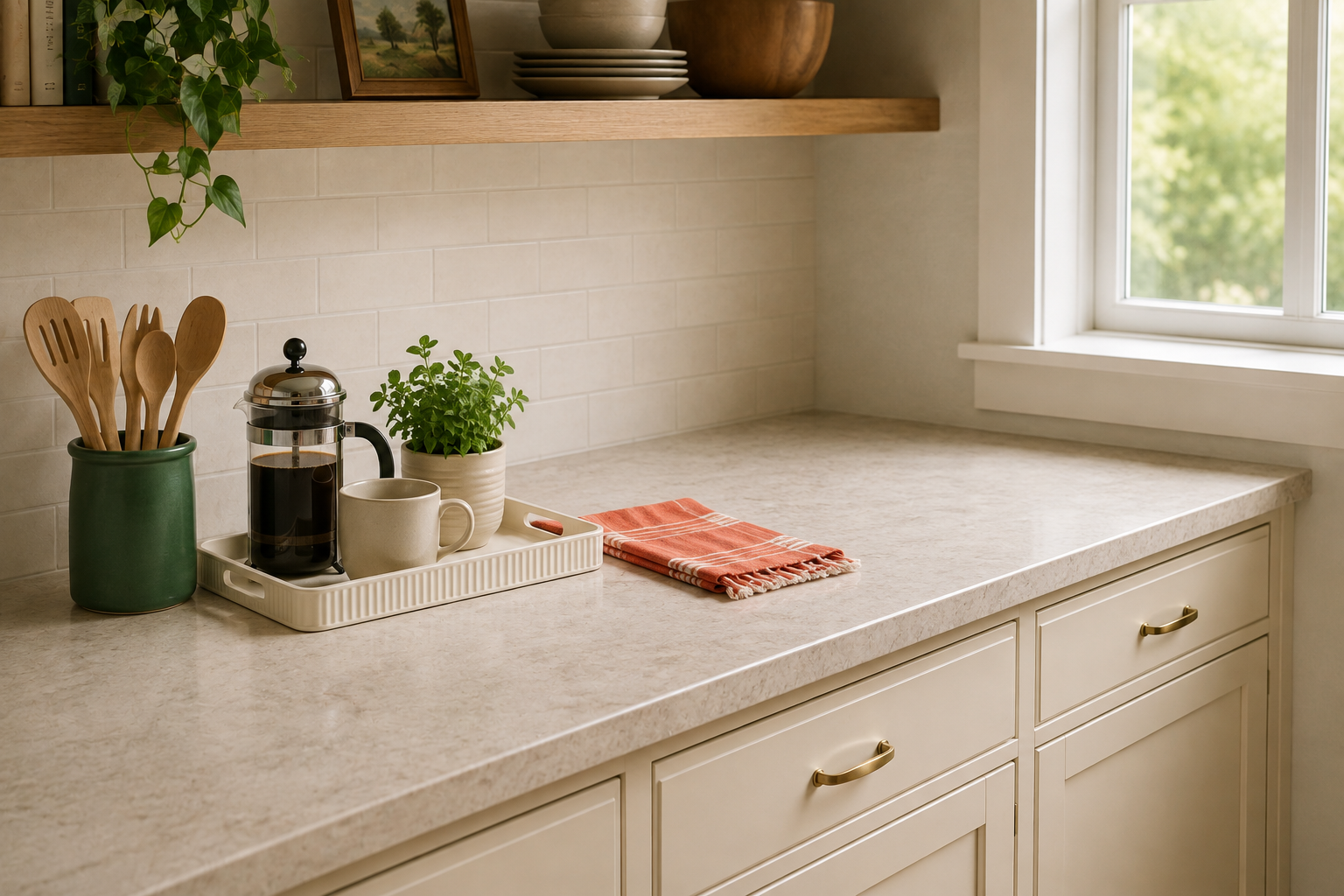
Items that pass the daily-use test still shouldn’t sit loose and scattered. A shallow tray, caddy, or lazy Susan groups your daily items into one visually defined zone, which makes even a busy counter read as intentional rather than cluttered.
This matters more than it sounds like it should. A counter with five items scattered across its full length looks messier than a counter with the same five items contained on one 12-by-16-inch tray, even though the total item count is identical. Containment creates the visual boundary your eye reads as “organized.”
Good containment options for a small kitchen counter:
- A wooden or ceramic tray for coffee setup (mug, filters, sugar, spoon)
- A vertical utensil crock near the stove for daily-use tools only, not your full utensil drawer’s contents
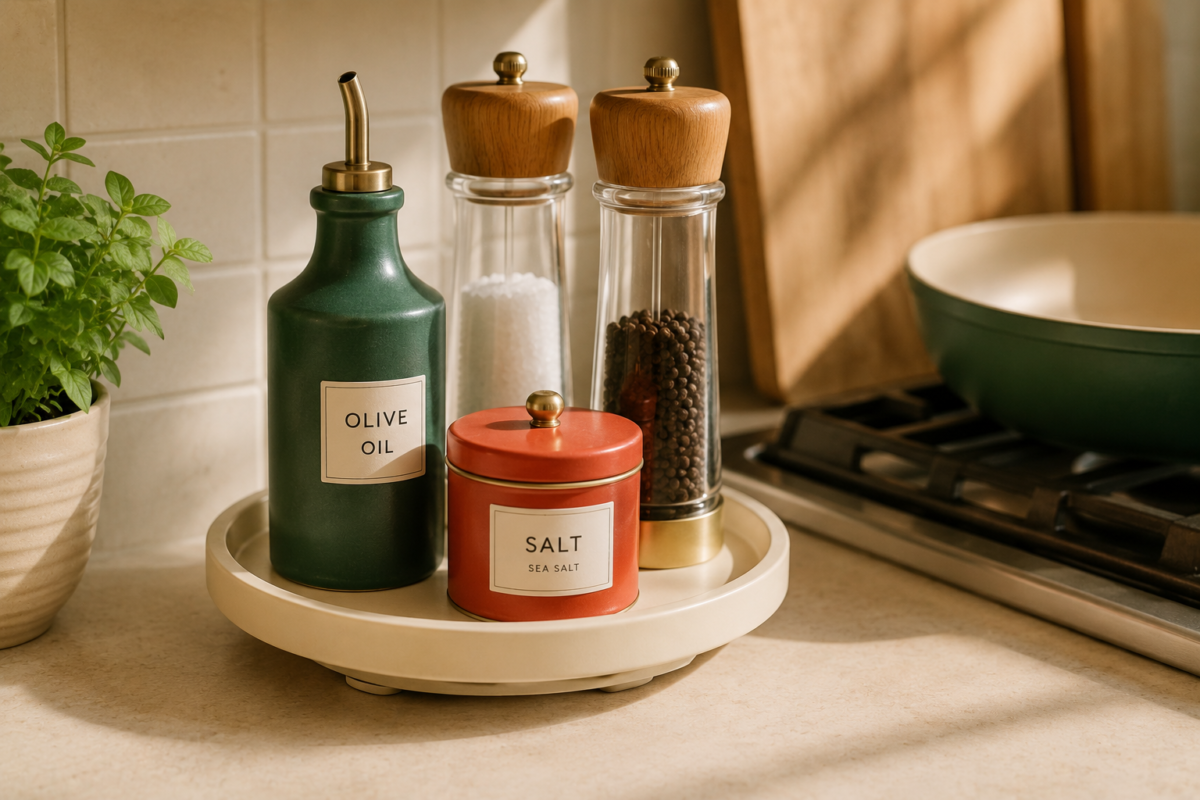
- A small lazy Susan near the stove for oils, salt, and pepper that rotates instead of requiring reaching
- A single small plant or vase, kept to one, as the only purely decorative item allowed permanent space
Give Everything Else a Landing Zone Off the Counter
Mail, keys, recipe cards, and the day’s random small items need somewhere to go that isn’t the counter, or they’ll end up there by default within a day of moving in. A small wall-mounted tray, a drawer near the entry, or even a single labeled basket tucked on a shelf gives these items a real home instead of a temporary counter perch that becomes permanent.
The trick is placing the landing zone somewhere just as convenient as the counter. If putting mail in its actual home takes ten extra seconds and three extra steps compared to just setting it on the counter, the counter wins every time, out of pure habit and low friction. Mount the landing zone somewhere on your natural path into the kitchen, not tucked in a spot you’d have to detour to reach.
If your kitchen’s biggest clutter source is actually inside your cabinets rather than on the counter itself, meaning dry goods and pantry items with nowhere consistent to live, Pantry Organization for Kitchens With No Pantry covers the exact bin and labeling system that solves that specific problem.
Reset the Counter at the Same Time Every Day
A consistent nightly reset, done at the same time each day (right after dinner cleanup works well for most households), stops small clutter from compounding into a counter you need a full weekend to reclaim. This takes under two minutes once your daily-use items already have a defined zone and everything else has a landing spot to return to.
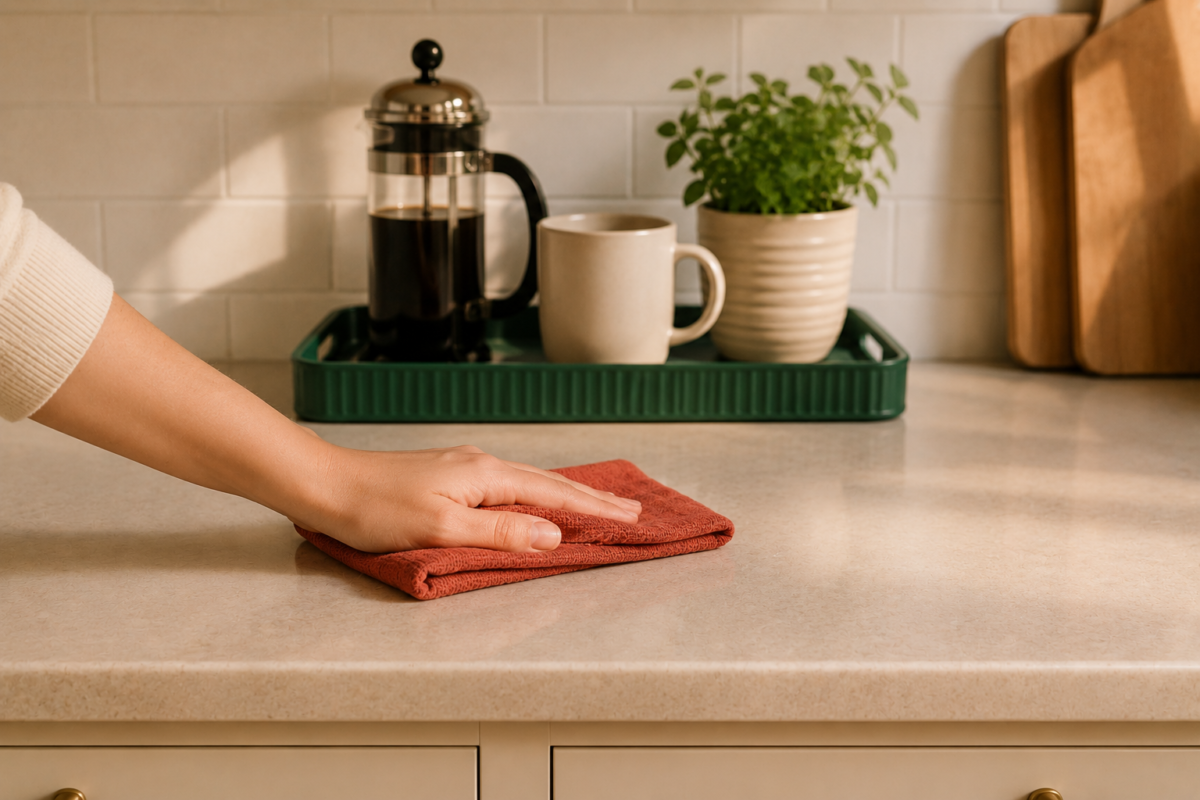
The reset is simple: wipe the surface, return anything that migrated onto the counter during the day to its actual home, and confirm only your daily-use tray or caddy items remain. Done consistently, this two-minute habit is the entire difference between a counter that stays clear and one that needs re-clearing from scratch every week or two.
For the daily and weekly routine that keeps this reset habit going long-term, alongside the rest of your kitchen, Daily Habits That Keep a Small Kitchen From Piling Up breaks down the exact two-minute tasks by day.
What a Genuinely Clear Counter Buys You
A clear counter isn’t about looking tidy for guests. It’s the difference between having a real workspace to cook on and constantly shuffling items aside just to cut a vegetable. Once your daily-use items are contained and everything else has a real home, the counter goes back to doing its actual job: giving you room to cook.
Frequently Asked Questions
What should never be left on a small kitchen counter? Anything used less than a few times a week, plus mail, keys, and paperwork that has a designated landing zone elsewhere. If it’s not touched daily and doesn’t have a clear reason to be visible, it belongs in a cabinet or drawer.
How do I keep my counter clear with a small kitchen and no extra storage? Focus on the daily-use rule first: remove anything not used every day before adding any new storage. Most small kitchens free up a foot or more of counter length through removal alone, before a single organizer gets purchased.
Are countertop trays actually necessary, or just decorative? Trays serve a real function beyond looks. Containing daily-use items in one defined zone keeps a counter reading as organized even when several items are sitting out, and it makes wiping down the counter faster since everything lifts as one unit.
How long should it take to reset a kitchen counter each night? A consistent nightly reset should take under two minutes once your daily-use zone and landing spots for other items are already established. If it’s taking longer, the underlying system, not the habit, usually needs adjusting.
Related Reading
- The Complete Guide to Organizing a Small Kitchen
- Pantry Organization for Kitchens With No Pantry
- Daily Habits That Keep a Small Kitchen From Piling Up
- Kitchen Organization (parent category)
- Small Kitchens (parent hub)