
Table of Contents
Some tasks don’t fit neatly into a daily or weekly routine, not because they’re less important, but because they genuinely don’t need that kind of frequency. Checking a smoke detector battery every day would be excessive. Checking it once a year is often too rare, since a dead battery can sit unnoticed for months in between. Once a month is the sweet spot for a specific category of tasks: important enough to matter, but infrequent enough that they’re easy to forget without a dedicated slot on the calendar.
This checklist covers four categories worth a monthly pass: safety checks, appliance maintenance, a focused declutter, and small repairs that tend to get put off indefinitely without a set reminder.
Safety Checks: The Tasks With the Highest Stakes for the Least Effort
Safety-related tasks belong at the top of any monthly list, since they take the least time relative to how much they matter. Test smoke detectors and carbon monoxide detectors by pressing the test button on each unit, and replace batteries on a fixed schedule (many detectors chirp when the battery is low, but a monthly test catches a dead battery before it starts chirping at an inconvenient time).
Check fire extinguishers if the home has one, confirming the pressure gauge still reads in the correct range and the unit hasn’t expired. Inspect any visible cords for fraying, especially ones behind furniture or appliances that don’t get looked at regularly, and unplug anything that shows wear rather than waiting for it to become a genuine hazard.
This entire category typically takes under fifteen minutes but addresses the kind of risk that, left unchecked for months, carries real consequences. It’s the single easiest category on this list to justify prioritizing first if time runs short during a particular month’s session.

Appliance Maintenance: The Deeper Clean a Weekly Routine Skips
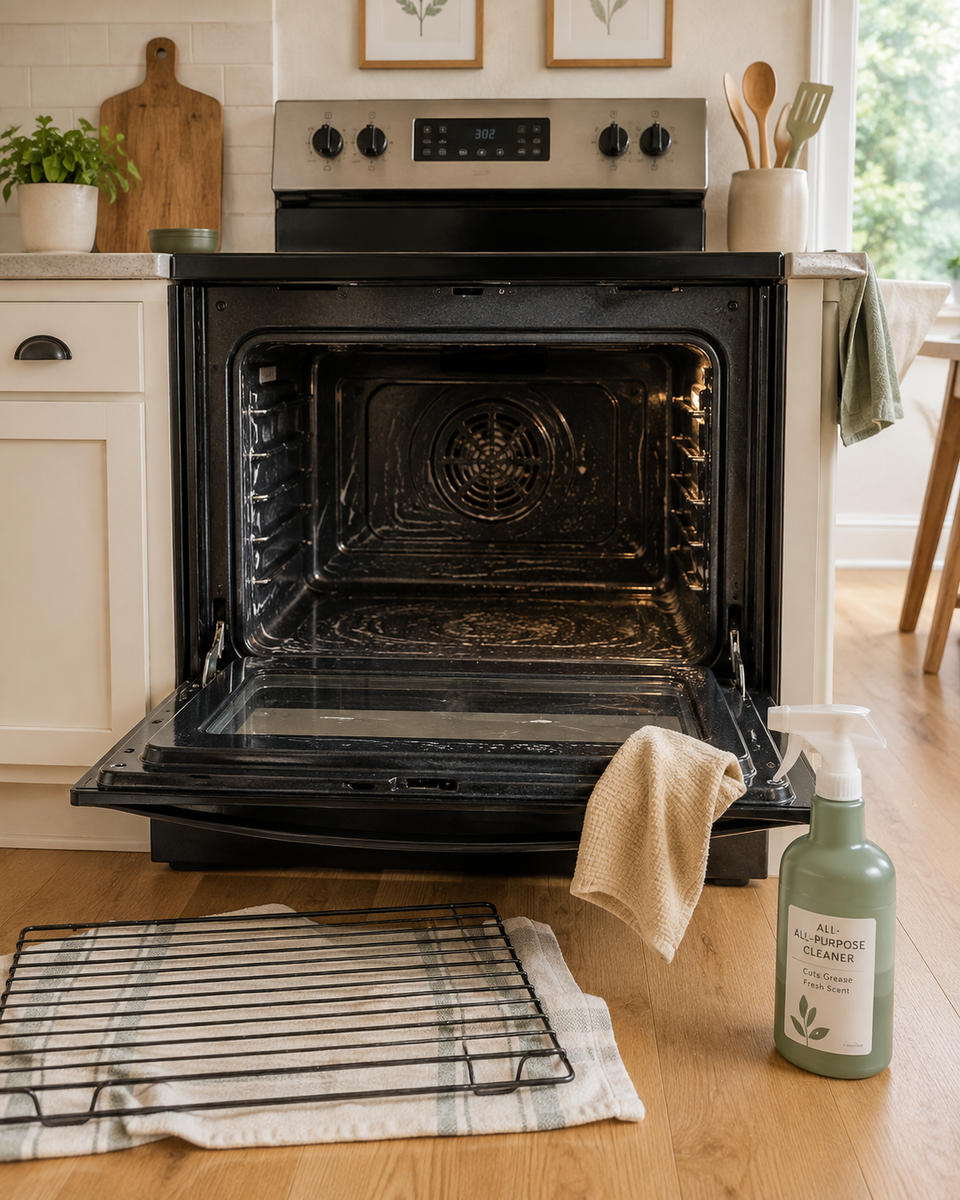
Appliances handle daily use without much visible sign of wear until a small problem becomes a bigger one, which makes monthly attention worth the time it takes. Clean the oven’s interior, including under any removable racks, since this is a task that’s easy to skip week after week until buildup becomes noticeably harder to remove. Wipe down the refrigerator’s interior shelves and check for anything expired that’s been pushed to the back and forgotten.
Check behind and underneath large appliances where reachable, the refrigerator, the washing machine, for dust buildup or early signs of a leak that a daily or weekly glance wouldn’t catch. Clean the dishwasher’s filter if it has one, and run an empty cycle with a dishwasher-safe cleaner if it’s been a while, since a dishwasher that’s never had this kind of attention gradually becomes less effective at actually cleaning dishes.
For homes with a washer and dryer, clean the dryer’s lint trap thoroughly (not just the surface lint that gets removed after each load, but the trap itself, which can build up residue over time) and check the dryer vent for blockage, since a clogged vent is both a fire risk and a common reason drying times gradually get longer.
A Focused Declutter: One Category or Zone, Not the Whole Home
Unlike a full seasonal declutter, the monthly version is deliberately narrow: pick one drawer, one shelf, or one specific category (like expired pantry items or a junk drawer) and work through it fully rather than attempting the whole home in a single sitting. This keeps the monthly checklist from turning into an overwhelming project and instead treats decluttering as an ongoing, manageable habit rather than a periodic overhaul.
Rotate through different zones each month rather than repeating the same one, since a junk drawer decluttered every single month barely needs the attention, while a closet shelf or a garage corner might genuinely benefit from that same monthly frequency. Keeping a simple rotating list, even just a few zones written down and worked through in order, prevents the same easy target from getting picked every month while harder zones never get their turn.
This is also a good moment to catch anything that’s drifted out of its assigned home since the last monthly check: an item that ended up in the wrong room, a category that’s started accumulating duplicates again since the last full declutter. A monthly check-in keeps small drift from compounding into the kind of buildup that eventually needs a full weekend to address.
Small Repairs: The Tasks That Get Put Off Indefinitely
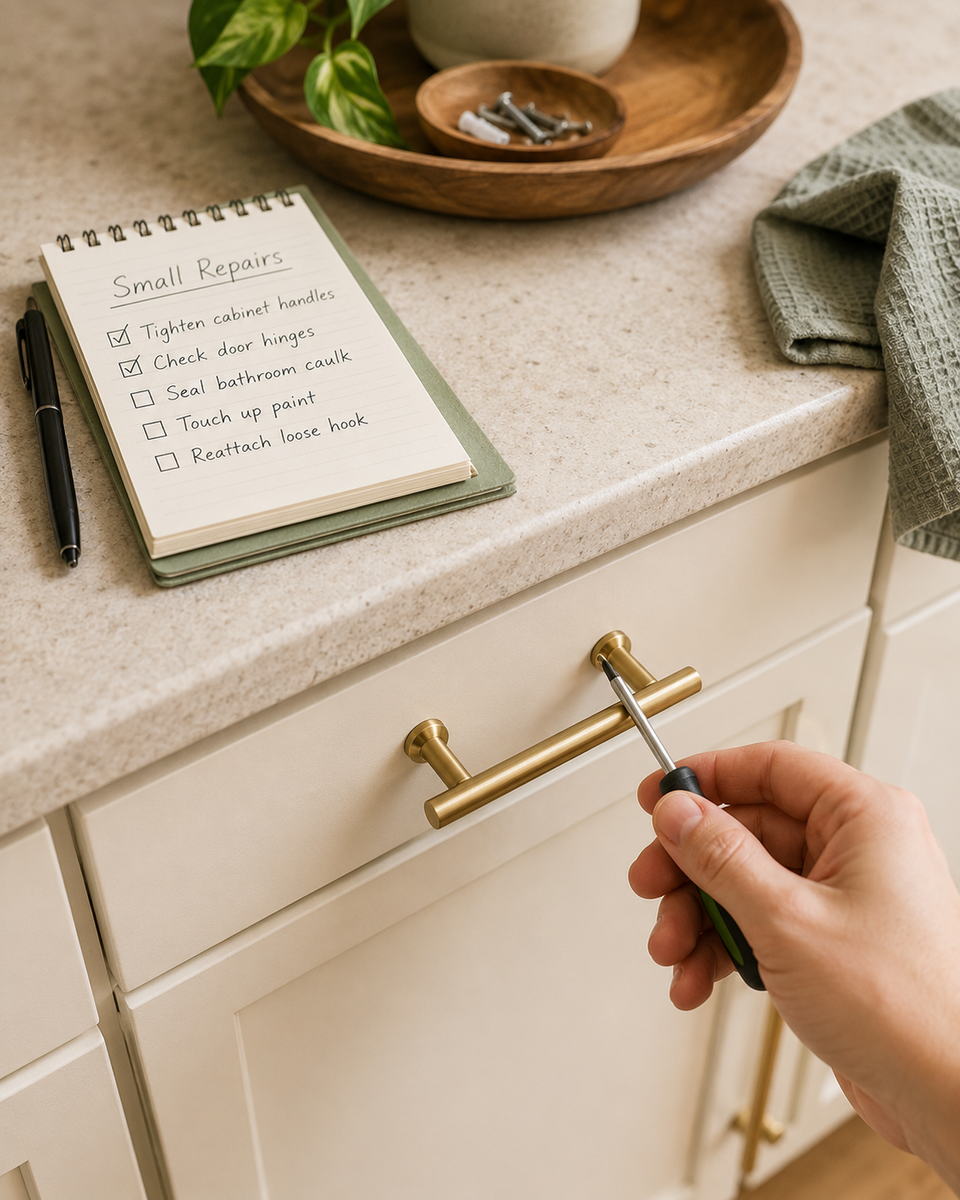
Small repairs, a loose cabinet handle, a squeaky hinge, a light bulb that’s burned out in a less-used room, tend to get mentally noted and then forgotten repeatedly, since none of them are urgent enough to demand immediate attention on their own. A monthly pass specifically for these tasks catches them before the list grows long enough to feel like its own overwhelming project.
Walk through the home with a simple mental or written list, noting anything that’s not working quite right: a drawer that sticks, a door that doesn’t close smoothly, a faucet with a slow drip. Tackle whatever’s realistic to fix within the current session, and note anything requiring a specific part or tool not currently on hand, so it doesn’t get forgotten before the next hardware store trip.
Keeping a running list between monthly sessions, rather than trying to remember everything from scratch each time, makes this category far more manageable. A simple note on a phone, added to whenever something’s noticed during the month, means the monthly session starts with an actual list to work through rather than a vague sense that “something’s been bothering me” without being able to pinpoint what.
For repairs that come up mid-month and feel urgent enough not to wait, there’s no rule against handling them immediately rather than saving them for the monthly session. The monthly checklist exists as a safety net for the smaller, easy-to-forget items, not a reason to delay something that’s genuinely bothering the household right now.
Setting a Date That Actually Sticks
A monthly routine is the tier most likely to get skipped entirely, since a full month is long enough for the intention to fade before it turns into action. Pick a specific, memorable date, the first Saturday of the month, or a date already tied to something else recurring like paying rent or a subscription renewal, rather than a vague plan to “get to it sometime.”
Block out a specific window of time, two to three hours, rather than leaving it open-ended. If a single session genuinely doesn’t fit, splitting the four categories across two shorter sessions in the same week works just as well, as long as each category still gets covered rather than being quietly dropped because time ran out.
Adjusting the Checklist for a Rental Versus a Home You Own
Some monthly tasks matter more depending on whether the home is owned or rented. In a rental, safety checks still matter just as much, since a tenant is usually responsible for testing smoke detectors even if the landlord handles replacement of the units themselves. Appliance maintenance tends to be lighter in a rental, since major appliance repairs typically fall to the landlord, but routine cleaning (the oven interior, the dishwasher filter, the dryer vent) still falls on whoever’s living there day to day.
Small repairs work differently in a rental too. A loose cabinet handle or a squeaky hinge might be worth fixing directly if it’s a quick, low-cost job, but anything involving plumbing, electrical work, or structural issues is usually worth reporting to a landlord rather than attempting a DIY fix that could complicate a security deposit or void a repair agreement. Keeping a running list specifically for items to report, separate from the list of items to fix directly, keeps this distinction clear from month to month.
For a home you own, the appliance and repair categories carry more weight, since there’s no landlord to fall back on if a small issue is left unaddressed and grows into a larger, more expensive one. This is where the monthly checklist earns its keep most: a dryer vent cleaned regularly, an oven maintained consistently, and small repairs handled before they compound are all things that save real money over the years compared to reactive fixes made only once something has already broken.
FAQ
How long does the full monthly checklist actually take? Most households complete all four categories, safety checks, appliance maintenance, a focused declutter, and small repairs, in two to three hours, though this varies depending on how much buildup exists in any given category that month.
What if I miss a month entirely? Resume with the next month’s session rather than trying to catch up on two months’ worth of tasks at once. The safety check category is worth prioritizing first if a month was missed, since it carries the highest stakes of anything on this list.
Do I need to declutter a different zone every single month? Rotating zones keeps the task manageable and ensures every part of the home eventually gets attention, but there’s no strict rule against repeating a zone if it’s genuinely accumulated clutter again since the last check.
Should I combine this with my weekly routine to save time? Keep them separate. The monthly tasks are deliberately less frequent because they don’t need weekly attention, and folding them into a weekly routine usually means the weekly session takes too long and starts getting skipped.
Related Reading
For how this monthly pass fits into a larger system, The Complete Home Maintenance Routine Guide covers the daily, weekly, and monthly tiers together in more depth.
For the short daily reset that keeps clutter from building up between longer sessions, A 10-Minute Daily Tidying Routine That Actually Works covers the foundation this checklist builds on.
And for the slightly longer weekly pass that catches what the daily routine misses, The Weekly Reset Checklist for a Small Home covers laundry, bathrooms, and floors on a weekly basis.
For the full category, browse Maintenance Routines under the Seasonal & Maintenance hub, home to every routine and reset guide on the site.