Table of Contents
There’s a specific moment in every move where a stack of boxes stops looking like “still unpacking” and starts looking like permanent furniture. It usually happens sometime in the second or third week, once the initial moving-day energy fades and a box that hasn’t been opened yet just becomes something to walk around. The first week is the window to prevent that, by getting the essentials genuinely functional before momentum runs out.
This checklist covers what actually needs to happen in the first week: getting the bed and bathroom working night one, the kitchen functional within the first couple of days, safety and admin tasks that are easy to forget amid the unpacking, and a realistic plan for the boxes that don’t get to fully unpacked right away.
Night One: The Bed and a Working Bathroom
The single most important task on moving day itself is setting up somewhere to actually sleep. Assemble the bed frame if it was disassembled for the move, and get sheets and basic bedding out and on the mattress before anything else gets unpacked. A proper night’s sleep on night one makes every other task over the following days meaningfully easier to tackle, both physically and in terms of general patience for the unpacking process ahead.
The bathroom needs just enough set up to function: toilet paper, hand soap, a towel, and a shower curtain if the unit doesn’t already have one installed. None of this needs to be the final, permanent setup, just enough for the bathroom to be usable without digging through boxes at an inconvenient moment.
Locate the apartment’s essential controls before the first night ends: the circuit breaker, the water shutoff valve if there is one accessible to tenants, and the thermostat. Knowing where these are before an actual emergency arises, a tripped breaker, an unexpected leak, saves real stress compared to searching for them for the first time while something’s already gone wrong.

Days Two and Three: A Functional Kitchen
The kitchen is the second priority after the bedroom and bathroom, since it’s the room that most affects whether daily life feels normal or like an extended camping trip. Unpack basic cookware, a couple of plates, bowls, and utensils, and enough to prepare simple meals, rather than waiting until the entire kitchen is fully organized before using it at all.
Set up the refrigerator and do a basic grocery run for essentials: something for breakfast, easy dinner options, and staples like coffee or tea depending on daily habits. Cooking a first simple meal in the new kitchen, even something basic, marks a genuine transition from “camping in a new place” to actually living there.
Organize cabinets and drawers with a rough system rather than a perfect one at this stage. Frequently used items, everyday plates, common cooking tools, go in the most accessible spots, while anything used less often can wait for a more considered organization pass later, once the more urgent unpacking is done.

The Safety and Admin Tasks Easy to Forget
Amid the unpacking, a handful of administrative and safety tasks are easy to overlook until they become genuinely urgent. Test the smoke detectors and carbon monoxide detectors on the first or second day, confirming they’re working and replacing batteries if needed, rather than assuming a previous tenant or the landlord already handled this.
Confirm utilities are properly set up and working: electricity, water, gas if applicable, internet. If anything was scheduled to connect on move-in day but isn’t working, contact the provider immediately rather than waiting, since some connection issues take longer to resolve the later they’re reported.
Update your address with anything time-sensitive: employer, bank, any subscriptions or deliveries expected soon. This doesn’t all need to happen in the first week, but the most urgent items, anything tied to mail that could arrive at the old address, are worth prioritizing early rather than letting several weeks pass before addressing them.
Locate the nearest essentials outside the apartment itself: a grocery store, a pharmacy, and if relevant, the closest urgent care or hospital. Knowing this before it’s needed in an emergency is a small task that takes a few minutes and removes one more thing to figure out under stress later.
What to Do About the Boxes That Aren’t Fully Unpacked Yet
Not every box needs to be unpacked in the first week, and trying to force the entire apartment into a finished state within seven days often creates more stress than it resolves. It’s reasonable, and genuinely common, for some boxes to remain unopened for a few weeks, especially ones holding items for a room or purpose that isn’t urgent yet, like a home office setup or decorative items for a space still being figured out.
Set a specific, realistic deadline for the remaining boxes rather than leaving it open-ended. Two to four weeks after moving in is a reasonable target for most small apartments, giving enough time for daily life to settle without letting boxes linger indefinitely as a permanent feature of the living room.
Keep any remaining boxes stacked neatly in one designated area rather than scattered across every room, since a single organized stack reads as “still in progress” while boxes spread throughout the apartment tend to make the whole space feel unfinished and cluttered even in rooms that are otherwise fully set up.
If a box remains unopened past the deadline you set, that’s often a useful signal in itself: an item that wasn’t missed in several weeks of daily living may not need to be kept at all, and it’s worth opening that specific box ready to declutter rather than automatically finding it a permanent home in the new place.

Getting to Know the New Neighborhood
Beyond the apartment itself, the first week is also a natural window to get oriented with the surrounding area, since this tends to happen more easily and thoroughly before daily routines fully take over and life narrows back down to the same few familiar paths. Locate the closest grocery store, pharmacy, and, if relevant to daily habits, a coffee shop or laundromat, walking or driving the route at least once rather than relying entirely on a map app for the first several weeks.
Introduce yourself to immediate neighbors if the building or complex layout makes that natural, since a quick introduction in the first week tends to feel far more comfortable than trying to strike up a conversation for the first time weeks later when it might feel oddly overdue. This isn’t essential to settling in functionally, but it does tend to make a new place feel like a genuine home faster than treating the building as simply a place to sleep.
Check on practical neighborhood logistics too: trash and recycling pickup days, mail delivery and package procedures if the building has a specific system, and parking rules if applicable. These are the kinds of small details that are easy to get wrong in the first few weeks simply from not knowing the local system yet, and getting them sorted early avoids avoidable friction with neighbors, building management, or a missed trash day.
FAQ
What’s the single most important task to finish on moving day itself? Setting up the bed. A proper night’s sleep the first night makes every other task over the following days genuinely easier to handle, both physically and mentally.
How long is it reasonable to leave moving boxes unopened? Two to four weeks is a realistic window for most small apartments, as long as remaining boxes are kept in one designated area rather than scattered throughout the home. Past that point, an unopened box is worth revisiting with fresh eyes and a willingness to let it go.
Should I fully organize every cabinet and drawer in the first week? Not necessarily. A rough, functional system in the first week, with frequently used items in accessible spots, is enough. A more considered organization pass can happen later, once the more urgent parts of settling in are handled.
What should I check immediately upon arriving at a new apartment? Smoke detectors, utility connections, and the locations of the circuit breaker and water shutoff valve. These are the tasks most disruptive to deal with for the first time during an actual emergency rather than checking them ahead of time in the first day or two.
How do I decide what counts as urgent versus something that can wait a few weeks? A simple test: if not having it functional would disrupt daily comfort or safety, like a working bed, a stocked bathroom, or a smoke detector, it belongs in the first few days. Anything tied to decor, a specific hobby setup, or a room not in daily use can reasonably wait without causing any real disruption in the meantime.
Related Reading
For how this first week fits into the larger move, The Complete Apartment Move Checklist covers every decision in order, from the first box packed to the first week settled in.
For getting everything packed correctly before this first week even begins, A Packing Checklist for Moving Out of a Small Apartment covers what to pack first, what to pack last, and what to just get rid of.
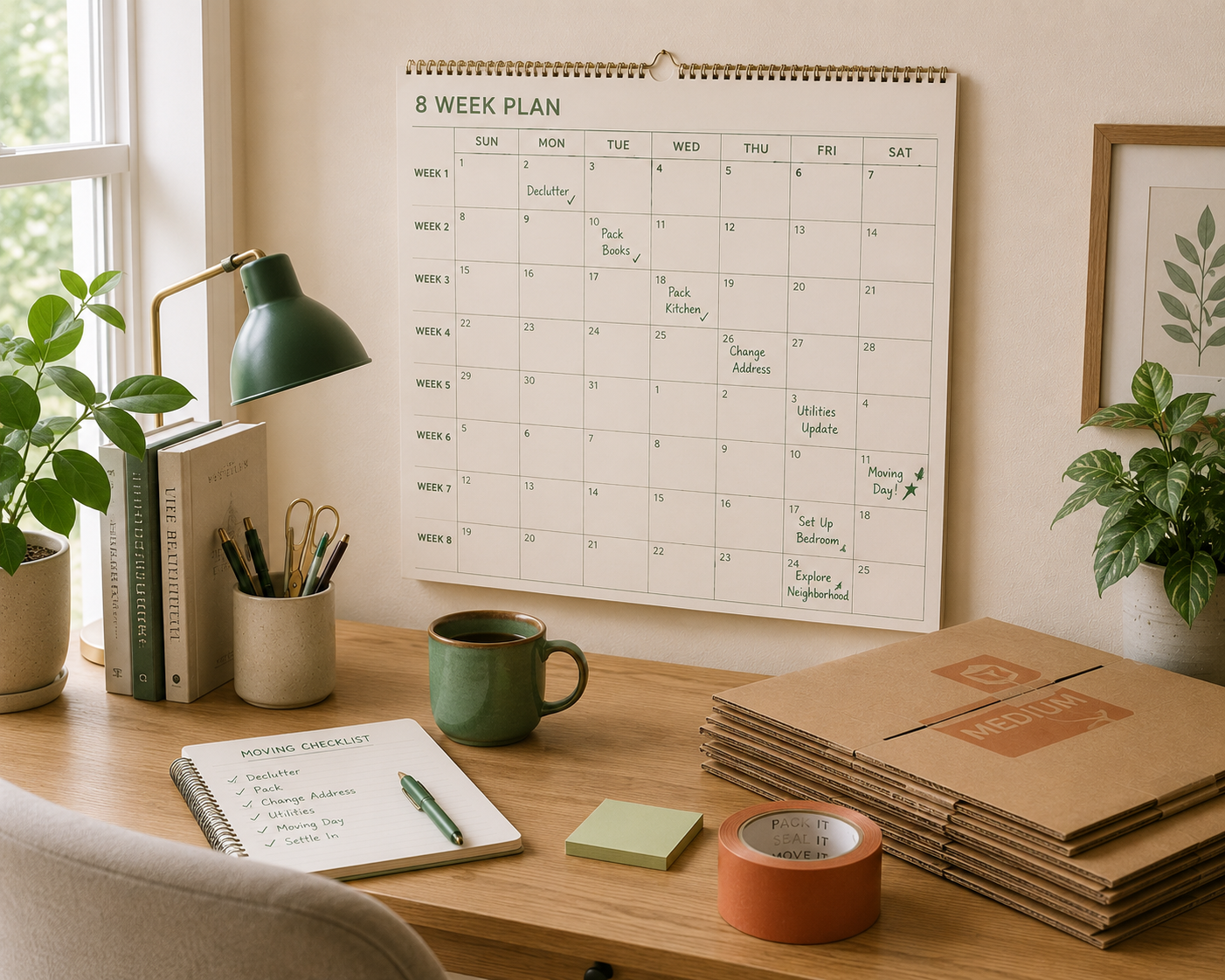
And for spreading the entire process out with real breathing room, A Realistic Moving Timeline, Eight Weeks Out to Move Day breaks the whole move into a week-by-week schedule.
For the full category, browse Move Checklists under the Seasonal & Maintenance hub, home to every moving and settling-in guide on the site.