Table of Contents
Packing a small apartment sounds like it should be simple given the limited square footage, but a small space often holds more than it looks like from the outside, and packing it in the wrong order turns a manageable few weeks into a chaotic final few days. This checklist breaks the process into three parts: what to pack first, since these are the easiest and least disruptive items to box up weeks in advance, what to pack last, the daily essentials that need to stay accessible until the very end, and what to just get rid of before any of it takes up space in a box at all.
What to Get Rid of Before You Pack a Single Box
Decluttering before packing saves both the time it takes to pack an item and the physical effort of moving it, so this step comes first even though it might feel like a delay to the “real” packing process. Every item that gets decluttered now is one less thing to box, carry, unload, and eventually find a home for in the new apartment.
Start with anything genuinely broken, expired, or duplicated, the same categories that come up in a standard declutter. A move is also a natural moment to reassess furniture and larger items specifically, since something that fit the current apartment might not make sense in the new one, and it’s far easier to sell or donate an oversized piece now than to deal with it cluttering a smaller space later.
Set a simple rule for anything genuinely uncertain: if it hasn’t been used or worn in the past year, and there’s no specific reason to expect that changing, it’s a strong candidate to donate rather than pack. Moving is one of the few moments where this kind of decision becomes easier than usual, since the physical cost of packing and carrying an unwanted item is immediate and tangible in a way that leaving it in a closet at home never quite is.

What to Pack First: The Least-Used Items
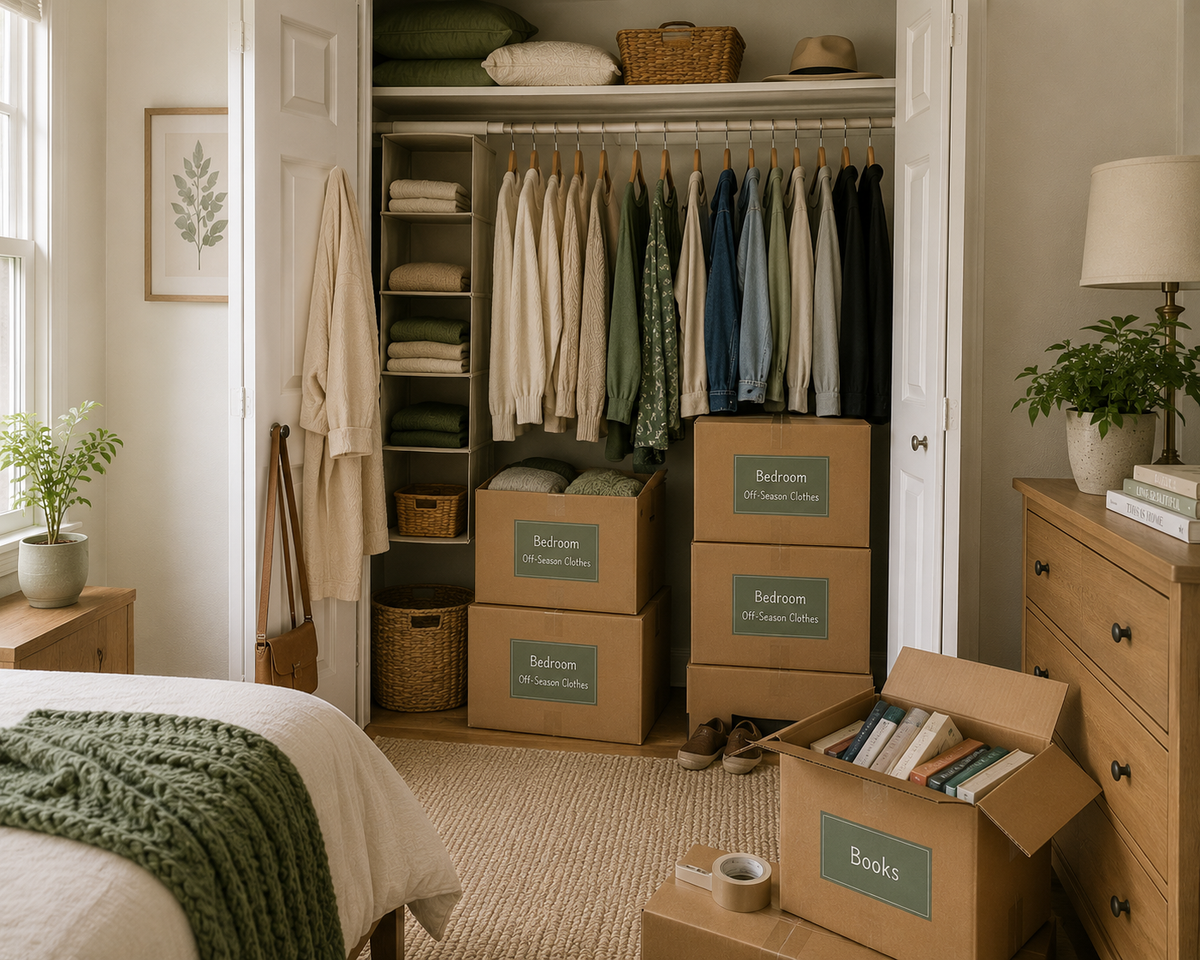
Once decluttering is done, start packing with the items used least frequently, since boxing these up weeks in advance barely affects daily life while still making genuine progress toward moving day. Seasonal decor, out-of-season clothing, books and media not currently being read or watched, and any items in long-term storage (a closet’s top shelf, under-bed bins) are all strong candidates for the earliest packing sessions.
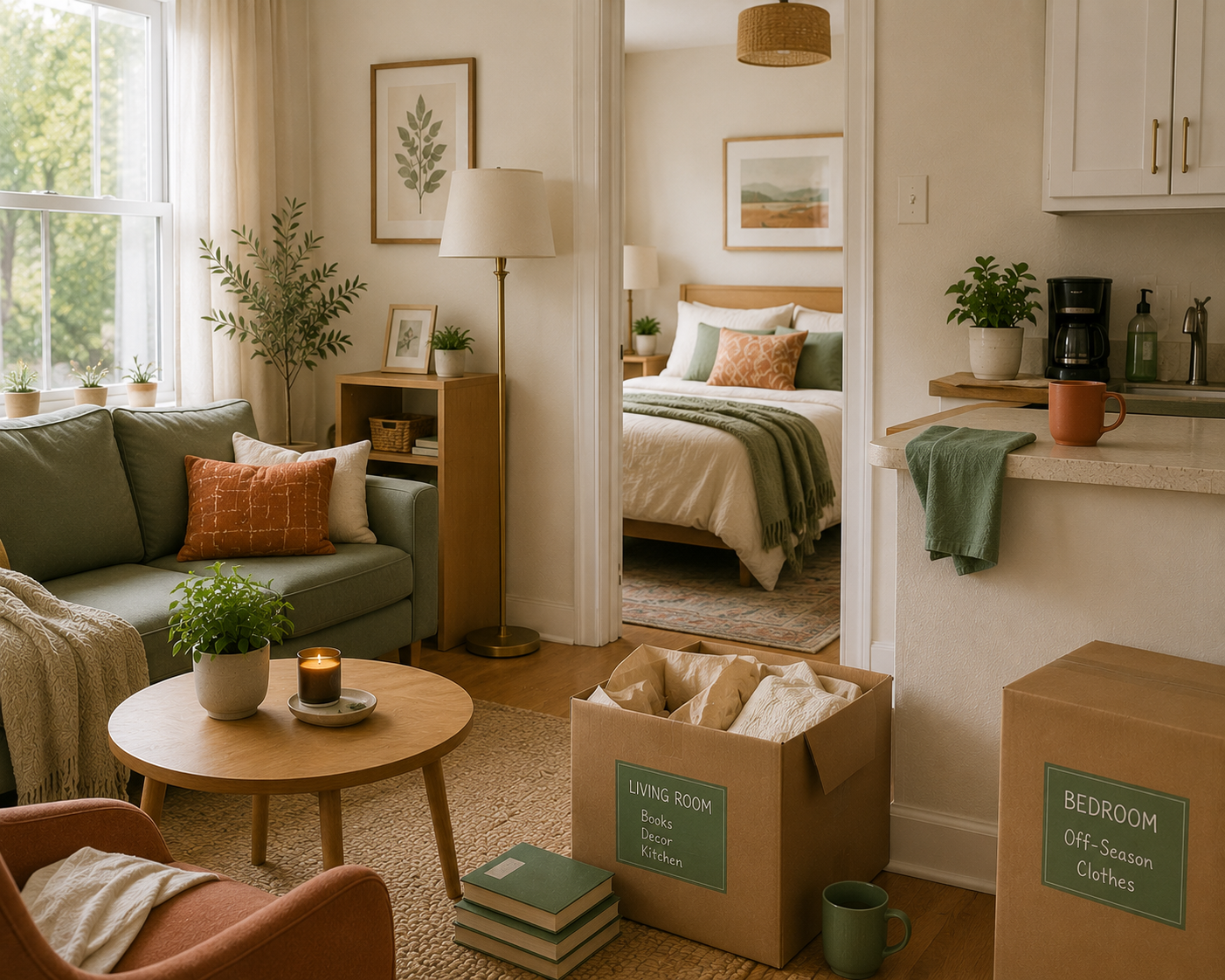
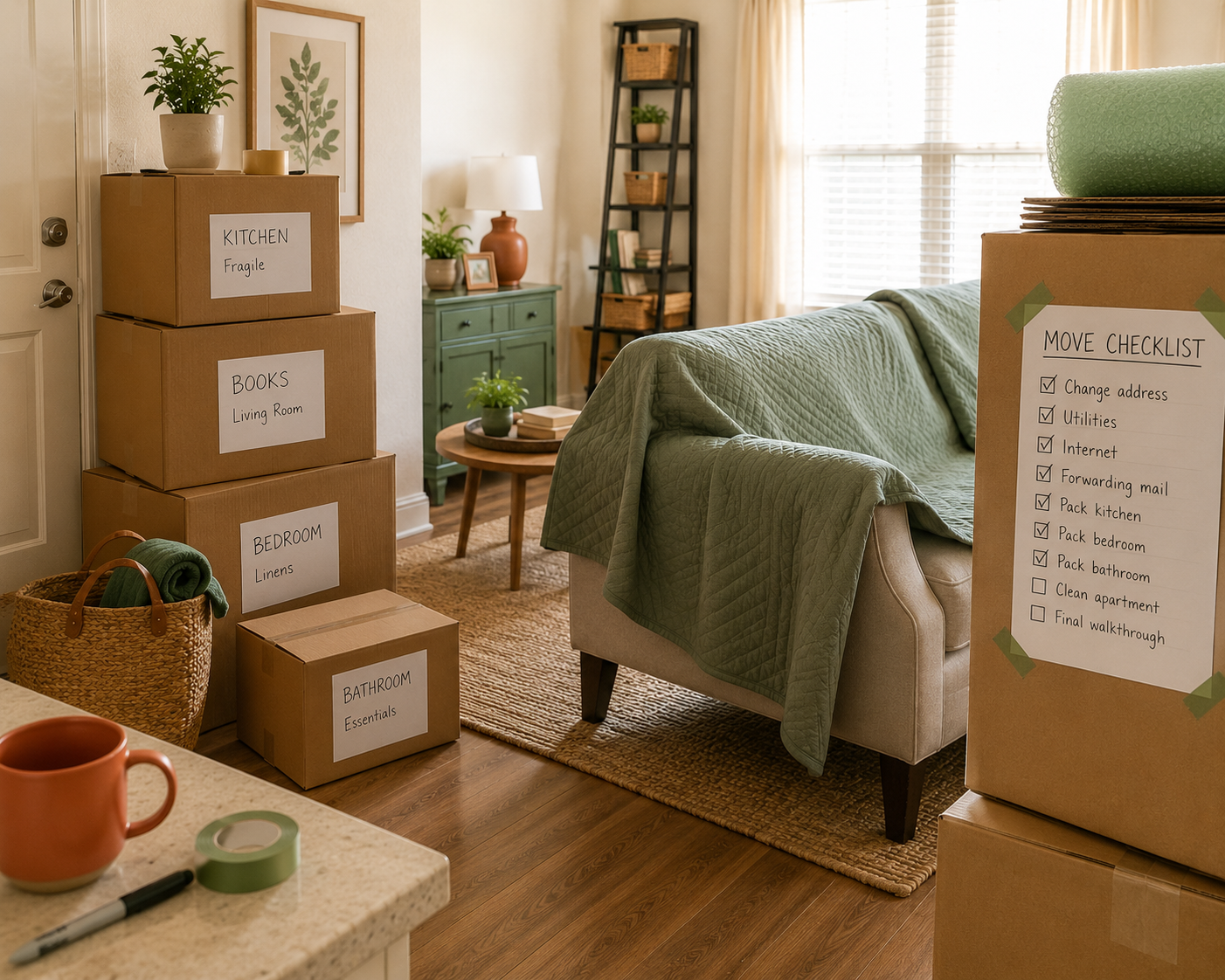
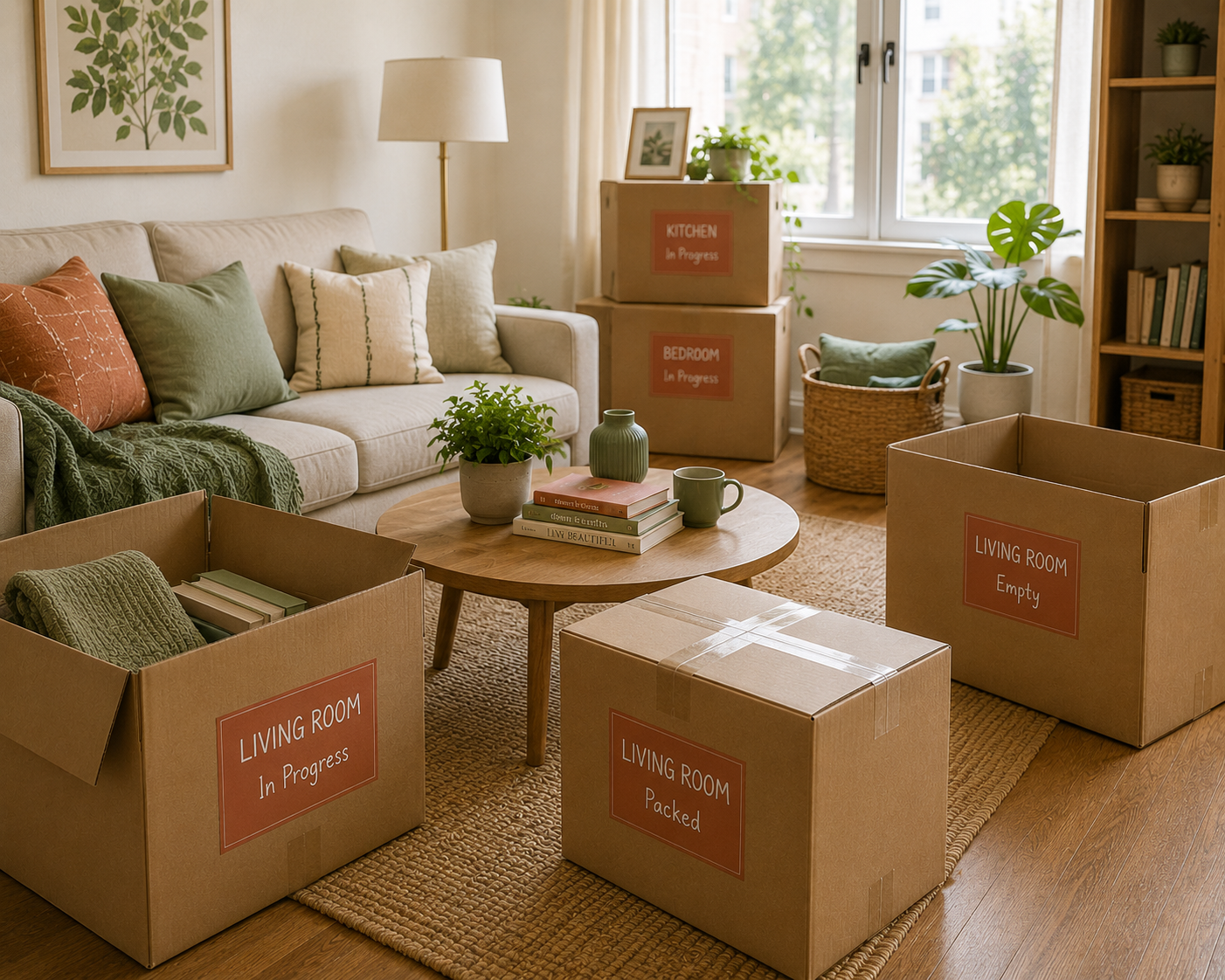
Label every box with both its general contents and the room it belongs in at the new apartment, not just the room it’s coming from. A box labeled “kitchen, extra dishware” is far more useful during unpacking than one labeled simply “kitchen,” especially if the new apartment’s layout doesn’t mirror the old one exactly.
Pack room by room rather than jumping between spaces, finishing one area’s early-packing items fully before starting the next. This keeps track of genuine progress and avoids the scattered, half-packed feeling that comes from having every room in a partial state of disarray at once.
Fragile items deserve extra care at this stage, since there’s no time pressure yet to rush the process. Wrap breakables individually, use plenty of padding, and mark these boxes as fragile so movers, whether professional or friends helping out, handle them with appropriate care during loading and unloading.
What to Pack Last: The Daily Essentials
The final 48 hours before a move need a different approach entirely, since these are the items still genuinely in daily use right up until moving day. Toiletries, a few days’ worth of clothes, phone chargers, basic kitchen items for simple meals, and any medication should stay unpacked until the very end, then go into a small, boldly marked “open first” box or bag rather than being mixed in with everything else.
This essentials box should travel separately from the rest of the moving boxes, ideally in a personal vehicle rather than on a moving truck, so it’s immediately accessible the moment you arrive at the new place rather than buried somewhere in a truck full of boxes loaded in a specific, hard-to-reverse order.
Keep important documents, identification, lease paperwork, medical records, in this same category rather than packed away in a general box. These are the items most disruptive to lose track of during a move, and they’re small enough to keep in a dedicated folder or bag that stays with you personally rather than traveling with the bulk of the move.
A simple test for what belongs in this last-packed category: if losing access to it for a day or two would genuinely disrupt daily life, it belongs here rather than in an earlier box. Everything else can reasonably wait until it’s unpacked at the new place, even if that’s a few days after moving in.
Packing Supplies Worth Having on Hand
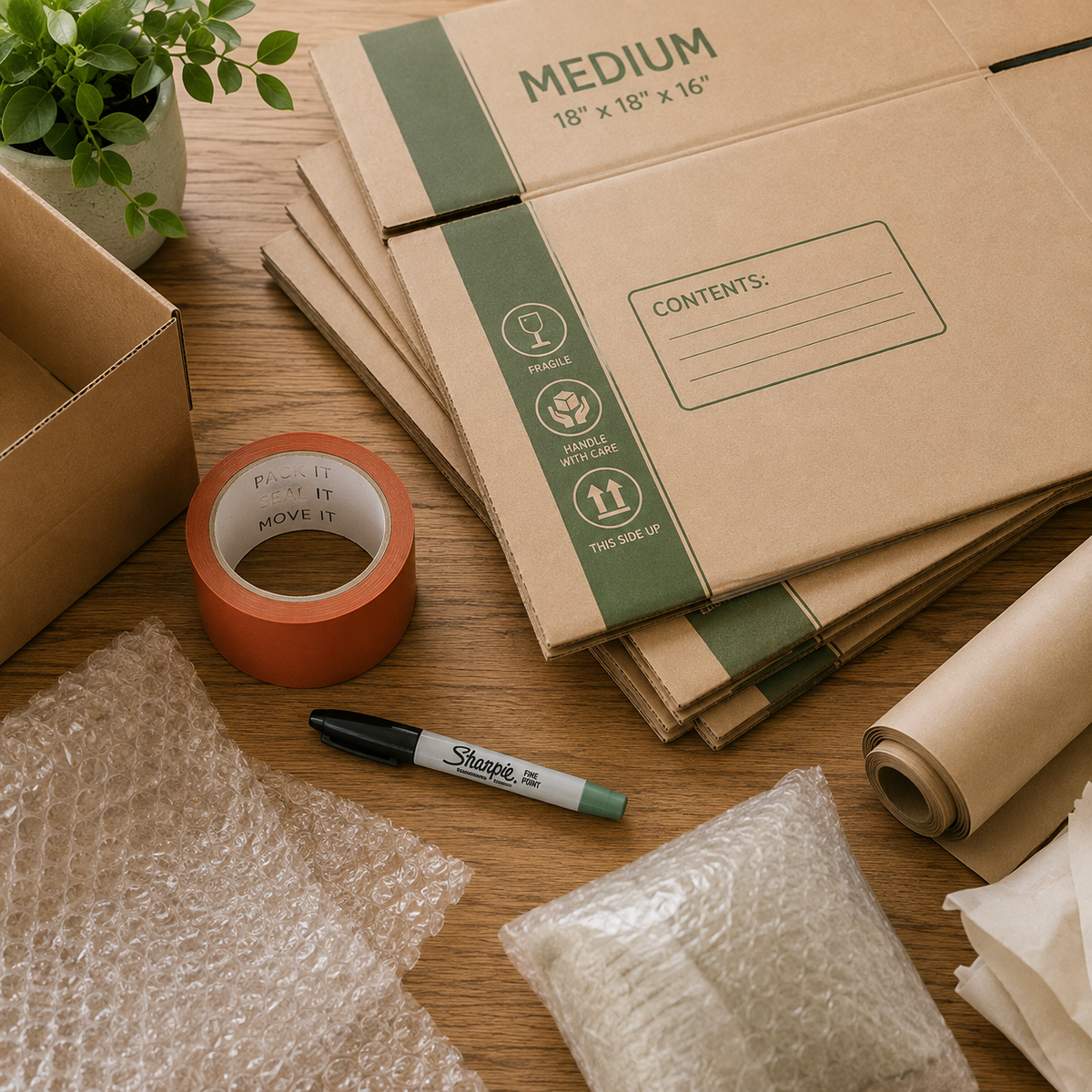
A small apartment move doesn’t need an elaborate supply list, but a few specific items make the whole process noticeably smoother. Sturdy boxes in a couple of different sizes cover most needs, small boxes for heavy items like books, larger ones for lighter, bulkier items like bedding and pillows. Packing an oversized box with heavy items makes it difficult to lift safely, so matching box size to item weight matters more than it might seem.
Packing paper or bubble wrap protects fragile items during the early packing stage, and a roll of sturdy packing tape (not general household tape, which tends to fail under the weight of a full box) keeps everything sealed securely through loading, transport, and unloading. A permanent marker for labeling, kept easily accessible rather than buried in a box itself, means every box gets labeled consistently rather than some getting skipped because the marker wasn’t within reach.
For a small apartment specifically, it’s often possible to source free or low-cost boxes from local grocery stores, liquor stores, or online marketplace listings from people who’ve just finished their own move, rather than buying new ones for a relatively contained packing job.
Packing Room by Room: What Changes From Space to Space
Different rooms in a small apartment call for slightly different packing approaches, and treating every room identically usually means either over-preparing for a simple space or under-preparing for a complicated one. The kitchen tends to need the most careful handling relative to its size, since it holds a mix of fragile items (dishware, glassware) and awkward shapes (pots, small appliances) that don’t pack neatly into uniform boxes. Wrap dishware in individual layers of paper, nest bowls and pots inside each other where sizes allow to save box space, and keep small appliances in their original boxes if they’ve been kept, since these are built to protect the specific shape and weight of the item.
The bathroom, despite being small, often gets packed at the very last minute since it’s in constant daily use right up until moving day. A small caddy or bag specifically for daily toiletries, packed the morning of the move rather than days in advance, keeps this space functional until the last possible moment without needing a dedicated early box.
The bedroom closet usually offers the most straightforward early-packing opportunity in the whole apartment, since off-season clothing and rarely-worn items can be boxed weeks ahead with almost no impact on daily routine. Pack current-season, frequently-worn items last, closer to moving day, using suitcases or garment bags rather than boxes where practical, since these travel easily and don’t need to be unpacked immediately at the other end.
FAQ
How many weeks before a move should I start packing? Start decluttering and packing least-used items about four to six weeks out, saving daily essentials for the final 48 hours. This spreads the effort out enough to avoid a last-minute scramble without starting so early that boxes sit around for months.
What’s the best way to label boxes for a small apartment move? Label with both general contents and the destination room in the new apartment, not just the room it’s coming from. This matters especially when the new layout doesn’t match the old one room for room.
Should I pack important documents with everything else? No. Keep identification, lease paperwork, and medical records in a dedicated folder or bag that travels with you personally rather than in a general box on the moving truck.
Do I really need to declutter before packing, or can I just pack everything and sort it out later? Decluttering first saves real time and effort, since it’s far easier to make a keep-or-donate decision now than to unpack an item at the new place only to realize it should have been let go before the move. It also reduces the physical volume that needs to be packed, carried, and moved in the first place.
What’s the easiest way to keep track of which boxes contain what once they’re all sealed and stacked? Beyond labeling each box by room and contents, numbering boxes and keeping a simple written or digital list matching each number to a general description saves real time during unpacking, especially for a move with more than a dozen or so boxes. This also makes it easier to confirm nothing was lost or left behind during loading and unloading.
Related Reading
For how this packing checklist fits into the full move, The Complete Apartment Move Checklist covers every decision in order, from the first box packed to the first week settled in.
For getting a new place genuinely livable fast once the boxes arrive, A First-Week Checklist for a New Apartment covers what needs to happen before boxes become permanent furniture.
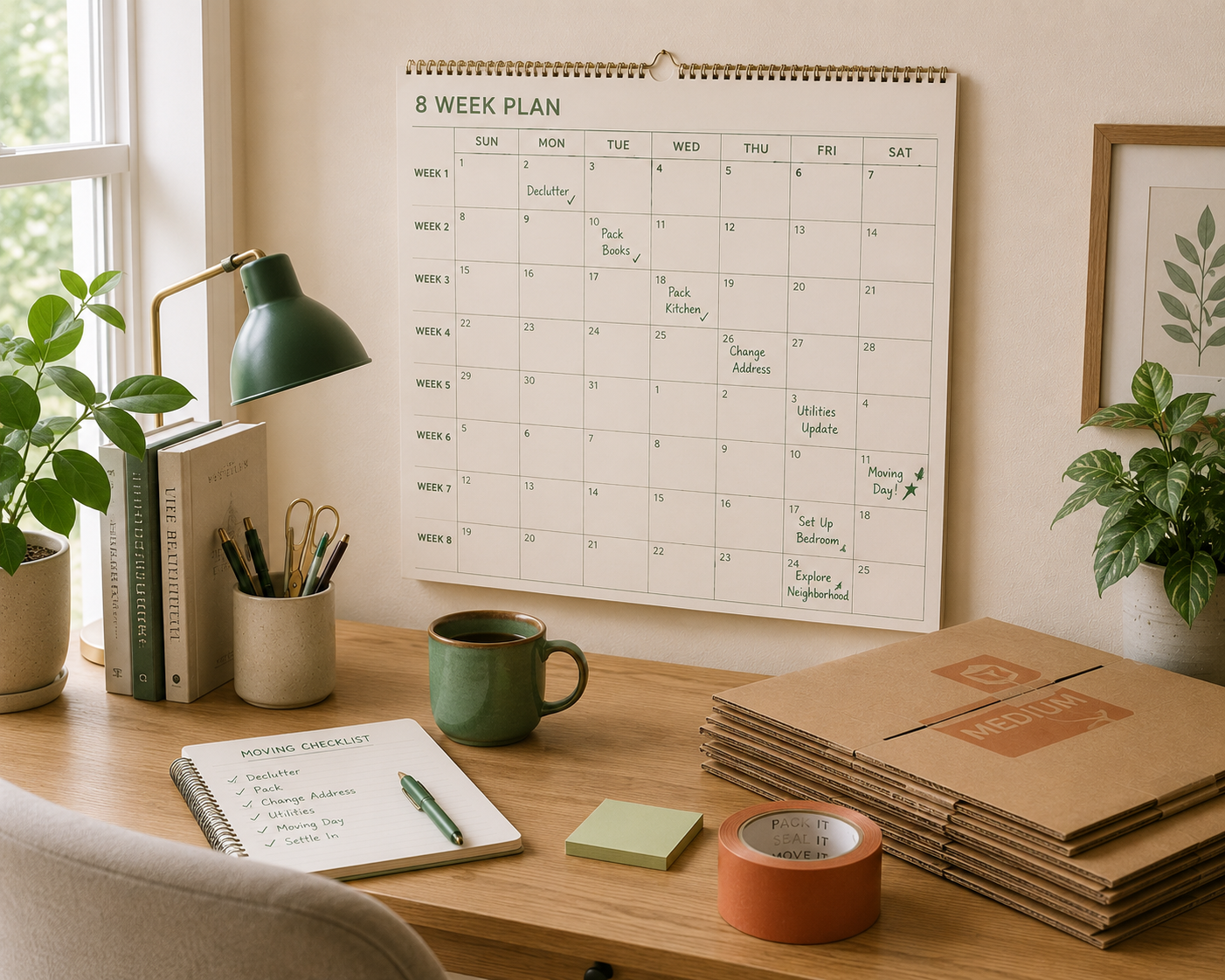
And for spreading the whole process out with real breathing room, A Realistic Moving Timeline, Eight Weeks Out to Move Day breaks the entire move into a week-by-week schedule.
For the full category, browse Move Checklists under the Seasonal & Maintenance hub, home to every moving and settling-in guide on the site.