Table of Contents
A move rarely fails because of the big, obvious tasks. The truck gets booked, the lease gets signed, the major furniture gets moved. It fails in the smaller decisions that get skipped because there was no clear order for handling them: what to pack first, what to leave for last, which utilities need switching before moving day and which can wait, and what actually needs attention in the first week before unpacked boxes quietly become permanent furniture.
This guide covers the full arc of a small apartment move in three stages: everything before moving day, moving day itself, and the first week after, when a home either starts to feel lived-in or starts accumulating the kind of half-unpacked clutter that lingers for months.
Stage One: Everything Before Moving Day
The weeks before a move are where most of the actual work happens, and doing it in the right order prevents the last few days from turning into a chaotic scramble. Start with decluttering before packing a single box, since packing and moving items you don’t actually want in the new place wastes both the packing effort and the physical space in the truck. Sort through each room and ask whether an item is worth the cost of moving it, both in time and in physical effort, before deciding to keep it.
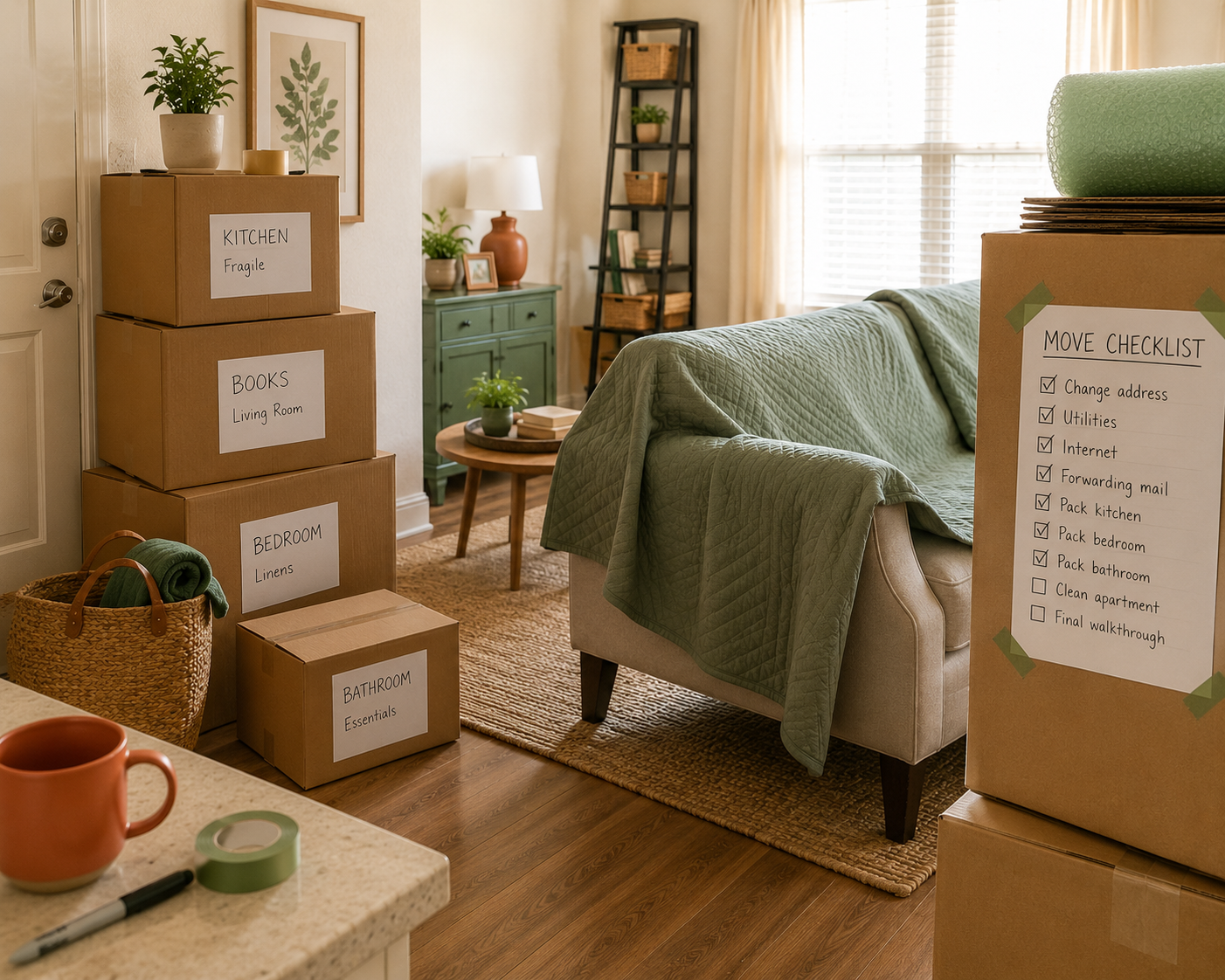
Once decluttering is done, pack in order of use frequency, starting with the least-used items first: seasonal decor, out-of-season clothing, books and media not currently being read or used. This keeps daily life relatively normal for as long as possible while still making real packing progress weeks before the move. Save daily essentials, the coffee maker, a few days of clothes, basic toiletries, for the final 48 hours, packed last and often kept separate in a boldly marked “open first” box rather than mixed in with everything else.
Handle the administrative side in parallel with packing rather than leaving it for the final week. Submit a change of address, schedule utility transfers for both the old and new address, and confirm move-out and move-in dates with both landlords well in advance. These tasks take minutes each but have a habit of being forgotten until they become genuinely urgent, like discovering the internet won’t be connected until a week after moving in because the transfer request went in too late.

Stage Two: Moving Day Itself
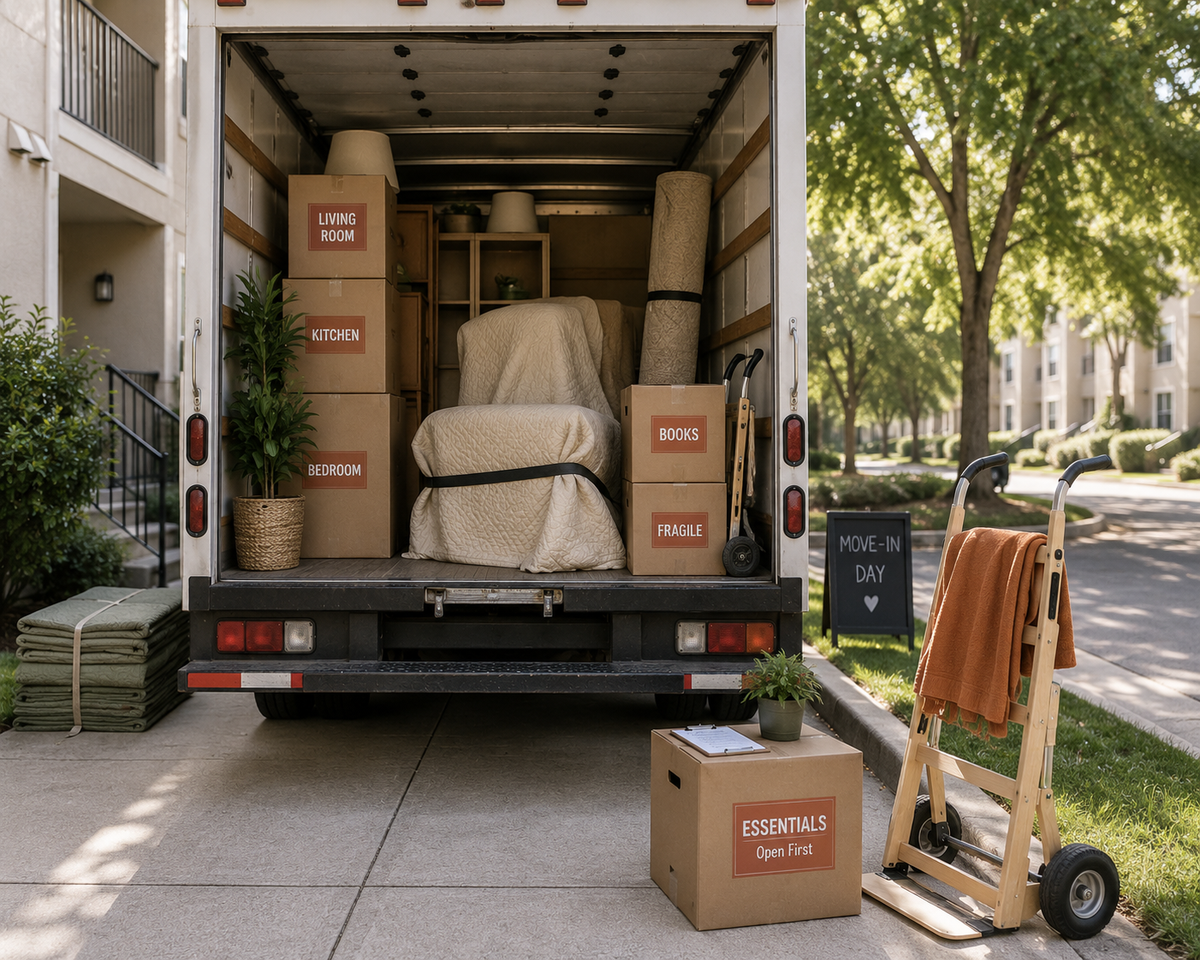
Moving day works best when the sequence is planned the night before rather than figured out on the spot. Load the truck or vehicle in reverse order of how items will be needed at the new place: furniture and boxes for rooms that won’t be used immediately go in first (toward the back or bottom), while the essentials box, basic kitchen items, and anything needed the first night go in last, so they’re the first things unloaded at the other end.
Do a final walkthrough of the old apartment before leaving, checking closets, cabinets, and any storage areas that are easy to forget, above cabinets, behind doors, inside a linen closet. It’s worth taking a few photos of the empty apartment too, both for your own move-out records and as documentation in case there’s ever a dispute over the security deposit.
Keep a small personal bag separate from the moving boxes entirely, holding anything genuinely essential for the day itself: identification, keys to both properties, phone chargers, snacks and water, and any medication. This bag should never go on the truck with everything else, since it’s the one thing you genuinely can’t afford to lose track of amid the chaos of loading and unloading.
At the new place, do a quick walkthrough before unloading begins, checking that utilities are actually connected and working, confirming the unit matches what was expected, and noting anything that needs to be reported to the landlord before it gets buried under moved-in furniture and forgotten.
Stage Three: The First Week Settled In
The first week after a move determines whether a home starts feeling lived-in quickly or whether boxes slowly become semi-permanent furniture scattered around every room. Unpack the essentials box and set up the bed first, on the first night if at all possible, since a proper night’s sleep makes every other task the following days genuinely easier to tackle.
Prioritize the kitchen and bathroom next, since these are the two rooms a home can’t really function without. Getting dishes, basic cookware, and toiletries unpacked and put away within the first day or two means daily life can resume close to normal, rather than living entirely out of takeout containers and a single overnight bag for a week.
Work room by room after that rather than opening every box at once and creating chaos across the entire apartment simultaneously. Finishing one room fully, even if it takes longer, produces a genuinely usable space faster than half-unpacking five rooms at once and leaving all of them in a similar state of disarray.
Set a specific deadline for the last box, even if it’s a few weeks out rather than the first week itself. A box that’s been “getting to it eventually” for two months usually means its contents weren’t essential in the first place, and that’s a useful moment to declutter rather than simply cramming the contents into a closet in the new place.

The Administrative Checklist Running Alongside Every Stage
Beyond packing and unloading, a handful of administrative tasks need attention at specific points throughout the move rather than all at once. Submit a change of address with the postal service two to three weeks before moving, so mail redirects in time rather than arriving at the old address after you’ve already left. Update your address with banks, subscriptions, and any recurring deliveries around the same time, since these tend to take longer to process than expected.
Schedule utility disconnection at the old address for the day after move-out, and connection at the new address for the day of or before move-in, so there’s no gap without power, water, or internet at either location. Confirm both dates directly with each utility provider rather than assuming a request submitted online has actually been processed and scheduled correctly.
Keep copies of the lease, move-out inspection notes, and any correspondence with either landlord in one dedicated folder, physical or digital, rather than scattered across emails and text messages. This becomes genuinely important if a security deposit dispute comes up months later and specific documentation is needed to resolve it.
Getting the Security Deposit Back in Full
A security deposit dispute is one of the most common sources of frustration after a move, and most of it is preventable with a bit of documentation done at the right moments. Take detailed, dated photos of the old apartment in every room before moving anything out, and again once it’s fully empty and cleaned, capturing walls, floors, appliances, and any existing damage that predates your tenancy so there’s no confusion later about who’s responsible for what.
Compare the apartment’s condition against the original move-in inspection report if one was completed, since this document is the baseline a landlord should be using to assess any deductions from the deposit. If no formal move-in inspection was done originally, dated photos from move-in day, if you still have them, or even email correspondence describing the unit’s condition when you moved in can serve a similar purpose.
Clean the apartment thoroughly before the final walkthrough, treating it the way the monthly maintenance routine treats a deep clean: appliance interiors, behind large furniture, inside cabinets and closets. A genuinely clean apartment at move-out is one of the simplest ways to avoid a cleaning-related deduction from the deposit, and it takes only a couple of hours if the packing and moving stages before it have gone according to plan.
Why This Order Matters More Than It Seems
Declutter before packing, pack in order of use frequency, load the truck in reverse order of need, unpack the essentials first: every step in this sequence exists to prevent a specific, common failure. Skipping the declutter step means paying to move things you don’t want. Packing daily essentials too early means digging through boxes for a coffee maker the morning before the move. Loading the truck without a plan means unloading furniture for a room you won’t use for weeks before reaching the box with your bedsheets in it.
None of these mistakes are catastrophic individually, but they compound into exactly the kind of chaotic, exhausting moving experience most people dread. Following the order in this guide doesn’t make a move effortless, but it does mean the effort goes toward the move itself rather than toward untangling avoidable problems created by doing things out of sequence.
What to Do With Furniture and Belongings That Don’t Fit the New Place
Moving to a genuinely smaller apartment often means confronting furniture and belongings that fit the old space but won’t reasonably work in the new one. This decision is easiest to make before packing rather than after arriving at the new place and discovering a couch doesn’t fit through the door or a dresser leaves no room to actually walk in the bedroom.
Measure the new apartment’s rooms and doorways in advance, comparing them against the dimensions of larger furniture pieces before deciding what makes the move. A couch, dining table, or bed frame that fit comfortably in a previous space isn’t automatically a fit for a smaller one, and it’s far easier to sell or donate an oversized piece before a move than to deal with it cluttering a new apartment that never had room for it in the first place.
For items that are borderline, worth keeping if there’s room but not essential, consider a temporary storage unit for the first month rather than forcing every decision before moving day. This gives a genuine sense of how the new space actually functions once it’s lived in, rather than making a permanent decision under the time pressure of a moving deadline.
Handling a Move With Roommates or a Partner
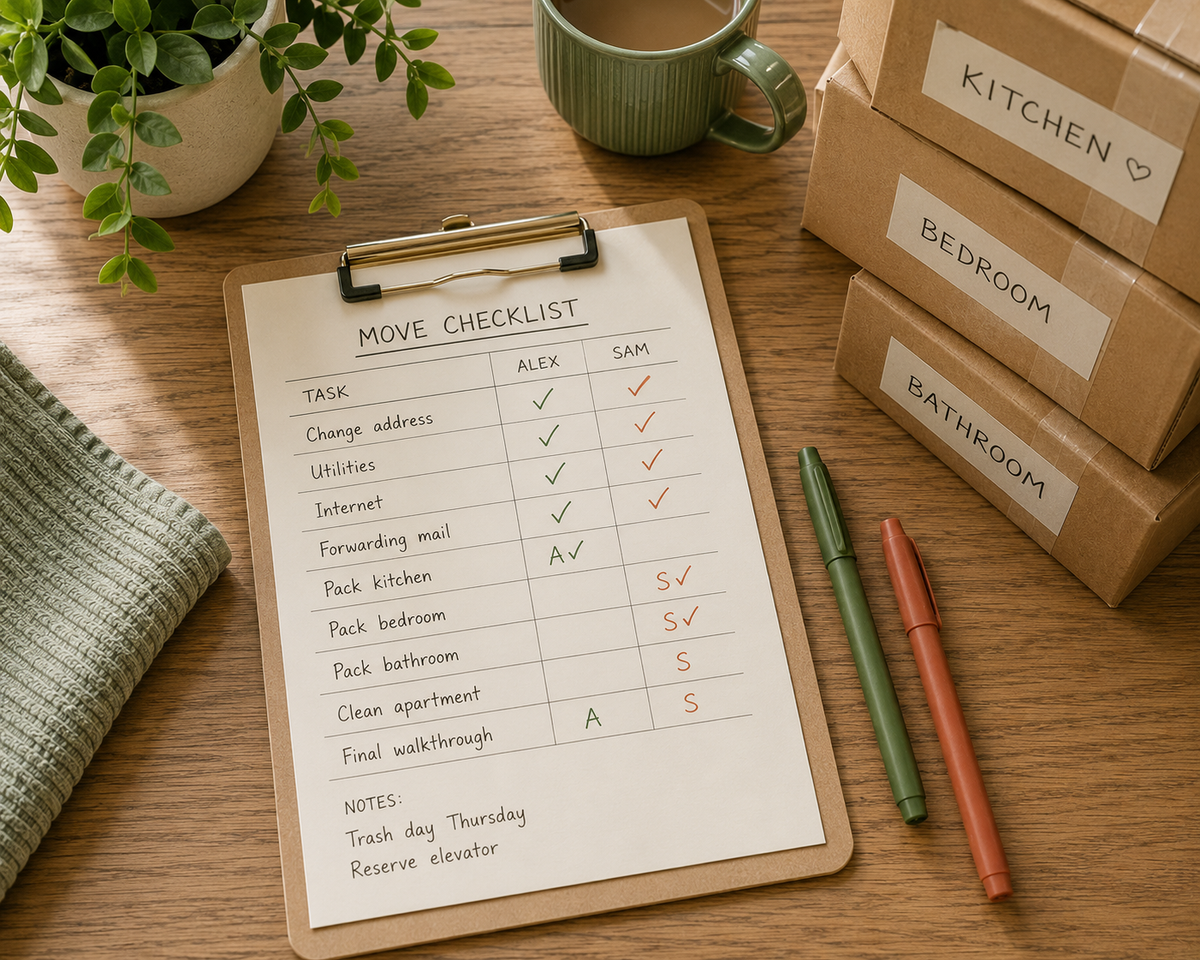
A move involving more than one person adds a layer of coordination that a solo move doesn’t require, and sorting out responsibilities early prevents duplicated effort or, just as commonly, tasks that both people assumed the other was handling. Split the administrative checklist, utility transfers, address changes, deposit paperwork, between people explicitly rather than leaving it unassigned, since these tasks are the easiest to fall through the cracks when everyone assumes someone else has it covered.
Agree on which shared items are worth moving together and which each person will handle individually, particularly for a move where two households are merging into one apartment for the first time. Duplicate kitchen items, overlapping furniture, and doubled-up decor are common in this kind of move, and deciding what to keep, sell, or donate before packing day saves both the effort of moving unnecessary duplicates and the awkwardness of sorting it out after everything’s already unpacked.
FAQ
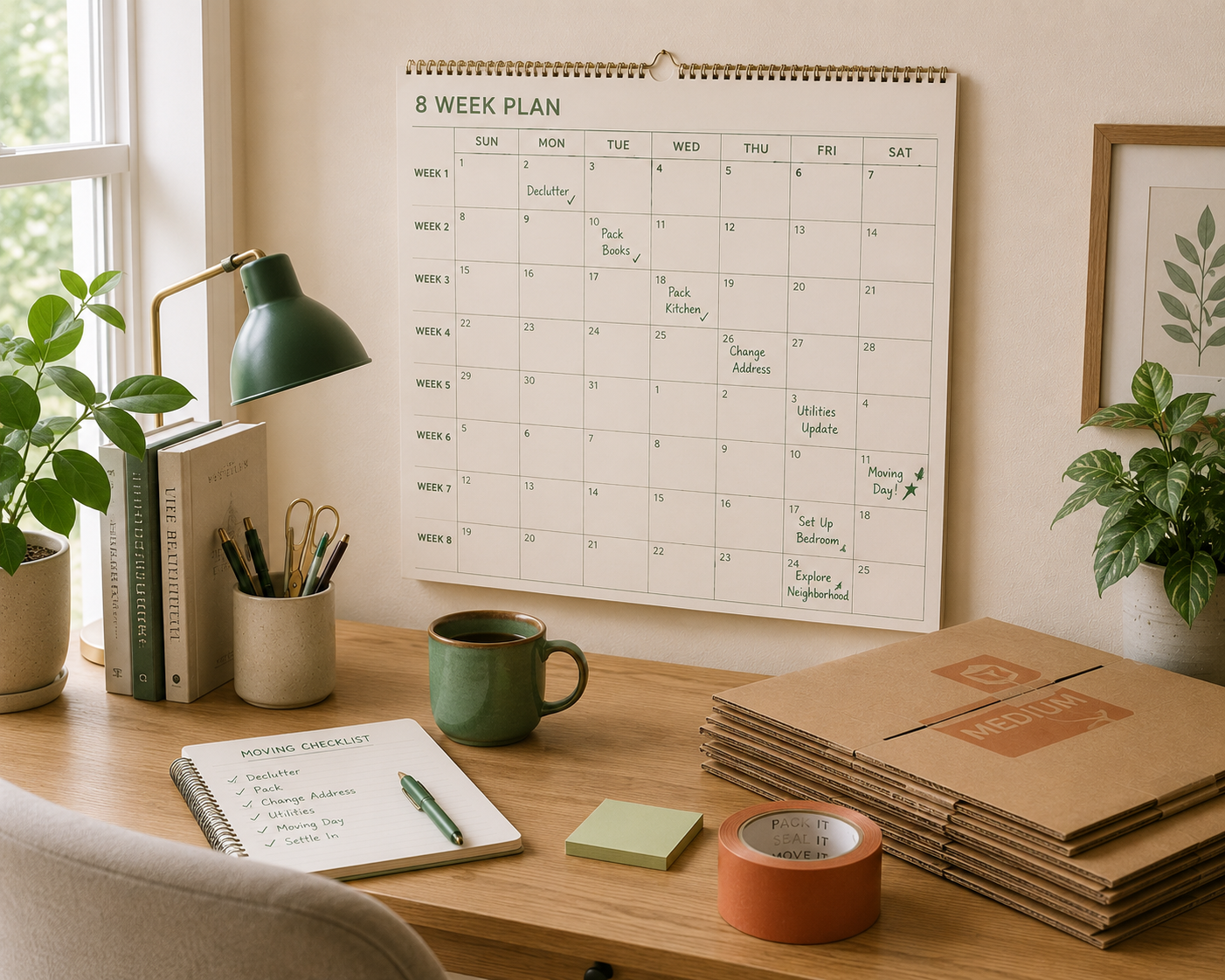
How far in advance should I start packing for a small apartment move? Start decluttering and packing least-used items about four to six weeks before moving day, saving daily essentials for the final 48 hours. A full eight-week timeline, spreading the entire process out further, works well for anyone wanting to avoid a last-minute rush entirely.
What should go in the essentials box specifically? Basic toiletries, a few days of clothes, phone chargers, any medication, a couple of towels, and simple bedding. The goal is surviving comfortably for the first 24 to 48 hours without needing to open any other box.
Do I need to hire movers for a small apartment move? It depends on the volume of belongings and physical practicality, but a small apartment with mostly boxes and modest furniture is often manageable with a rented truck and a few helpers, especially if the packing and loading order in this guide is followed closely.
What’s the most commonly forgotten task in a move? Utility transfer timing. Many people submit the request but don’t confirm the specific disconnect and connect dates with the provider directly, which can lead to a gap without power or internet right when it matters most.
Related Reading
For the specific packing order this guide references, A Packing Checklist for Moving Out of a Small Apartment covers what to pack first, what to pack last, and what to just get rid of.
For getting a new place genuinely livable fast, A First-Week Checklist for a New Apartment covers what needs to happen before boxes become permanent furniture.
And for spreading this entire process out with real breathing room, A Realistic Moving Timeline, Eight Weeks Out to Move Day breaks the whole move into a week-by-week schedule.
For the full category, browse Move Checklists under the Seasonal & Maintenance hub, home to every moving and settling-in guide on the site.