Table of Contents
Your kitchen was organized three weeks ago. You cleared the cabinets, sorted the pantry, cleared the counter. It looked genuinely good for about ten days, and now there are dishes stacked by the sink again, mail is back on the counter, and the fridge has two containers you’re avoiding opening. Nothing about the original system failed. What’s missing is the two minutes a day that keeps it working.
A small kitchen stays organized through a handful of short daily habits, not a bigger re-organizing project every few weeks. The habits that matter most take under two minutes each: a nightly counter clear, a rinse-and-load right after cooking instead of letting dishes sit, and a five-minute weekly fridge scan. None of them are dramatic. All of them, done consistently, are what separates a kitchen that stays organized from one that needs redoing on a loop.
The Two-Minute Nightly Counter Clear
Right before bed, or right after the last dish is done for the day, clear the counter completely except for whatever earns permanent daily-use space (see the countertop rule below). Anything that migrated onto the counter during the day, mail, a recipe card, a stray mug, goes back to wherever it actually belongs.
This takes under two minutes once you’ve already decided what’s allowed to live on the counter permanently. If you haven’t made that decision yet, Countertop Systems That Keep Clutter From Building Up covers the exact rule for what earns counter space and what doesn’t.
Doing this nightly, rather than “when it gets bad,” is the actual mechanism that works. A counter that’s reset daily never accumulates the kind of pile that takes thirty minutes to sort through. A counter left alone for a week does, every time, because five small items a day compound fast in a space this size.
Rinse and Load Right After Cooking, Not After Eating
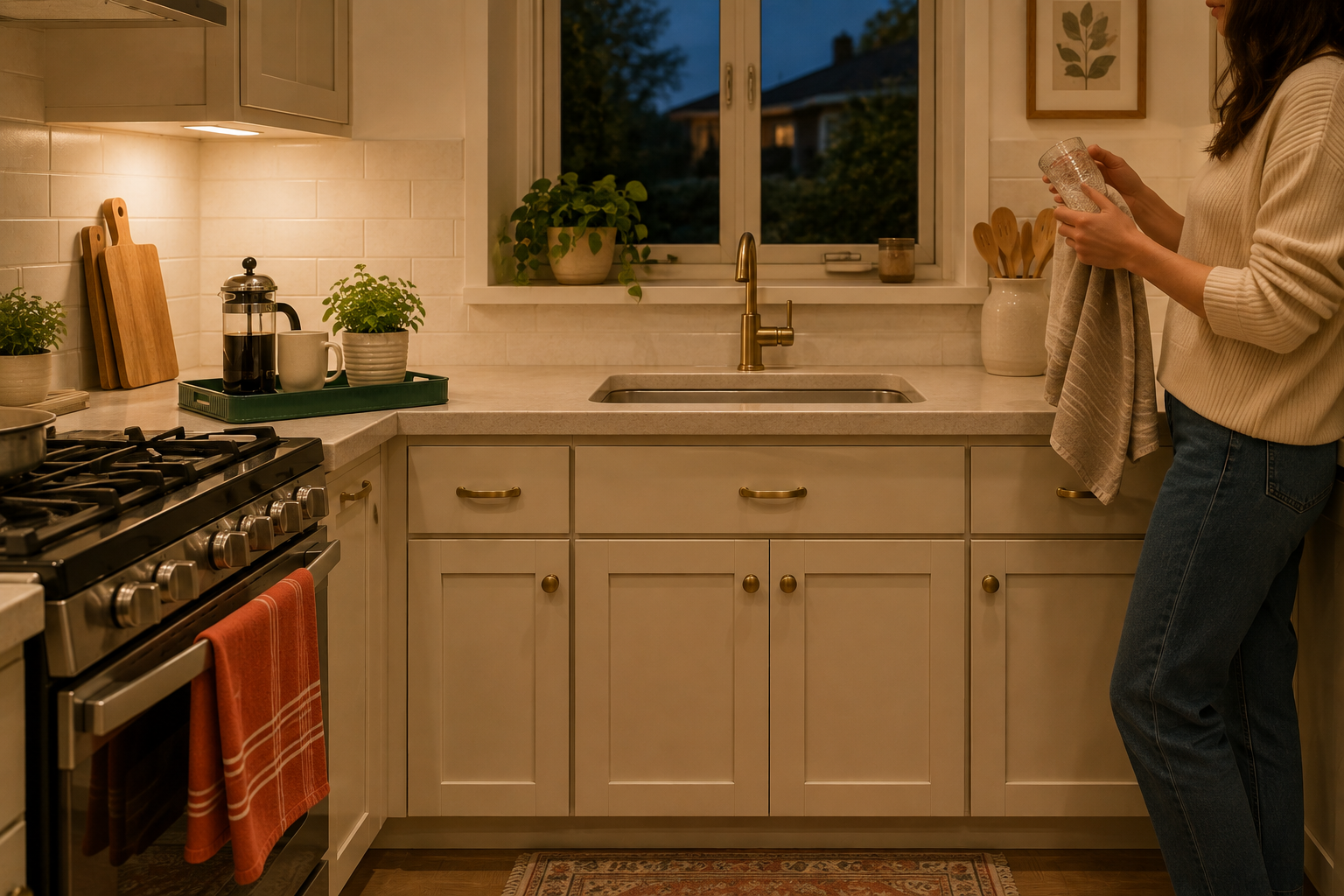
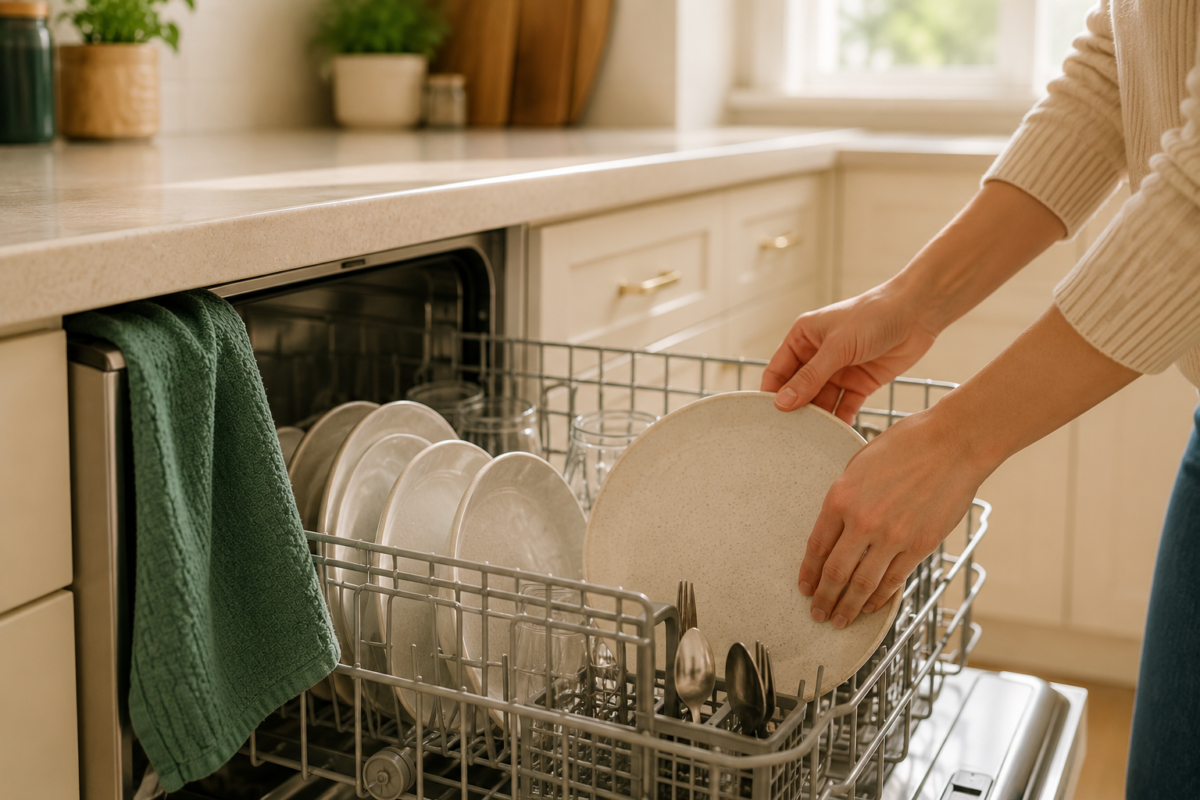
Dishes left to “soak” for a few hours almost always end up sitting overnight instead, and a sink full of dishes is the single fastest way a clean small kitchen starts to feel out of control again. Rinsing and loading the dishwasher (or hand-washing what needs it) within a few minutes of finishing cooking, rather than after the meal is eaten and everyone’s settled elsewhere, takes advantage of the momentum you already have standing at the sink.
This habit matters more in a small kitchen than a large one because there’s less counter and sink space to absorb a backlog. One large pot and a cutting board can occupy the entire usable counter in a compact galley kitchen, which means tomorrow’s cooking gets harder the moment today’s dishes are still sitting there.
If a full rinse-and-load genuinely isn’t possible in the moment, at minimum move dishes into the sink rather than leaving them on the counter. An empty counter with a full sink is a five-minute fix in the morning. A cluttered counter and a full sink both is a bigger project that tends to get put off.
The Sunday Five-Minute Fridge Scan
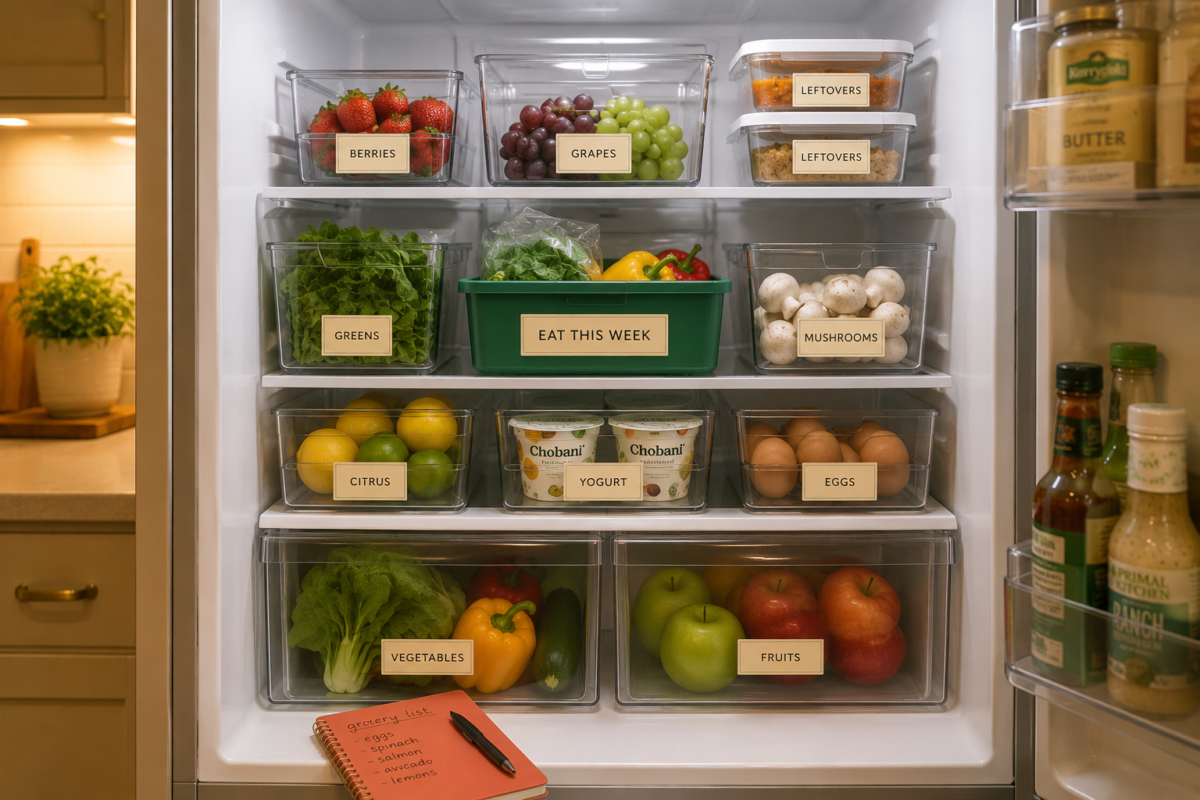
Once a week, pick a consistent day, Sunday works well for most schedules since it’s often before a grocery trip, and do a fast scan of every shelf and drawer. Toss anything that’s turned, consolidate any half-used containers of the same thing, and note what’s genuinely close to empty so it makes the shopping list before it runs out mid-week.
This habit prevents two separate problems at once: fridge clutter from containers nobody’s tracking, and the moment mid-recipe where you discover you’re out of something you needed. Both are avoidable with five minutes once a week instead of a bigger, more unpleasant fridge clean-out every month or two.
Keep a small running list, either on your phone or a magnet notepad on the fridge, and add to it the moment you notice something’s low rather than waiting for the Sunday scan to catch it. The scan is a backstop, not the only chance to catch a gap.
The 30-Second Reset After Every Meal
Beyond the full nightly clear, a smaller reset right after each meal, wiping the stovetop if it was used, putting condiments back in the fridge, and clearing crumbs off the counter, keeps small messes from layering on top of each other throughout the day. This is separate from the nightly clear because it happens two or three times a day instead of once, and it’s what stops a kitchen from looking chaotic by 2pm even on a day you haven’t done a full reset yet.
Thirty seconds after breakfast, thirty seconds after lunch, and the full two-minute version at night adds up to under three minutes of total daily maintenance, which is a small trade for a kitchen that never needs a weekend-long deep clean to fix.
When You Don’t Have Time for Any of It
Some days genuinely don’t allow for the full routine, and that’s fine as long as it’s the exception, not the pattern. On those days, prioritize just one habit: get dishes into the sink or dishwasher, even if the counter and fridge wait until tomorrow. A messy counter is a quick fix. A sink that’s been sitting for two days, especially in a small kitchen without much counter to work around it, becomes the bigger problem faster than anything else on this list.
If your cabinets or pantry zone are the actual source of the daily mess, meaning items don’t have a real home to return to in the first place, no amount of nightly habit will fix that on its own. The Complete Guide to Organizing a Small Kitchen walks through the full cabinet and pantry setup that gives every item somewhere to actually go.
What Consistency Actually Buys You
None of these habits are big on their own. Two minutes at night, thirty seconds after each meal, five minutes on Sunday. Add it up and it’s under twenty minutes a week, spread across small moments instead of one dreaded weekend project. That’s the actual trade: a kitchen that stays organized because of small daily upkeep, instead of one that needs a full re-do every time it gets out of hand.
Frequently Asked Questions
How long does it take to maintain an organized small kitchen daily? Under three minutes a day total: a thirty-second reset after each meal and a two-minute nightly counter clear. The weekly fridge scan adds another five minutes once a week.
What’s the single most important daily kitchen habit? Getting dishes into the sink or dishwasher right after cooking. A backed-up sink is the fastest way a small kitchen starts to feel out of control, since there’s little extra counter space to absorb the overflow.
How often should I deep clean my fridge if I’m doing weekly scans? A weekly five-minute scan usually means a full deep clean is only needed every couple of months, since spills and expired items get caught before they build up into a bigger project.
What if I fall off the habit for a week or two? Restart with just the nightly counter clear and the dish habit first. Those two alone prevent most of the visible clutter, and the fridge scan and full reset routine are easy to layer back in once those feel automatic again.
Related Reading
- The Complete Guide to Organizing a Small Kitchen
- Pantry Organization for Kitchens With No Pantry
- Countertop Systems That Keep Clutter From Building Up
- Kitchen Organization (parent category)
- Small Kitchens (parent hub)