Table of Contents
A ten-minute daily routine handles the day-to-day clutter, but some tasks genuinely need more than a quick nightly pass. Laundry piles up over several days, not one. A bathroom needs more than a wipe-down to actually feel clean. Floors accumulate dust and debris a daily surface tidy doesn’t touch at all. The weekly reset is where these tasks live, one slightly longer session that catches everything the daily routine was never built to handle.
This checklist breaks the weekly reset into four categories: laundry, bathrooms, floors, and a final catch-up pass for anything that slipped through the daily routine during the week. Most households complete all four in 45 minutes to an hour.
Laundry: Getting Through a Full Cycle Without It Backing Up
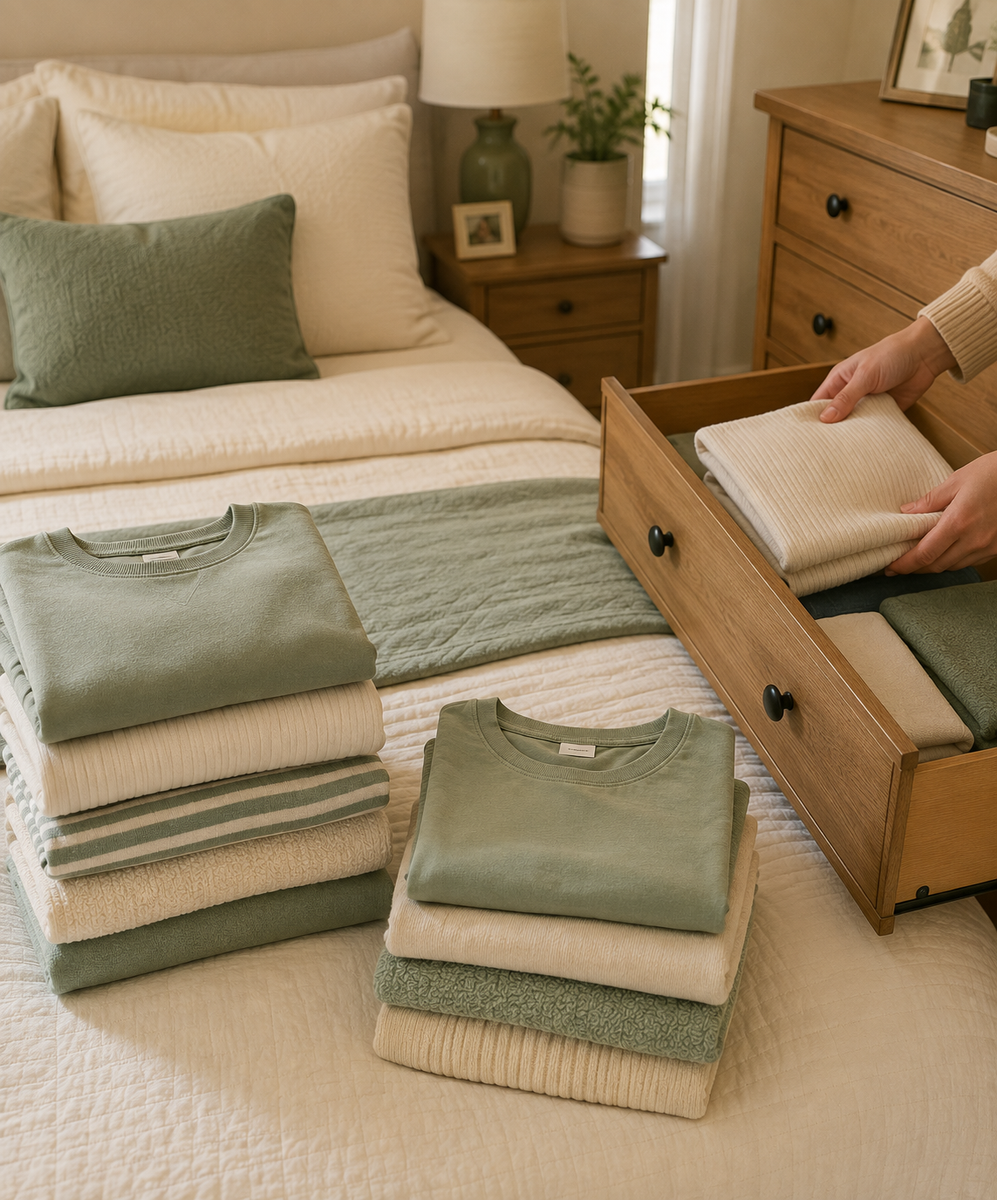
Laundry is the category most likely to spiral if it doesn’t have a dedicated weekly slot, since it’s easy to do “a load here and there” without ever actually finishing the full cycle from dirty to washed to folded to put away. A weekly laundry session means picking one day to run through the entire process for whatever’s accumulated that week, rather than letting partially-done loads sit in various states across multiple rooms.
Start by gathering everything that’s accumulated: hampers from each bedroom, towels from the bathroom, anything from the kitchen like dish towels or cloth napkins. Sort into loads by fabric type and color as usual, but the real goal of a weekly session is getting through the entire pile in one sitting rather than one load trickling through over several days.
The step most often skipped is the last one: actually putting folded laundry away rather than leaving it in a basket “for now.” A basket of clean, folded laundry sitting in a bedroom for days functions as clutter almost as much as a basket of dirty clothes would, and it’s a small enough task to fold into the same session rather than treating it as a separate future chore.
For a household with more laundry than one weekly session can comfortably handle, splitting into two smaller sessions, midweek and weekend, keeps the same principle of a dedicated slot without letting either session become overwhelming.
Bathrooms: A Proper Clean Rather Than a Quick Wipe
The daily routine handles surface-level bathroom tidying, but a genuine weekly clean covers what a quick wipe doesn’t: scrubbing the toilet, cleaning the shower or tub, wiping down mirrors, and mopping the floor. Doing this weekly rather than waiting longer keeps buildup manageable, since bathroom grime compounds fast in a way that’s much harder to tackle after several weeks than after just one.
Work top to bottom within the room: mirrors and any shelving first, then sink and counter, then toilet, then shower or tub, finishing with the floor last so anything that falls during the earlier steps gets swept up in the final pass rather than needing a second round. Keep cleaning supplies stored in or near the bathroom itself, rather than in a separate closet elsewhere in the home, so the session doesn’t lose time to a supply hunt each week.
Restock anything running low while you’re already in the room: toilet paper, hand soap, a fresh hand towel. Checking supply levels during the weekly clean, rather than discovering something’s out at an inconvenient moment, is a small addition that saves real frustration during the week ahead.

Floors: Vacuuming and Sweeping the Whole Home in One Pass
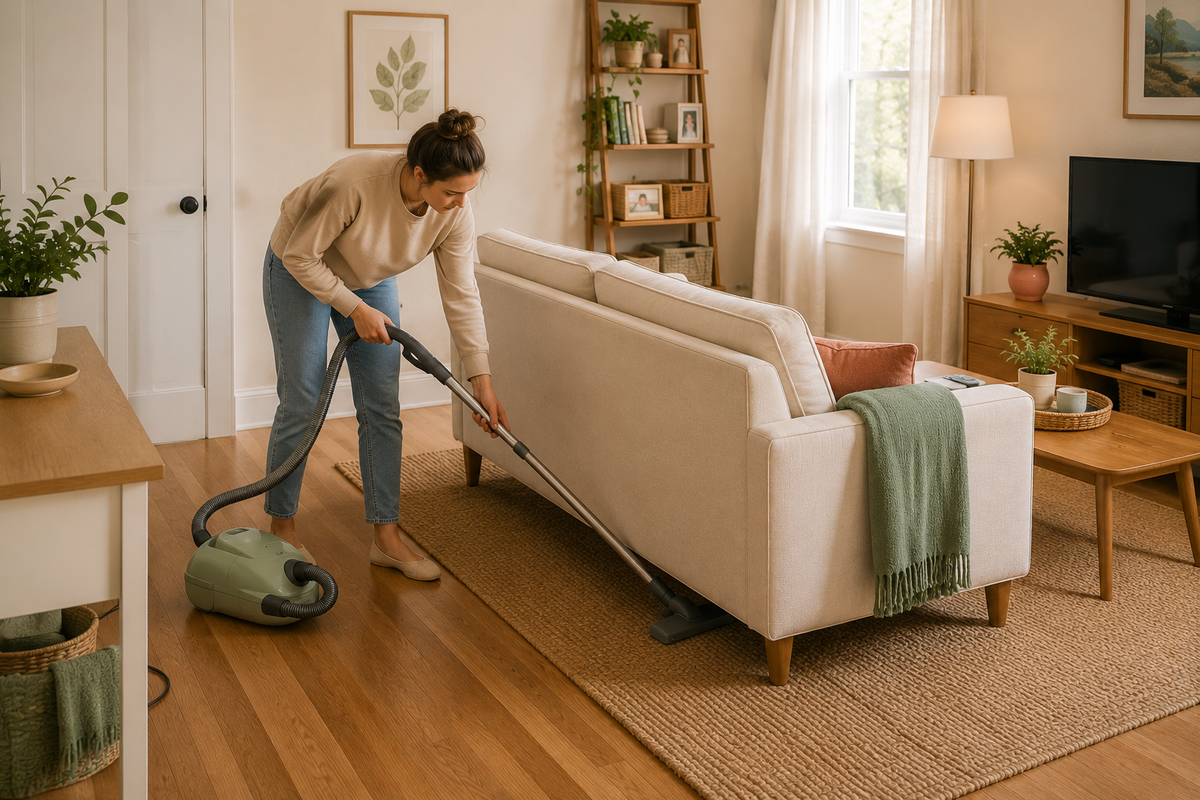
Floors accumulate dust, crumbs, and general debris throughout the week in a way that’s easy to overlook day to day, since the daily routine focuses on surfaces and clutter rather than the floor itself. A weekly vacuum and sweep through the entire home, not just high-traffic areas, catches what builds up gradually and keeps the home feeling genuinely clean underfoot rather than just tidy on top.
Work room by room in a consistent order, starting furthest from the entry point and working back toward it, so debris gets pushed toward the exit rather than tracked back across already-cleaned floors. Move light furniture where practical to catch what collects underneath, since these spots often go unaddressed for weeks or months without a deliberate check.
For homes with pets, this step often needs to happen more than once a week given how quickly pet hair accumulates on floors and furniture. If that’s the case, fold a mid-week quick vacuum of the highest-traffic areas into the daily or weekly rhythm rather than waiting for the full weekly session to handle a week’s worth of pet hair all at once.
The Catch-Up Pass: Anything the Daily Routine Missed
The final piece of the weekly reset is a general catch-up for anything that slipped through the cracks during the week, mail that’s been accumulating on a counter, a specific spill that got a quick wipe but needs a proper clean, an item that’s been sitting in the wrong room for several days waiting to be returned to its actual home.
This catch-up doesn’t need a rigid checklist the way the previous three categories do, since its whole purpose is flexibility, addressing whatever specifically built up that particular week rather than a fixed routine. A quick walkthrough of the home, room by room, with fresh eyes at the start of the weekend session usually reveals exactly what needs attention here.
This is also a reasonable moment to handle any small task that’s been mentally noted throughout the week but didn’t fit into a single day’s ten-minute routine: replacing a light bulb, tightening a loose cabinet handle, watering plants that need weekly rather than daily attention. None of these need their own dedicated tier, but they fit naturally into the flexible space this catch-up pass provides.
Choosing the Right Day for Your Weekly Reset
Consistency matters more than which specific day gets chosen. A Saturday morning works well for households with a predictable weekend, while a Sunday afternoon suits others better depending on other weekend commitments. What matters is picking one day and treating it as the default rather than letting the session float to whatever day happens to have free time, since a floating schedule is far more likely to get pushed back repeatedly until an entire week or two passes without it happening at all.
If the chosen day occasionally needs to shift, a busy weekend, an unexpected commitment, that’s fine as long as it shifts to a specific alternative rather than simply being skipped. Moving the session from Saturday to Sunday because of a conflict keeps the weekly rhythm intact. Skipping it entirely because Saturday didn’t work out is what allows buildup to compound into a much longer session the following week.
Splitting the Session Across the Week Instead of One Long Block
Not every household can set aside a single uninterrupted hour, and the four categories in this checklist don’t need to happen back to back. Splitting them across two or three shorter sessions during the week works just as well, as long as each category still gets its dedicated time slot rather than being squeezed into a rushed few minutes.
A reasonable split: laundry on one day, bathrooms and floors together on another, and the catch-up pass on a third, shorter day. This works especially well for households with unpredictable schedules, shift work, young children, where a single long weekend block genuinely isn’t realistic most weeks. The total time spent stays roughly the same as one longer session, just spread across the week rather than concentrated into one sitting.
Whichever approach fits better, one long session or several shorter ones, the same principle applies: assign each category its specific day or moment rather than leaving the whole reset open-ended and hoping it gets done sometime that week. A vague intention to “get to laundry and cleaning sometime this week” is far more likely to slip than a specific slot on a specific day, even if that slot is only fifteen minutes long.
Adjusting the Checklist for a Smaller or Larger Household
A single person or a couple in a small apartment often finds that all four categories combined take closer to thirty minutes than a full hour, since there’s simply less laundry, less floor space, and less general buildup to work through each week. For this kind of household, it’s reasonable to combine steps, running the bathroom clean and a quick floor pass back to back in the same short session, rather than treating each category as a fully separate block of time.
A larger household, especially one with several people generating laundry and daily mess, often benefits from stretching this checklist across more of the week rather than compressing it into a single session, since the sheer volume involved can make one continuous hour feel overwhelming rather than manageable. Splitting laundry into two sessions, or handling bathrooms on a rotating basis if there’s more than one in the home, keeps each individual task from feeling like too much at once.
FAQ
How long should the full weekly reset actually take? Most small homes complete all four categories, laundry, bathroom, floors, and catch-up, in 45 minutes to an hour, assuming the daily routine has been keeping general clutter in check throughout the week.
What if I don’t have time for the full weekly reset some weeks? Prioritize bathrooms and laundry over floors and the catch-up pass if time is genuinely short. Bathrooms and laundry both compound noticeably if skipped for more than a week, while floors and general catch-up are more forgiving of an occasional shorter pass.
Should I do laundry more than once a week? For larger households or households with more laundry than a single day can comfortably handle, splitting into two sessions across the week works well, as long as each session still runs the full cycle through to folded and put away rather than leaving it partially done.
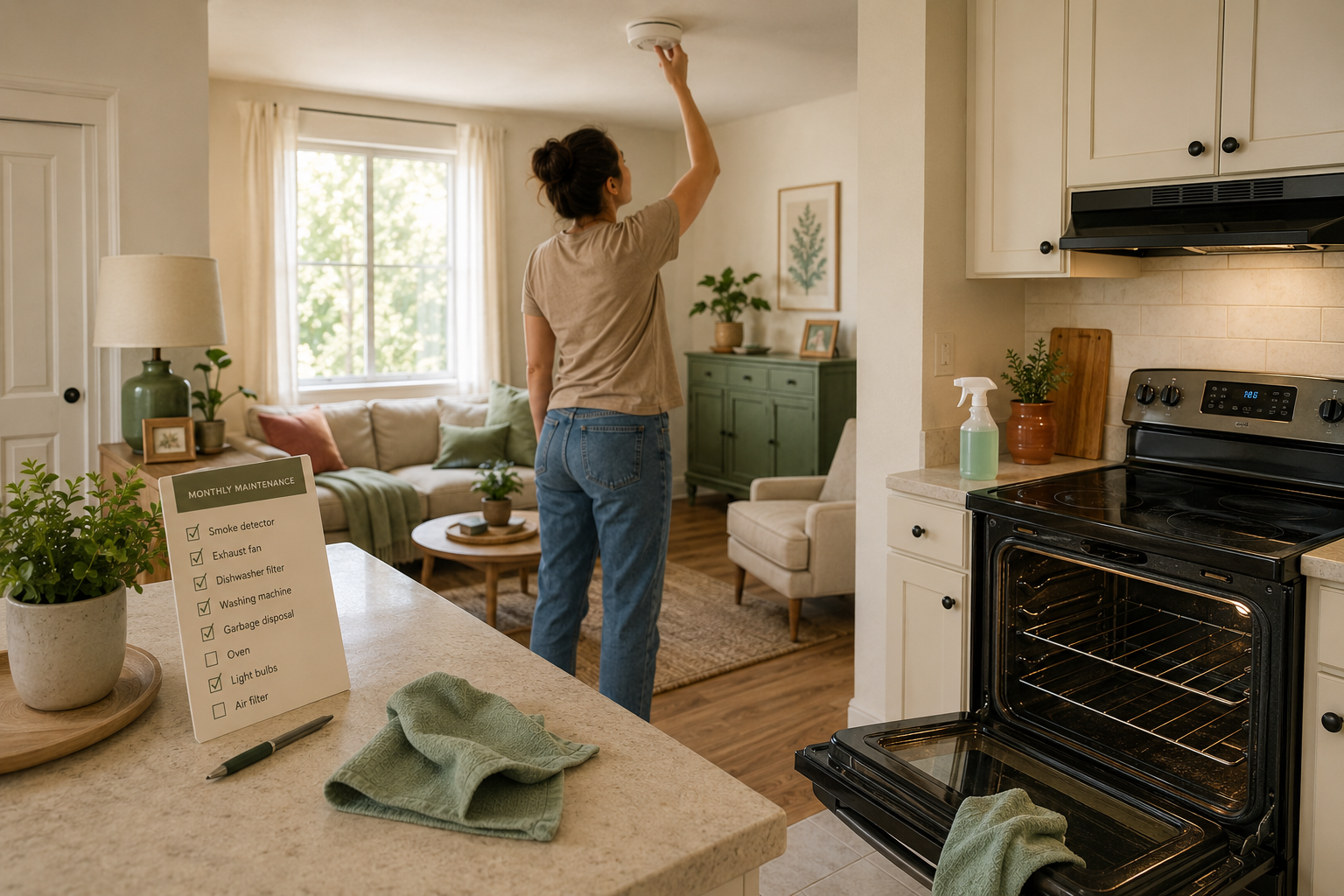
Does the weekly reset replace the need for a monthly deep clean? No. The weekly reset keeps ongoing maintenance manageable, but certain tasks (checking smoke detector batteries, cleaning behind large appliances, a deeper declutter pass) only need attention once a month and belong in that separate, longer routine instead.
Related Reading
For how this weekly pass fits into a larger system, The Complete Home Maintenance Routine Guide covers the daily, weekly, and monthly tiers together in more depth.
For the short daily reset that keeps clutter from building up between weekly sessions, A 10-Minute Daily Tidying Routine That Actually Works covers the foundation this weekly checklist builds on.
And for the once-a-month tasks that are easy to forget entirely, A Monthly Maintenance Checklist for the Tasks Easy to Forget covers what belongs on a longer, less frequent schedule.
For the full category, browse Maintenance Routines under the Seasonal & Maintenance hub, home to every routine and reset guide on the site.