Table of Contents
Two kitchens can cost almost the same to decorate and look completely different once they’re finished. One has a dozen small, inexpensive items scattered across every surface, a decorative sign here, a set of matching canisters there, a few throw items that seemed cute in the store. The other has three or four things: a real light fixture, upgraded hardware, one genuinely nice textile, and nothing else. The second kitchen looks finished. The first one looks like it’s still deciding what it wants to be, even though the total spend was similar.
The real skill in decorating a small kitchen on a budget isn’t spending less. It’s spending on the few things that get touched, seen, and used every day (lighting, hardware, one or two quality textiles) and skipping the small decorative extras that photograph fine but don’t actually change how the room feels to be in. Get that split right and a $150 budget looks more finished than a $500 one spent the wrong way.
The Rule: Spend on What You Touch Daily, Skip What You Just Look At
Before buying anything, sort your decorating wish list into two categories: things you’ll physically interact with (hardware you open every day, lighting you’re under every evening, a runner you’ll stand on while cooking) and things that are purely visual (a decorative sign, a set of canisters you won’t actually use, a themed centerpiece).
The first category is worth real investment. You’ll notice a cheap, sticky cabinet pull every single time you open that drawer, for months, in a way you’ll stop noticing a $12 decorative object within about a week of it being on the shelf. Daily-use items earn their cost back in daily satisfaction. Purely decorative items don’t, no matter how nice they looked in the store.
This doesn’t mean skip decor entirely. It means the budget for decor items should be smaller and more selective than the budget for functional daily-use upgrades, which is the opposite of how most budget decorating actually gets approached. People tend to buy five cheap decorative items and skip the “boring” functional upgrade, when it should be the reverse.
If you’re deciding this alongside a bigger kitchen refresh, meaning lighting, shelving, and hardware are all changing together, The Complete Guide to Decorating a Small Kitchen covers the full sequence for tackling those changes in the right order, starting with lighting first.
Where to Actually Spend
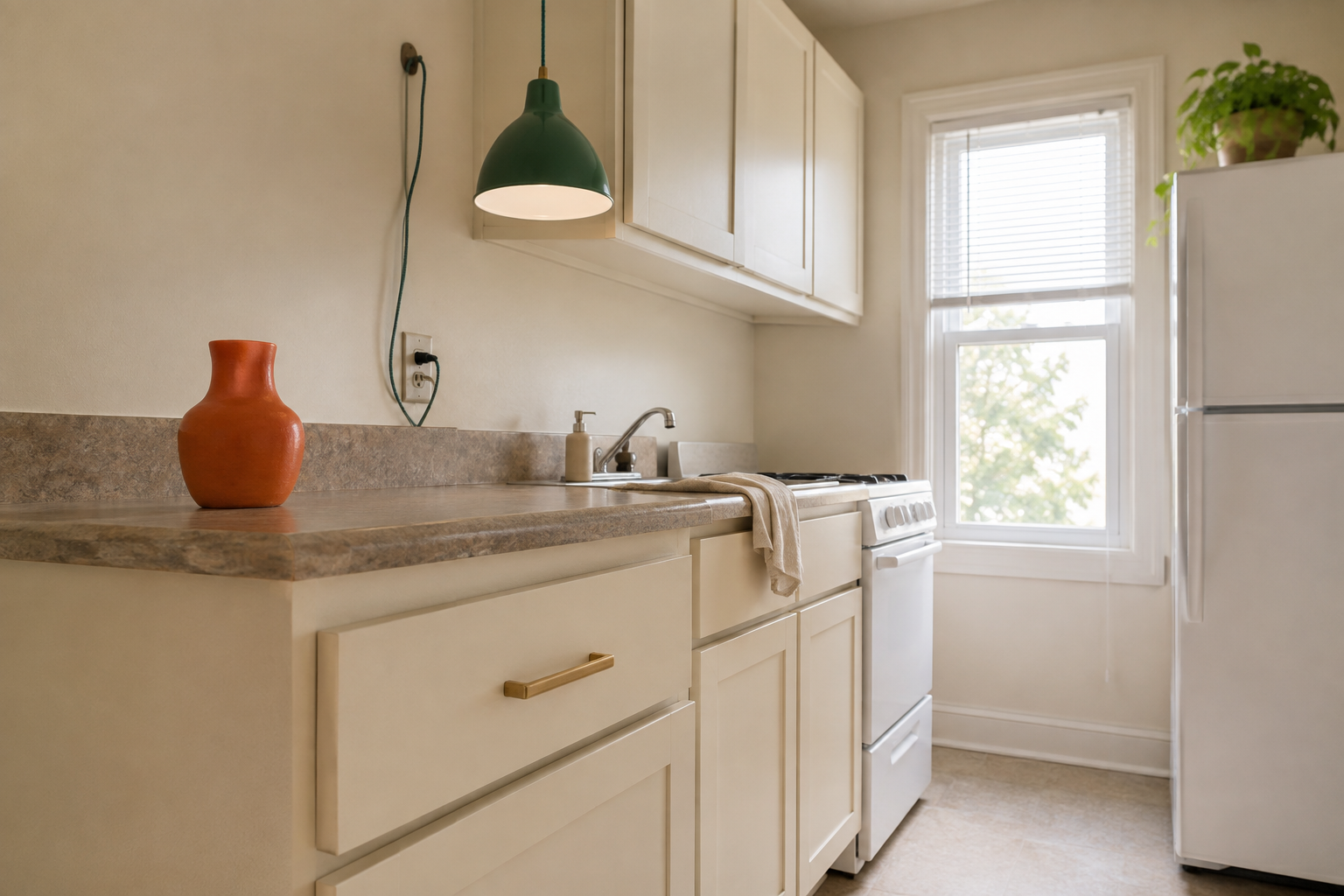
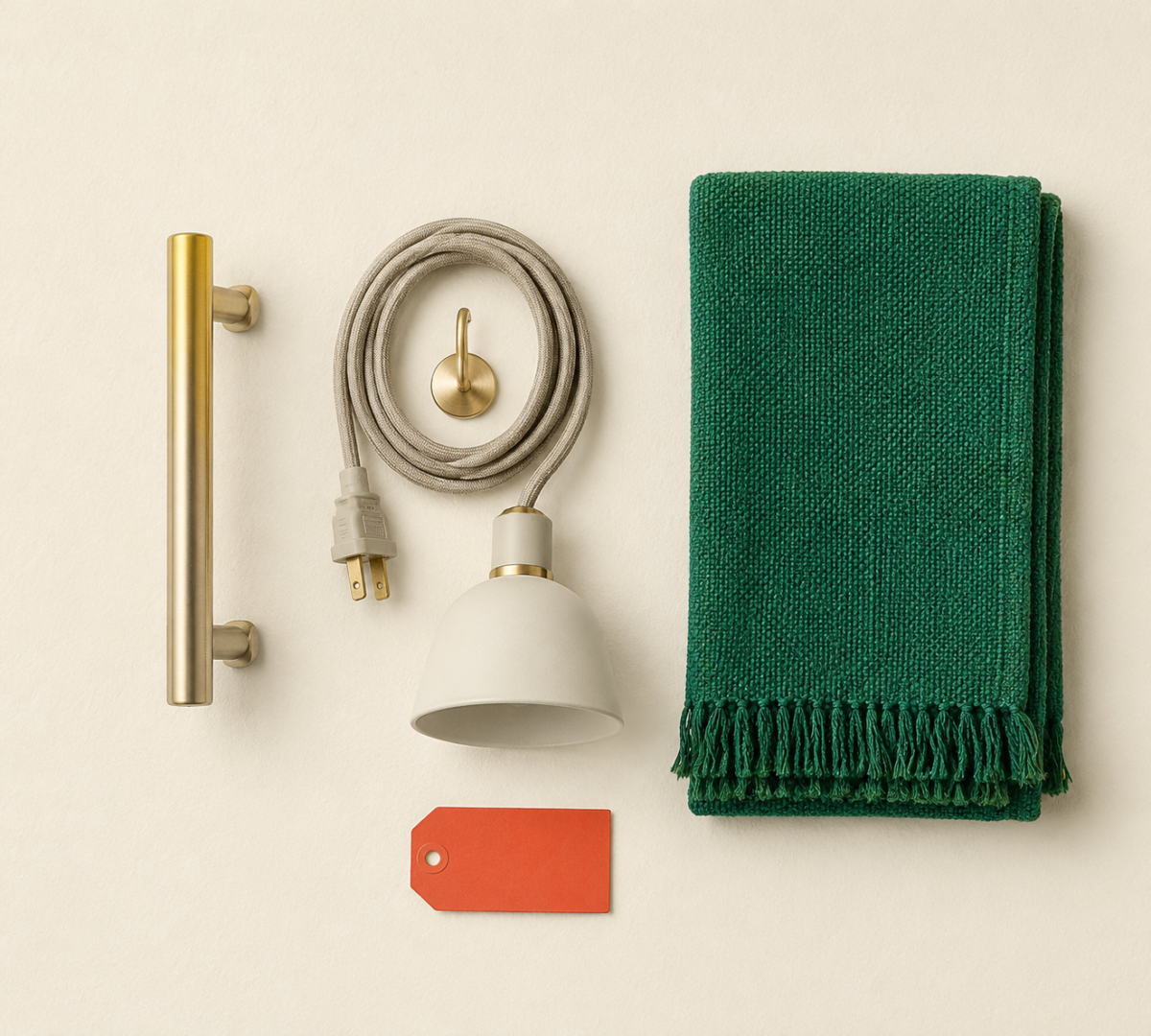
Lighting. A plug-in pendant kit or a quality under-cabinet LED strip is one of the highest-return purchases available in small kitchen decor, since it changes how the entire room looks and feels every single evening, not just how one shelf photographs. Budget $60-$130 for a genuinely good plug-in pendant, and $20-$40 for a decent under-cabinet strip kit. Both are rental-friendly and both travel with you if you move.
Cabinet hardware. Swapping builder-grade knobs for pulls that actually match your kitchen’s style is one of the few upgrades that reads as a real design decision rather than a decor add-on, and it touches your hand every single time you open a drawer or cabinet. Budget $2-$6 per knob or pull; a full kitchen typically needs 15-25 pieces, putting a complete hardware swap in the $50-$120 range. Keep the original hardware in a labeled bag for move-out.
One genuinely good textile. A quality runner or a set of dish towels made from a nicer material than the dollar-store version does more visual and tactile work per item than almost anything else in a kitchen. Budget $25-$50 for one good runner rather than $8 for a thin one that looks worn within a season.
Where to Skip It Without It Looking Cheap
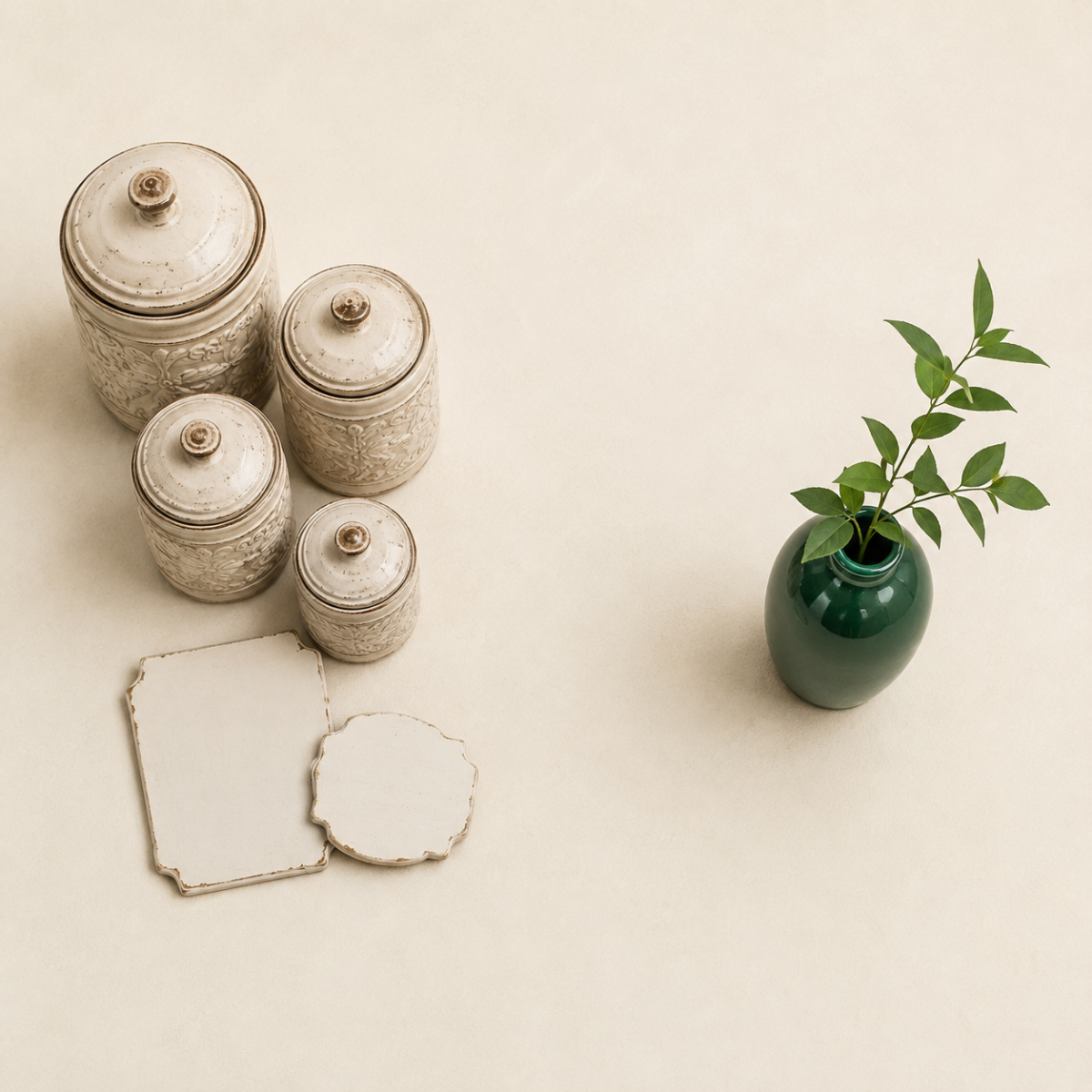
Matching decor sets. A matching canister set, a matching sign-and-shelf combo, a full themed collection bought together, almost always costs more than assembling a few genuinely nice individual pieces over time, and it tends to date faster since the whole look changes together the moment one piece feels dated. Buy pieces individually and let them earn their spot rather than buying a set to fill space.
Trend-driven decorative objects. Anything bought specifically because it’s trending right now (a specific slogan sign, a decor item tied to a very current aesthetic) has a short shelf life before it starts to feel dated, which makes it a poor use of a limited decorating budget regardless of price. Spend that money instead on something with more lasting appeal, a plant, a well-made bowl, a piece of real pottery.
Multiple small decorative objects instead of one good one. Five items at $8 each add up to the same $40 as one genuinely nice piece, but the five small items read as clutter while the one good piece reads as a deliberate choice. This is the single most common budget mistake in small kitchen decor: spreading a limited budget across too many small purchases instead of concentrating it on fewer, better ones.
Full wallpaper or paint jobs in a rental you’re not staying in long-term. If a lease has less than a year left, a large decorative wall project is a lot of cost and labor for a look you won’t get to enjoy for long. A smaller, removable accent (a single shelf backing, a small section of peel-and-stick wallpaper) gets a similar visual payoff for a fraction of the cost and effort.
A Sample $150 Budget Breakdown
Here’s how a modest, real-world budget might split across a small kitchen refresh, favoring daily-use items over purely decorative ones:
- Under-cabinet LED strip lighting: $30
- Cabinet hardware, 15 pulls: $75
- One quality runner: $35
- One statement decor piece (a vase or bowl): $10
That’s $150 spent almost entirely on items you’ll interact with or see daily, with one small, deliberate decorative splurge instead of a handful of scattered smaller ones. A kitchen decorated this way reads as considered and finished, even at a genuinely modest total cost, because every dollar went toward something that actually changes the daily experience of the room.
Compare that to the same $150 spent on eight small decorative items from a discount aisle: a sign, two candles, a set of coasters, a small tray, a themed dish towel, a decorative bowl, two picture frames. The total cost is identical. The result reads as cluttered and temporary rather than intentional, because no single piece was big enough to anchor the room, and there are too many competing for attention at once.
Stretch the Budget Further With Thrifting and DIY
Secondhand and thrift stores are genuinely strong sources for the kind of statement decor piece worth splurging on, a real ceramic vase, an interesting bowl, a piece of pottery with actual character, often at a fraction of retail cost precisely because these items don’t go out of style the way trend-driven decor does. Vintage and secondhand pieces also tend to have more texture and personality than anything mass-produced at a big box store, which matters more per item when you’re only buying one or two statement pieces rather than a full set.
Simple DIY projects, repainting a single accent object, swapping a plain lampshade for one in a better color, adding trim or fabric to an existing plain item, stretch a budget further than buying new equivalents, as long as the time investment is realistic. Reserve DIY effort for changes that also give you a genuinely custom result you couldn’t buy off the shelf anyway.
What “Finished on a Budget” Actually Looks Like
A kitchen decorated well on a real budget doesn’t announce how much or how little was spent. It just looks like someone made deliberate choices: good lighting, hardware that feels intentional, one textile that’s actually nice to touch, and a single object worth looking at twice. That’s a smaller list than most people start with, and it’s exactly why it works.
Frequently Asked Questions
What’s the single best thing to spend on for small kitchen decor on a budget? Lighting, specifically a plug-in pendant or under-cabinet LED strip. It changes how the whole room feels every evening, which is more daily impact per dollar than almost any purely decorative purchase.
Is it worth buying a matching decor set to save money? Usually not. Matching sets cost more upfront than assembling individual pieces over time, and they tend to look dated all at once when trends shift, since the whole set is tied to one aesthetic moment.
How much should a basic small kitchen decor refresh cost? A modest but genuinely finished-looking refresh, covering lighting, hardware, and one quality textile, typically runs $100-$200. Spending more on scattered small decorative items rarely produces a more finished look than that same total spent on fewer, better pieces.
Are thrifted kitchen decor items actually a good investment? Yes, particularly for statement pieces like vases, bowls, or pottery. Secondhand items tend to have more character than mass-produced new pieces and often cost far less, which makes them a strong source for the one or two splurge items worth having.
Related Reading
- The Complete Guide to Decorating a Small Kitchen
- Open Shelving Styling That Doesn’t Look Cluttered
- Small Kitchen Lighting That Changes the Whole Room
- Kitchen Decor (parent category)
- Small Kitchens (parent hub)