Table of Contents
The instinct, when a room feels flat, is to go buy something. A new throw pillow, a new basket, one more small object for the empty shelf. Most of the time, that instinct is solving the wrong problem. A flat room usually isn’t missing objects. It’s missing contrast between the textures of the objects it already has.
Layering texture on a budget mostly means rearranging what you already own so that smooth, rough, soft, and matte surfaces sit near each other, instead of buying new items to add more of the same. A kitchen towel, a closet sweater, and a bathroom basket can do the same visual work as three new decor purchases, once they’re pulled into the right room and placed beside something with a different surface.
What Texture Actually Means in a Room
Texture, in a styling sense, is simply the visual and physical variation between surfaces in the same space, like a smooth ceramic vase next to a woven basket, or a flat painted wall behind a chunky knit throw. A room with only smooth, similar surfaces, like glossy furniture and flat painted walls with nothing soft or woven nearby, reads as flat even when it’s technically full of objects.
This is why a room can be completely decorated and still feel unfinished. Every item might be doing its job individually, but if they’re all roughly the same surface quality, the eye has nothing to move between. Contrast is what makes a space feel layered instead of just filled.
Walk Your Own Home Before You Buy Anything
Walk through every room in your home, not just the one you’re styling, and look specifically for texture rather than decor. A folded blanket in a closet, a set of woven placemats in a kitchen drawer, a decorative bowl from a bathroom counter, and a scarf you haven’t worn in months are all texture sources sitting unused somewhere in your home right now.
Most people only look at their decor budget when a room feels unfinished. Almost nobody does an actual walkthrough of their own closets, kitchen drawers, and other rooms first, looking specifically for anything with an interesting surface, weave, or weight to it. That walkthrough usually turns up more usable texture than an afternoon of browsing would.
Four Places to Shop Your Own Home First
The Kitchen
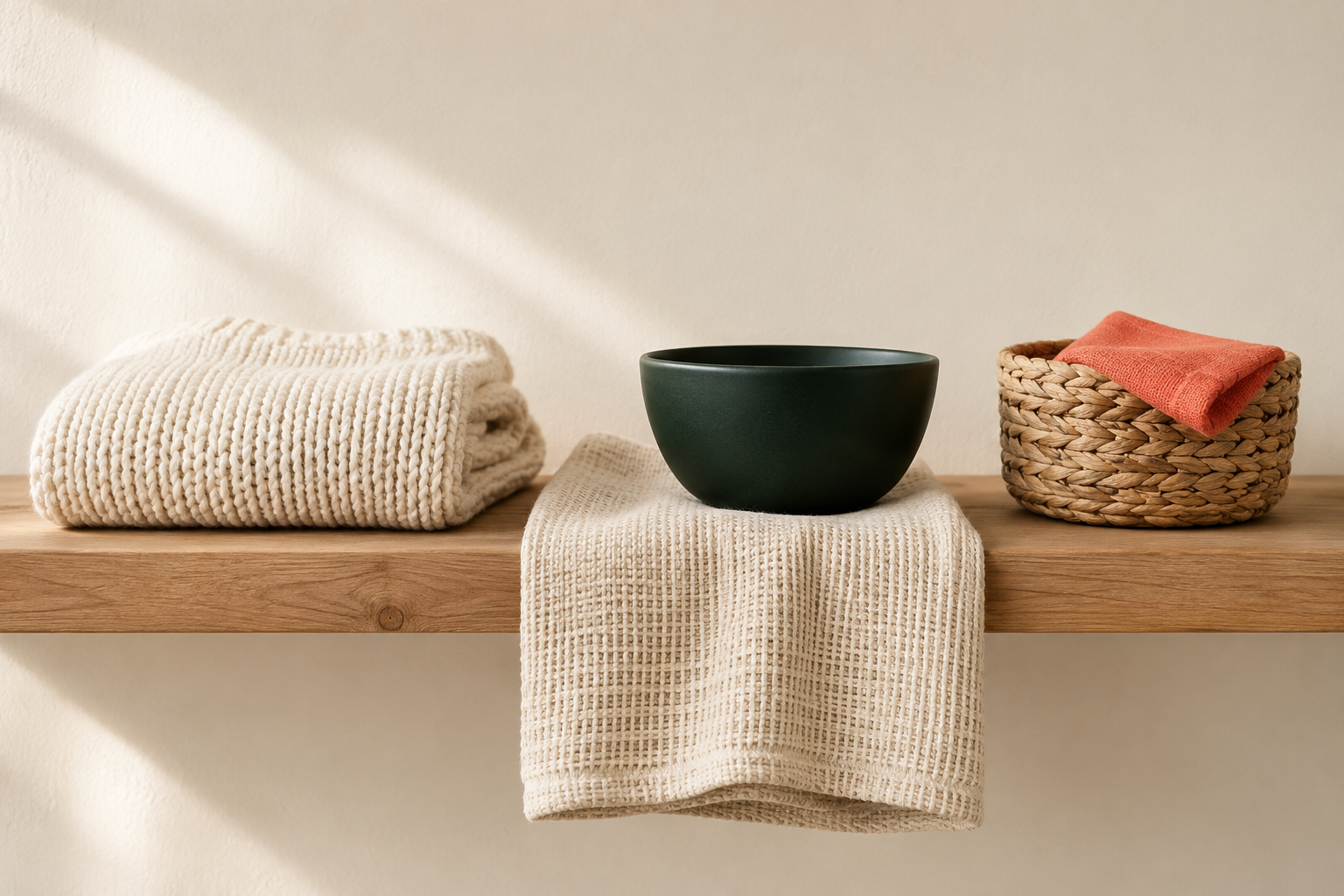
Kitchens hold more texture-rich, decor-ready items than almost any other room, because linen tea towels, woven placemats, and wooden cutting boards are already chosen for their look as well as their function. A linen towel draped over a shelf edge or a wooden board leaned upright on a counter both work as styling objects, not just kitchen tools.
The Closet
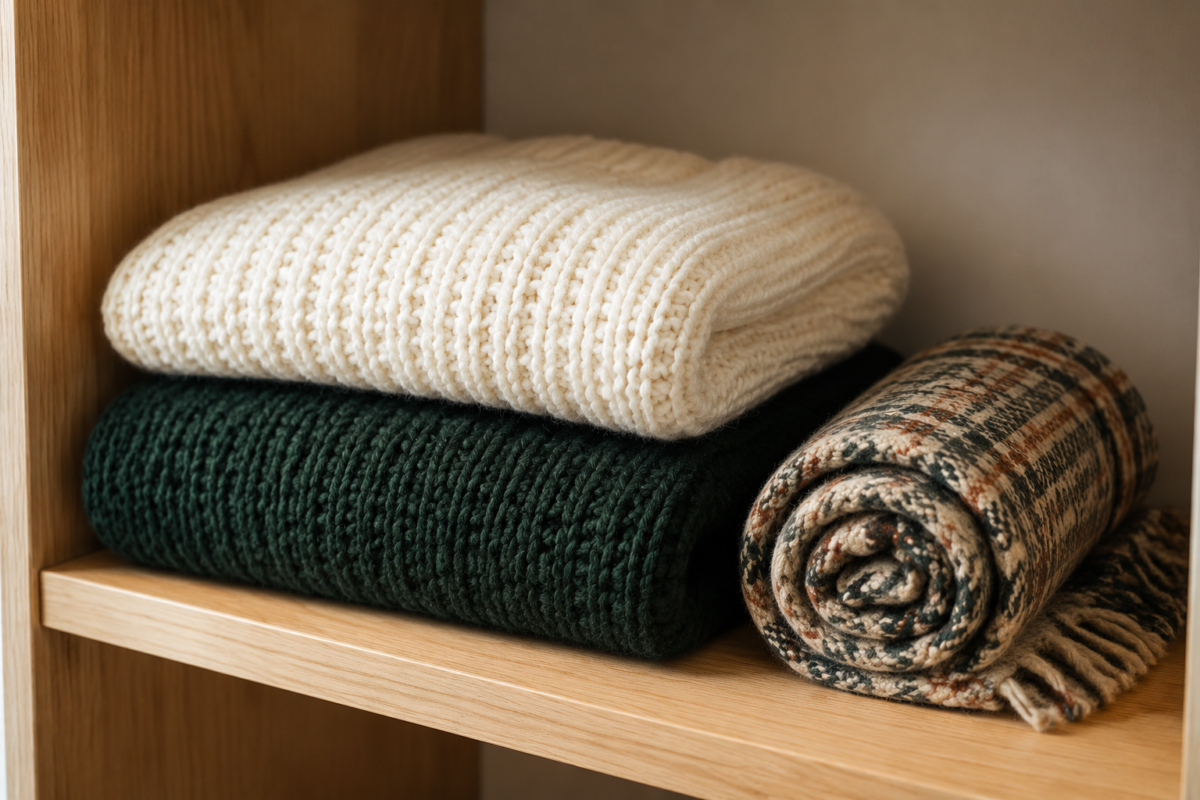
Closets hold folded knits, scarves, and out-of-season blankets that are usually far more textured than anything currently sitting on your shelves as decor. A chunky knit sweater, folded and stacked on an open shelf, reads exactly like a styled throw. A silk or patterned scarf, draped over a chair back or hung as a small textile, adds a surface most rooms don’t already have.
The Bathroom
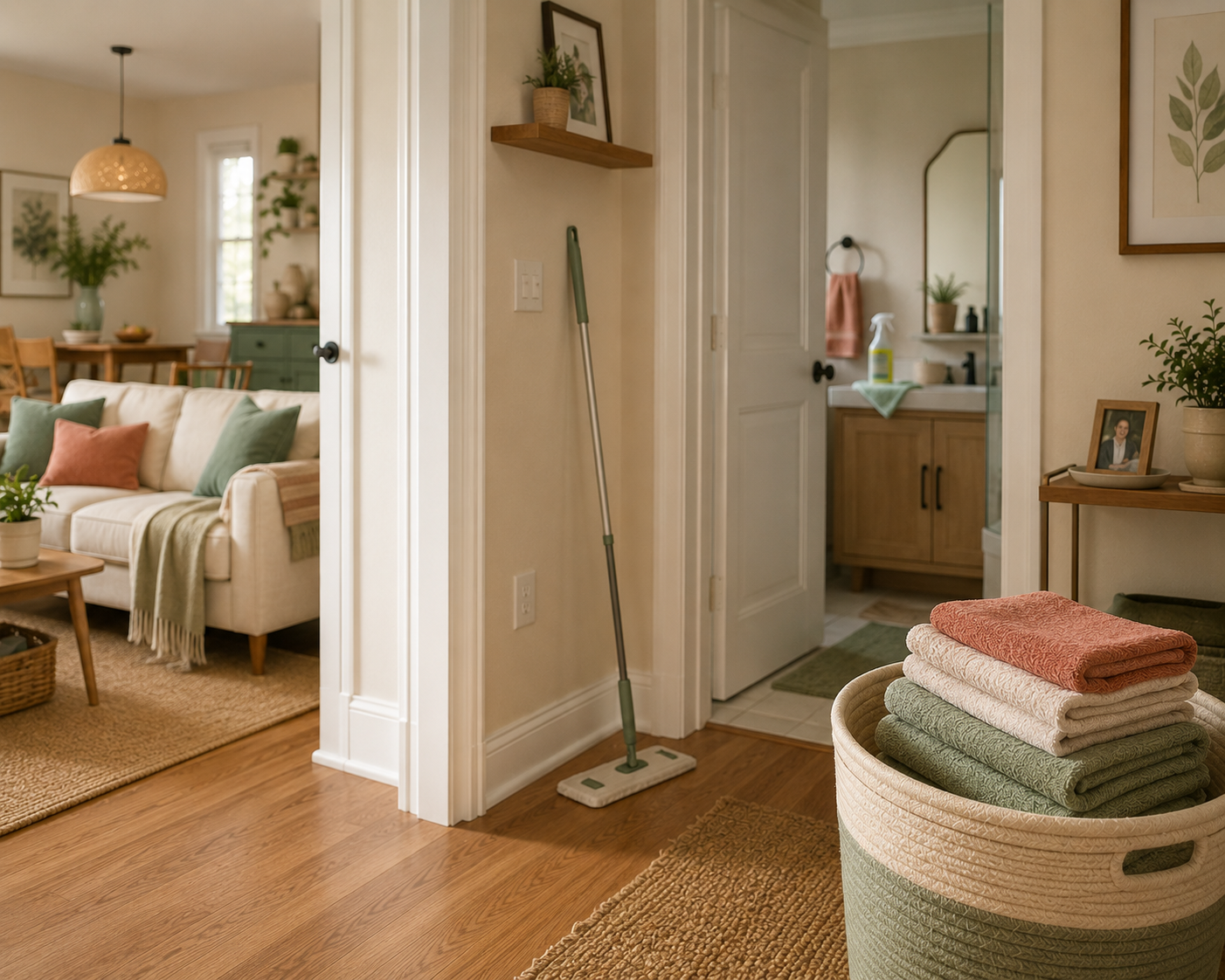
Bathrooms usually have woven baskets, rolled towels, or a ceramic tray that can move into a bedroom or living room without leaving the bathroom short on anything essential. A rolled towel in a coordinating color, tucked into a basket on an open shelf, mimics a styled textile roll that would otherwise cost real money new.
Other Rooms in the Apartment
Every other room in a small apartment has at least one item currently doing nothing visually interesting where it sits. A throw blanket folded at the foot of a bed that’s rarely seen might do far more work draped over a living room chair instead. Moving an item to a room where it’s actually visible often has more impact than buying something new for the room where it’s currently ignored.
How to Layer Without It Looking Cluttered
Layering texture works when you group two or three different surfaces closely together in one spot, rather than scattering single textured items evenly across the whole room. A smooth vase, a woven basket, and a knit throw sitting near each other on one shelf reads as a styled moment. The same three items spread across three separate shelves in three different rooms barely register at all.
A few things keep this from tipping into clutter:
- Group by proximity, not by matching. Items don’t need to match in color or origin to work together. They need to sit close enough that the eye reads them as one composed area.
- Vary the scale, not just the texture. One larger textured piece, like a folded blanket, paired with one smaller one, like a woven coaster or small basket, reads better than two items of similar size competing for attention.
- Leave negative space around the grouping. A texture grouping needs visible empty surface around it to read as intentional. Fill every inch of the shelf and even great texture starts to look like storage instead of styling.
- Stop at three textures per spot. A smooth surface, a woven surface, and a soft knit surface together read as layered. A fourth and fifth texture in the same small area usually starts competing rather than adding.
When It’s Actually Worth Buying Something New
Buying something new is worth it when no item currently in your home has the specific texture a spot genuinely needs, most commonly a floor-level texture like a rug or a large woven basket, since those are harder to substitute with something repurposed from a closet or kitchen drawer. Smaller surface texture, like shelf styling or a throw over a chair, is almost always solvable with what you already own somewhere in the apartment.
If you’ve done the full walkthrough above and a specific gap remains, that’s the moment to spend, not before. A single new rug or one substantial woven basket, bought deliberately to fill a texture gap nothing else in your home can cover, is a better use of budget than several smaller impulse purchases made without checking your closets first.
Frequently Asked Questions
What counts as texture in home styling? Any surface variation that creates contrast in a room, like a woven basket against a smooth wall, a knit throw against a flat sofa cushion, or a wooden object next to a ceramic one. It’s about how surfaces differ from each other, not any specific material.
Where should I look first for texture I already own? Start with your kitchen and closet. Tea towels, wooden cutting boards, folded sweaters, and scarves are usually the most texture-rich, decor-ready items already sitting unused in most small apartments.
How many textures should I layer in one spot? Three is usually the limit for a single shelf, corner, or surface. A smooth item, a woven item, and a soft knit item together read as layered. Adding a fourth or fifth in the same tight spot often starts to look cluttered instead.
Is it ever worth buying new texture instead of repurposing what I own? Yes, mainly for floor-level pieces like a rug or a large woven basket, since those are harder to substitute with smaller repurposed items. For shelf and surface styling, what you already own is almost always enough.
Related Reading
For the full order to style a room in, The Complete Guide to Budget Styling a Small Space covers where texture fits alongside lighting and wall decor.
If you’re building out a focal point and need texture specifically for that spot, How to Style One Focal Point When You Can’t Redo the Whole Room covers exactly how much texture one area actually needs.
For the handful of items genuinely worth buying new once you’ve exhausted what you own, The 5 Places Worth Spending More When You’re on a Budget breaks down where quality actually shows.
Browse the full Budget Styling category for more no-spend and low-spend styling techniques, or explore the wider Budget Decor hub for thrift-first and DIY-friendly guides.