Table of Contents
There’s a common belief that renters are stuck with whatever storage came with the apartment, that real fixes mean drilling into walls, which means a landlord’s permission and a security deposit on the line. That’s not true. Tension rods, adhesive hooks, and freestanding units add genuine storage capacity in a rental kitchen, and every option here comes off clean at move-out.
You don’t need permission to gain storage. You need the right products and a little care about where you put them. This guide covers what actually holds up in daily use, not just what looks good in a product photo.
The Myth That Renters Can’t Add Real Storage
Renters can add substantial kitchen storage without a single hole in the wall, using tension-mounted, adhesive, and freestanding solutions rated for real kitchen weight. The idea that renting means living with whatever storage exists is outdated. Most of the fixes that make the biggest difference in a small kitchen require zero permanent alteration.
The key is choosing products actually rated for the job, not just anything labeled “no drill” on a box. A $3 adhesive hook meant for a bathroom towel will not hold a cast iron pan, and testing that the hard way usually ends with a broken jar on the floor. The sections below cover which products genuinely hold up and which ones are a waste of money in a real, daily-use kitchen.
If you haven’t sorted your existing cabinets and doors yet, adding rental-friendly storage on top of a disorganized kitchen just gives you a new place to lose things. The Complete Guide to Small Kitchen Storage covers the full order of operations, cabinets first, doors and walls next, so every rental-friendly product you add actually solves a real gap.
Adhesive Hooks and Strips That Actually Hold
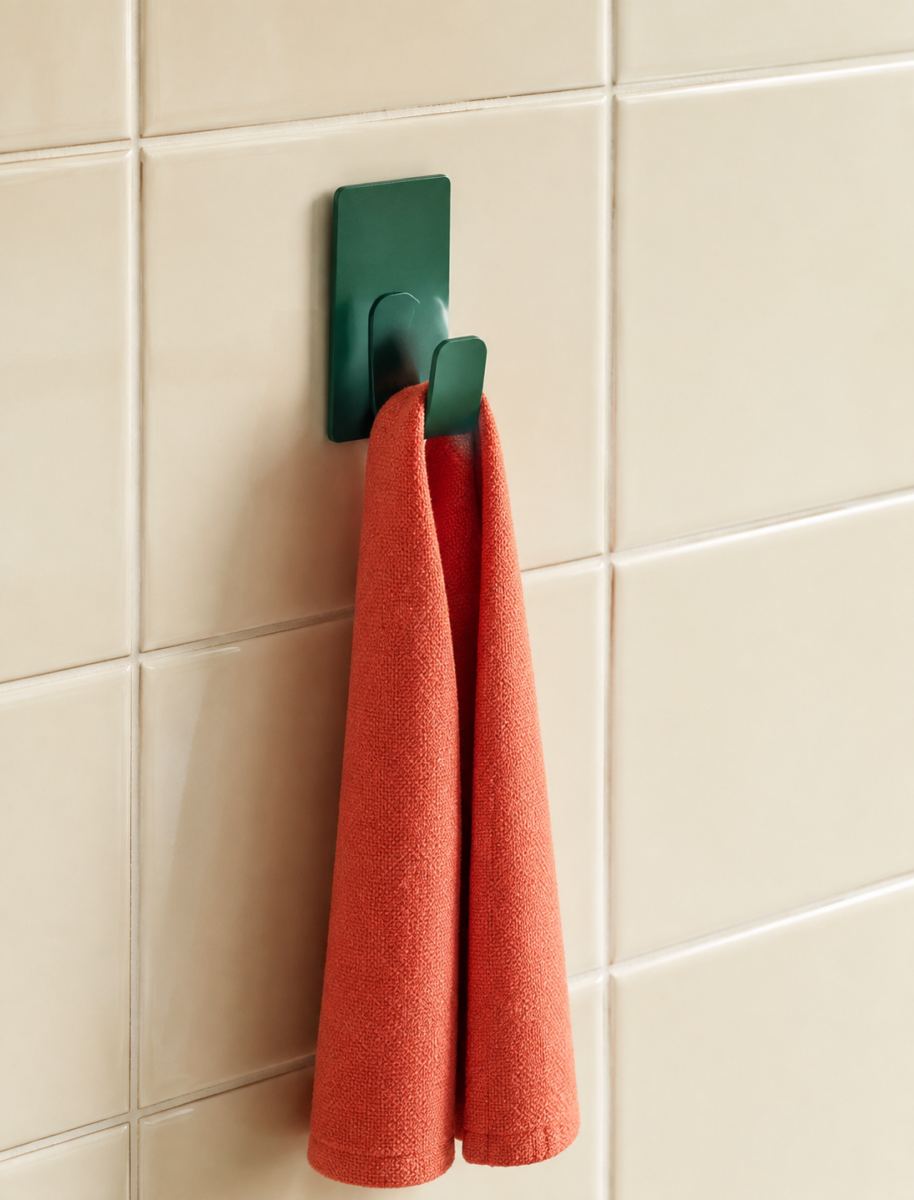
Adhesive hooks rated for at least 5 pounds hold real kitchen items, oven mitts, a hanging fruit basket, dish towels, without leaving marks behind at move-out. The strength of the hold depends almost entirely on wall prep and hook placement, not just the brand.
Clean the wall with rubbing alcohol before applying any adhesive strip, since grease and dust (both common in a kitchen) weaken the bond a lot more than on a bathroom wall. Give the hook a full 24 hours to set before hanging anything on it, even though the packaging often suggests it’s ready sooner. And avoid mounting adhesive hooks directly above the stove or near steam from a kettle, since heat and moisture break down the adhesive faster than anywhere else in the kitchen.
Tension Rods for Instant No-Drill Shelves
A tension rod wedged inside a cabinet, under a shelf, or across an open alcove creates an instant second layer of storage with zero hardware and zero holes. It’s one of the cheapest, fastest rental fixes in a kitchen, and it comes out in seconds if you need the space back.
Inside a cabinet, a tension rod mounted a few inches below an existing shelf holds spray bottles by their trigger handles, doubling that shelf’s storage without stacking bottles on top of each other. Under an open shelf, a tension rod with S-hooks along it turns flat shelf space into hanging storage for mugs. In a narrow alcove or the gap beside a fridge, a tension rod mounted a foot or two down from the top can hold a curtain-style fabric divider to hide loose items from view.
Freestanding Carts and Units for Extra Capacity
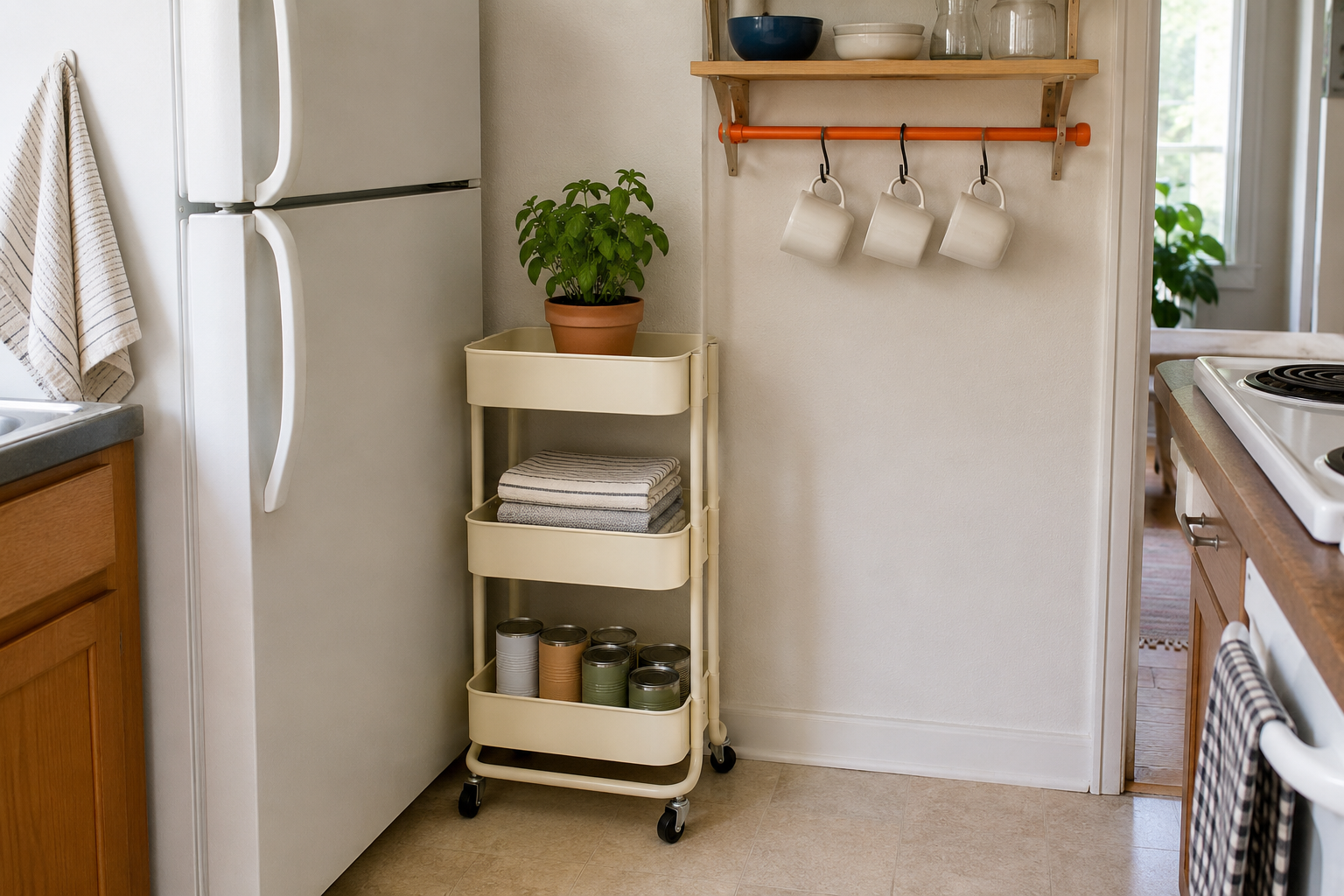
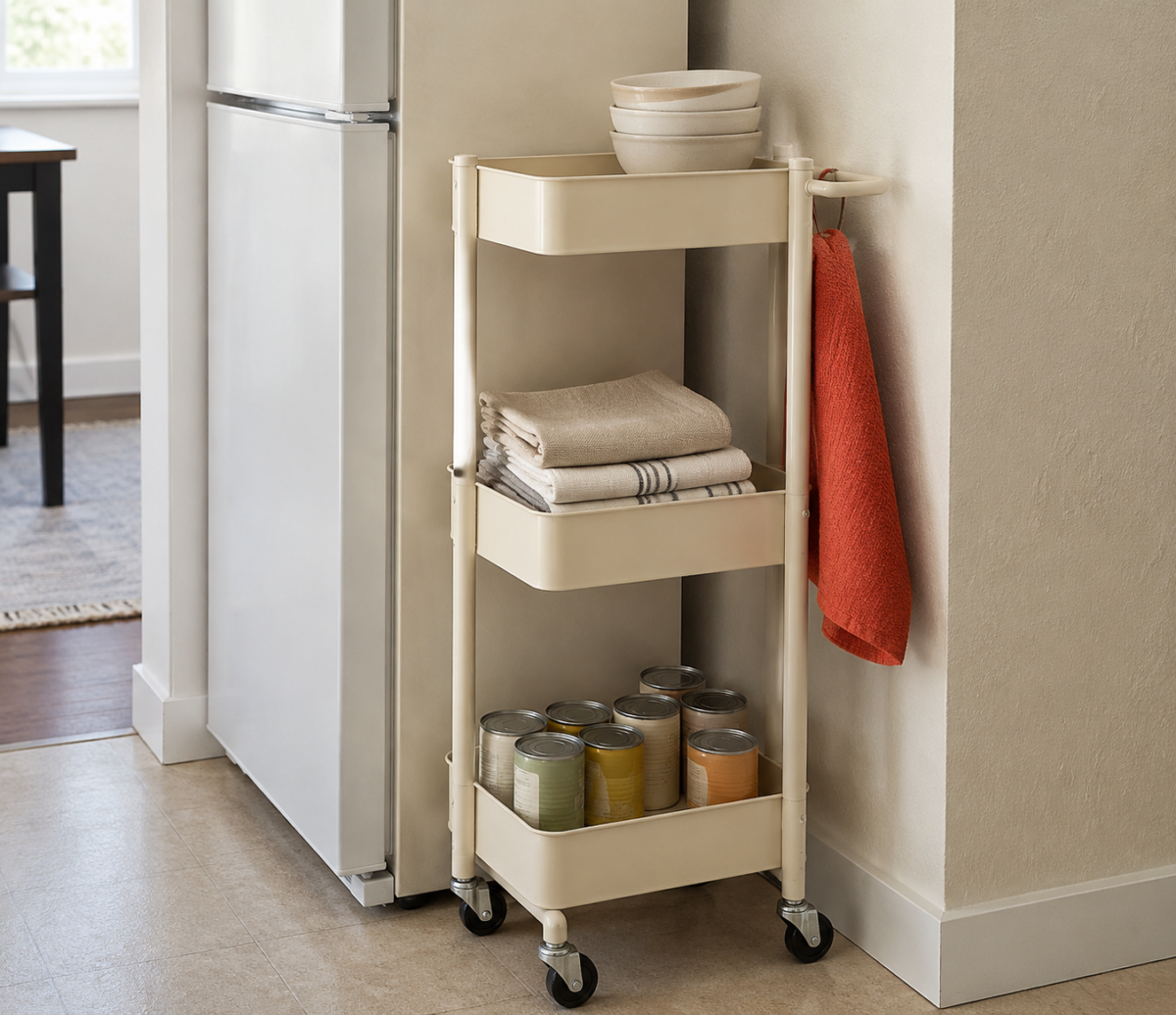
A slim rolling cart, three tiers deep, fits into the gap next to a fridge, stove, or counter and adds real storage capacity you can move wherever it’s needed that day. Unlike anything mounted to a wall or door, a freestanding cart moves with you completely at move-out, no removal process at all.
Look for a cart between 10 and 14 inches wide for tight gaps, with locking wheels so it doesn’t roll while you’re cooking. A three-tier cart typically holds canned goods and small appliances on the bottom, everyday dishware in the middle, and a mix of spices or snacks on top, giving you the equivalent of a small extra cabinet in the footprint of a narrow gap.
What to Avoid With No-Drill Storage
Not every “no drill” product on the market actually holds up. Cheap adhesive hooks not rated for kitchen weight, tension rods loaded past their stated capacity, and freestanding units with weak plastic wheels are the three most common ways rental-friendly storage fails within a few weeks.
Always check the stated weight rating before buying, and load conservatively below it rather than right at the limit. Skip adhesive products near heat or steam entirely, that’s the fastest way a hook lets go without warning. And if you’re deciding between wall-mounted and freestanding options for a specific gap, Vertical Storage for Kitchens With No Extra Cabinets covers weight limits and mounting options in more depth if your lease allows any wall mounting at all.
FAQ
What kitchen storage doesn’t require drilling? Adhesive hooks and strips, tension rods, and freestanding carts or shelving units all add real storage without drilling. Each comes off or moves out completely at the end of a lease, with adhesive products designed to remove cleanly when applied correctly.
Do adhesive hooks really hold in a kitchen? Yes, if rated for at least 5 pounds and mounted away from heat and steam. Clean the wall with rubbing alcohol first and let the hook set for 24 hours before hanging anything, since skipping the cure time is the most common reason adhesive hooks fail early.
Will a tension rod damage my cabinet or wall? No, tension rods hold in place through pressure alone and don’t require any adhesive or hardware. They can leave a light mark on soft surfaces like drywall over long-term use in the same spot, so check periodically and reposition slightly if needed.
What’s the best rental-friendly storage for a really tight kitchen? A slim rolling cart in an unused gap next to the fridge or stove usually adds the most capacity in the least floor space, since it functions like a small extra cabinet. Pair it with adhesive door racks and tension rods inside existing cabinets for the biggest overall gain.
Can I get my security deposit back after using adhesive hooks? In most cases, yes, if you use hooks specifically rated for clean removal and follow the removal instructions (usually stretching the strip downward slowly rather than pulling straight off). Test removal on a low-visibility spot first if you’re unsure how your specific wall paint reacts.
Related Reading
For the full order of operations across your whole kitchen, start with The Complete Guide to Small Kitchen Storage.
If your cabinet doors are still bare, Cabinet Door Storage You’re Not Using Yet shows what actually fits there without drilling.
If your lease allows light wall mounting, Vertical Storage for Kitchens With No Extra Cabinets covers shelving and pegboard options worth the extra step.
For more storage fixes across every part of a small kitchen, visit the Kitchen Storage category, part of the Small Kitchens hub.