Table of Contents
Two people can furnish the exact same studio apartment for the exact same total, and one room reads expensive while the other reads like a dorm that never fully unpacked. The difference almost never comes down to how much they spent. It comes down to where.
The five places worth spending more, even on a tight budget, are bedding, your main light fixture, your rug, your curtain hardware, and one real piece of wall art. These five get touched, seen up close, or sat under longer than anything else in the room, so a cheap version shows fast and a good one keeps paying off.
Why These Five and Not Everything Else
The instinct on a tight budget is to cut evenly across every category. Cheap everywhere feels fair. It also means every single item in the room is quietly working against you at once, because nothing gets a chance to actually look considered.
The better approach is uneven spending on purpose. Cut hard on the things nobody touches or examines closely, like a basic storage bin tucked in a closet, and put real money toward the handful of items that get direct contact, close-up viewing, or daily wear. That’s the whole logic behind this list. None of these five are expensive in absolute terms. They’re just the five places where a $15 version and a $45 version are obviously, immediately different, in a way most other decor purchases aren’t.
1. Bedding
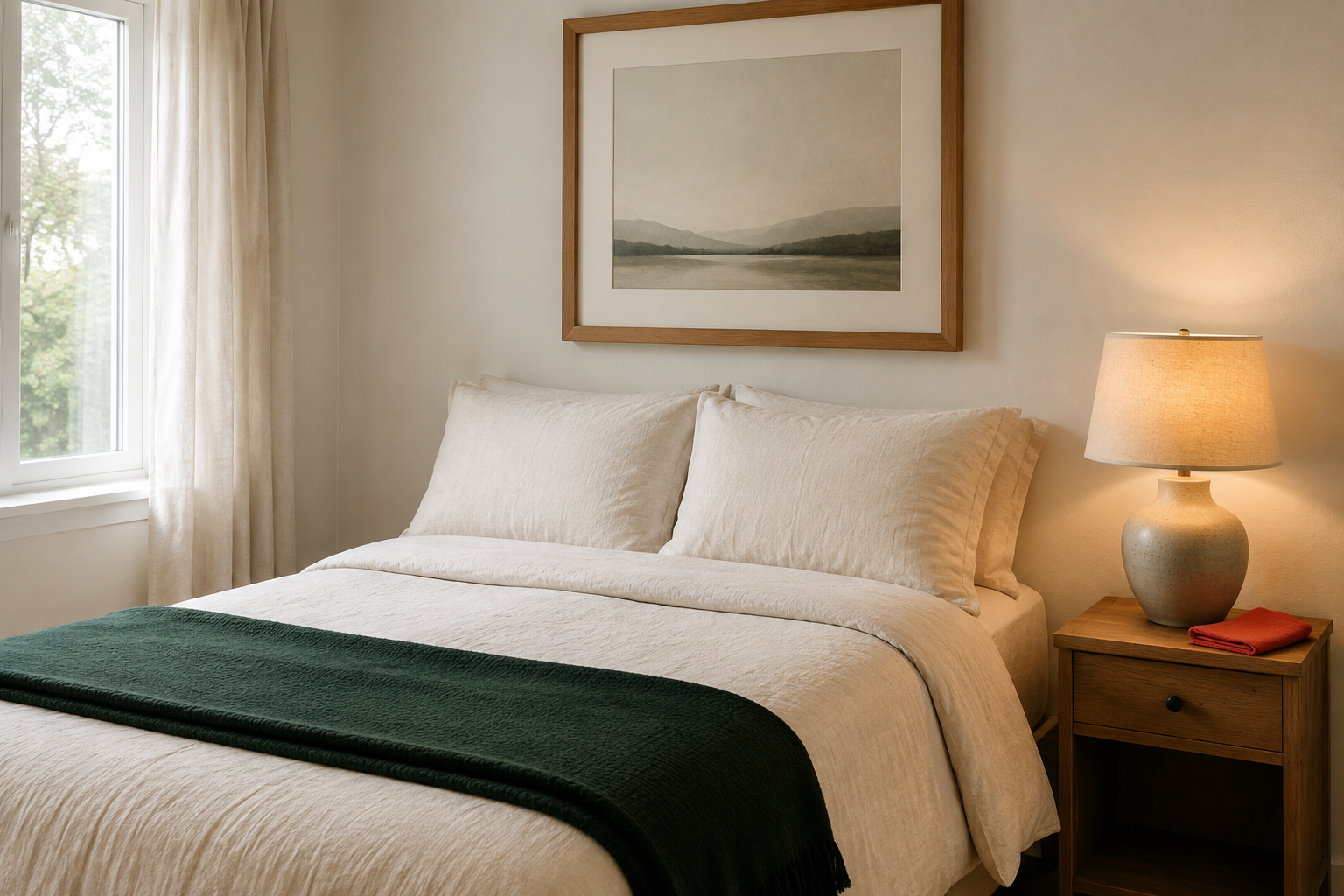
Bedding is worth spending more on because you touch it every single night and see it up close every single day, so thread quality and weave show in a way almost nothing else in a bedroom does. A thin, low-thread-count sheet set pills, wrinkles oddly, and looks slightly gray under warm light within a few washes, no matter what color it started as.
You don’t need luxury linen. A mid-range cotton percale or sateen set, usually $50 to $90 for a full sheet set plus one duvet cover, holds its color, drapes better over the mattress, and doesn’t develop that slightly matted look after a month of regular washing. If you can only upgrade one textile item in the whole apartment, make it this one. It’s the item you’re closest to for eight hours a day.
2. Your Main Light Fixture
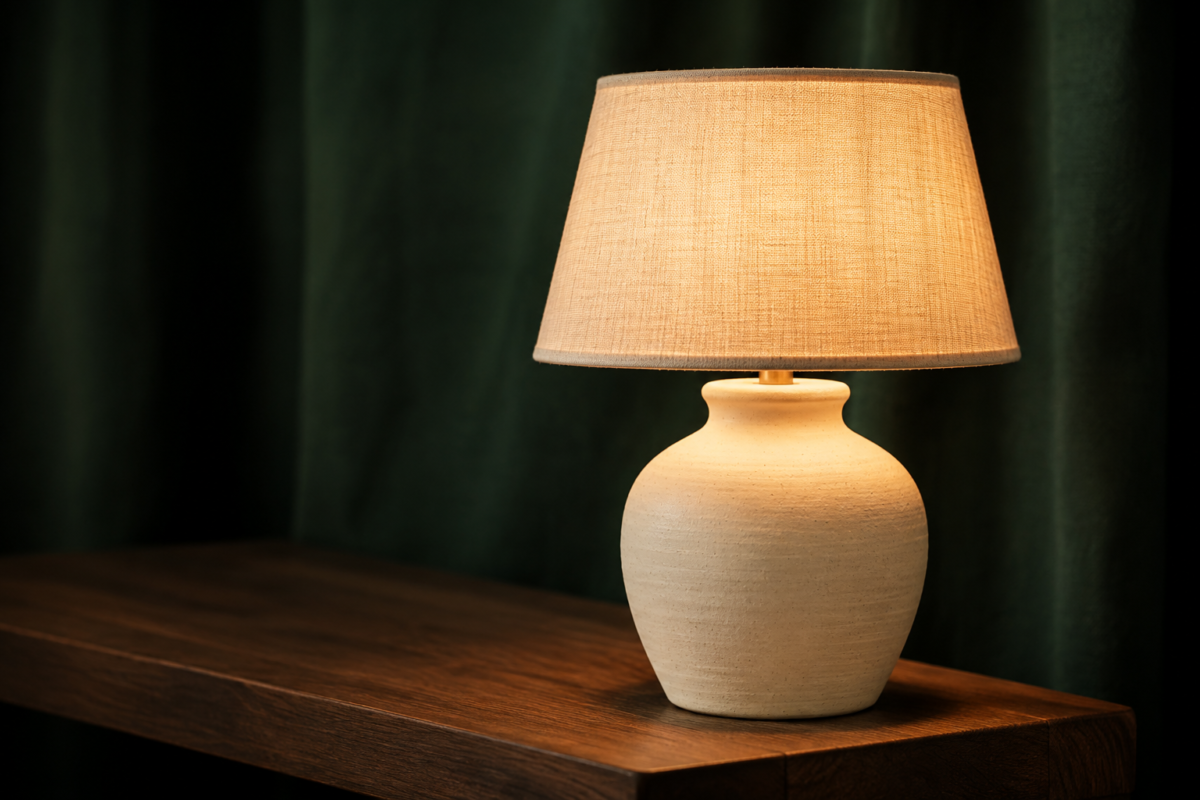
Your main light fixture is worth the extra spend because it’s the one object in the room that’s on, and visible, for most of the hours you’re actually home, which makes a flimsy plastic shade or a bare bulb impossible to ignore once the sun goes down. A genuinely well-made lamp, with a real fabric or linen shade and a solid ceramic or wood base, changes the character of a whole room the moment it’s switched on.
This doesn’t mean the most expensive lamp available. It means avoiding the bottom tier entirely. Bottom-tier lamps typically use thin plastic shades that yellow within a year and bases light enough to tip over. A $35 to $60 lamp with a real shade material and enough base weight to sit steady on a shelf will still look intentional two years from now, while the $12 version usually gets replaced within one.
3. Your Rug
Your rug is worth spending more on because it’s the largest surface in the room besides the walls, and it’s the one you interact with barefoot, which makes cheap synthetic pile obvious within weeks through flattening, shedding, and a plasticky texture underfoot. A better rug, even a modest wool blend or a well-made polypropylene, holds its pile and its shape far longer.
Budget rugs in the $20 to $30 range for a living-room-sized piece almost always use thin, loosely woven synthetic fiber that mats down in high-traffic spots within a month and sheds loose fibers across your floor in the meantime. Moving up to $70 to $120 for a denser weave buys you a rug that still looks like a rug a year later, not a flattened mat with visible backing showing through in the middle.
4. Curtain Rods and Hardware
Curtain rods are worth upgrading because flimsy tension rods sag under the weight of real curtain fabric within weeks, leaving a visible dip in the middle of your window that undercuts everything else you’ve styled in the room. A sturdy rod with real wall-mounted brackets, even a rental-friendly adhesive-mount version, keeps curtains hanging straight and even.
This is a small line item, usually $15 to $25 more than the cheapest tension rod option, but it’s one of the most visible failure points in a styled room. Curtains hung on a sagging rod pull the eye toward the problem every time you walk past the window, which undoes the effect of even genuinely nice curtain fabric.
5. One Real Piece of Wall Art
One real piece of wall art, in an actual frame rather than a plastic poster frame, is worth spending more on because it’s the item people look at directly and up close, unlike most decor that gets seen only in passing. A print in a real wood or metal frame with proper matting reads as a deliberate choice. The same print in a $6 plastic snap frame reads as a placeholder, even if the artwork itself is identical.
You don’t need original art or a gallery-quality frame. A $30 to $50 print with a genuine frame, sized appropriately for the wall and hung or leaned at the right height, does more for a room than three cheap unframed prints taped up together ever will.
What to Keep Cheap Instead
Everything you save on the five items above needs to come from somewhere, and the honest answer is almost everything else in the room. Storage bins, closet organizers, extra throw pillows beyond your first one or two, small decorative objects, and anything tucked inside a drawer or cabinet are all fine at the lowest price point available. Nobody examines the thread count of a closet bin.
The one exception worth a second thought is anything load-bearing, like a shelf bracket or a closet rod meant to hold real weight. Cheap there risks damage, not just a worse look. Everything else, spend as little as you genuinely can, and let the five items above carry the visual weight of the room.
Frequently Asked Questions
Is it worth spending more on bedding if I’m on a tight budget? Yes. Bedding gets more direct daily contact than almost anything else in a bedroom, and a low-thread-count set shows wear, pilling, and discoloration within a few washes, which makes it one of the fastest-paying-off upgrades on this list.
What makes a light fixture look cheap even if the bulb is good? The shade material and base weight, not the bulb, usually give away a cheap fixture. Thin plastic shades yellow over time and lightweight plastic bases feel unstable, both of which are visible even with a warm, well-chosen bulb inside.
Should I spend more on a rug or on furniture first? A rug, in most small spaces. It covers more visible surface area than most single furniture pieces and unifies mismatched furniture visually, which usually delivers more visual change per dollar than replacing one item of furniture.
How much more should I realistically budget for these five items? Expect roughly $50 to $80 more total across all five compared to the absolute cheapest version of each, spread across bedding, one lamp, one rug, curtain hardware, and one framed piece.
Related Reading
For the full spend-first sequence these five items fit into, The Complete Guide to Budget Styling a Small Space walks through the order to buy in, room by room.
If you’re hunting for these five items secondhand instead of new, Thrift and Secondhand: Building a Small Space Without Buying New covers what to check for quality when buying used textiles and hardware.
For more ways to make a modest budget look considered, Get the Look for Less: Lighting Edition breaks down specific fixture and bulb swaps by room.
Browse the full Budget Styling category for more spend-smart breakdowns, or explore the wider Budget Decor hub for DIY-friendly updates and thrift-first styling guides.