Table of Contents
Not every lighting dupe saves you the same amount of money, even when two fixtures look nearly identical in a photo. Some categories of lighting have an enormous gap between the designer price and the dupe price. Others barely have a gap worth chasing at all. Knowing which is which before you start shopping saves far more time than browsing every lighting category evenly.
Lighting dupes save the most money on statement overhead fixtures like chandeliers, sconces, and pendants, where designer pricing climbs fastest and hangs far enough from eye level that small material differences barely register. Table and floor lamps save less in real dollars, since their starting price is already lower, and bulbs, wiring, and other electrical parts aren’t worth duping at all.
Why the Savings Gap Isn’t Equal Across Lighting Categories
The savings gap is largest on lighting that combines high designer markup with distance from the viewer, since a fixture hanging six or more feet overhead simply can’t be examined closely the way a table lamp sitting at arm’s reach can. That combination is exactly what makes chandeliers, sconces, and pendants the categories worth spending real research time on.
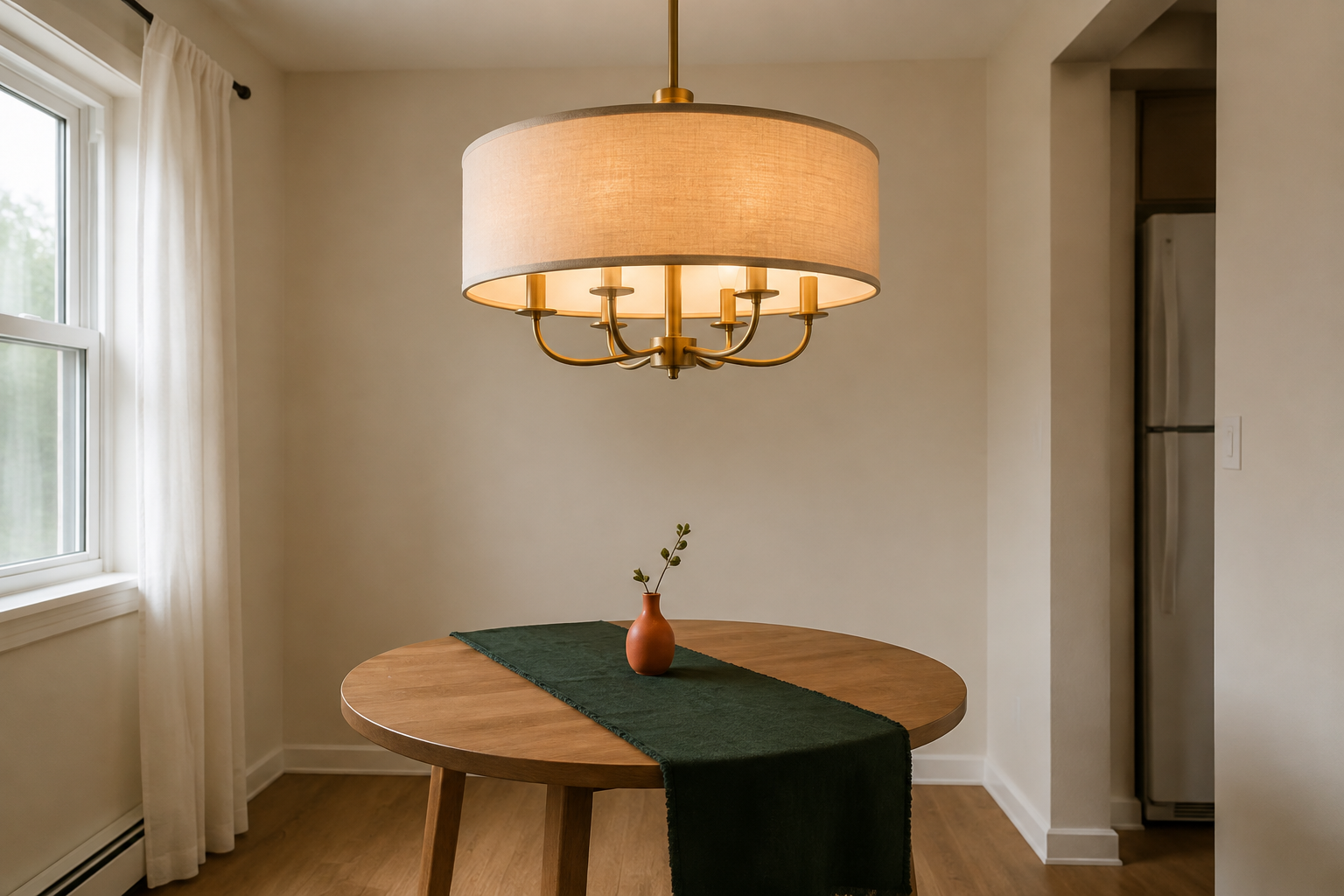
A designer chandelier’s price reflects scale, brand, and often genuine handcrafted detail. From directly underneath, though, most of that fine detail disappears into general impression: shape, warmth of light, and finish color. A well-matched dupe captures all three of those from a normal viewing angle, which is exactly why this category has some of the most convincing budget lookalikes in home decor right now.
Statement Fixtures Save the Most, in Both Dollars and Percentage
Chandeliers and large pendant fixtures typically carry the biggest dollar gap between the designer original and an affordable dupe, sometimes several hundred dollars on a single fixture, because scale and brand markup both climb steeply at the top of this category while a dupe of similar size and shape can often be sourced for a fraction of the cost.
This is the category worth spending the most research time on. Search by shape and material description rather than brand name, the same way you would for a piece of furniture: “linen drum chandelier brass frame” or “tiered glass chandelier” instead of the specific designer collection name. Wayfair, Lumens, and general home retailers like Walmart and Home Depot’s lighting sections all carry a wide range of close matches in this exact category, refreshed frequently enough that a new search every few months often turns up something better than the last.
Don’t undersize a statement fixture to save further. A chandelier that’s noticeably too small for its space reads as a budget choice immediately, regardless of how well matched its style is. Go slightly larger than feels comfortable rather than slightly smaller.
Sconces Are the Easiest Wins for the Effort
Sconces deliver an outsized visual impact relative to their cost, because a matched pair flanking a mirror, bed, or entryway reads as a deliberate design choice while typically costing far less than a single chandelier. Two well-chosen sconces often change a wall’s entire feel for less than the price of one mid-range table lamp.
The catch with sconces is installation, not price. A hardwired sconce needs an existing electrical box and often an electrician in a rental, which isn’t always realistic or allowed. Plug-in sconces solve this. They’ve become widely available in the same swooping-arm, linen-shade silhouette as their hardwired designer counterparts, and they mount with the same rated adhesive strips used for mirrors and art, with the cord run along the wall or tucked behind furniture.
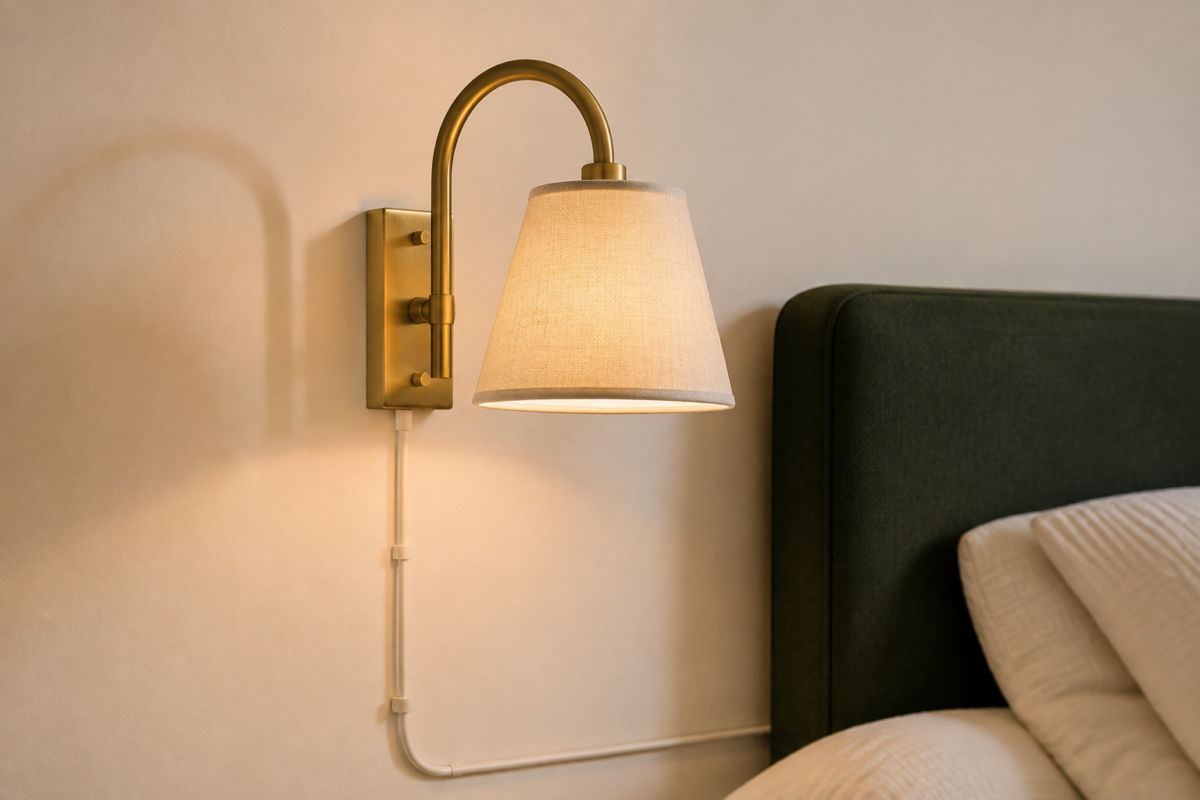
Table and Floor Lamps Save Less, but the Right One Still Matters
Table and floor lamps carry a smaller absolute dollar gap between designer and dupe versions than statement overhead fixtures, since the starting price on both ends of the category is already lower. The percentage savings can still be meaningful, but this isn’t the category to spend hours hunting for the perfect match if your research time is limited.
Where a lamp dupe genuinely matters is shade material and base weight, the same two details that separate a lamp that looks intentional from one that reads as an afterthought regardless of price. A linen or fabric shade over a plastic one, and a ceramic or solid wood base over hollow plastic, both make a bigger visible difference than chasing an exact silhouette match to a specific designer lamp.
Where Not to Dupe: Bulbs, Wiring, and Safety-Rated Parts
Bulbs, wiring, dimmer switches, and other electrical components aren’t worth duping down in quality, since these are safety-rated parts where a cheaper version can create a real fire or shock risk rather than just a slightly less convincing look. This is the one category in lighting where spending the extra few dollars for a properly rated product isn’t optional.
A warm 2700K LED bulb from any major retailer performs identically to one from a designer lighting brand, so there’s no real savings being missed here in the first place, only a brand name you’re not paying for. Where it matters is checking that any wiring, dimmer switch, or plug-in adapter is rated for the fixture’s actual wattage and, in a rental, confirming with your lease or landlord before altering anything hardwired.
How to Judge Scale From a Distance
Stand at the actual distance you’ll normally view a fixture from, not the close-up distance of a product photo, before deciding if a dupe’s finish or material looks convincing enough. A chandelier viewed from six feet below at a dining table reads completely differently than the same chandelier viewed at arm’s length in a listing photo, and most fine material differences that would bother you up close disappear entirely at real viewing distance.
This is the single biggest reason statement lighting dupes work as well as they do, and it’s worth remembering before spending extra money chasing a closer material match than the room will ever actually let you see.
Frequently Asked Questions
Which type of lighting has the biggest gap between designer and dupe pricing? Chandeliers and large statement pendants, since designer pricing climbs fastest with scale and brand in this category, while a well-matched dupe of similar size is viewed from far enough away that fine material differences rarely show.
Are plug-in sconces as good as hardwired ones? For most rental situations, yes. Plug-in sconces now come in the same silhouettes as hardwired designer versions and mount with rated adhesive strips, avoiding the need for an electrician or permanent wall changes.
Is it worth spending more on designer light bulbs? No. A properly rated, warm-toned LED bulb from any major retailer performs the same as a designer-brand bulb. The only place to spend more on lighting components is safety-rated parts like wiring and dimmers, not the bulb itself.
Should I size a lighting dupe smaller to save more money? No. An undersized fixture reads as a budget choice immediately, no matter how well it’s otherwise matched. It’s usually worth going slightly larger than feels comfortable rather than smaller.
Related Reading
For the method behind identifying which piece in a room is worth matching closely before you shop, The Complete Guide to Getting the Look for Less covers how to isolate a room’s hero piece first.
If lighting is the layer you’re tackling as part of a full room refresh, The Complete Guide to Budget Styling a Small Space covers exactly where lighting fits in the spending order.
For furniture dupes in the same high-end aesthetic families, The Best Dupes for Popular High-End Furniture Brands covers where those savings actually live too.
Browse the full Get the Look for Less category for more brand-specific dupe breakdowns, or explore the wider Budget Decor hub for thrift-first and DIY-friendly styling guides.