Table of Contents
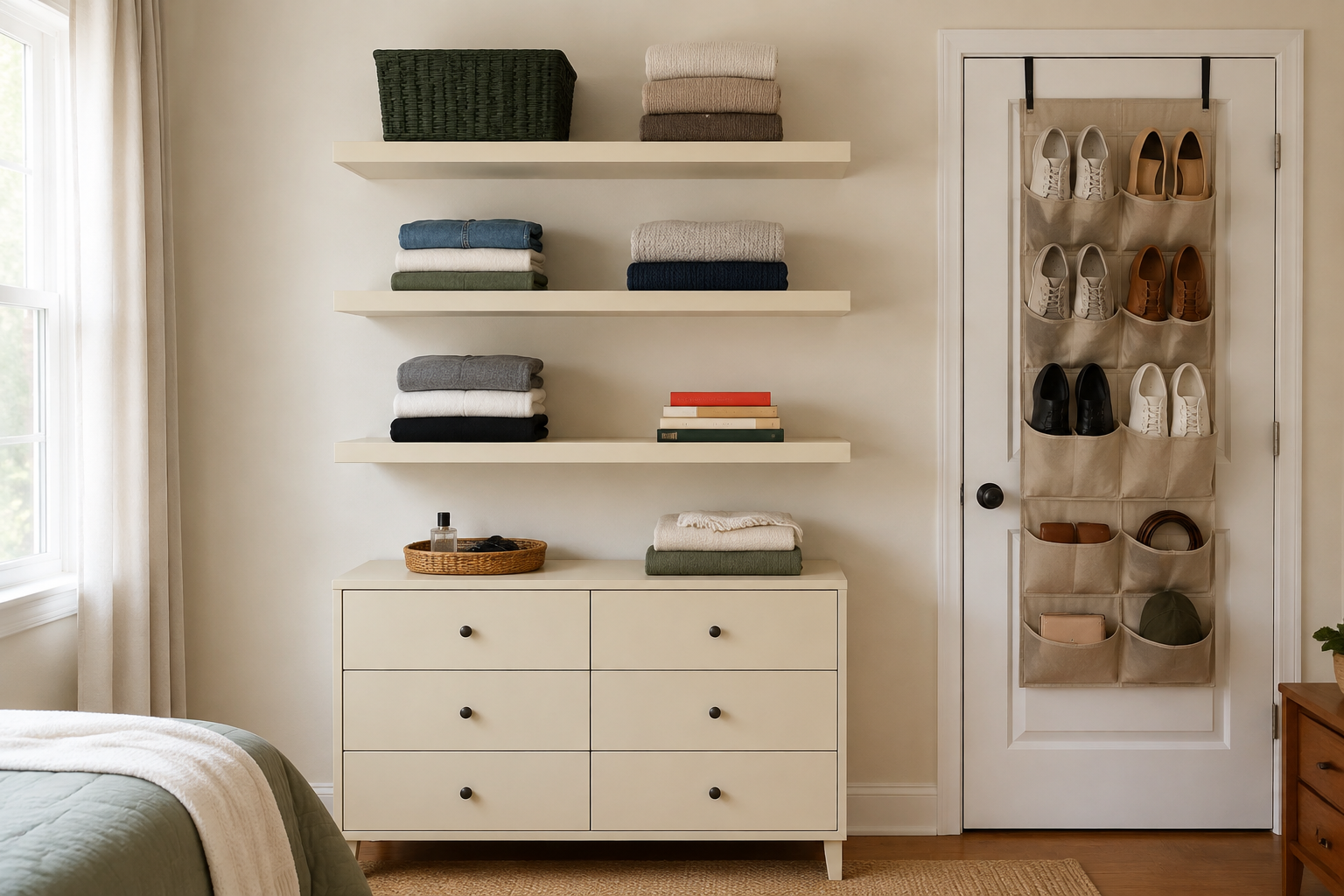
Picture the same 10×10 bedroom before and after: in the before, the walls above furniture height sit completely bare, all the storage crammed into a closet and a dresser that’s already maxed out. In the after, three floating shelves and an over-the-door organizer are doing real work above and behind existing furniture, and the floor space hasn’t shrunk by a single inch. That’s the entire case for vertical storage. It’s the one zone in a small bedroom that adds capacity without competing with your walking space.
Most small bedroom storage advice treats walls as a decorating afterthought, something to hang art on once the “real” storage is sorted. That undersells what vertical space can actually hold. The area above 48 inches, roughly furniture height, is almost always empty in a small room, and it’s rental-safe to use since command-strip shelving and tension-mounted systems come down clean without drilling.
Start at 48 Inches and Work Up
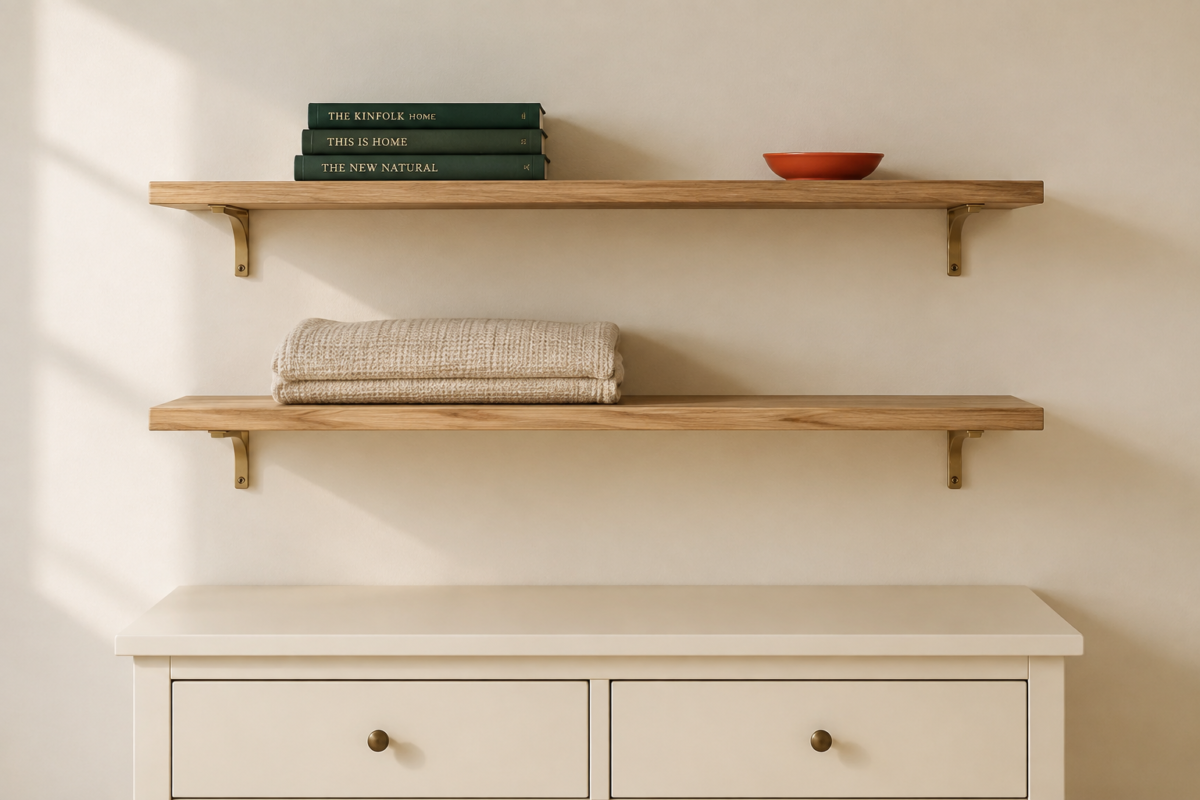
Wall space starts earning its keep above roughly 48 inches, the point where most furniture tops out. Below that line, shelving competes visually and physically with dressers and nightstands. Above it, the wall is empty real estate that adds storage without shrinking the room.
This is the line worth measuring before you buy a single shelf. Stand in the room and mark where your tallest piece of furniture ends. Anything above that line is fair game for floating shelves, and anything below it should stay clear, since crowding a wall at furniture height makes a small room feel lower and more cluttered, not more organized.
Three shelf placements that consistently earn their spot:
- Directly above a dresser or desk, for items you want visible and easy to grab, like books, a small plant, or a stack of folded scarves. This zone works best for things you use weekly, not seasonally.
- Flanking a window, using the vertical space on either side that furniture usually can’t reach anyway. A narrow shelf here holds small decor and light storage without blocking natural light.
- Above a headboard, if your bed sits against a solid wall. This spot handles books, a small lamp, or framed pieces, and it’s one of the few walls in a bedroom that isn’t already claimed by furniture.
The Back of the Door Is Wasted Space in Almost Every Bedroom
An over-the-door organizer typically holds 20 to 30 items, shoes, accessories, or small toiletries, in a zone that’s otherwise completely empty in most bedrooms. It hangs over the top of a standard interior door with no hardware and no drilling, which makes it one of the fastest vertical storage wins in a rental.
This is the spot people walk past every single day without noticing it’s empty. A door swings through roughly 30 square feet of floor space when it’s open, but the door itself, once closed, is a flat vertical surface doing absolutely nothing. An over-the-door shoe organizer, a hanging jewelry case, or a slim organizer built for cleaning supplies all use that surface without touching the floor plan at all.
Match the organizer to what’s actually cluttering your room, not what looks nice in a photo:
- Shoe pockets, if shoes are ending up in a pile by the closet instead of inside it. Clear vinyl pockets let you see the pair you want without unzipping anything.
- A hanging jewelry organizer, if jewelry is currently tangled in a dish on your dresser. Look for one with a mix of hook and zippered pouch sections, since necklaces and small studs need different storage.
- A slim mesh organizer, for cleaning supplies or extra toiletries that don’t have a home in a small bathroom-adjacent bedroom setup.
Ceiling-Height Storage: The Zone Almost Nobody Uses
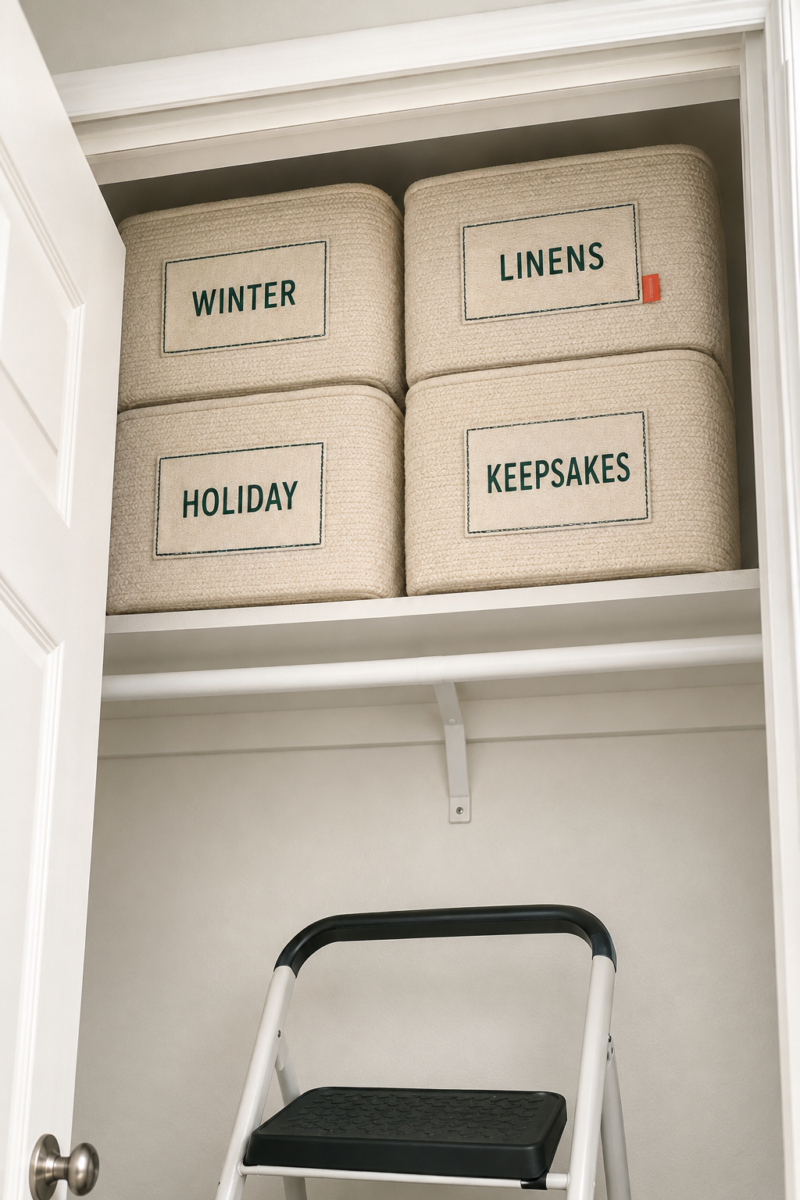
The space between the top of a closet shelf and the ceiling typically holds 4 to 6 stackable bins, storage that’s completely invisible from normal eye level and accessed only a few times a year. This is the highest-capacity, lowest-effort vertical zone in a small bedroom, and it’s routinely left empty simply because it’s above sightline.
Reaching it does take a small step stool, which is exactly why it’s the right spot for things you touch rarely: off-season clothing, spare bedding, out-of-season decor, or luggage. Label each bin in large text you can read from the floor, since you won’t want to pull down three bins just to find the right one. A simple system, front-facing labels in large text, does more for this zone than any bin style choice.
If your closet doesn’t have a shelf that reaches this high, a tension-mounted shelf kit installs above the existing rod without any drilling, adding a full second storage layer to a closet that currently stops at eye level.
Don’t Force Vertical Storage Where You Don’t Need It
Not every bare wall needs a shelf. If your closet, under-bed space, and furniture are already handling everything you own, an empty wall is doing something useful too, it’s giving the room visual breathing room instead of one more surface to organize. Vertical storage earns its place when you’re genuinely short on capacity elsewhere, not as a default add-on because a wall happens to be empty.
The test worth running before installing anything: is there a specific category of stuff that currently has no home, shoes, extra bedding, books, jewelry, or is the wall just bare and you’re filling it because it feels unfinished? The first is a real storage decision. The second usually ends in a shelf holding decorative objects that don’t need to be there, which crowds the room without solving anything.
Frequently Asked Questions
Do I need to drill holes for vertical wall storage? No. Command-strip floating shelves, over-the-door organizers, and tension-mounted closet shelf kits all install without drilling, which makes them fully rental-friendly and reversible when you move out.
How much weight can a command-strip floating shelf hold? It depends on the specific strip and shelf, but most rated command-strip shelving holds between 5 and 15 pounds evenly distributed. Check the packaging for the exact rating before loading it with anything heavier, like a stack of hardcover books.
Where’s the best place to start with vertical storage in a small bedroom? Start above furniture height, roughly 48 inches up, since that’s the zone that’s almost always empty and doesn’t compete with anything already in the room. An over-the-door organizer is usually the second-easiest win, since it needs no measuring or mounting at all.
Is ceiling-height closet storage hard to access? It requires a small step stool, which is exactly why it works best for items you only need a few times a year, like off-season clothing or spare bedding. Clear, front-facing labels make it fast to grab the right bin without pulling several down first.
Related Reading
If vertical storage is the last piece of a bigger system rather than your starting point, The Small Bedroom Storage Guide (In the Right Order) walks through why closet and under-bed space should be handled before you add anything to the walls.
If shoes are the main clutter problem an over-the-door organizer would solve, the Closet Organization hub covers the full closet-side system, including whether the shoes belong on the floor, on a shelf, or on the back of the door.
And if bedding or off-season clothing is what’s filling your ceiling-height bins, Under-Bed Storage Ideas That Actually Hold Things covers the alternative zone for the same category of items, in case under-bed clearance ends up being the easier fit.
For the rest of the storage library organized by zone, the Bedroom Storage category has every guide in this series, and the Small Bedrooms hub covers the full room beyond storage alone.