Table of Contents
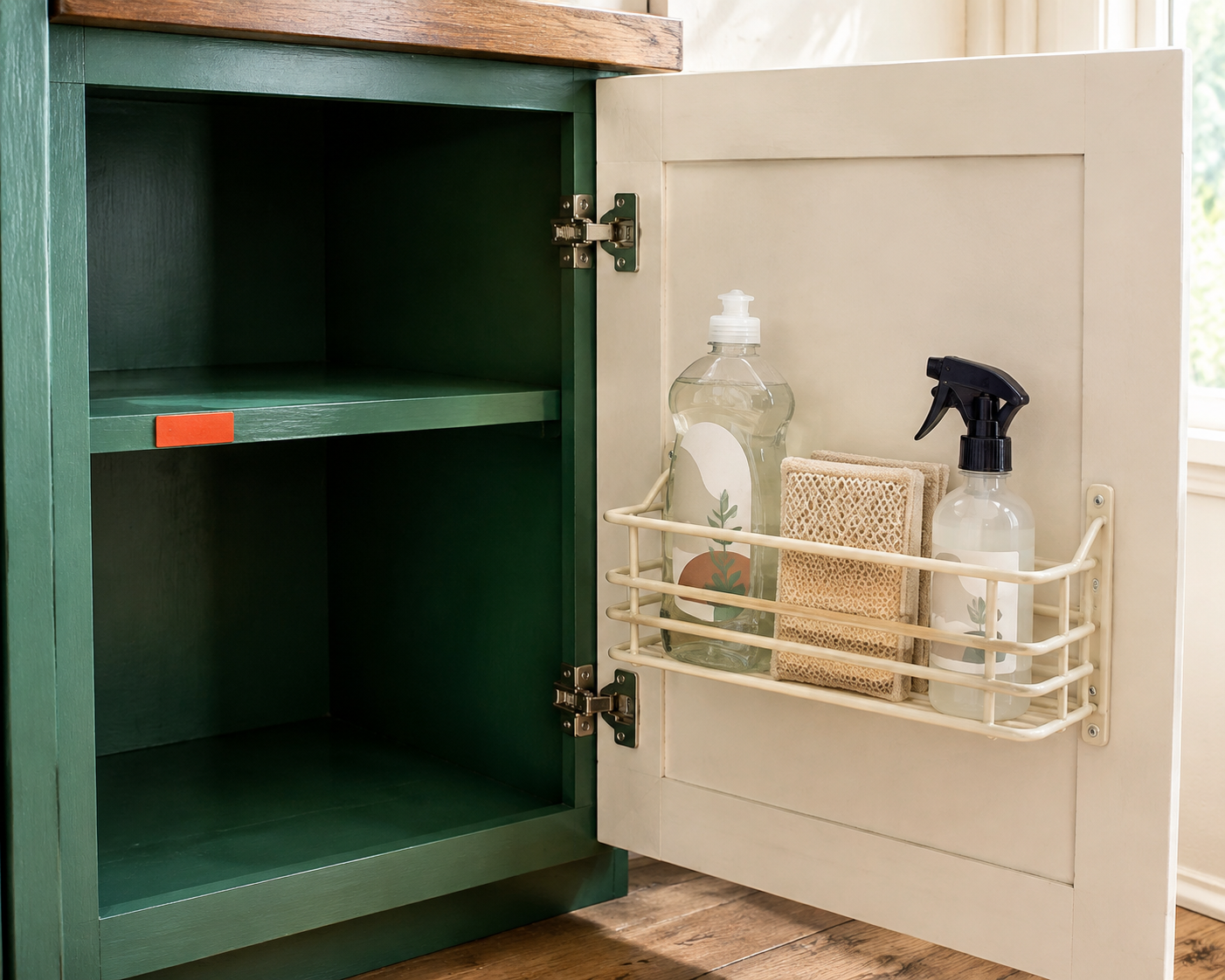
Open the cabinet under your sink right now. Look at the inside of the door. If it’s bare, flat, unused space, that’s storage capacity sitting empty in a kitchen where you probably don’t think you have any to spare.
Cabinet doors are the most overlooked storage surface in a small kitchen because they’re vertical and flat, which makes them easy to forget. Over-the-door racks, adhesive hooks, and slim door-mounted organizers turn that space into real storage for sprays, sponges, foil, spices, and lids, and none of it requires a drill.
Why Cabinet Doors Are the Easiest Storage Win You Have
Every cabinet door in your kitchen has usable space on its interior face, and most of it sits completely empty. Adding a rack or hook system there gives you storage capacity without losing a single inch of shelf space inside the cabinet, which makes it the fastest fix in a small kitchen with nowhere left to expand.
This matters most under the sink, where spray bottles and sponges usually sit loose on the cabinet floor and fall over every time you reach past them. It also matters on pantry doors, where flat items like foil boxes and spice jars get shoved sideways into whatever gap is left on a shelf. A door rack gives both of those categories an actual home instead of a pile.
If your whole kitchen feels like it’s out of storage and you haven’t sorted what’s already in your cabinets, The Complete Guide to Small Kitchen Storage walks through the full order of operations, cabinets first, then doors, then walls, so you’re not adding racks to a cabinet that still needs a real declutter.
What Actually Fits on a Cabinet Door
Wire racks, mesh baskets, and slim over-the-door organizers hold anything flat, light, or bottle-shaped, think spray bottles, sponges, foil and plastic wrap boxes, cutting boards, and spice jars. Heavier or bulky items, like cast iron pans or a stack of plates, don’t belong on a door rack no matter how sturdy it looks.
The rule of thumb is simple: if you can hold it comfortably in one hand while the door swings, it works on a door rack. If it needs two hands or shifts your balance, it goes back on a shelf.
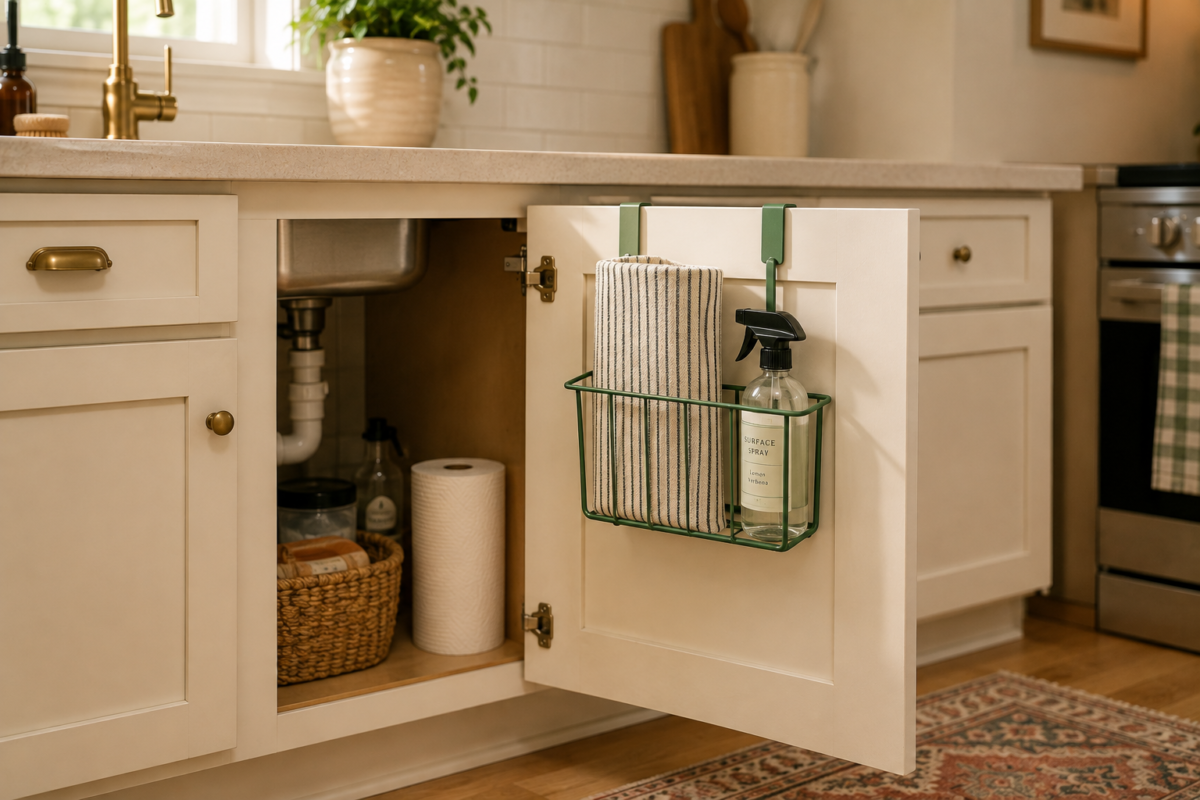
Under-the-sink cabinet door: a wire rack holds dish soap, a sponge caddy, and one or two spray bottles, keeping the cabinet floor clear for the trash bin liner box and a bin for recycling.
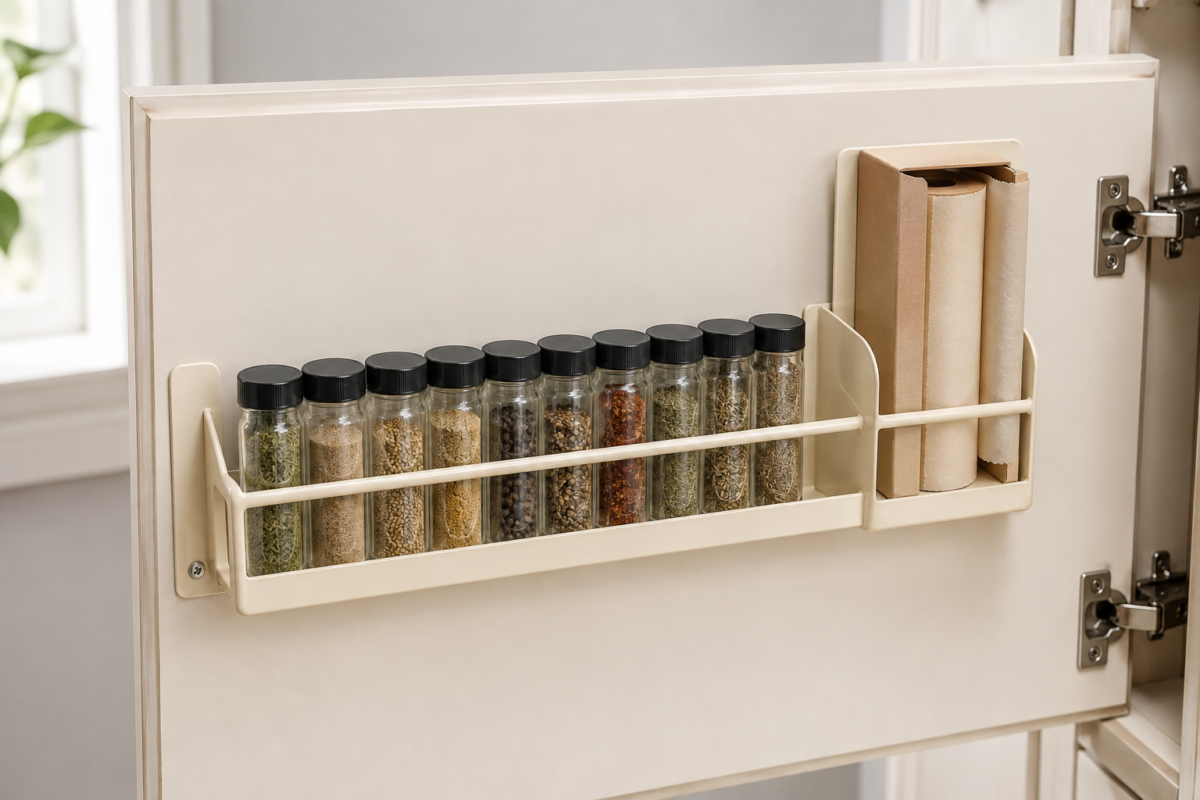
Pantry or dry-goods cabinet door: a shallow rack holds spice jars in a single visible row, plus a slot for foil, parchment, and plastic wrap boxes that otherwise sit sideways and slide every time the door opens.
Under the stove or a lower cabinet door: a slim rack holds one or two cutting boards on edge, freeing up a shelf that used to lie flat and stack three boards deep.
What to Check Before You Buy One
Not every door rack fits every cabinet, and the biggest mistake is buying one before measuring what happens when the door actually closes. A rack that’s too deep hits the shelf behind it, and a rack that’s too heavy when loaded can pull screws or adhesive strips loose within weeks.
Measure the gap between the inside of the door and the front edge of the nearest shelf before you buy anything; most standard racks need at least 3 to 4 inches of clearance to close without hitting. Check the weight rating on the rack itself, not just the adhesive strips or hooks holding it, since a rack rated for 10 pounds loaded with glass jars can still exceed that once everything’s added up. And test the door swing with the rack empty first. If it drags or doesn’t latch, that’s a return, not a project to force through.
Rental-Friendly Door Racks That Need No Drilling
If you’re renting, door racks are one of the easiest wins in the whole kitchen because most mount with adhesive strips or slide over the top of the door, no screws required. A wire rack that hooks over the top edge of a cabinet door holds real weight without a single hole, and it comes off in seconds at move-out.
For doors where the top-edge style doesn’t fit, adhesive hooks rated for kitchen use hold lighter items like a dish towel or a small spray bottle without leaving marks behind. Rental-Friendly Kitchen Storage That Needs No Drilling covers which adhesive products actually hold up in a real kitchen, since steam and grease near the stove weaken some faster than others.
FAQ
Do cabinet door racks damage the door? No, if you choose an over-the-door style that hooks over the top edge or an adhesive rack rated for kitchen use. Both leave the door undamaged and remove cleanly, which matters if you’re renting or just don’t want visible screw holes.
How much weight can a cabinet door rack hold? Most wire door racks hold 5 to 15 pounds depending on the mounting style, with over-the-door hook racks generally handling more weight than adhesive-mounted ones. Always check the rack’s own weight rating, not just the general category, since materials and mounting hardware vary between brands.
What’s the best cabinet for a door rack, under the sink or the pantry? Both work well, but they hold different things. Under-the-sink doors are best for sprays and sponges, while pantry or dry-goods doors work better for spice jars and flat items like foil and plastic wrap boxes.
Will a door rack stop my cabinet from closing all the way? It can, if you skip measuring the clearance between the door and the shelf behind it first. Most standard racks need 3 to 4 inches of clearance, so measure that gap before buying, and test the door with the rack empty before loading it up.
Related Reading
For the full order of operations across your whole kitchen, start with The Complete Guide to Small Kitchen Storage.
If your walls above the counter are still empty, Vertical Storage for Kitchens With No Extra Cabinets covers what’s worth hanging there.
If you’re renting and want more no-drill options beyond door racks, Rental-Friendly Kitchen Storage That Needs No Drilling has the full list.
For more storage fixes across every part of a small kitchen, visit the Kitchen Storage category, part of the Small Kitchens hub.