Table of Contents
Stand in the middle of your kitchen and look up. Above your counters, above the stove, on either side of the window, there’s probably several feet of bare wall doing absolutely nothing. That’s not empty space. That’s storage you haven’t installed yet.
When a kitchen has no room for more cabinets, the wall above the counter is the next best thing. Floating shelves, pegboards, and rail-and-hook systems add real storage capacity without touching the floor or requiring a single new cabinet box, and most options work in a rental as easily as an owned home.
Why the Wall Above Your Counter Is the Answer
Most small kitchens run out of cabinet space long before they run out of wall space, which makes vertical storage the highest-value fix available once the cabinets are already full. A single stretch of wall above a counter can hold as much as an entire extra cabinet, without the cost or hassle of installing one.
This matters most in galley kitchens and studio kitchenettes, where there’s often only one real wall to work with and no floor space to spare for a freestanding unit. Using that wall well can be the difference between a kitchen that feels impossibly tight and one that feels like it has room to breathe.
If you haven’t sorted your existing cabinets yet, adding wall storage on top of a disorganized kitchen just gives you a new place to lose track of things. The Complete Guide to Small Kitchen Storage covers the full order, cabinets and doors first, walls second, so vertical storage actually solves a real gap instead of adding clutter above your head.
Floating Shelves for Everyday Items
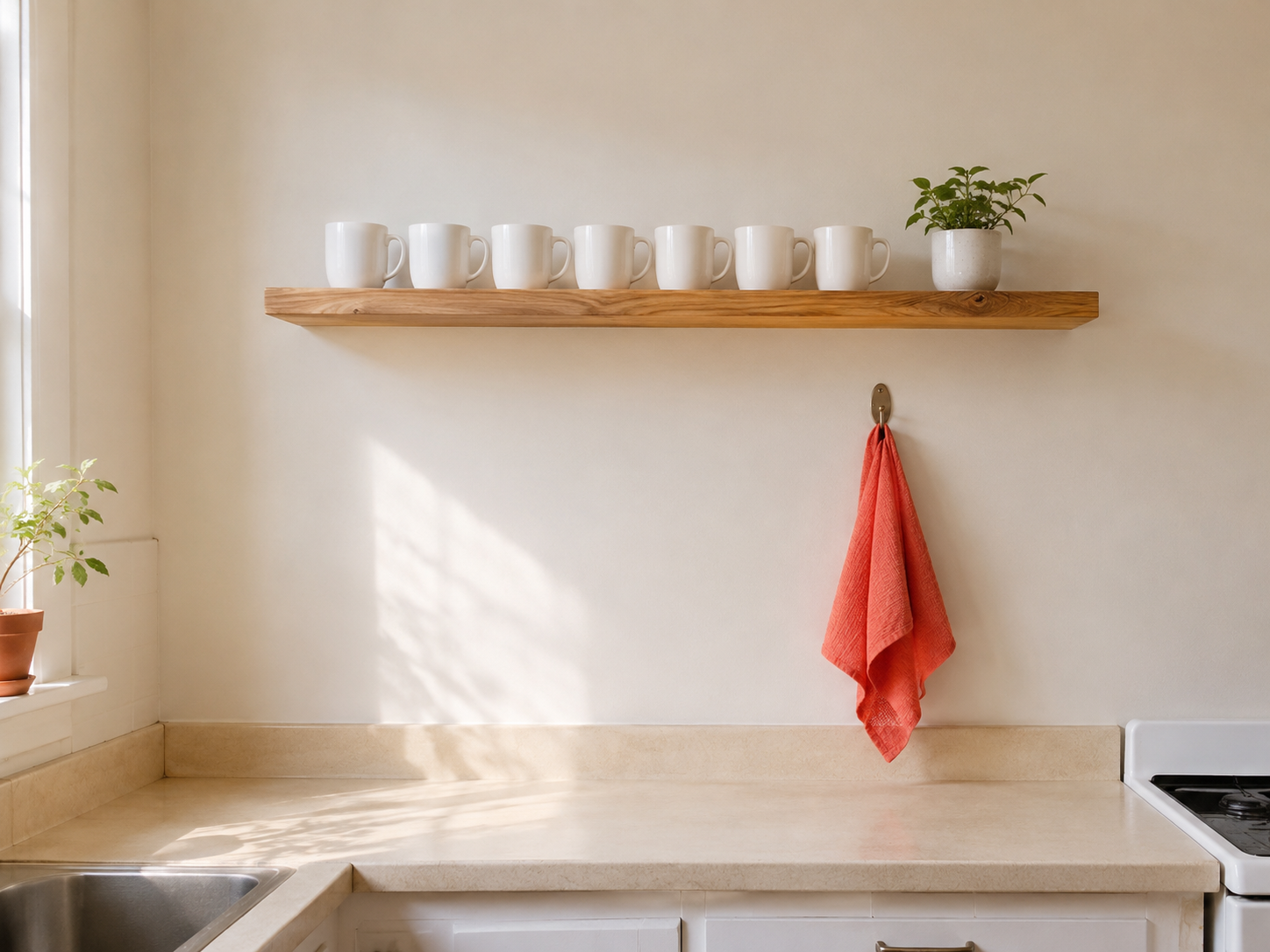
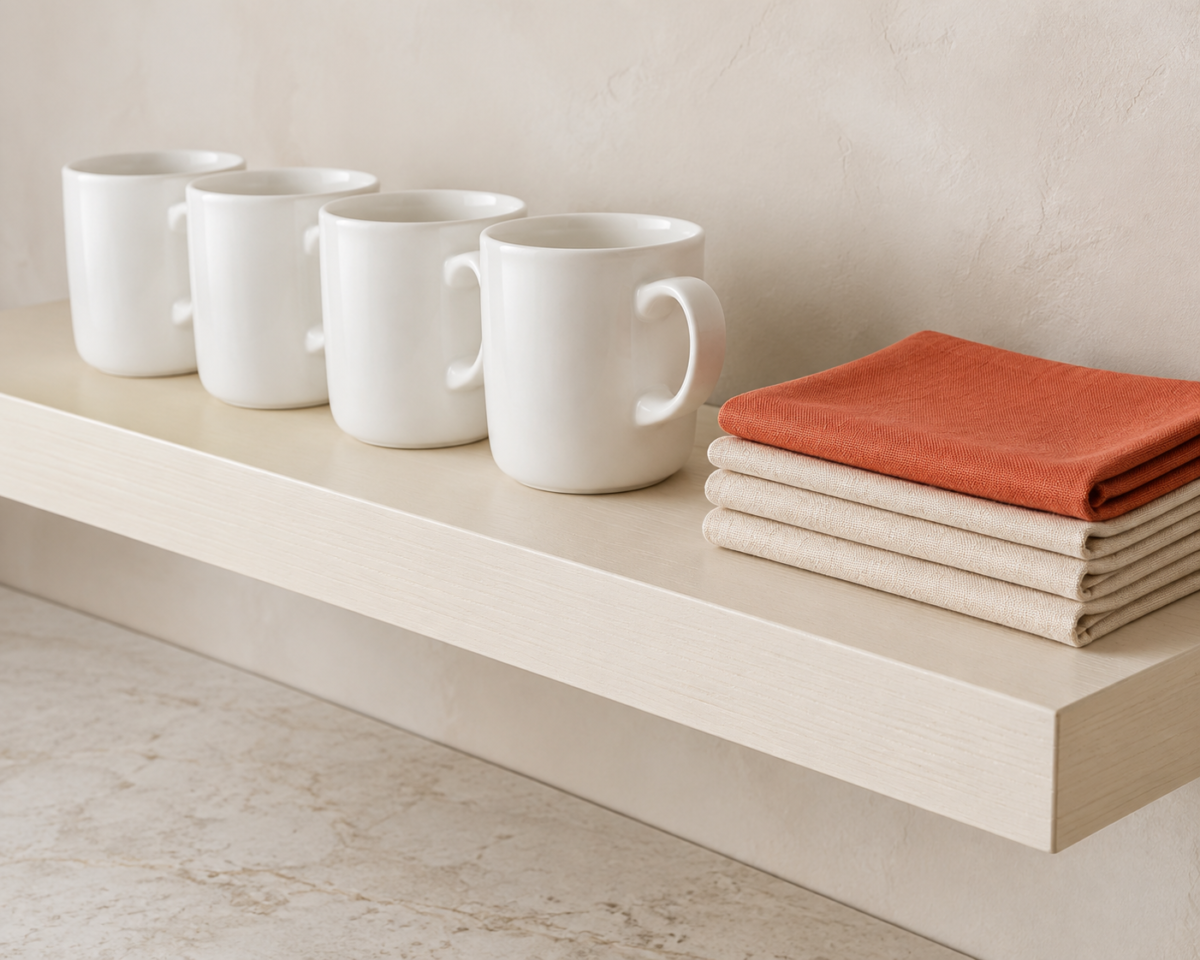
A single floating shelf mounted above your counter or stove gives you open, visible storage for the items you reach for most, plates, mugs, glasses, or a row of cookbooks. Because the shelf is open, everything on it stays easy to grab with one hand, which matters more in a small kitchen than a closed cabinet ever will.
Keep floating shelves to items you use weekly, not seasonal or rarely-used pieces, since open storage looks best (and stays most useful) when it’s not overloaded. A standard 24-inch floating shelf, properly anchored into studs, typically holds 25 to 40 pounds, enough for a stack of ten to twelve plates or a row of mugs and glasses.
Pegboards for Pots, Utensils, and Real Flexibility
A pegboard mounted above a prep area or the stove gives you hanging storage that rearranges as your cooking habits change, which a fixed shelf can’t do. Hooks hold pots, pans, cutting boards, and utensils in the open, freeing up drawer and cabinet space for everything else.
The advantage over a shelf is flexibility. If you start cooking more one-pot meals and fewer sheet-pan dinners, you move the hooks in twenty minutes instead of buying new storage. A painted pegboard also doubles as a visual anchor on a plain wall, which is part of why it works as both function and decor in a small kitchen that has limited room for either.
Mount the pegboard into studs or with heavy-duty anchors rated for the total weight of what you plan to hang, cast iron pans especially add up fast, and leave at least 18 inches of clearance below it if it’s above a stove, so nothing hangs directly over an open flame.
Rail and Hook Systems Under Upper Cabinets
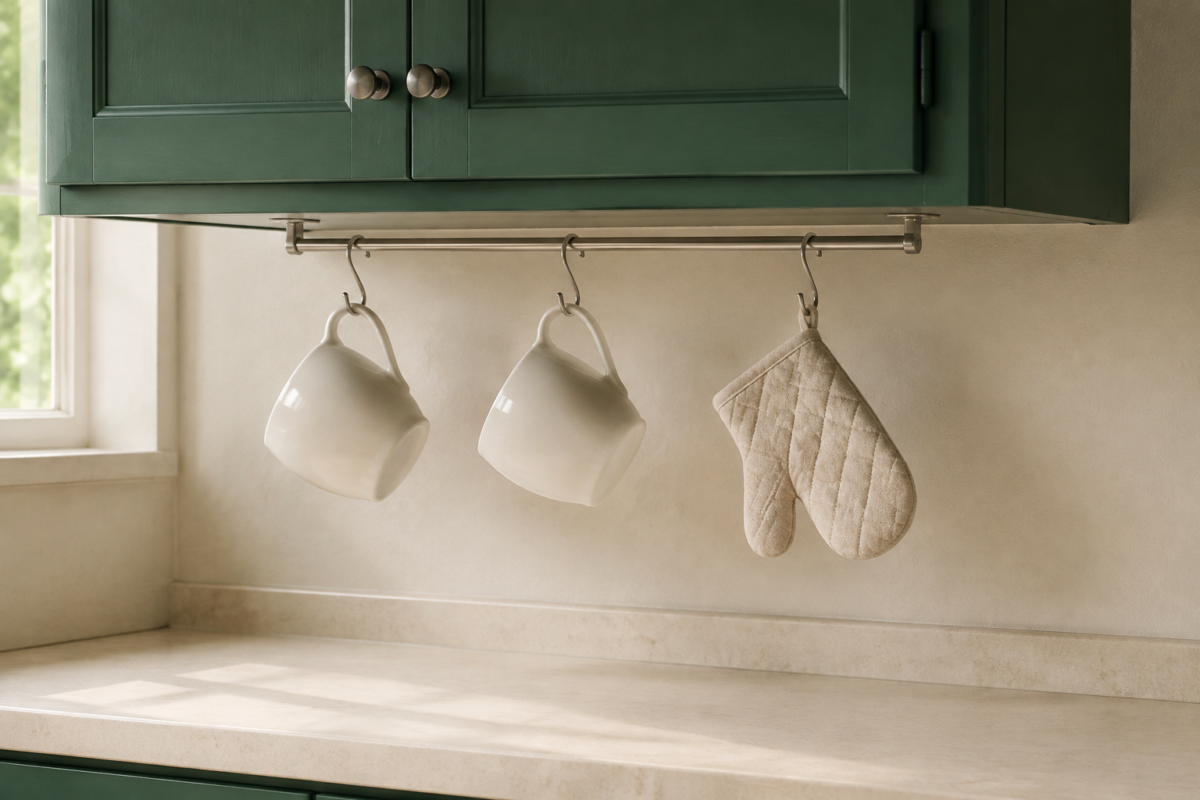
If your upper cabinets stop short of the counter, leaving a gap of open wall underneath, a rail-and-hook system mounted just below the cabinet uses that strip without needing its own separate installation. S-hooks along the rail hold mugs, small pots, or oven mitts within easy reach of where you’re actually cooking.
This is one of the lowest-effort vertical options because most rail systems mount with just two or three screws into the underside of the existing cabinet, no new studs to find. It’s also one of the easiest to remove cleanly if you move, since patching two small holes is far less work than patching a full shelf mount.
What Not to Hang, and What to Skip Entirely
Not everything belongs on a wall. Heavy cast iron, large stockpots, and anything you use less than once a month are better kept in a cabinet or on a lower shelf, both for weight safety and because open storage that’s rarely used just becomes visual clutter instead of a functional system.
Skip any wall mount you haven’t checked against your wall type first. Drywall alone, without anchors into a stud, generally holds far less weight than most people assume, and a shelf that pulls loose after two weeks is a bigger problem than the empty wall you started with. If you’re renting and unsure what your walls allow, Rental-Friendly Kitchen Storage That Needs No Drilling covers tension-mounted and adhesive alternatives that skip wall anchors entirely.
FAQ
How much weight can a floating shelf hold in a kitchen? A properly anchored 24-inch floating shelf, mounted into wall studs, typically holds 25 to 40 pounds. Weight capacity drops to roughly 5 to 10 pounds with drywall anchors alone, so check your wall type before loading it with heavy dishware.
Is a pegboard or a floating shelf better for a small kitchen? A pegboard offers more flexibility since you can rearrange hooks as your cooking habits change, while a floating shelf gives you visible, grab-and-go storage for everyday plates or mugs. Many small kitchens benefit from one of each, a shelf for daily dishware and a pegboard for pots and utensils.
Can I add vertical storage without drilling into the wall? Yes, for lighter loads. Adhesive strips and hooks rated for kitchen use, plus tension-mounted rails, hold items like towels, oven mitts, and light utensils without any drilling. Heavier items like a full shelf of plates generally need a proper stud-anchored mount to stay safe long-term.
How do I find a stud to mount a shelf on a kitchen wall? A stud finder is the most reliable method, and most hardware stores sell a basic one for under $15. If you don’t have one, knocking gently along the wall and listening for a change from hollow to solid can help locate a stud, though it’s less precise than an actual finder.
Related Reading
For the full order of operations across your whole kitchen, start with The Complete Guide to Small Kitchen Storage.
If your cabinet doors are still bare, Cabinet Door Storage You’re Not Using Yet shows what actually fits there.
If you’re renting and want zero-drilling alternatives to wall mounting, Rental-Friendly Kitchen Storage That Needs No Drilling has the full breakdown.
For more storage fixes across every part of a small kitchen, visit the Kitchen Storage category, part of the Small Kitchens hub.