Table of Contents
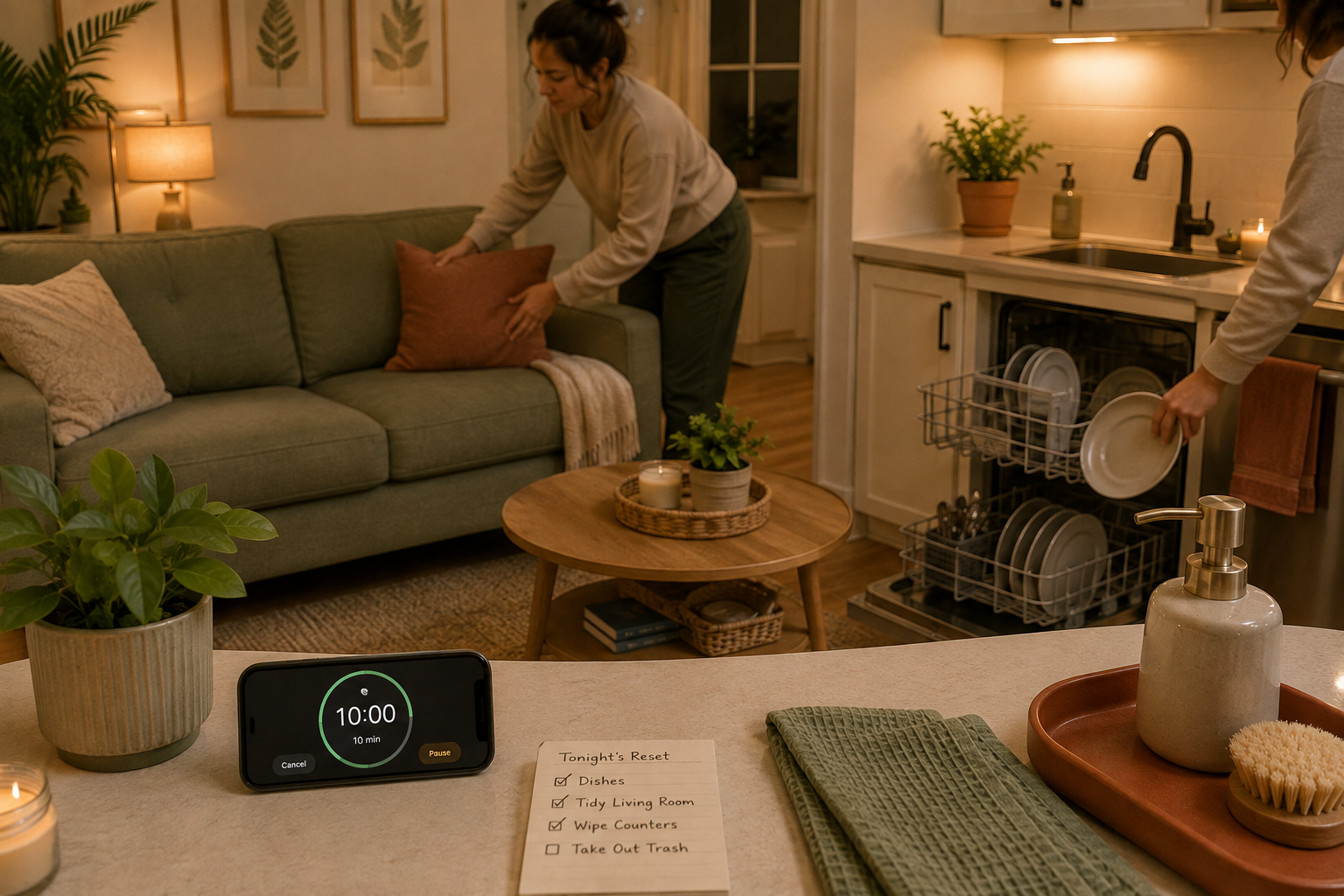
Most tidying advice assumes a spare hour that doesn’t actually exist most evenings. Ten minutes is different. It’s short enough to fit into any day, no matter how full, and it’s exactly enough time to stop a day’s worth of clutter from becoming a week’s worth. The routine below breaks those ten minutes into four short segments, each with a specific job, so nothing gets skipped and nothing takes longer than it needs to.
Do this at the same time every day, ideally right after dinner or right before winding down for the night, so the home starts every new morning at a genuine baseline rather than one day further into a slow decline.
Minutes One Through Three: The Kitchen Reset
The kitchen accumulates the fastest of any room in a small home, since it gets touched multiple times a day for meals, snacks, and drinks. Start here because a kitchen left messy overnight tends to set a discouraging tone for the whole next day before it’s even started.
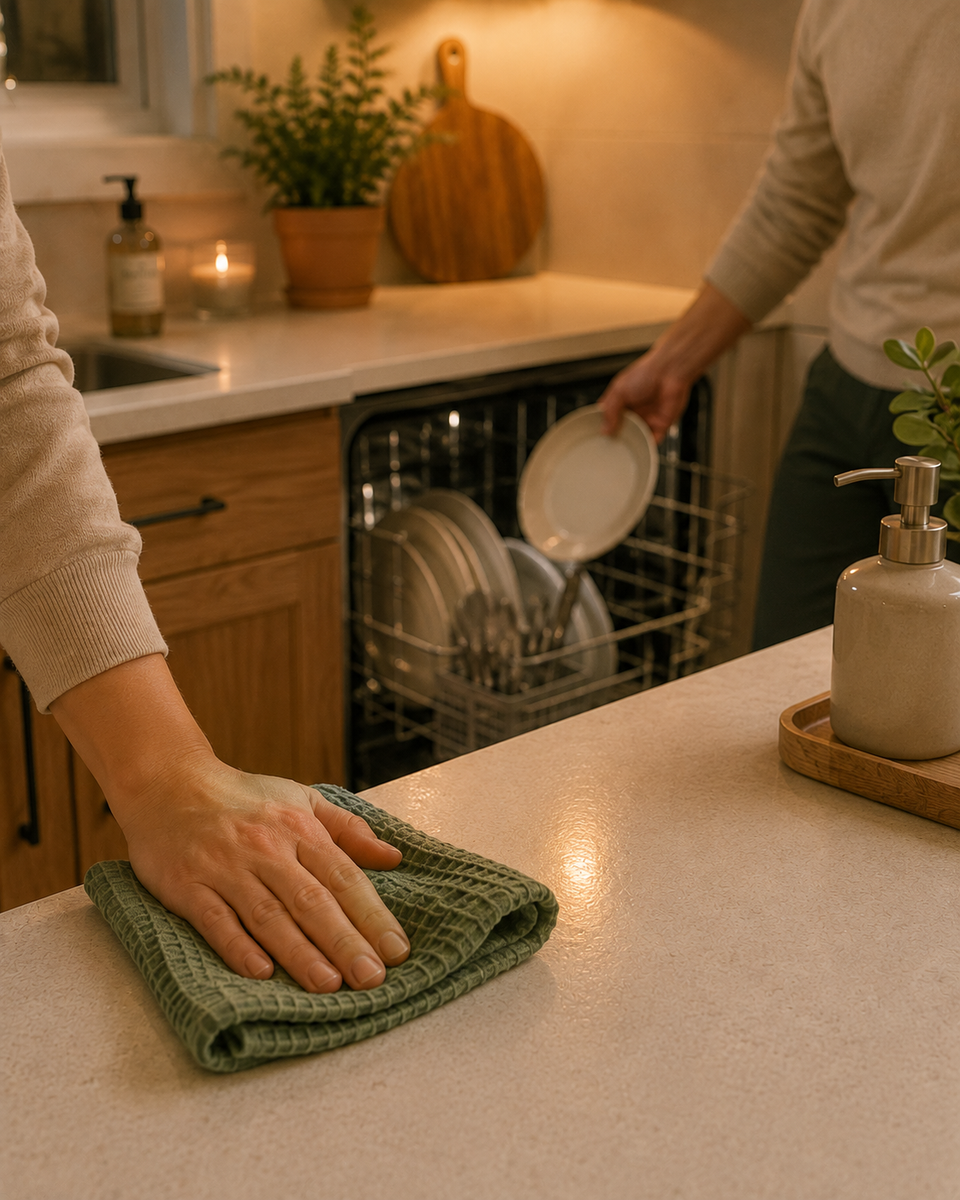
Load or hand-wash whatever dishes accumulated since the last reset. If the dishwasher is full and running, that’s fine, the goal is dishes off the counter and out of the sink, not necessarily fully clean and put away. Wipe down counters and the stovetop in one quick pass, focusing on visible crumbs and spills rather than a deep scrub, which belongs in the weekly routine instead.
Check the table or any eating surface for anything left behind, mail, a stray plate, a child’s homework, and return each item to where it actually belongs rather than simply shifting the pile to a different surface. This last step matters more than it seems, since a kitchen that looks clean but has simply relocated its clutter to a counter or a chair isn’t actually reset, just rearranged.
Minutes Four Through Six: The Living Room and Shared Spaces
The living room, or whatever shared space the household spends the most time in during the evening, is the second stop, since it’s usually where the day’s loose items land: a book left open, a blanket half-folded on the couch, remote controls scattered across a coffee table.
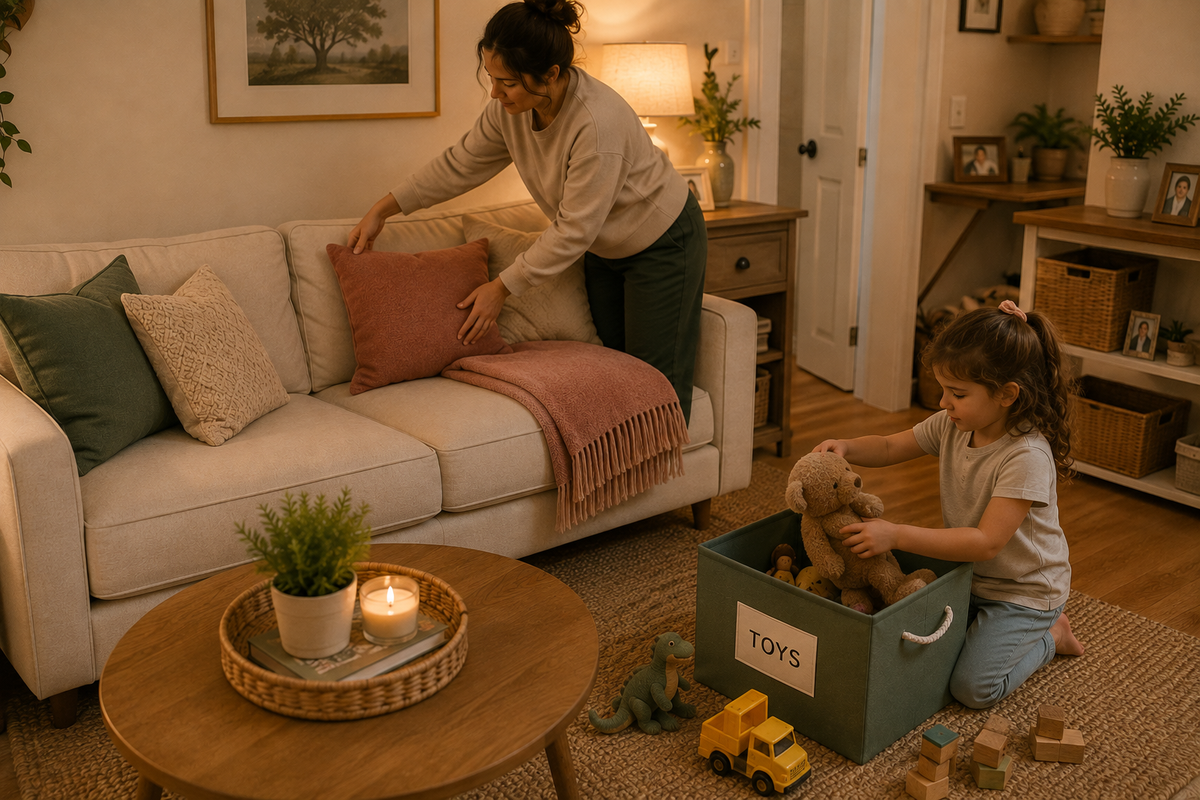
Straighten couch cushions and fold or drape any blankets neatly rather than leaving them bunched. Clear the coffee table or any main surface of loose items, returning each one to its actual home, a book to a shelf, a remote to its designated spot, rather than simply stacking everything into a single neater-looking pile that still needs to be dealt with eventually.
If the household includes kids, this is also the moment for a quick toy sweep: back into a bin or basket rather than left scattered across the floor. Keeping a designated bin genuinely accessible in the living room itself, rather than requiring a trip to a bedroom or closet, makes this step fast enough to actually happen every single day rather than getting skipped because the bin is inconveniently placed.
Minutes Seven Through Nine: The Entryway and Bedroom
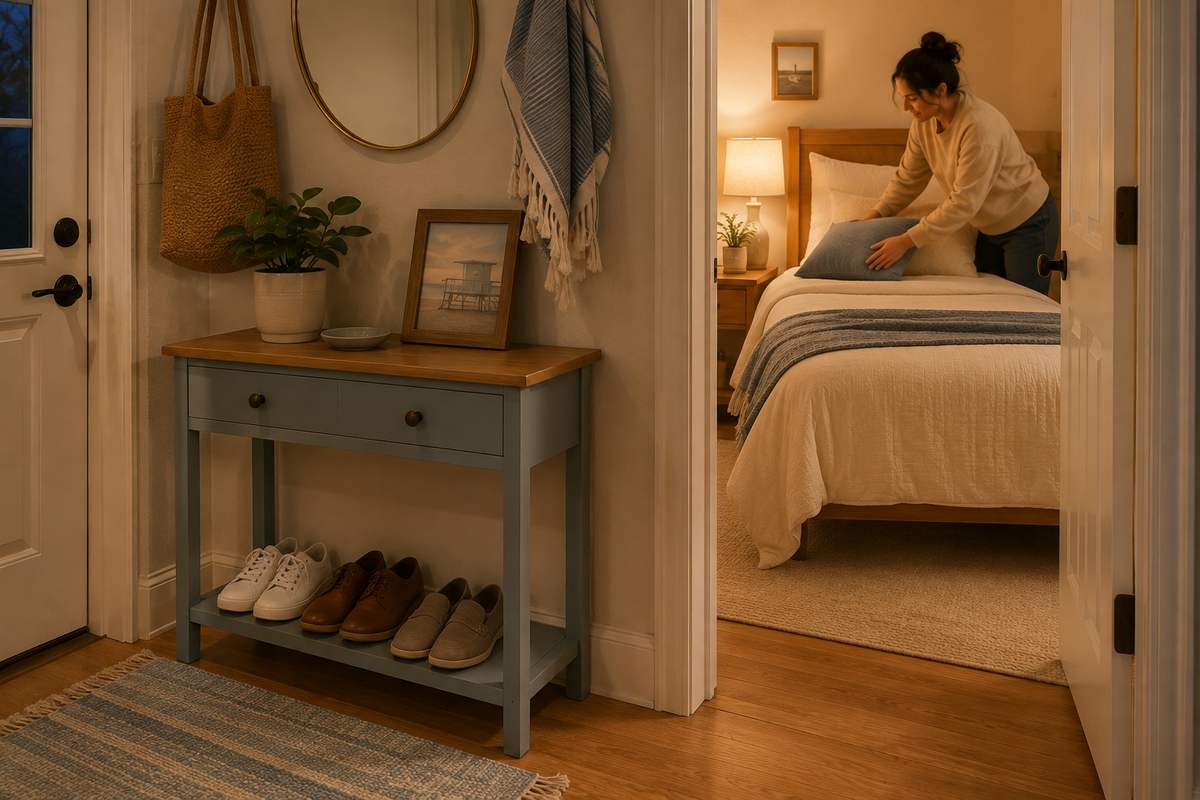
The entryway is a small but high-impact stop, since it’s the first thing seen coming home and the last thing seen leaving. Shoes get lined up or placed on a rack rather than left scattered by the door, coats and bags go on hooks rather than draped over a chair, and any mail or packages get moved to wherever they’re actually dealt with rather than left in a pile by the entrance.
The bedroom gets a quick pass too: the bed gets made or straightened, clothes worn that day get hung back up or placed in a hamper rather than draped over a chair, and any surface clutter, a dresser top, a nightstand, gets a fast clear. This step matters more for how the next morning feels than for how the room looks at night, since climbing into a made bed and waking up to a tidy room genuinely changes the tone of the following day for a lot of people.
Skip anything in either room that would take more than a minute or two, a genuinely messy closet, a drawer that needs real sorting. Those belong in the weekly or monthly routine, and trying to squeeze them into this daily pass is one of the fastest ways for a ten-minute routine to quietly become a twenty-five-minute one that starts getting skipped.
Minute Ten: The Final Walkthrough
The last minute is a quick lap through the home, checking for anything the first three segments missed. This is often where a stray item gets spotted, a cup left in a bedroom, a jacket still on a chair rather than a hook, and a genuinely fast final catch keeps small misses from turning into the start of tomorrow’s clutter.
This final minute is also a good moment to do a quick mental note of anything that needs more than today’s ten minutes can offer: a task better suited for the weekly routine, a repair that needs attention, a category that’s started building up and deserves a longer look soon. Jotting this down somewhere, even a quick note on a phone, means it doesn’t get forgotten by the time the weekly or monthly routine actually rolls around.
Why the Order of These Four Segments Matters
Starting with the kitchen rather than any other room isn’t arbitrary. It’s the room most likely to have accumulated genuine mess (dishes, spills) rather than just displaced clutter, so tackling it first means the hardest part of the routine is done while energy and motivation are both highest. Ending with a fast walkthrough rather than a specific room means the routine closes with a check on the whole home rather than a single space, catching anything that slipped through the earlier segments.
If a specific day genuinely doesn’t allow for all ten minutes, prioritize the kitchen segment above the others. A messy kitchen sets a rough tone for the next morning more than an unmade bed or a stray shoe by the door does, so if only three minutes are available, that’s where they’re best spent.
Building the Habit So It Sticks
The hardest part of a daily routine isn’t the ten minutes themselves. It’s remembering to actually start each day, especially in the first few weeks before it becomes automatic. Attaching the routine to something that already happens daily, right after the last dish from dinner, right before brushing teeth at night, removes the decision of when to do it, which is often the real reason a short daily task gets skipped rather than the task itself being too much.
A physical or phone timer helps in the early weeks more than it might seem necessary for such a short routine. Ten minutes goes by faster than expected once you’re actually moving through the segments, and a timer prevents the routine from either stopping short of real progress or quietly stretching into fifteen or twenty minutes that starts feeling like a bigger commitment than it’s meant to be.
For a household with more than one person, splitting the four segments across family members, one person on the kitchen, another on the living room, speeds up the whole routine and builds a shared sense that tidying is a collective habit rather than one person’s ongoing responsibility. Even young children can take on a simplified version of one segment, like the toy sweep in the living room, which starts building the habit early rather than waiting until it feels like a chore to introduce later.
What This Routine Isn’t Meant to Replace
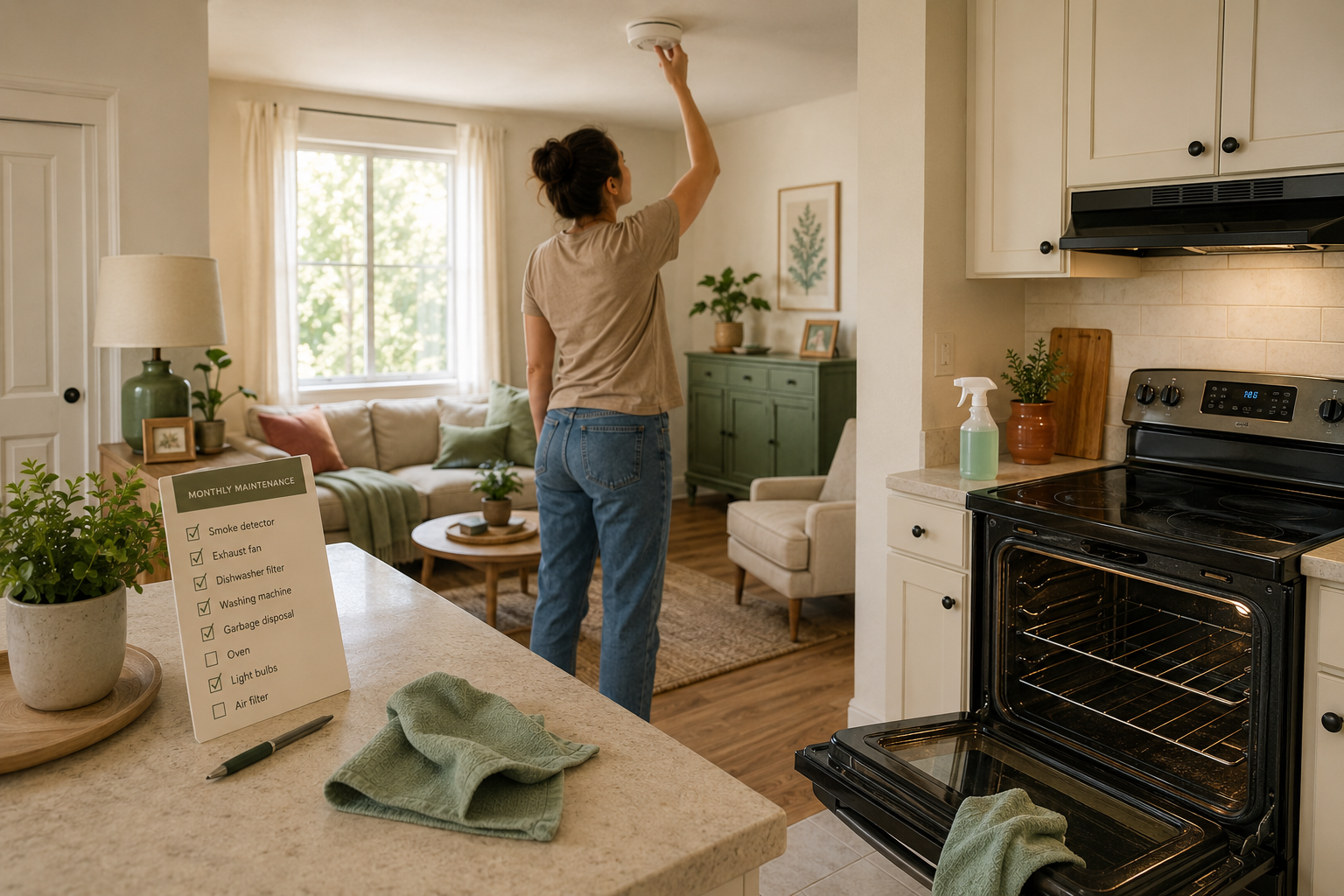
A ten-minute daily reset is deliberately narrow in scope, and it’s worth being clear about what it doesn’t cover so expectations stay realistic. It won’t replace a proper weekly clean of bathrooms and floors, and it won’t catch the kind of deeper maintenance, checking smoke detectors, cleaning behind appliances, that only needs attention once a month. Trying to stretch this routine to cover those tasks usually means it takes too long and starts getting skipped altogether.
Think of this routine as damage prevention rather than deep cleaning. Its entire purpose is making sure a single day’s mess never gets the chance to become two days’ worth, three days’ worth, and eventually an overwhelming pile that takes an entire weekend to address. A home that keeps this daily habit consistently rarely needs a dramatic weekend catch-up session, since there’s simply nothing large enough left to catch up on.
FAQ
What if my home is already messier than a ten-minute routine can handle? Start the daily routine anyway, even if it only makes a small dent the first few days. A consistent daily reset, paired with a dedicated weekend or weekly session to catch up on existing buildup, gets a home to a manageable baseline faster than waiting until everything’s already tidy to start.
Can I do this routine in the morning instead of the evening? Yes, though an evening routine tends to work better for most households, since it means waking up to an already-tidy home rather than starting the day with cleanup. Pick whichever time is more consistently available and stick with it.
What if I live alone and don’t generate much daily mess? The routine can shrink to five minutes or less for a single person with lower daily accumulation. The same four segments still apply, just with less to actually do in each one.
Do I need to do this every single day without exception? Missing an occasional day won’t undo the routine’s benefits, but the habit works best with real consistency. A day or two missed here and there is normal; a week or more missed usually means the next session takes noticeably longer to catch back up.
Related Reading
For how this daily routine fits into a larger system, The Complete Home Maintenance Routine Guide covers the daily, weekly, and monthly tiers together in more depth.
For the slightly longer pass that catches what this daily routine misses, The Weekly Reset Checklist for a Small Home covers the tasks that build up gradually across several days.
And for the tasks easy to forget entirely without a set monthly reminder, A Monthly Maintenance Checklist for the Tasks Easy to Forget covers what belongs on a once-a-month schedule instead.
For the full category, browse Maintenance Routines under the Seasonal & Maintenance hub, home to every routine and reset guide on the site.