Table of Contents
The single biggest predictor of a smooth move-in isn’t how organized the boxes are. It’s what happened before a single box was ever packed, specifically, whether the apartment was measured, utilities were scheduled, and a handful of setup tasks were handled with real lead time instead of squeezed in at the last minute.
Most move-in stress traces back to the same root cause: something that needed advance planning got treated as a same-day task instead. A sofa that doesn’t fit through the stairwell. Internet that won’t be installed for another week. A first night with no shower curtain and no idea where the nearest hardware store is. Every one of these is avoidable with a checklist run in the right order, starting well before moving day and ending with the smaller details that make the first night actually feel livable.
Three to Four Weeks Out: Measure Everything
Measuring before committing to furniture, a truck size, or even your final layout plan is the step that prevents the most common and most frustrating move-in day problems.
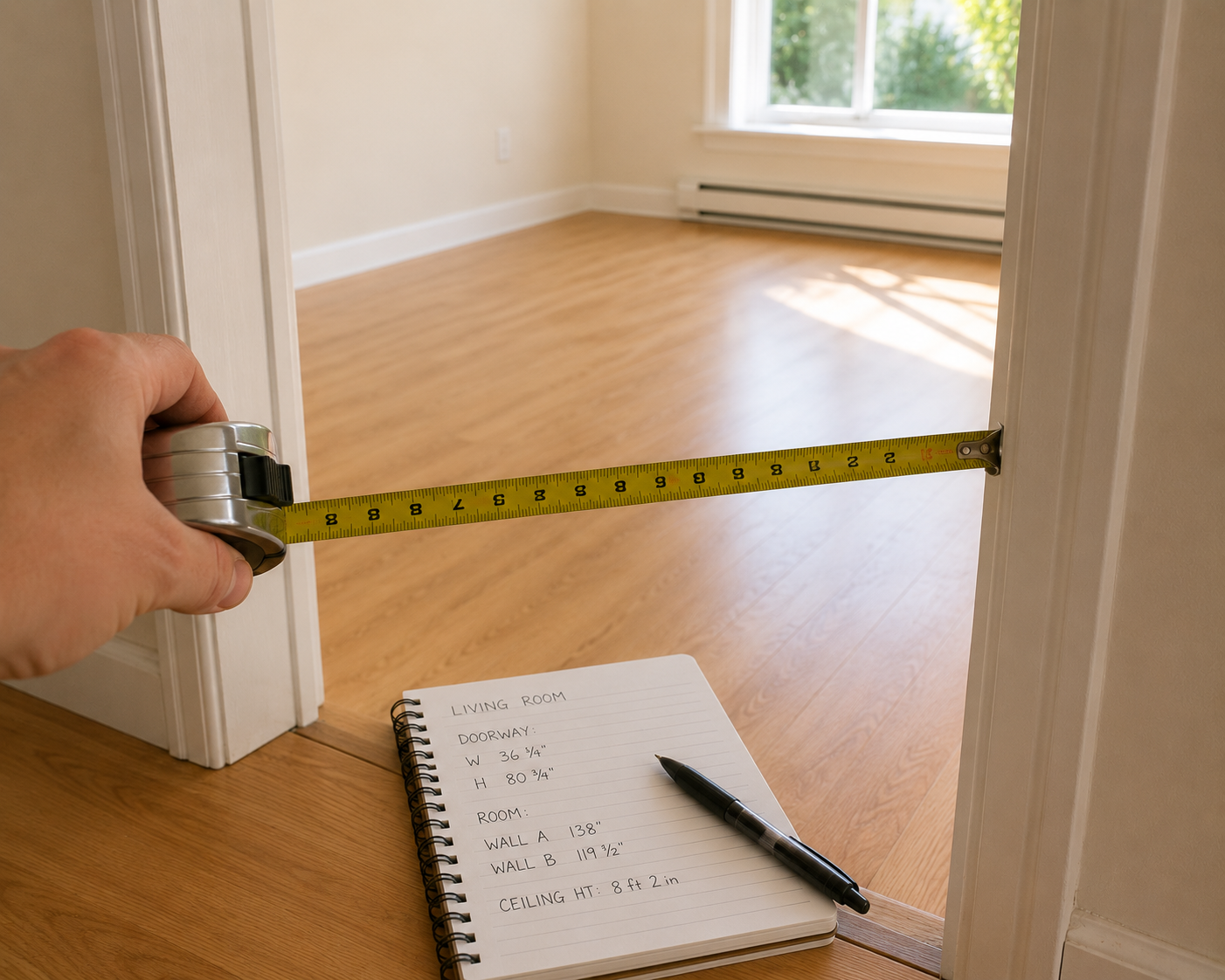
Measure every room’s width, length, and ceiling height. Room dimensions determine what furniture will actually fit, and ceiling height matters more than people expect for tall pieces like bookshelves or wardrobes, particularly in older buildings where ceiling heights can vary meaningfully from what’s listed in a floor plan.
Measure every doorway, hallway, and stairwell your furniture needs to pass through. This is the step people skip most often, and it’s the one most likely to cause a real problem. A sofa that fits the living room on paper is irrelevant if it can’t physically make it around a tight stairwell corner or through a narrow hallway to reach that room.
Note window dimensions for curtains and blinds. Ordering curtains before move-in, rather than living with bare windows for the first few weeks, means privacy and a finished look from day one rather than a gradual project that takes months to actually complete.
Sketch a rough furniture layout based on your measurements, even a simple hand-drawn floor plan. This catches sizing conflicts (a bed and a desk that can’t both fit against the same wall, for example) before moving day rather than during it, when there’s no time or energy left to solve a layout problem on the fly.
Two to Three Weeks Out: Utilities and Services
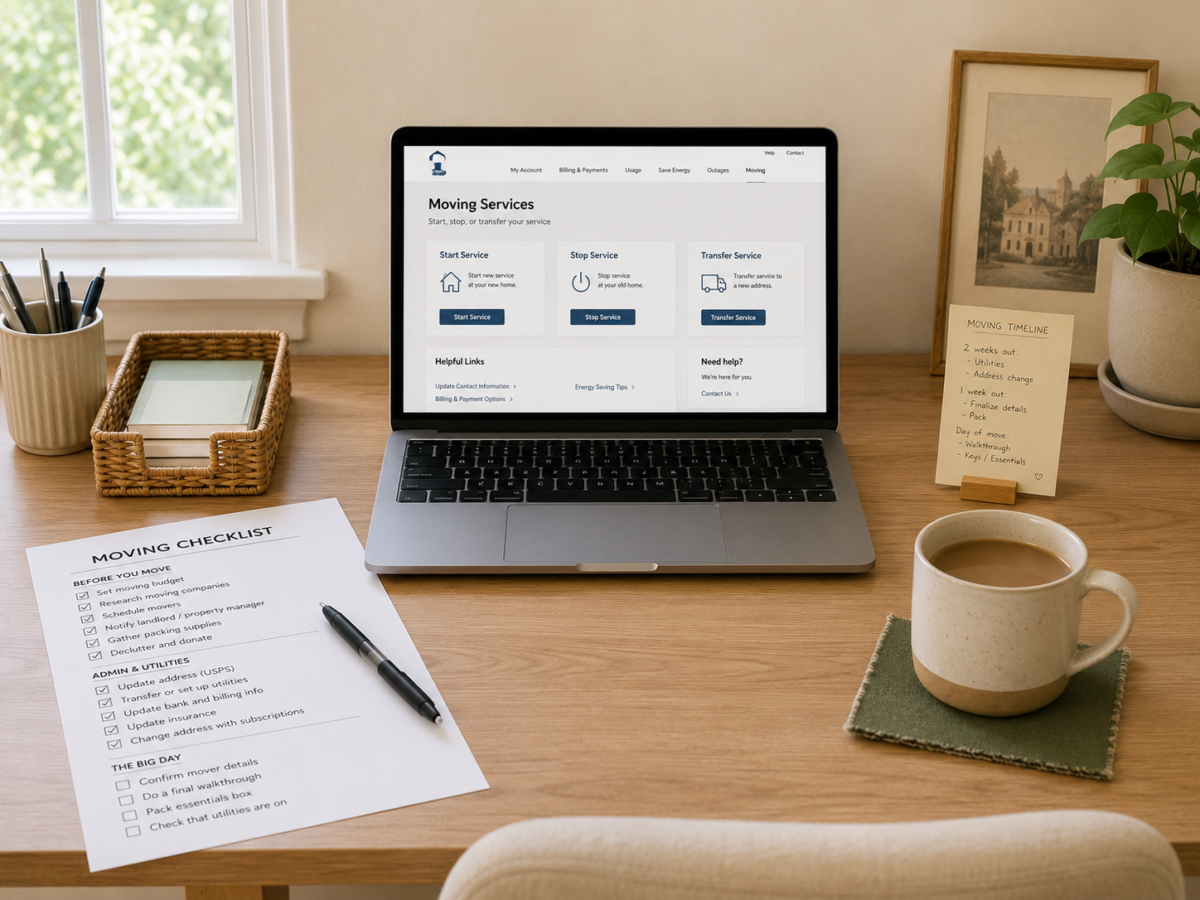
Schedule electricity and water/sewer service to be active on or before move-in day. Most providers need one to two weeks of lead time for a smooth transition, and scheduling right at move-in day itself risks a gap if anything about the request needs to be adjusted or confirmed on the provider’s end.
Schedule internet installation as early as your provider allows. Internet installation windows are often the longest lead time of any utility, sometimes two weeks or more depending on the provider and area, so this is worth scheduling as soon as a move-in date is confirmed rather than waiting until other utilities are settled.
Confirm renters insurance is active by move-in day. Many leases require proof of renters insurance before keys are handed over, and setting this up takes only a few minutes online in most cases, making it one of the easiest items on this entire checklist to knock out early.
Update your address with anything time-sensitive, mail forwarding through the postal service, any subscriptions or deliveries tied to your current address, and your driver’s license or ID if required by local rules. This isn’t strictly a move-in-day task, but starting it two to three weeks out means it’s largely handled by the time moving day arrives, rather than becoming another item competing for attention during an already busy week.
One to Two Weeks Out: Booking and Sourcing
Reserve a moving truck or moving company with real lead time. Moving demand spikes hard around the beginning and end of each month, and booking two to three weeks ahead consistently offers better availability and pricing than waiting until the week of the move.
Source moving boxes and packing materials. Free boxes from local stores, community groups, or friends who’ve recently moved cost nothing and work exactly as well as new ones for most purposes. Starting this search early avoids a last-minute scramble or an unnecessary expense buying boxes new from a moving supply company.
Order any furniture or major items that need lead time to arrive. A mattress, a sofa, or larger furniture pieces with multi-week shipping windows should be ordered as soon as move-in timing allows, so they arrive close to move-in day rather than leaving the apartment without basic furniture for weeks after you’re already living there.
Confirm parking and building logistics with the new building’s management, freight elevator reservations, loading dock access, or specific move-in time windows some buildings require. This is easy to overlook and can cause real delays on moving day if a building has rules that weren’t accounted for in advance.
The Week Before: Final Confirmations and First-Night Prep
Confirm every scheduled appointment, the truck reservation, utility activations, internet installation, with a quick call or check of confirmation emails. Catching a scheduling conflict a few days out still leaves time to fix it; catching it on move-in day itself does not.
Buy first-night essentials that a previous tenant won’t have left behind. A shower curtain and rings, toilet paper, basic cleaning supplies, and a few days’ worth of paper towels and trash bags make the first night in an empty apartment feel functional rather than like camping.
Pack a dedicated first-day essentials box or bag, and keep it separate from everything going onto the truck. Toiletries, a phone charger, a change of clothes, basic tools (a screwdriver, box cutter), and any medications should all be in this one distinctly labeled bag that travels with you personally rather than getting lost among dozens of similar-looking boxes.
Print or save digital copies of the lease and any move-in inspection forms, so they’re easily accessible on move-in day rather than needing to be tracked down from an email thread while everything else is happening at once.
Move-In Day: The Right Order
Document the apartment’s condition before unloading anything. Photos and video of every room, with particular attention to any existing scuffs, marks, or damage, create a record that protects you at move-out time, months or years from now, when memory alone won’t be reliable enough to dispute an incorrect charge.
Verify utilities are genuinely working, not just scheduled. Flip the light switches, run the tap, check that the internet connects. A scheduled activation date doesn’t always mean the service is functioning correctly the moment you arrive, and catching a gap immediately means there’s still same-day support available to fix it.
Move large furniture in before smaller boxes clutter the floor. Beds, sofas, and dressers are significantly easier to maneuver through doorways and into position while the room is still mostly empty, rather than navigating around stacks of boxes already unloaded.
Set up the bedroom and bathroom first, even minimally. A made bed and a stocked bathroom mean the apartment feels livable by the end of the first night, even if the living room and kitchen are still full of unopened boxes waiting for the following days.
Locate the breaker panel, water shutoff, and any smoke or carbon monoxide detectors. Knowing where these are on day one, rather than searching for them during an actual emergency weeks later, is a small step that matters disproportionately the one time it’s actually needed.
The First Week: Settling In Without Rushing
Not everything needs to happen on move-in day itself, and trying to fully unpack and organize an entire apartment in the first 24 hours often leads to rushed, poorly thought-out decisions about where things go.
Unpack room by room, starting with daily-use spaces. Kitchen and bathroom essentials matter most in the first few days; decorative items, art, and less-used storage can wait a week or two without any real cost.
Test the full range of appliances, oven, dishwasher, washer and dryer if included, within the first few days rather than assuming everything works. Reporting a malfunctioning appliance early, ideally in writing, both gets it fixed sooner and protects you from being blamed for a pre-existing issue later.
Introduce yourself to immediate neighbors if the building layout makes that natural. This isn’t strictly a checklist item in the traditional sense, but a friendly first impression can matter later, whether it’s a package held for you, a heads-up about a building quirk, or simply a more comfortable day-to-day experience in a new home.
Save all move-in related documents and receipts in one place, a folder, either physical or digital, for the lease, inspection forms, utility confirmations, and moving receipts. Having everything together saves real time later, whether for tax purposes, insurance claims, or eventually preparing for move-out.
Room-by-Room Setup Priorities
Not every room needs the same level of attention in the first week, and knowing which rooms genuinely need to be functional right away versus which can wait keeps the setup process from feeling overwhelming.
Bathroom, day one. Beyond a shower curtain and toilet paper, this room needs a bath mat, hand soap, and basic toiletries unpacked and accessible immediately. It’s the smallest room to fully set up and the one where an incomplete setup is felt the most acutely on the first night.
Bedroom, day one. A made bed with real sheets, not a sleeping bag balanced on a bare mattress, makes an enormous difference in how the first night feels. A single lamp, even before the rest of the room is organized, means you’re not relying on a harsh overhead fixture as the only light source in the room you’ll spend the most time trying to actually rest in.
Kitchen, days two through four. Unlike the bathroom and bedroom, a fully functional kitchen can reasonably wait a few days, especially if takeout or simple meals bridge the gap. Prioritize unpacking whatever’s needed for basic meals, a few plates, utensils, a pan, over fully organizing cabinets and drawers on day one.
Living room, week one. This room tends to be the last one that needs to be fully set up, since furniture placement here often benefits from living in the space for a few days first and seeing how you actually move through it, rather than committing to a final layout before you’ve spent any real time in the apartment.
Closets and storage areas, week one to two. These rooms benefit from the same measured, deliberate approach covered in The Complete Guide to Apartment Storage, and rushing to fill every shelf and hook on day one often means redoing the organization a few weeks later once you understand how the space actually gets used day to day.
A Note on Moving Alone Versus With Help
The order in this checklist holds regardless of whether a move involves professional movers, a group of friends, or a single person handling everything solo, but a few adjustments matter depending on which situation applies.
Moving with professional help means the physical loading and unloading is handled, which frees up attention for the documentation and setup tasks covered above, confirming utilities, photographing the apartment, directing furniture placement, rather than also managing the heavy lifting. Confirm the movers’ arrival window with enough buffer that the first-day essentials and any move-in documentation can happen before or immediately after they leave, rather than getting lost in the shuffle of a busy moving day.
Moving with friends or family benefits from clear task assignments decided in advance rather than figuring it out on the spot. Assigning one person to handle unloading order (large furniture first) and another to handle unpacking the essentials box keeps the day organized even with several people working at once, each with a different sense of what should happen next.
Moving solo means the timeline naturally stretches longer, and it’s worth planning for that rather than expecting to accomplish in one day what would normally take a full moving crew. Prioritizing the bedroom and bathroom setup first, and giving yourself permission to spread the kitchen and living room across several days, prevents burnout partway through what’s already a physically demanding process. There’s no real penalty for a slower, staggered move-in beyond your own impatience, and a calmer pace almost always produces a better-organized result than trying to force everything into a single exhausting day.
Frequently Asked Questions
How far in advance should I measure my new apartment? Ideally three to four weeks before move-in, or as soon as you have access to the unit or a detailed floor plan. This gives enough lead time to adjust furniture plans, order anything that needs to fit specific dimensions, and avoid a last-minute surprise on moving day.
When should I schedule utilities to start at a new apartment? Two to three weeks before move-in for electricity and water, and as early as possible for internet, since installation windows are often the longest lead time of any utility. Confirm activation dates a few days before the move to catch any scheduling issues while there’s still time to fix them.
What should I pack in a first-day essentials bag? Toiletries, a change of clothes, phone chargers, basic tools like a screwdriver and box cutter, any medications, and a few kitchen basics if you plan to cook right away. Keep this bag with you personally rather than loading it onto the moving truck.
Do I need to document my apartment’s condition on move-in day? Yes. Photos and video of every room, especially any existing scuffs, marks, or damage, protect you at move-out by creating a clear record of the apartment’s original condition before you moved in.
What should I unpack first in a new apartment? Focus on the bedroom and bathroom first, since a made bed and a stocked bathroom make the first night feel functional. Kitchen essentials come next, with decorative items and less-used storage able to wait a week or two without any real downside.
Related Reading
- The Complete Move-In / Move-Out Checklist — the full sequence this move-in guidance fits into, covering the move-out side too.
- How to Pack a Small Apartment Without Losing a Month to Boxes — the exact packing order that keeps one room livable right up until moving day.
- The Move-Out Cleaning Checklist That Protects Your Deposit — what to reference now if this move-in is also someone else’s move-out.
- The Complete Guide to Apartment Storage — where to start once your furniture is in place and it’s time to organize.
- Parent Category: Move-In & Move-Out
- Parent Hub: Apartments & Rentals