Table of Contents
A listing photo can make almost any convertible piece look like the answer to a small living room’s every problem. In practice, some multi-use furniture genuinely earns its extra cost and complexity. Some of it fails at both jobs it’s supposed to do, ending up worse at each one than a single-purpose piece would have been.
The convertible furniture worth buying for a multi-purpose living room shares a specific pattern: it does its primary job well on its own, without the secondary function getting in the way, and the secondary function is genuinely usable rather than a marketing checkbox. Furniture that compromises the primary use to enable the secondary one usually isn’t worth the trade, no matter how clever the concept looks online.
Why Some Multi-Use Furniture Fails at Both Jobs
A convertible piece fails when its two functions actively compete rather than coexist, which usually shows up as a mediocre primary use in exchange for a secondary function that turns out to be inconvenient enough that it rarely gets used anyway.
This is the pattern worth watching for across every category below. A sofa bed with an uncomfortable daily seating cushion because the mechanism takes up too much depth fails at its primary job for a secondary one used a few nights a month. A coffee table with a lift-top that wobbles under normal use because the hinge mechanism weakens the surface fails the same way. The genuinely good multi-use pieces don’t make this trade. They handle the primary function as well as a single-purpose version would, with the secondary function layered in as a real bonus rather than a compromise.
Sleeper Sofas: Worth It If You Check One Thing
A sleeper sofa is worth the extra cost and bulk if the daily seating cushion sits at a normal, comfortable depth and height despite the mechanism inside, which is worth sitting on in person before buying rather than trusting a product description alone.
This is one of the strongest cases for convertible furniture in a small living room, since it solves genuine seating and occasional overnight guest capacity in one footprint. But sleeper sofas vary enormously in how much the pull-out mechanism compromises daily comfort. Some sit exactly like a normal sofa. Others have a noticeably firmer, shallower seat because of the folded mechanism underneath. Sitting on a specific model for several minutes, not just glancing at the listing, is the only reliable way to know which kind you’re getting.
Storage Ottomans: Almost Always Worth It
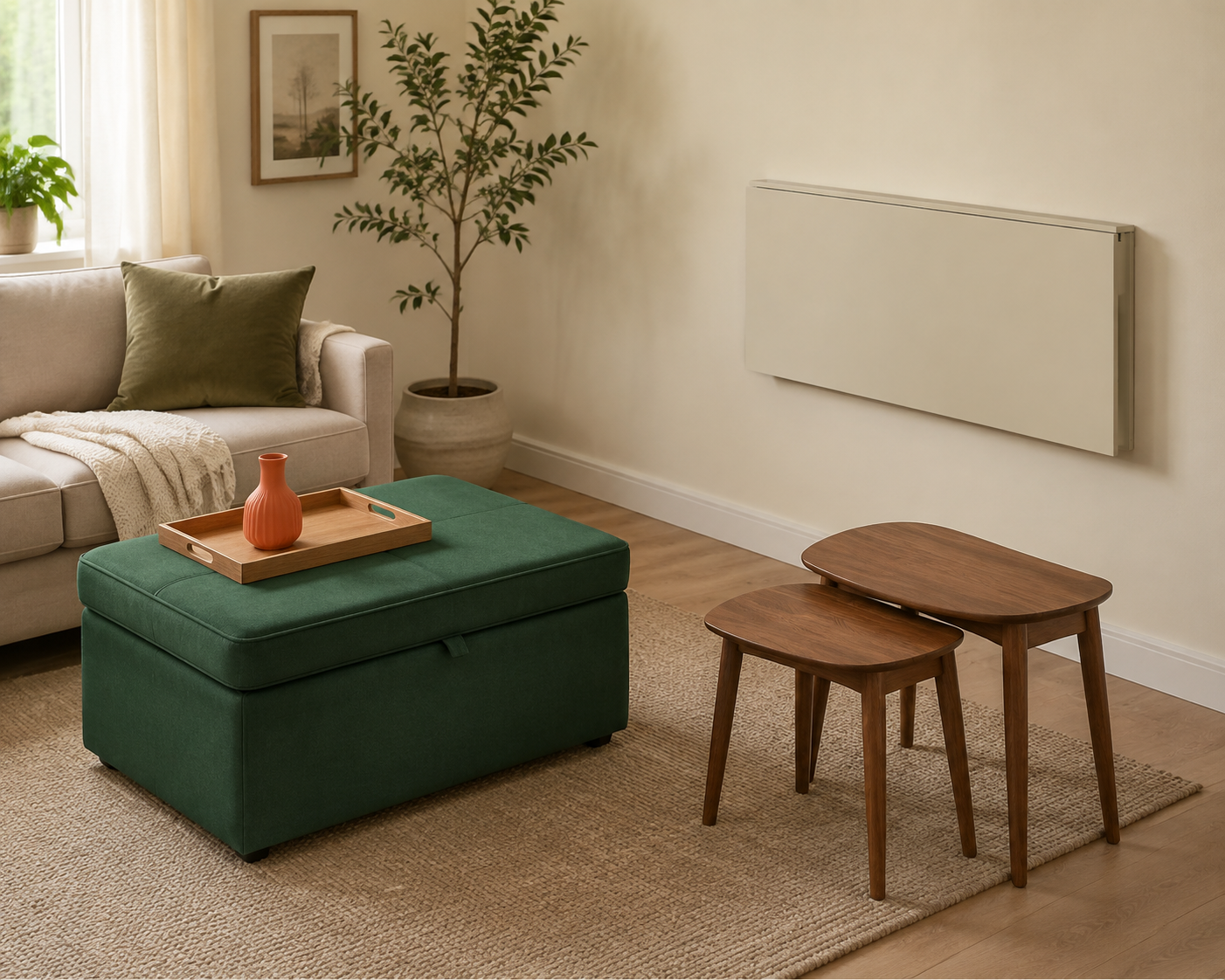
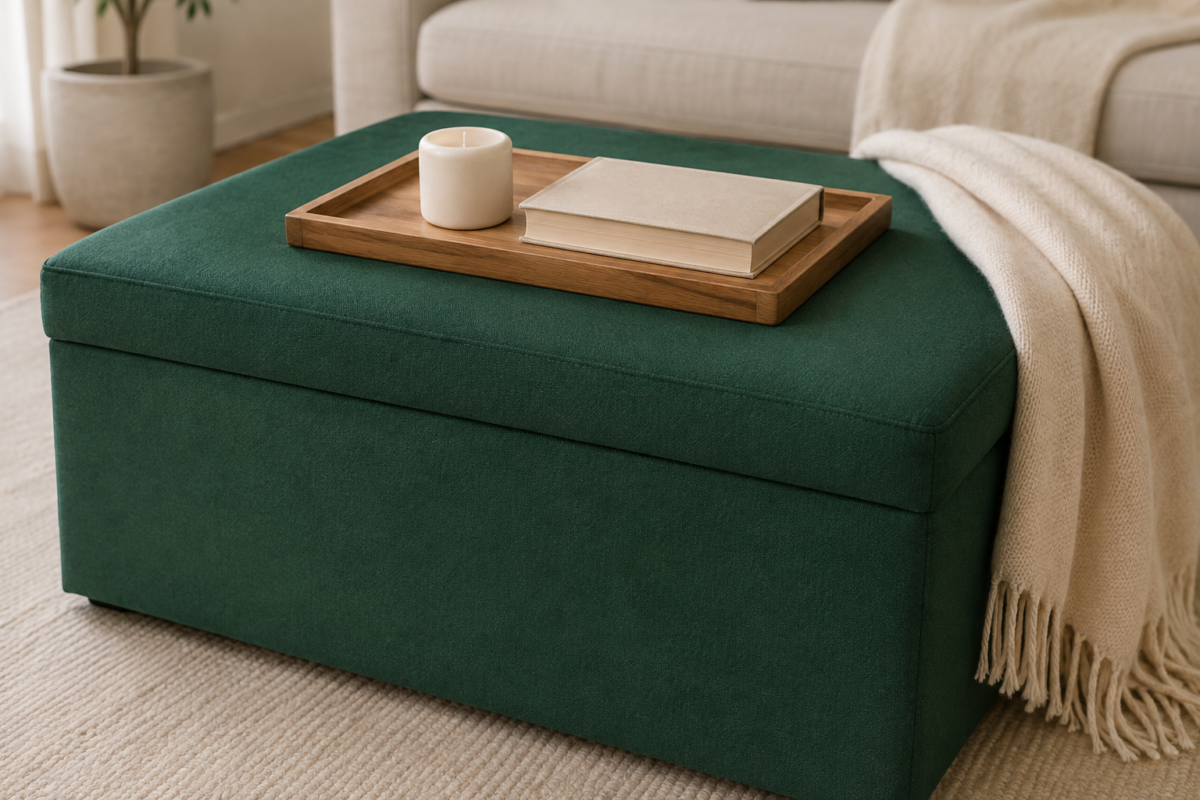
A storage ottoman is worth buying in nearly every small living room, since a hinged storage compartment adds real capacity to a coffee table’s footprint without meaningfully compromising the table’s primary surface function, as long as the lid sits flat and stable when closed.
This is close to a universal recommendation among convertible furniture, because the two functions, surface and storage, don’t actually compete with each other the way a sofa’s seating and sleeping functions can. The only real failure point is a lid that doesn’t sit flat or feels unstable holding a drink or a book, which happens occasionally with lower-quality hinges. Check that the closed lid feels genuinely solid before buying, and the storage function comes at essentially no cost to the table’s everyday use.
Nesting Tables: Worth It for Space, Not for Weight
Nesting tables are worth buying for their space efficiency, separating to hold drinks or a temporary work surface for guests and stacking back to one small footprint otherwise, but they’re not a substitute for a table that needs to hold real weight or serve as a primary surface daily.
Nesting tables solve a specific, narrow problem well: occasional extra surface area without a permanent footprint. Where they underperform is as a household’s main coffee table replacement, since most nesting table sets are built lighter and less sturdy than a genuine single coffee table, in order to keep the smaller pieces easy to lift and stack. Used as intended, an occasional-use surface added to a room’s main furniture, they’re one of the easier convertible purchases to feel good about. Used as the room’s only surface, they tend to feel flimsy for daily use.
Folding and Drop-Leaf Desks: Worth It If They Actually Fold
A folding or drop-leaf desk is worth buying if it genuinely closes to a slim, low-effort footprint in under a minute, since the entire value of this category depends on the reset actually happening consistently rather than becoming another piece of furniture left permanently open.
This category has a wide range in real-world usability. Some drop-leaf desks fold with one motion and a single latch. Others require removing items from the surface, folding legs individually, and dealing with a mechanism stiff enough that it discourages daily use. Before buying, look specifically at how many steps the fold-down process takes, since a desk that’s technically foldable but genuinely annoying to fold usually ends up staying open indefinitely, which defeats the entire purpose of choosing a convertible option over a fixed desk in the first place.
Lift-Top Coffee Tables: A Mixed Case
A lift-top coffee table, which raises to laptop height for occasional work or dining, is worth it specifically for households that need that raised surface a few times a week, but it’s not worth the extra cost for households that would use the lift function rarely, since the added mechanism typically raises the price without adding value the rest of the time.
This is one of the more situational cases in this category. The lift mechanism itself doesn’t usually compromise the table’s function as a normal coffee table, so there’s little downside to owning one. But the added cost over a standard coffee table only pays off if the raised-surface function actually gets used regularly, for eating, working, or games at a comfortable height. If that function would realistically be used once or twice a year, a standard coffee table paired with a simple lap desk covers the occasional need for less money.
Murphy Beds and Wall Beds: Worth It Only in Specific Rooms
A murphy bed or wall bed is worth the significant cost and installation only in a living room that needs to convert to a full bedroom regularly, since the investment and space requirement are considerably higher than a sleeper sofa or daybed, and the payoff only makes sense if the room genuinely needs a full bed’s worth of sleeping capacity on an ongoing basis.
This is the highest-cost, highest-commitment option in this category, and it’s worth being honest about who actually needs it. For occasional overnight guests, a sleeper sofa or daybed handles the same need at a fraction of the cost and installation complexity. A murphy bed makes more sense specifically when a living room needs to function as a genuine bedroom on a regular basis, a studio apartment where the “living room” is effectively the only room, rather than a separate living room hosting occasional guests.
What to Skip Among Multi-Use Furniture
Skip any convertible piece where the primary daily function is noticeably compromised for the sake of the secondary one, skip a folding desk with more than two or three steps to close, and skip a high-cost conversion, like a murphy bed, for a need that happens only occasionally.
A few specific habits worth avoiding:
- Buying a sleeper sofa based on its daytime appearance alone, without sitting on the actual seating cushion to check daily comfort.
- Choosing nesting tables as a household’s only coffee table, when their lighter build is meant for occasional secondary use, not daily primary use.
- Investing in an expensive convertible piece for a secondary function that, honestly, comes up only a few times a year.
Frequently Asked Questions
Is a sleeper sofa comfortable enough for daily use? It depends on the specific model. Some sit exactly like a normal sofa, while others have a noticeably firmer or shallower seat due to the mechanism inside. Sitting on the actual model before buying is the most reliable way to check.
Are storage ottomans actually sturdy enough as a coffee table? Most quality storage ottomans have a reinforced, flat-sitting lid that functions well as a surface, though it’s worth checking that the closed lid feels solid and doesn’t wobble before buying.
Are nesting tables a good replacement for a full coffee table? Generally not as a household’s only table, since most nesting sets are built lighter for occasional use. They work best as an addition to a primary table rather than a full replacement.
Is a murphy bed worth it for a small living room? Only if the room genuinely needs to convert to a full bedroom on a regular basis. For occasional overnight guests, a sleeper sofa or daybed covers the same need at a much lower cost and without permanent installation.
Related Reading
For the full principle multi-purpose furniture choices are built around, The Complete Guide to Multi-Purpose Living Rooms covers guest, office, and dining combinations together as one system.
For sleeper sofa and daybed details specific to overnight guests, Living Room and Guest Room, in the Same Space covers mattress thickness and comfortable setup in full.
For folding desk placement and the habits that keep a workspace from taking over the room, Living Room and Home Office, Without It Looking Like an Office covers the office combination in full.
For more multi-purpose ideas, visit Multi-Purpose Living Rooms, or explore the wider Small Living Rooms hub for layout, storage, and decor guides for the rest of the room.