Table of Contents
One room, and it’s supposed to be a place to relax in the evening, a guest room when your sister visits for the weekend, a workspace during the day, and occasionally a spot for six people to eat dinner off their laps. Ask any single room to be all of that at once, permanently, and it fails at everything. Ask it to be one thing by default, with the rest built in as additions that come and go, and it actually works.
A multi-purpose living room succeeds by keeping one fixed layout, the everyday seating and TV arrangement, and treating every additional function, a guest bed, a desk, extra dining seating, as something added on top of that fixed layout and removed again, rather than a second permanent zone competing for the same square footage. The specific setup differs by which combination your room needs to cover, but the underlying principle stays the same across all of them.
The One Principle Every Multi-Purpose Living Room Needs
Keep the room’s core seating and TV layout fixed and permanent, and let every secondary function operate as a temporary addition, using furniture that folds, converts, or tucks away rather than furniture that claims its own dedicated footprint every day of the week.
This is the difference between a multi-purpose room that works and one that constantly feels like a compromise. A living room trying to permanently host a full guest bed, a desk, and dining seating for six at once usually serves none of those functions well, since none of them gets the space it actually needs on top of the room’s primary job as a living room. A room where the seating stays fixed and a bed folds out, a desk closes flat, or extra chairs tuck under a console keeps the primary function intact while still genuinely covering the rest.
This mirrors the Taims Space Method™ directly: simplify what the room defaults to, then let anything beyond that default earn its temporary place rather than claiming permanent space it only needs some of the time.
Living Room Plus Guest Room
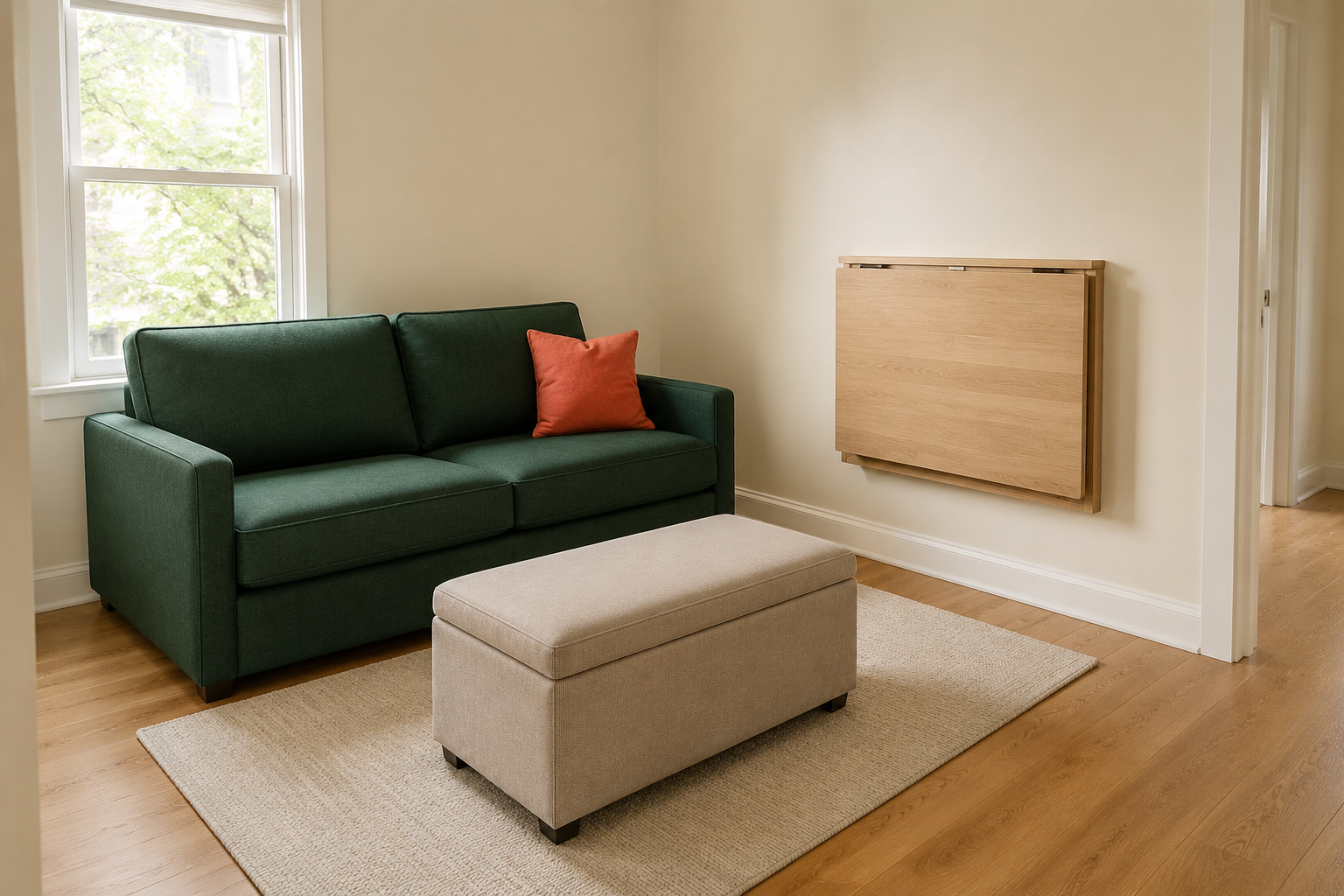
Use a sleeper sofa or a daybed as your primary seating piece, so the room’s everyday seating and its overnight guest capacity share the same furniture instead of requiring a separate bed that sits unused most nights.
This is the most common multi-purpose combination in a small living room, and it’s also the one people most often try to solve with a second, dedicated piece of furniture, an air mattress stored in a closet, or a futon that sits in the room permanently looking like neither real seating nor a real bed. A genuine sleeper sofa or a daybed avoids that compromise entirely, since it functions as legitimate daily seating and converts to a real sleeping surface only when needed.
A few specifics that make this combination work in practice:
- Choose a sleeper sofa with a mattress at least 4 inches thick if overnight guests are frequent, since thinner pull-out mattresses are genuinely uncomfortable for more than one night.
- Keep bedding, a pillow, and a folded blanket in the room’s existing storage, inside a storage ottoman or a console drawer, so setting up the guest bed doesn’t require digging through a closet elsewhere in the home.
- A daybed against a wall, styled with bolster pillows during the day, reads as seating first and reserves the “bed” identity for when it’s actually needed.
For the full breakdown of sleeper sofa types, daybed setups, and the specific details that make overnight guests genuinely comfortable, Living Room and Guest Room, in the Same Space covers mattress thickness, bedding storage, and setup time in detail.
Living Room Plus Home Office
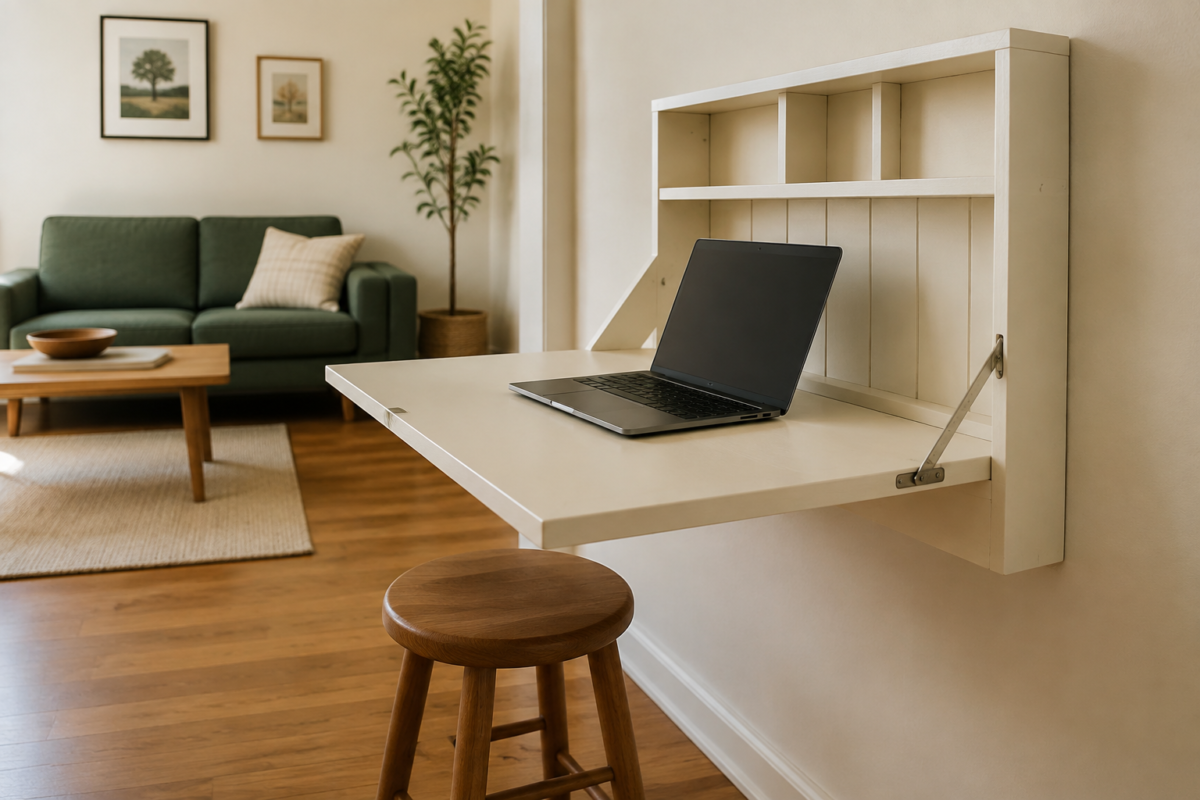
Add a slim folding desk or a wall-mounted drop-leaf desk against a side wall, not the wall your TV and seating already claim, so the room can switch into a workspace during the day without disrupting the fixed seating layout the rest of the time.
A desk placed on the same wall as the TV competes directly with the room’s primary function, and it tends to sit half-used as a result, since working there means sitting with your back to the room’s actual focal point. A desk on a side wall, away from the main walking path, gives the room a genuine second function during work hours without ever touching the seating arrangement. The best options for this specific combination fold flat, drop down, or roll away completely once the workday ends, so the desk doesn’t linger as a visible reminder of work during the room’s evening hours.
A few specifics worth knowing before choosing a desk:
- A drop-leaf or wall-mounted folding desk, closed, should read as a slim console or shelf, not an obvious folded-up workstation.
- Keep the desk chair lightweight enough to tuck fully underneath or store elsewhere, since a bulky task chair left out undoes most of the visual reset a folding desk provides.
- If video calls happen regularly, position the desk so the background behind you, visible on camera, is a wall or shelf rather than the room’s TV or seating area.
For the complete range of desk setups that genuinely disappear at the end of the workday, Living Room and Home Office, Without It Looking Like an Office covers specific desk types and the small daily habits that make the reset actually stick.
Living Room Plus Dining or Overflow Guest Seating
For occasional dining or extra seating needs, use furniture that already lives in the room doing another job, a storage ottoman that becomes a footstool-turned-seat, a bench tucked under a console, or nesting tables that separate to hold plates, rather than furniture kept out permanently to cover a use that happens once or twice a month.
The mistake most rooms make with this combination is keeping a full dining table or several extra chairs on permanent standby for an occasional need. That furniture sits taking up floor space every ordinary day just to be ready for an infrequent one. A better approach treats existing furniture as genuinely dual-purpose. Nesting tables separate to hold food or drinks for a small group and stack back down to a single small table’s footprint the rest of the time. A bench that lives under a console the rest of the week slides out to seat two more people at a casual gathering without ever needing its own dedicated spot.
If dining or guest overflow is a regular, weekly occurrence rather than an occasional one, it’s worth reconsidering the room’s base seating count rather than relying entirely on temporary additions for something that happens often enough to deserve permanent capacity.
A shared kitchen or dining nook just off the living room changes this calculation. If dining chairs already exist a few steps away, pulling two into the living room for an evening and returning them afterward solves overflow seating without adding a single new piece of furniture to the room at all. This works especially well for households in open-plan apartments, where the living room and dining area share enough proximity that “borrowing” furniture between them takes seconds rather than feeling like a real reorganization.
Furniture That Makes Every Combination Easier
The furniture that makes any multi-purpose combination genuinely work shares one trait across guest, office, and dining uses alike: it folds, nests, converts, or tucks away completely when its secondary job isn’t needed, rather than sitting out as a permanent reminder of a function the room only serves part-time.
A short list of pieces worth prioritizing across most combinations:
- A sleeper sofa or daybed for guest capacity that doubles as everyday seating, rather than a separate bed that sits unused most nights.
- A slim folding or drop-leaf desk for office use that closes flat and reads as a console or shelf outside work hours.
- A storage ottoman that covers coffee table duty, hidden storage, and occasional extra seating in one piece.
- Nesting tables that separate for dining, drinks, or a temporary work surface and collapse back to one small footprint otherwise.
Not every convertible or multi-use piece is actually worth its added cost or complexity. Furniture That Does Two Jobs at Once breaks down which convertible pieces genuinely earn their place and which ones tend to fail at both jobs rather than succeeding at either.
Choosing Which Combination Your Room Actually Needs
Identify which secondary function your living room needs most often, guests, work, or dining overflow, and build the room’s furniture around that primary secondary use first, adding solutions for less frequent needs only after the main one is genuinely working.
Very few small living rooms need to solve for guest sleeping, a full home office, and regular dining overflow all at the highest level simultaneously. Most households have one clear secondary need that happens often, weekly work-from-home days, or monthly overnight guests, and one or two others that come up rarely. Solving the frequent need properly, with real furniture chosen for that specific combination, and handling the rare needs with lighter, more improvised solutions, produces a better daily living room than trying to permanently equip the room for every possible use at once.
What to Skip in a Multi-Purpose Living Room
Skip permanent furniture for occasional uses, skip placing a desk or dining setup on the same wall as the TV and seating, and skip any convertible piece that takes more than a few minutes to reset between functions.
A few specific habits worth avoiding:
- Keeping an air mattress or a futon as the room’s permanent “solution” for guests, when a genuine sleeper sofa or daybed handles both daily seating and overnight guests in one piece.
- Buying multi-use furniture that looks clever in a product photo but is genuinely difficult to fold, convert, or reconfigure, which means it stops getting used for its secondary purpose within a few weeks.
- Letting a secondary function’s furniture creep into the room’s main walking path, since that measurement can’t be sacrificed no matter which combination the room is solving for.
What a Working Multi-Purpose Room Actually Looks Like
On an ordinary evening, this room looks like a normal living room. Nothing about it announces “guest room” or “office” unless you know to look for the drop-leaf desk against the side wall or the storage ottoman that happens to hold spare bedding. When your sister visits for the weekend, the sofa becomes a real bed in under five minutes, with sheets and a pillow already stored a few feet away. When you need to work from home on a Tuesday, the desk unfolds, does its job, and folds away again before dinner.
None of it required a bigger room or a second one down the hall. It required choosing furniture that could genuinely do more than one job, and being honest about which combination the room actually needs to solve for most often.
Frequently Asked Questions
What’s the best way to make a small living room double as a guest room? Use a sleeper sofa or daybed with a mattress at least 4 inches thick as your primary seating, and store bedding in the room’s existing storage so setup takes minutes rather than requiring a trip to another closet.
Can a living room really work as a home office too? Yes, if the desk goes on a side wall rather than the same wall as the TV and seating, and the desk itself folds flat or drops down so it doesn’t remain a visible workstation once the workday ends.
How do I add dining or extra seating without permanent furniture? Use pieces that already serve another job in the room, like nesting tables or a storage bench, rather than keeping a dedicated table or extra chairs out permanently for an occasional need.
Is a futon a good multi-purpose solution for a living room? Generally not compared to a genuine sleeper sofa or daybed. A futon tends to serve neither seating nor sleeping particularly well, while a real sleeper sofa or daybed is designed to do both roles properly.
Related Reading
For arrangements built specifically around switching between movie night, guests, and daily life, Layouts That Work for Watching TV and Everything Else covers the layout logic this guide’s principle is built on.
For mattress thickness, bedding storage, and overnight setup details, Living Room and Guest Room, in the Same Space covers the guest-room combination in full.
For desk types that genuinely disappear at the end of the workday, Living Room and Home Office, Without It Looking Like an Office covers the office combination in full.
For which convertible furniture is actually worth the extra cost, Furniture That Does Two Jobs at Once covers specific pieces worth buying and ones to skip.
For more multi-purpose ideas, visit Multi-Purpose Living Rooms, or explore the wider Small Living Rooms hub for layout, storage, and decor guides for the rest of the room.