Table of Contents
By nine at night, a desk that sits four feet from the bed stops feeling like a workspace and starts feeling like a low-grade reminder of tomorrow’s inbox. That’s the real problem with a shared room office, not the lack of space itself, but the lack of any visual signal that says one zone is for working and the other genuinely isn’t, once the day is supposed to be over.
Keeping a home office visually separate from a shared bedroom, living room, or dining space works through five techniques: anchoring each zone with its own rug, using furniture as a soft divider, adding a curtain or screen for a physical break, contrasting color and material between the two areas, and letting lighting signal which zone is currently “on.” Combining two or three of these creates a genuine sense of separation, even without a single wall between them.
Why One Technique Alone Rarely Works
A single separation technique used on its own, like a rug placed under the desk with nothing else distinguishing the zone, rarely creates enough visual signal to genuinely separate a shared space, since the eye needs more than one cue before it reads two areas as functionally distinct rather than one continuous room with a desk pushed into a corner of it.
This is why most of the techniques below work best in pairs. A rug alone helps. A rug combined with a lighting shift or a furniture divider does considerably more, because it stacks multiple visual signals instead of relying on just one.
Technique 1: Anchor Each Zone With Its Own Rug
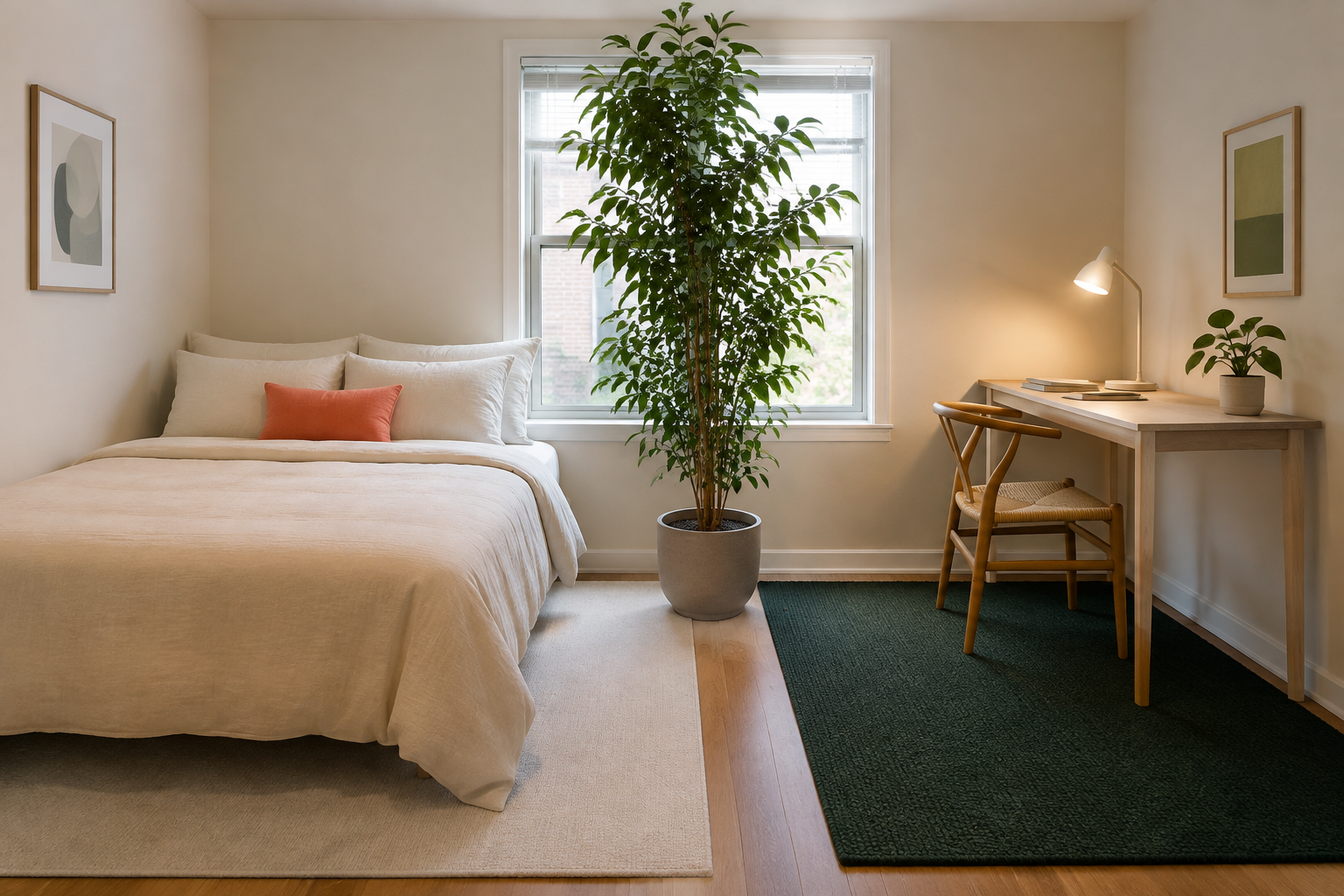
Placing a separate rug under each zone, one for the work area and a different one for the living or sleeping area, gives the room two distinct visual footprints, since a change in flooring texture or pattern is one of the fastest ways the eye registers “this is a different space” without needing an actual wall.
The two rugs don’t need to match, and in most cases shouldn’t. A slightly different texture, tone, or pattern between the work rug and the living or sleeping area’s rug reinforces the sense that you’re stepping into a different zone each time you cross between them, which is exactly the psychological cue a shared room benefits from most.
Technique 2: Use Furniture as a Soft Divider
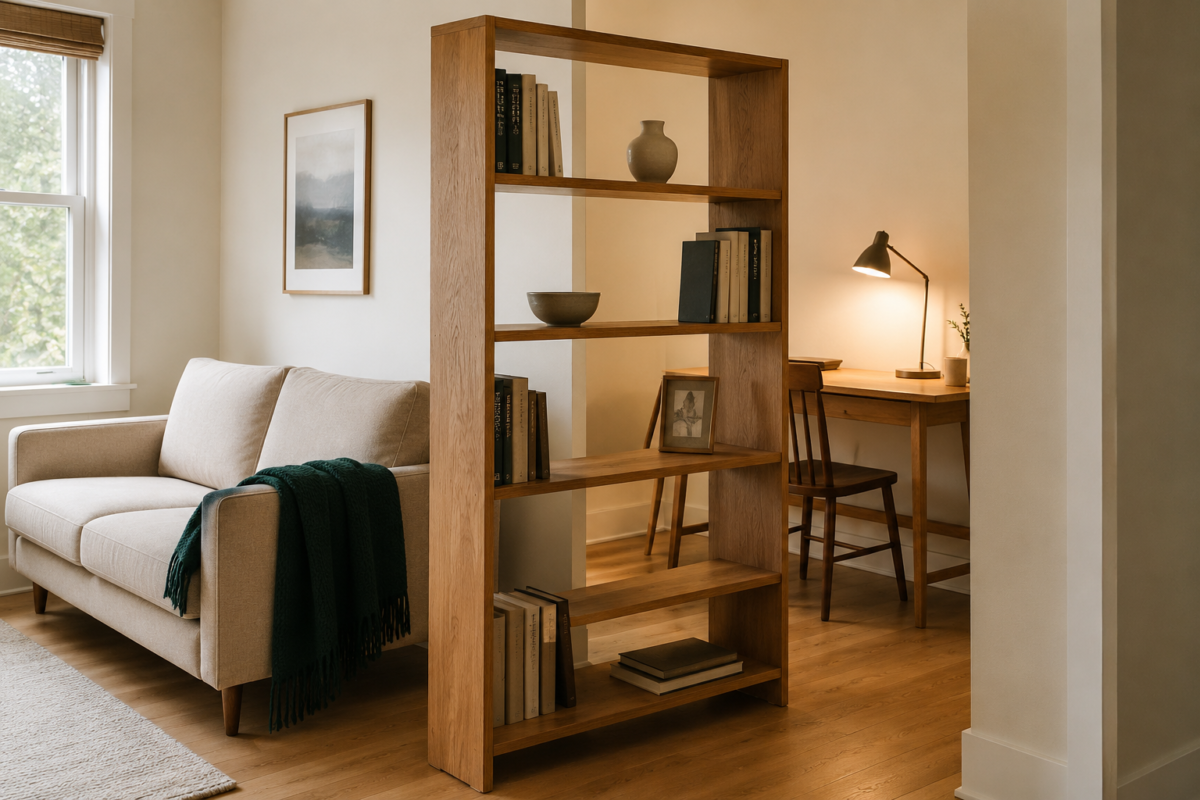
Positioning a piece of furniture, like an open bookshelf, the back of a sofa, or a tall plant, between the work zone and the rest of the room creates a physical break in sightline without blocking light or airflow, which works especially well in a room too small for a full room divider or curtain track.
An open bookshelf placed perpendicular to the wall, with its back facing the work zone, does double duty as storage and a visual break at once. A sofa positioned with its back toward the desk area achieves something similar in a living-room-shared setup, turning the seating itself into the boundary between the two functions. Even a single tall plant, placed at the exact point where one zone ends and the other begins, gives the eye a marker to register without requiring any furniture rearrangement beyond what’s already in the room.
Technique 3: Add a Curtain or Screen for a Physical Break
A ceiling-mounted curtain track or a folding screen creates the most complete visual separation of any technique on this list, since it can fully close off the work zone from view when the day is done, functioning almost like a real wall without any permanent construction.
A curtain track mounted with a rated adhesive bracket, sized to run along the boundary between the two zones, lets you draw the work area fully out of sight in seconds. A folding screen achieves a similar effect without any mounting at all, and can be moved, folded flat, or repositioned as needs change, which makes it a strong option for a renter who wants maximum flexibility without committing to a fixed track.
Technique 4: Contrast Color and Material Between Zones
Using a noticeably different color palette or material story in the work zone compared to the rest of the room, like a cooler, more neutral tone for the desk area against a warmer palette for the living or sleeping zone, reinforces the sense of two distinct spaces even when they share the same four walls and the same natural light.
This doesn’t require repainting anything, which matters in most rental situations. A different desk chair fabric, a different accent color in the work zone’s small decor, or even just keeping the work area more visually minimal while the rest of the room carries more texture and color, all create the same effect through contrast rather than construction.
Technique 5: Let Lighting Signal Which Zone Is “On”
Using a dedicated task light exclusively in the work zone, separate from the room’s general ambient lighting, means the simple act of turning that light off at day’s end signals the work zone is closed, which is one of the most effective and lowest-effort separation techniques on this entire list.
This technique does double duty as both a functional lighting upgrade and a genuine end-of-day ritual. A desk lamp that’s specifically associated with work hours, switched off deliberately once the day is done, reinforces the psychological boundary between the two zones far more effectively than most people expect from something this simple.
Combining Techniques Without Overdoing It
Pick two, at most three, of these five techniques rather than attempting all of them at once, since stacking every technique into one small room tends to create visual clutter that undoes the separation it was meant to create, while two well-chosen techniques working together are almost always enough.
A bedroom-shared office tends to benefit most from a rug plus dedicated task lighting, since both are achievable without adding bulk to an already tight floor plan. A living-room-shared office often does well with a furniture divider plus color contrast, since there’s usually more furniture already available to repurpose as a boundary. Choose based on what your specific shared room already has room for, rather than trying to apply every technique on this list at once.
Frequently Asked Questions
What’s the single most effective way to separate a shared-room office? A curtain or folding screen creates the most complete separation, since it can fully close the work zone from view. For a lower-effort option, pairing a dedicated rug with a task light that’s only used during work hours is nearly as effective.
Do the two rugs need to match the rest of the room’s decor? No, and a slight difference between them is actually part of what makes the separation work. A distinct texture or tone shift between the work rug and the rest of the room’s flooring is a visual cue in itself.
Is a curtain track difficult to install in a rental? Not typically. A rated adhesive bracket, sized correctly for the curtain’s weight, mounts and removes without drilling in most cases. Check the bracket’s weight rating against your specific curtain fabric before installing.
How many separation techniques should I actually use? Two or three, generally. Using all five at once in a small shared room tends to create visual clutter rather than clearer separation, since too many competing signals make the space feel busy instead of genuinely divided.
Related Reading
For the full six-step order to set up a home office of any layout, The Complete Guide to Setting Up a Small Home Office covers placement, ergonomics, and lighting in sequence.
If your shared room is a studio without a separate corner to work with, How to Build a Real Office Into an Unused Corner covers dedicated corner types worth considering instead.
For rental-friendly curtain and rod installation, DIY Projects That Won’t Cost You Your Security Deposit covers the reversibility test worth running before mounting anything.
Browse the full Shared-Space Offices category for more layout strategies, or explore the wider Home Office & Small Workspaces hub for desk organization and full setup guides.