Table of Contents
The instinct, once a small living room’s lighting is sorted, is to reach for more objects. A candle here, a small tray there, another framed print for the wall that still feels bare. But a room can hold plenty of individual objects and still feel flat, because none of that solves for texture, and texture is what actually makes a room feel finished rather than just decorated.
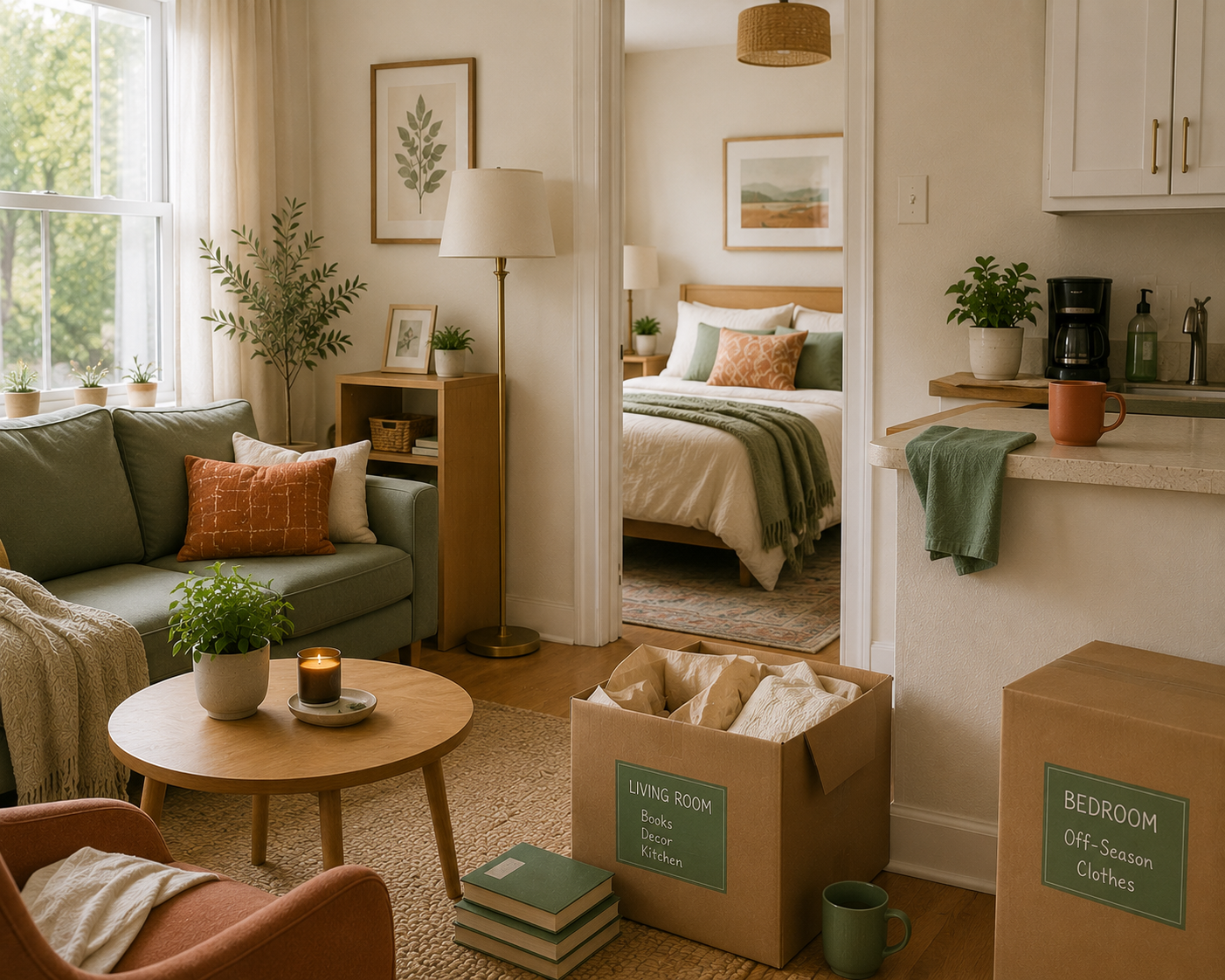
Texture in a small living room comes from a rug, a throw, and pillow covers chosen to contrast in material, wool against smooth cotton, linen against velvet, rather than from adding more individual decor items. One good rug and one substantial throw do more to make a room feel layered than five small matching accessories, and they take up far less visual and physical space doing it.
Why Texture Isn’t About Adding More
Texture makes a room feel finished by giving the eye variation to move across, but that variation comes from contrast in material and weight, not from the sheer number of items in the room. A room with three or four textiles in genuinely different materials reads as more layered than a room with a dozen matching accessories.
This distinction matters most in a small living room, where physical space to add more objects is limited to begin with. Buying more small decor pieces to solve a flat-feeling room usually makes a tight room feel crowded before it ever feels finished. Swapping in fewer pieces with real material contrast, a nubby wool throw against a smooth linen sofa, solves the same problem without adding volume the room doesn’t have space for.
Start With the Rug: Size and Material
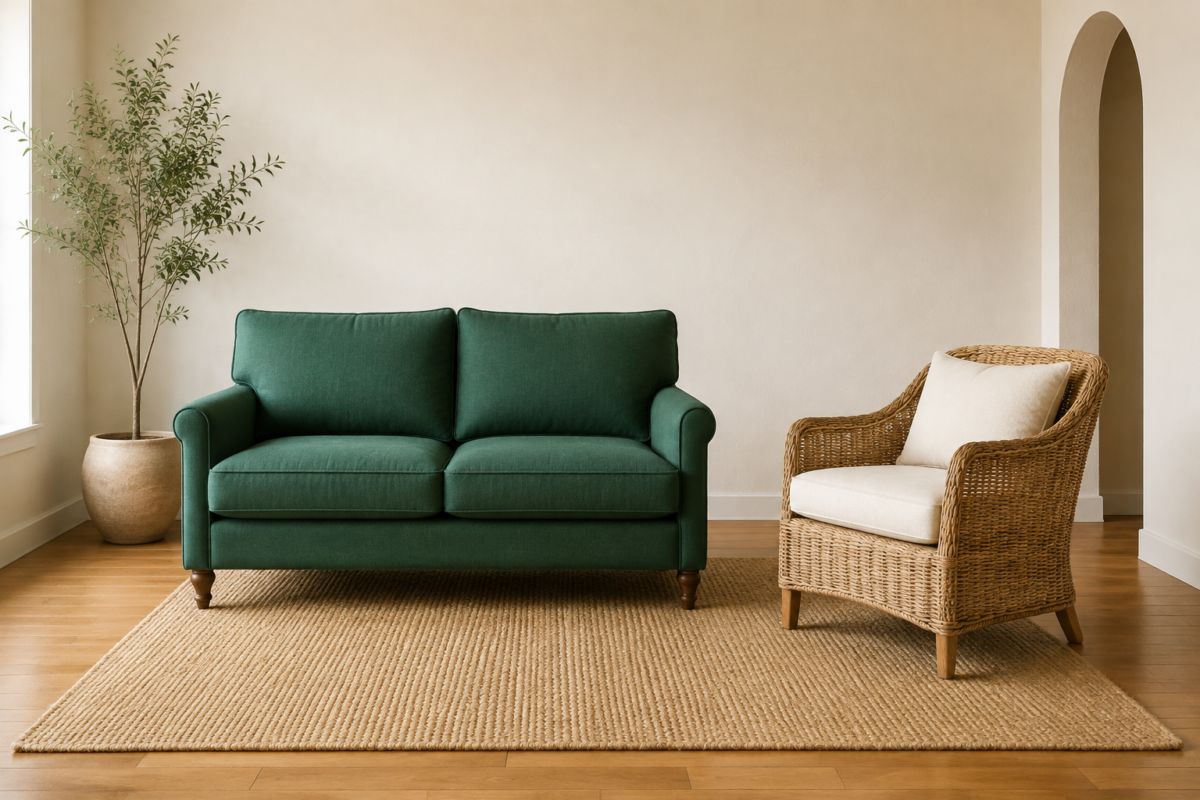
Choose a rug large enough for at least the front legs of your main seating to sit on it, in a material that contrasts with your flooring, a soft wool or jute rug over hardwood, a flatweave over carpet, since the rug is the single largest texture surface in the room and does the most to anchor everything sitting on it.
A rug that’s too small to reach the seating, sometimes called a floating rug, undercuts the whole layering effect no matter how nice the rug itself is, because it reads as disconnected from the furniture rather than grounding it. A 5-by-7 rug is the realistic minimum for anchoring a loveseat and a chair in most small living rooms. Sizing up to 6-by-9, so all the seating’s front legs rest on it, creates a noticeably more finished, grounded feeling than a rug the furniture only partially touches.
Material matters here as much as size. A rug in roughly the same texture as your floor, like a flatweave over another flatweave surface, adds far less visual interest than one that genuinely contrasts, a soft wool pile over a hard floor, or a woven jute texture against smooth tile.
One Substantial Throw, Not Three
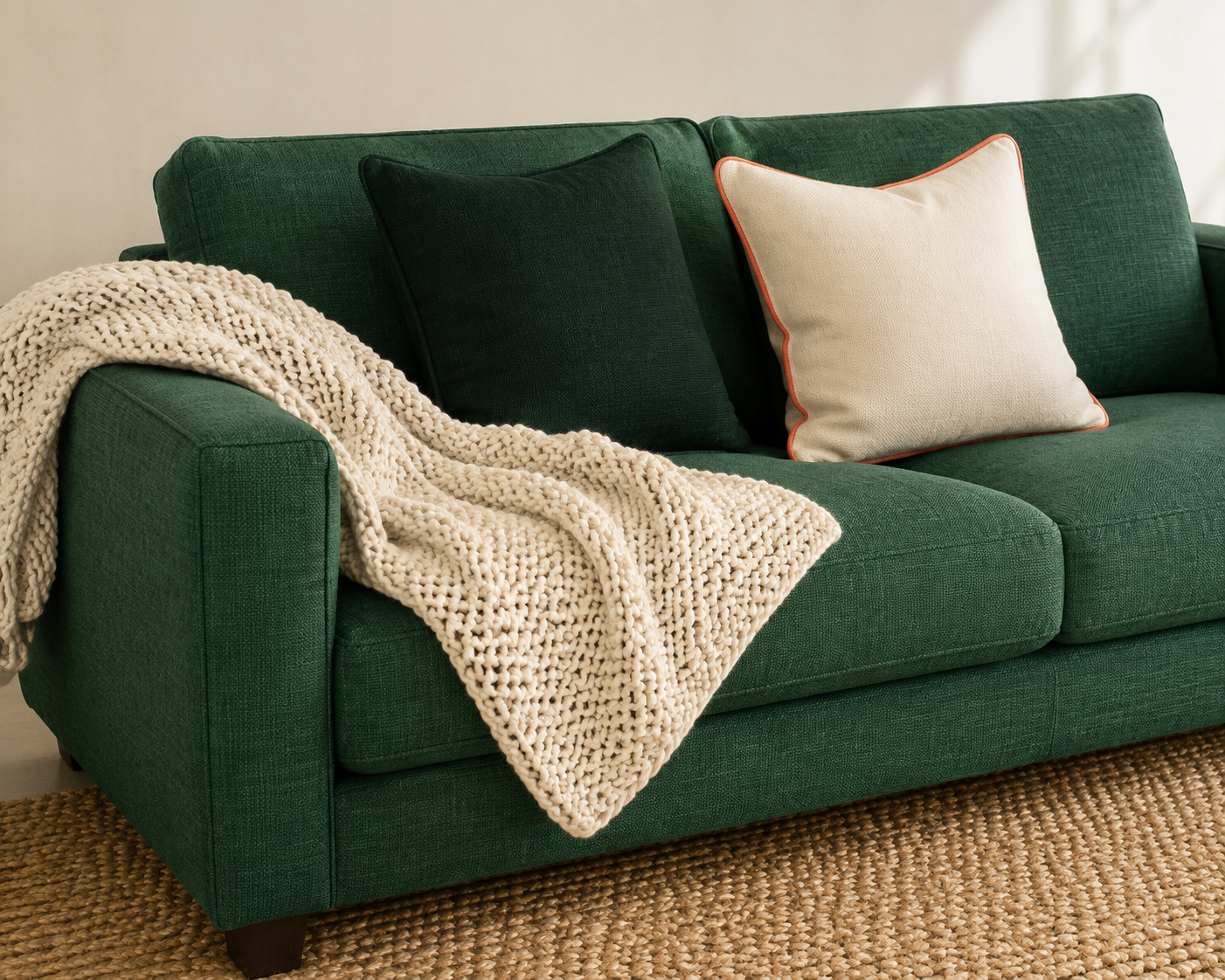
Choose one throw blanket in a texture that genuinely contrasts your existing furniture, a chunky knit against a smooth sofa, a woven cotton against a leather chair, rather than several thinner throws layered together, which tends to read as cluttered rather than intentionally layered.
A single substantial throw does more visual work than three thin ones draped across different pieces of furniture. The thickness and texture of one good throw creates real contrast against the furniture beneath it, while multiple thin throws scattered around the room tend to blur together into a general sense of fabric rather than a deliberate layering choice. Drape it over one arm of the sofa, folded so its texture is visible, rather than spreading it flat across the whole cushion, which hides most of its texture under its own weight.
If you’re drawn to more than one throw, keep the second one in a genuinely different room or seasonal rotation rather than layering both in the same spot at once. A living room benefits more from one throw that’s actually used than two competing for the same corner of the sofa.
Pillow Covers: Contrast Material, Not Just Color
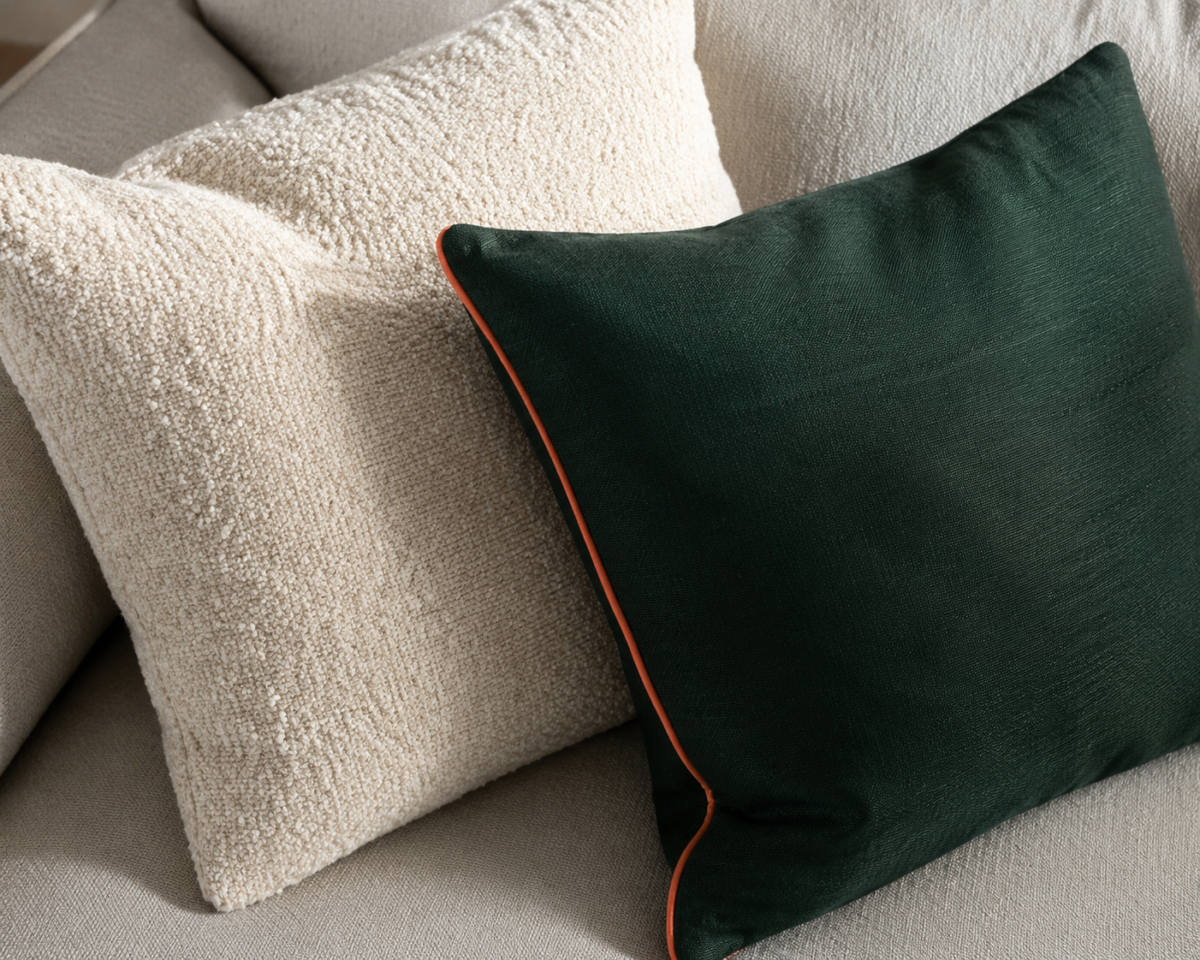
Choose two to three pillow covers in materials that contrast with your sofa’s upholstery and with each other, a linen cover against a smooth cotton sofa, paired with one in a slightly nubbier weave, rather than pillows that only vary in color while sharing the same flat material.
Color coordination alone doesn’t create the layered feeling texture is meant to add. Three pillows in different shades of the same smooth cotton still read as visually flat, since nothing about their surface actually varies. Swap even one of those covers for a linen, bouclé, or woven texture, and the same three-pillow arrangement suddenly reads as considered rather than matched.
Two or three pillows is usually the right count for a loveseat or a two-seat sofa in a small room. More than that starts to compete with the actual seating space available, especially once a throw blanket is added to the same piece of furniture.
Curtains as a Texture Layer, Not Just Coverage
If your current window coverings are builder-grade mini blinds, add floor-length curtains in a textured fabric, linen or a slubbed cotton rather than a flat, smooth panel, hung close to the ceiling so they add both height and a genuine texture layer to the room rather than serving only as light coverage.
Curtains often get chosen purely for function, blocking light or adding privacy, and the texture opportunity gets overlooked entirely. A textured linen panel does the same functional job as a flat cotton one while adding real visual interest to a wall that’s often otherwise bare. Hanging the curtain rod a few inches below the ceiling, rather than directly above the window frame, makes a small room’s ceiling read as taller, which is a separate benefit layered on top of the texture itself.
How Many Textures Is Too Many
Keep the total texture count in one seating area to roughly three to four distinct materials, the rug, the throw, the pillow covers, and the seating fabric itself, since adding more than that in a small space starts to compete rather than layer.
A small living room has less visual room to absorb variation than a larger one, which means the point of diminishing returns arrives faster. Three or four genuinely different textures in one seating group reads as intentional. Six or seven starts to feel busy, even if each individual piece is well chosen. If you’re adding a new textural element and the room already has four in that seating area, consider swapping one out rather than adding a fifth.
What to Skip When Layering Texture
Skip buying a matching throw-and-pillow set from a single collection, skip more than one throw draped in the same spot, and skip a rug too small to reach the seating it’s meant to anchor.
A few specific habits worth avoiding:
- A full matching textile set, where the rug, throw, and pillows all come from the same collection in the same material. This reads as purchased rather than layered.
- Piling multiple thin throws on one piece of furniture instead of choosing one substantial one that actually holds its shape and texture.
- Choosing pillow covers that only vary in color while sharing the same flat material, which misses the point of layering entirely.
Frequently Asked Questions
How do I add texture to a small living room without it feeling cluttered? Choose materials that genuinely contrast, a chunky knit throw against a smooth sofa, a woven rug against a hard floor, rather than adding more individual decor objects. Fewer pieces with real contrast read as more finished than many similar ones.
What size rug works best for layering texture in a small room? A 5-by-7 rug is the realistic minimum for anchoring a loveseat and one chair. Sizing up so all the seating’s front legs rest on the rug creates a noticeably more grounded, layered feeling.
How many pillows should be on a small sofa? Two to three pillow covers usually works best for a loveseat or two-seat sofa, in materials that contrast with the upholstery and with each other, rather than matching pillows that only vary in color.
Should curtains match the rest of the room’s texture? They don’t need to match exactly, but choosing a textured fabric like linen over a flat, smooth panel adds the same layering benefit to the window wall that a rug or throw adds elsewhere in the room.
Related Reading
For the full three-step order this texture layer fits into, The Complete Guide to Decorating a Small Living Room covers lighting, texture, and finishing details together as one system.
If lighting hasn’t been addressed yet, Lighting Ideas That Make a Small Living Room Feel Bigger covers the layer that should come before texture in most rooms.
If budget is the deciding factor in how far to take this, Small Living Room Decor on a Real Budget covers exactly where texture fits into a real spending plan.
For more decorating guides, visit Living Room Decor, or explore the wider Small Living Rooms hub for layout, storage, and multi-purpose ideas for the rest of the room.