Table of Contents
$150 feels like nothing and everything at the same time when a living room needs work. Spend it on the wrong things first and it disappears without the room looking any different. Spend it in the right order and even $100 can genuinely change how the room feels, before a single big-ticket item gets replaced.
The order that makes the most of a small living room’s decor budget is lighting first, texture second, and finishing details last, and that order holds true whether you’re working with $100 or $500. What changes as the budget grows isn’t the sequence, it’s how much you do within each step.
The Order Still Matters More Than the Amount
Spending a larger budget out of order, buying wall art and accent pieces before fixing the lighting underneath them, produces a worse-looking result than a smaller budget spent in the right sequence. Lighting changes how everything else in the room reads, which makes it the highest-value spend regardless of total budget size.
This is worth internalizing before looking at any specific dollar amount below. A $500 budget spent entirely on furniture and wall decor, with the original overhead bulb still in place, will look flatter than a $100 budget spent on warm bulbs, one lamp, and a rug. The sequence, covered in full in The Complete Guide to Decorating a Small Living Room, does more work than the total amount spent.
What $100 Buys, and Where It Goes
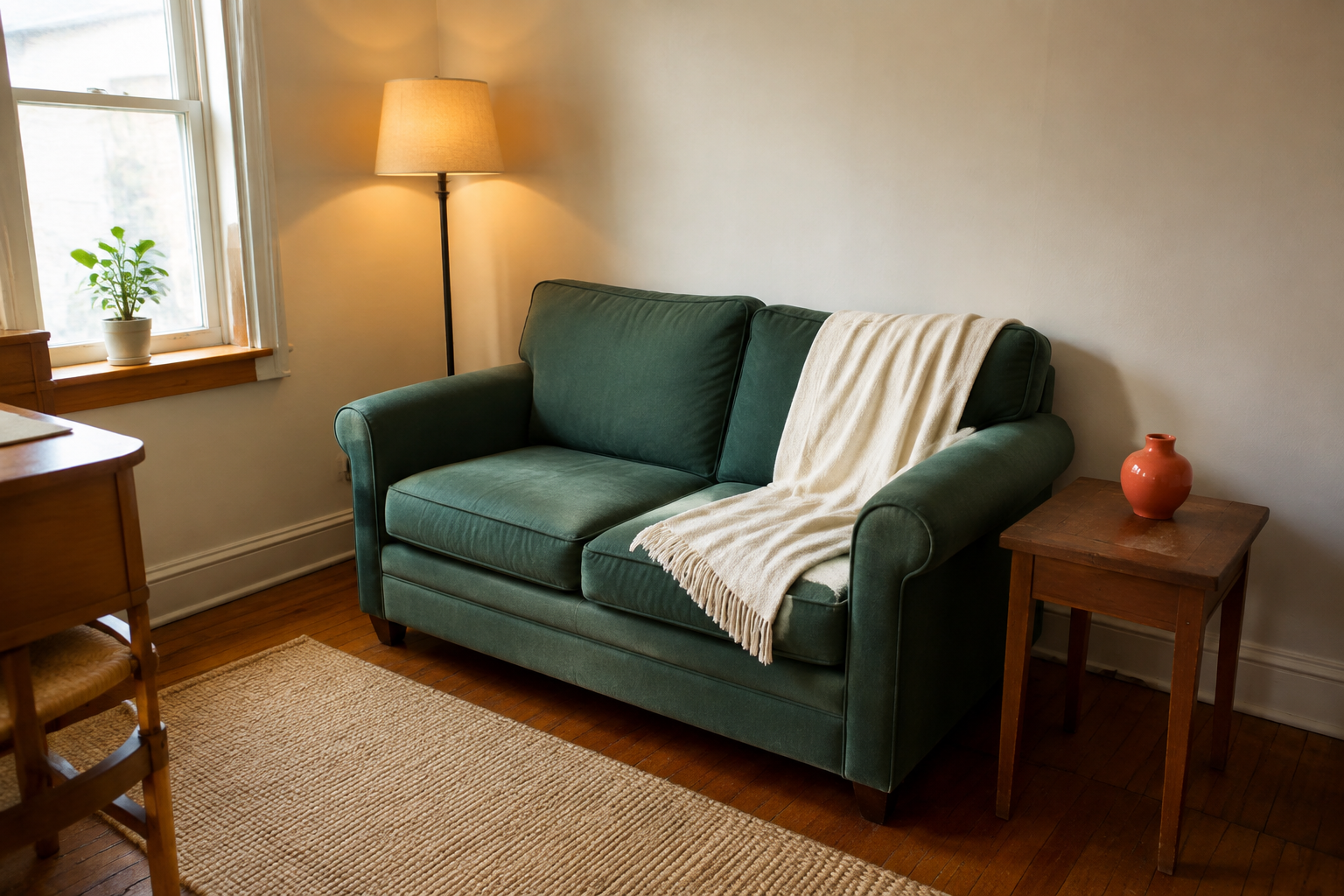
At $100, spend roughly $35 on lighting, meaning warm 2700K bulbs and one basic floor or table lamp, $50 on one piece of texture, either a small rug or a substantial throw, and the remaining $15 on a single finishing detail like one small plant or a framed photo already in your possession.
This budget doesn’t stretch to cover every layer fully, and that’s fine. The goal at $100 is to genuinely finish one or two layers rather than partially touch all three. Lighting and one texture piece, done well, outperform a thin attempt at lighting, texture, and wall decor all at once. If you have to choose between a rug and a throw at this budget, pick whichever piece touches the largest visible area of the room, usually the rug.
What $250 Buys, and Where It Goes
At $250, spend roughly $55 on lighting across two lamps with warm bulbs throughout, $120 on texture including a rug, a throw, and two pillow covers, and $75 on finishing details like one leaned frame or a small mirror plus a single plant.
This is the budget where all three layers genuinely start to work together rather than one layer doing all the visible work alone. Two lamps means the layered-lighting effect covered in Lighting Ideas That Make a Small Living Room Feel Bigger actually takes hold, rather than relying on a single point of warm light. The texture budget at this level covers a rug sized to reach the seating, plus enough textile variety, throw and pillow covers, to create genuine material contrast rather than a single flat layer.
What $500 Buys, and Where It Goes
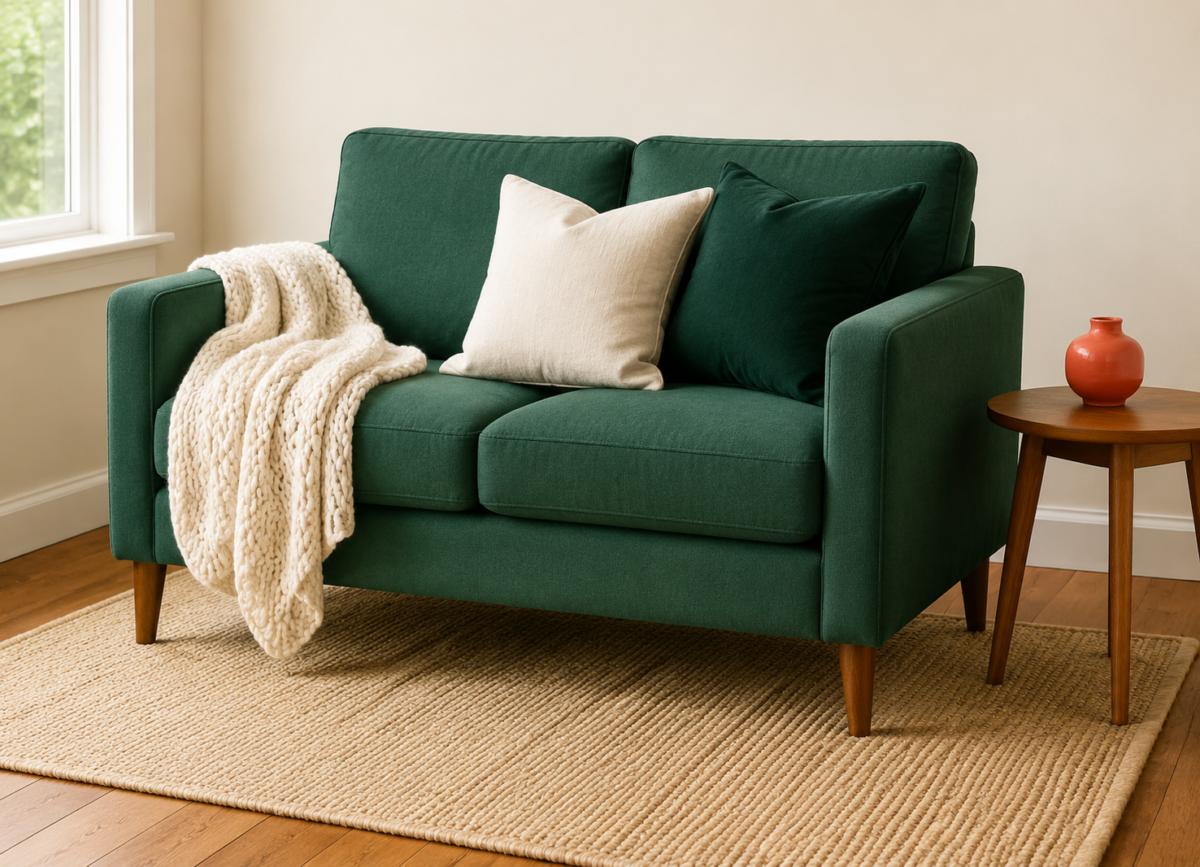
At $500, spend roughly $70 on a full layered-lighting setup with every fixture in the room using warm bulbs, $180 on a complete texture layer including a rug, curtains, a throw, and pillow covers, and $100 on finishing details like a large mirror or a small gallery of leaned frames, leaving $150 for one higher-quality piece the room genuinely needs, whether that’s a better sofa, a proper coffee table, or a real accent chair.
At this level, the three-layer sequence is fully covered, and the remaining budget goes toward whichever single furniture piece is doing the most work in the room while currently underperforming. That’s usually the sofa or the seating anchor, since it’s both the largest visual element and the one that gets used every day. A better-quality throw or rug matters, but a sofa that’s genuinely uncomfortable or visibly worn undercuts every decor decision layered around it.
Where to Spend More If You Can Only Upgrade One Thing
If the budget forces a single choice between upgrading lighting, texture, or finishing details, upgrade lighting, since it’s the layer that affects how every other purchase in the room, past or future, actually reads.
This matters most for anyone decorating in stages over several months rather than all at once. A well-lit room with a secondhand sofa and a single thrifted throw still looks considered. A poorly lit room with brand-new everything still looks flat. If the budget only allows one genuine upgrade this month, lighting returns more visible improvement per dollar than any other single category, which makes it the right place to spend first even when the total budget is small.
What to Skip at Every Budget Level
Skip a full matching furniture-and-decor set regardless of budget, skip buying wall art before the lighting underneath it is settled, and skip spreading a small budget evenly across every category instead of genuinely finishing one or two layers first.
A few specific habits worth avoiding at any spend level:
- Buying decor items because they’re on sale rather than because they fit the room’s actual sequence needs at that moment.
- Spending the full budget in one trip rather than spreading it across a few paychecks, which lets you see how each layer changes the next before committing further.
- Replacing furniture that’s structurally sound but visually dated, when a throw, slipcover, or refinished hardware would solve the same problem for far less.
Sample Budget Breakdown by Layer
| Budget | Lighting | Texture | Finishing Details |
| $100 | 1 lamp, warm bulbs (~$35) | 1 rug or 1 throw (~$50) | 1 plant or framed photo already owned (~$15) |
| $250 | 2 lamps, warm bulbs (~$55) | Rug, throw, 2 pillow covers (~$120) | Leaned frame or mirror, 1 plant (~$75) |
| $500 | Full layered lighting (~$70) | Rug, curtains, throw, pillows (~$180) | Mirror or gallery frames (~$100), plus $150 toward one better seating or table piece |
Every budget follows the same lighting-texture-details order. What changes is depth within each layer, never the sequence itself.
Frequently Asked Questions
What should I prioritize when decorating a small living room on a budget? Lighting first. Warm bulbs and a basic lamp cost under $40 total and improve how every other decor purchase in the room looks, which makes it the highest-value spend at any budget size.
Is it better to spend on furniture or decor when the budget is tight? Decor sequence, meaning lighting and texture, generally delivers more visible change per dollar than a furniture swap, unless the current furniture is genuinely uncomfortable or structurally worn rather than just visually dated.
How much does it cost to decorate a small living room on a budget? A genuinely finished-looking refresh is possible starting around $100 to $150, as long as the spend follows the lighting-then-texture-then-details order rather than being spread thin across every category at once.
Should I buy everything at once or spread out the budget? Spreading a decorating budget across a few paychecks usually produces a better result, since you can see how each layer changes the room before deciding what the next one actually needs.
Related Reading
For the full lighting-texture-details order this budget guide is built on, The Complete Guide to Decorating a Small Living Room covers each layer in depth.
For the specific lamp and bulb choices that make the lighting budget above work, Lighting Ideas That Make a Small Living Room Feel Bigger breaks down placement by room zone.
For rug sizing and fabric pairing that makes the texture budget above stretch further, Layering Texture Without Adding Clutter covers exactly how much texture is enough.
For more decorating guides, visit Living Room Decor, or explore the wider Small Living Rooms hub for layout, storage, and multi-purpose ideas for the rest of the room.