Table of Contents
Look at your open shelf right now. If you can’t immediately tell whether it’s styled or just where the extra mugs and mismatched Tupperware ended up living, that’s the tell. Open shelving is either one of the best decor opportunities in a small kitchen or the most visible clutter in the room, and the difference has nothing to do with how much shelf space you have.
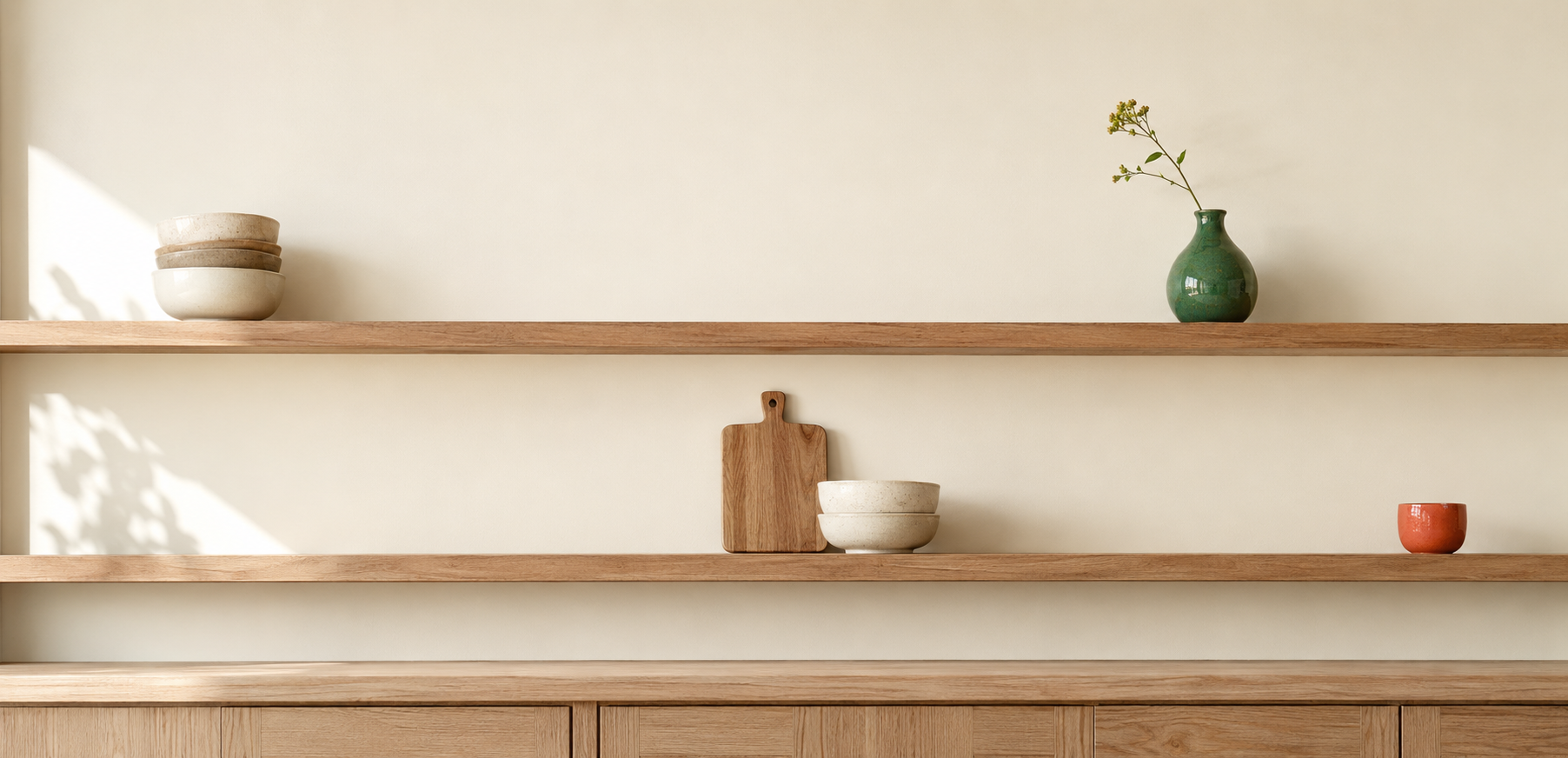
Open shelves read as decor, not storage, when only a curated selection of genuinely nice items goes on them, grouped in odd numbers at varied heights with real negative space left between groupings. Everything else, the everyday plastic containers, the mismatched mugs, anything visually busy, belongs behind a closed cabinet door instead. The shelf isn’t for what needs a home. It’s for what’s worth looking at.
Decide What Actually Earns a Spot
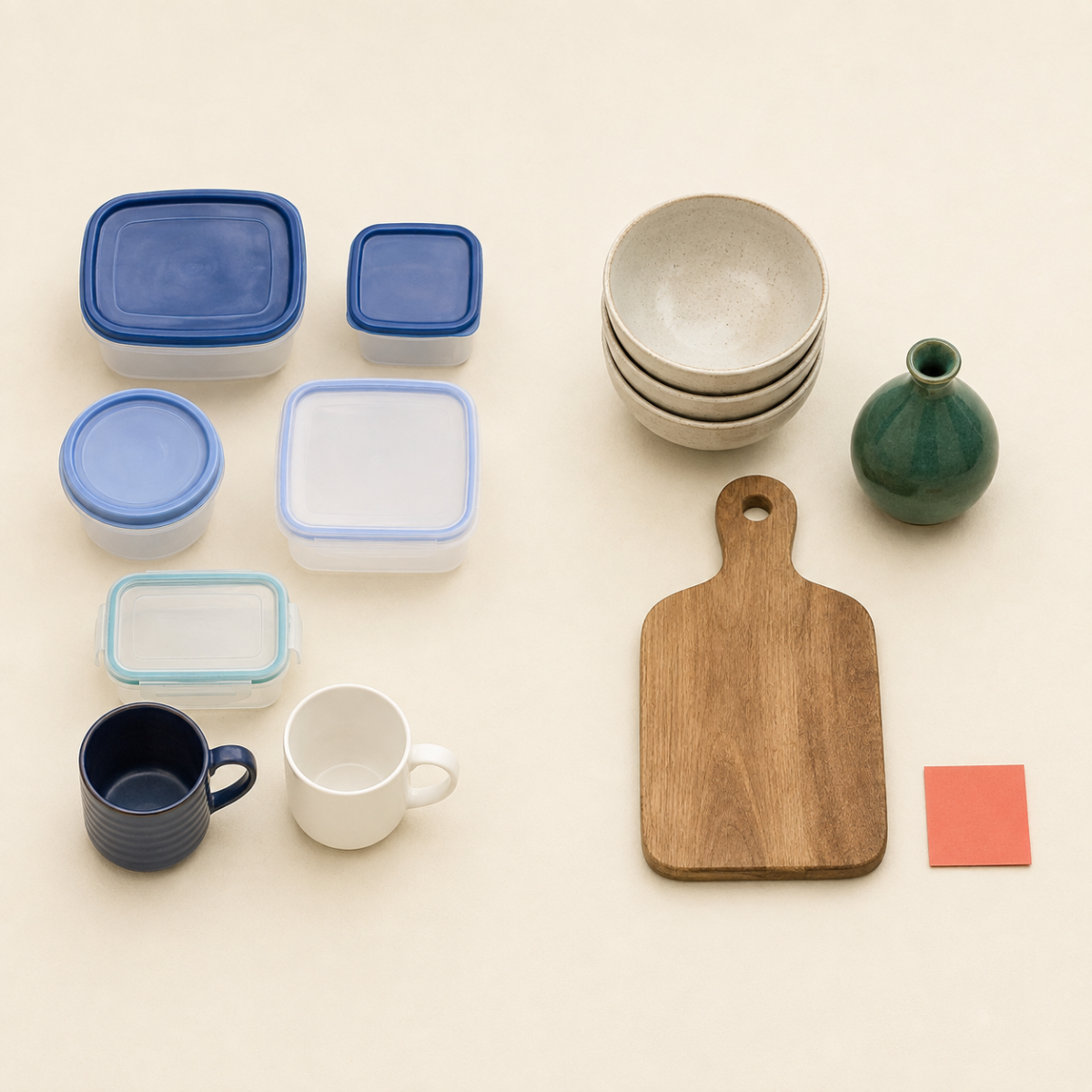
Before arranging anything, sort what you’d consider putting on the shelf into two piles: items that are genuinely nice to look at, and items that are just convenient to reach. Only the first pile goes on display. The second pile, your everyday plastic cups, the mug with the chipped handle, mismatched Tupperware, belongs in a cabinet even if it means a slightly less convenient reach.
This is the single rule that separates styled open shelving from a shelf that’s just absorbing overflow. A shelf with fewer, nicer items always reads better than a shelf with everything you own displayed at once, no matter how organized the arrangement is.
Good candidates for open display: your best dishware (even if it’s not your everyday set), a couple of plants, one or two pieces with real texture or color, a cutting board or two used as much for their look as their function. If you wouldn’t want a guest to see it up close, it doesn’t belong on an open shelf.
If you’re deciding this alongside a bigger kitchen decor refresh, meaning lighting, hardware, and shelving are all changing at once, The Complete Guide to Decorating a Small Kitchen covers the full order to tackle those changes in, starting with lighting before anything else.
Group in Odd Numbers and Vary the Height
Arrange items in groups of three where possible. Odd-numbered groupings read as more natural and intentional than pairs or even sets, which is a basic styling principle that applies just as much to a kitchen shelf as it does to a mantel or a bookshelf.
Within each grouping, vary the height. A tall vase, a shorter stack of bowls, and one flat object like a small dish or coaster set creates visual interest through contrast, where three items of identical height in a row reads flat and static no matter how nice the items themselves are.
Mix shapes and materials within reason. A grouping of all-ceramic items in similar shapes blends together and loses definition. Adding one item in a different material, wood, glass, woven fiber, gives your eye something to catch on and makes the whole grouping feel more considered rather than accidental.
Leave Real Negative Space
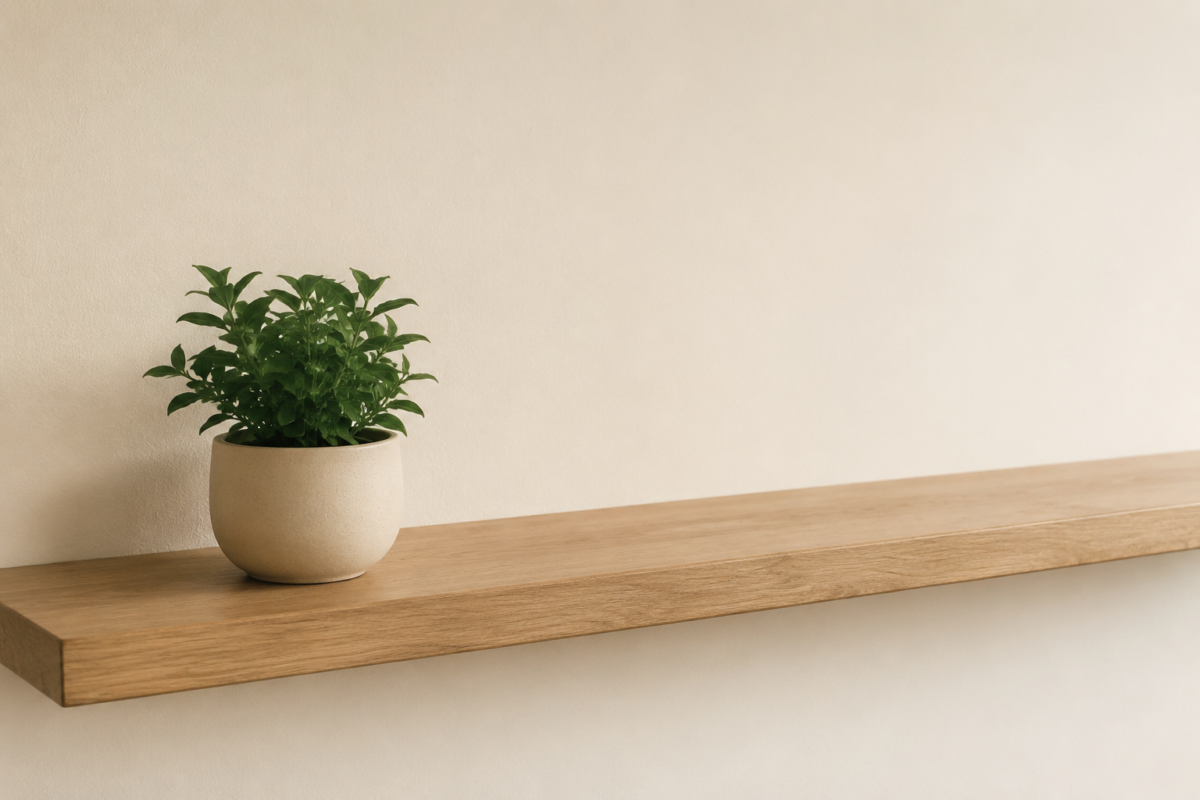
The single most common mistake in open shelf styling is filling every available inch. A shelf packed edge to edge, even with genuinely well-chosen items, starts to look cluttered again the moment there’s no visual breathing room left between one grouping and the next.
Aim for roughly a third of each shelf’s length to stay empty, broken up rather than one single gap. That empty space isn’t wasted. It’s doing real visual work, giving your eye a place to rest and making each grouping read as its own intentional moment instead of one continuous wall of stuff.
If your shelf currently has zero negative space no matter how you rearrange it, that’s usually a sign there’s simply too much on the shelf overall, not that the arrangement needs more tweaking. Go back to the sorting step and move a few more items back into cabinet storage.
Use Color and Texture With Restraint
One or two bold color moments per shelf run does more than scattering small pops of color across every grouping. A single coral vase or a piece of glazed pottery in a saturated tone becomes a genuine focal point when it’s the only bold color in view, where the same color repeated three or four times across the shelf loses its impact and starts to look busy.
Texture works the same way. A woven basket, a raw wood cutting board, or a linen napkin folded and displayed adds tactile variety that pure ceramic and glass can’t provide on their own. One textured piece per grouping is usually enough. More than that and the shelf starts competing with itself for attention.
If you’re figuring out where a bold color accent makes sense across your whole kitchen, not just the shelf, Kitchen Decor on a Real Budget covers where a small splurge on one or two statement pieces goes further than spreading the same budget thin.
Restyle Seasonally, Not Constantly
Open shelving is one of the easiest parts of a kitchen to refresh without any real cost, since swapping in a seasonal plant, a different-colored dish towel folded on the shelf, or rotating which pieces are on display keeps the space feeling current without buying anything new most of the time.
That said, resist the urge to rearrange constantly. A shelf that gets restyled every week never has a chance to feel settled, and the styling itself starts to look more like clutter in progress than a finished decision. A seasonal swap, three or four times a year, keeps things fresh without undoing the sense of intention the rest of your styling built.
Frequently Asked Questions
What should never go on open kitchen shelving? Everyday plastic containers, mismatched mugs, and anything visually busy or purely functional. If an item’s only value is convenience rather than how it looks, it belongs in a closed cabinet instead.
How many items should be on an open kitchen shelf? Fewer than feels natural at first. Aim for two or three groupings of two to three items each per shelf, with roughly a third of the shelf’s length left as open negative space between groupings.
Do open shelves make a small kitchen feel bigger or more cluttered? Either, depending entirely on styling. Curated, sparse open shelving with real negative space reads as spacious and intentional. Overloaded open shelving reads as more cluttered than a closed cabinet would, since everything is visible at once.
Can I add open shelving to a rental kitchen without drilling? Freestanding shelving units, tension-mounted shelves, and adhesive floating shelf brackets rated for kitchen weight all add open shelf space without permanent wall damage, though weight limits vary, so check the rating before loading heavier ceramics.
Related Reading
- The Complete Guide to Decorating a Small Kitchen
- Small Kitchen Lighting That Changes the Whole Room
- Kitchen Decor on a Real Budget
- Kitchen Decor (parent category)
- Small Kitchens (parent hub)