Table of Contents
There’s a wall in most small living rooms that never gets looked at twice. It’s the stretch beside the doorway, the strip above the console, the narrow column next to a window. It’s not big enough to feel like a decorating decision, so it stays blank, month after month, while the coffee table underneath it gets more crowded.
That blank wall is usable storage you’re paying rent or a mortgage on without getting anything back from it. A single floating shelf, or a pair stacked with a gap between them, turns that ignored stretch of wall into real storage for books, baskets, and a few styled objects, without touching a single inch of floor space the room can’t spare.
The Wall Space Most Small Living Rooms Waste
The walls worth shelving are the ones with at least 18 inches of unbroken vertical space and no major furniture already planned against them, typically beside a doorway, above a console or media stand, or flanking a window on one or both sides.
These spots go unused because they don’t feel like obvious decorating zones the way a wall behind the sofa does. But 18 inches of wall width is enough for a shelf that holds a genuine stack of books or a mix of storage and display, and none of that space was doing anything for the room before. Walk your living room’s perimeter and note every stretch of wall between 18 and 36 inches wide that has nothing planned for it. That list is your shelving map before you buy a single bracket.
Shelving Above a Console or Media Stand
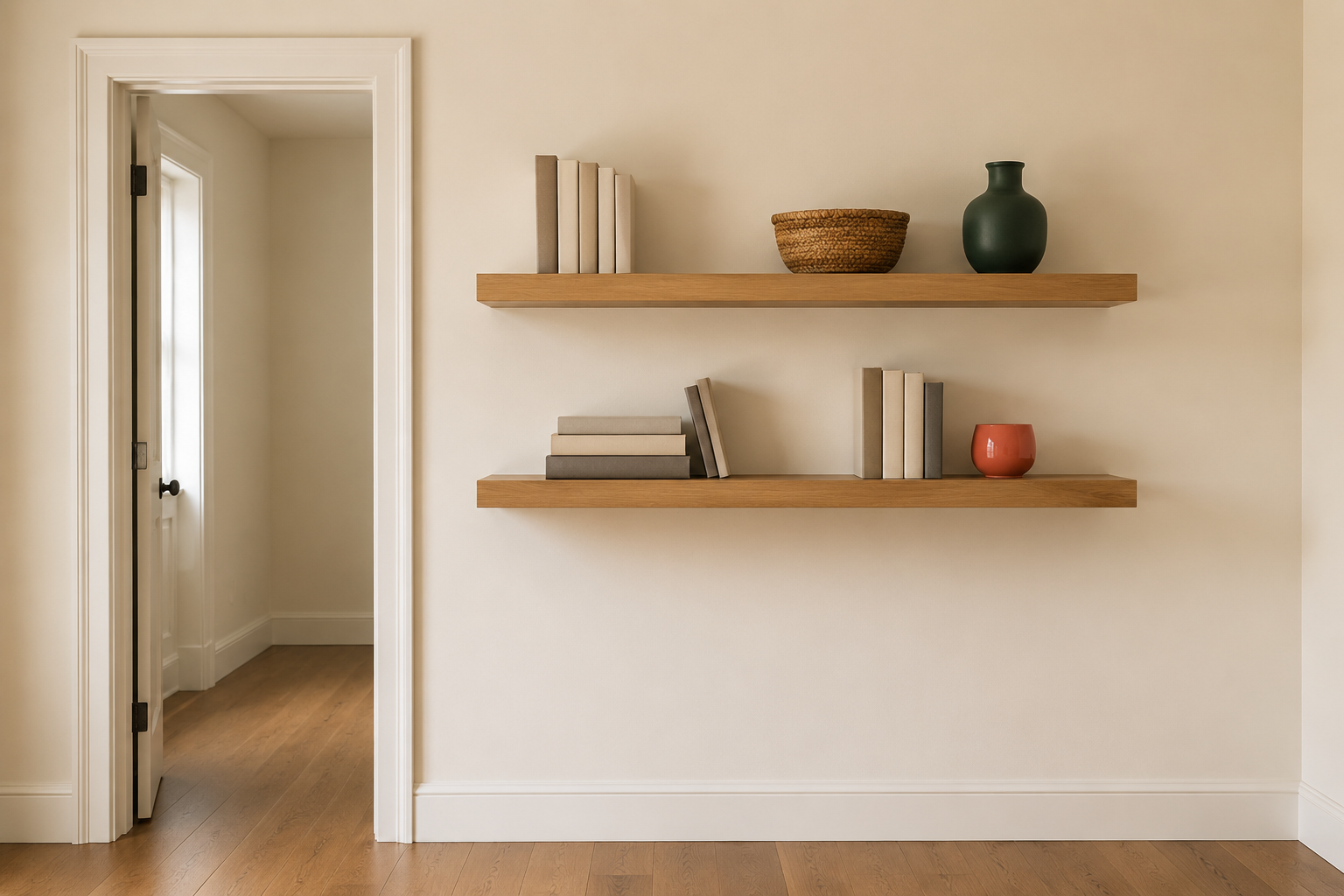
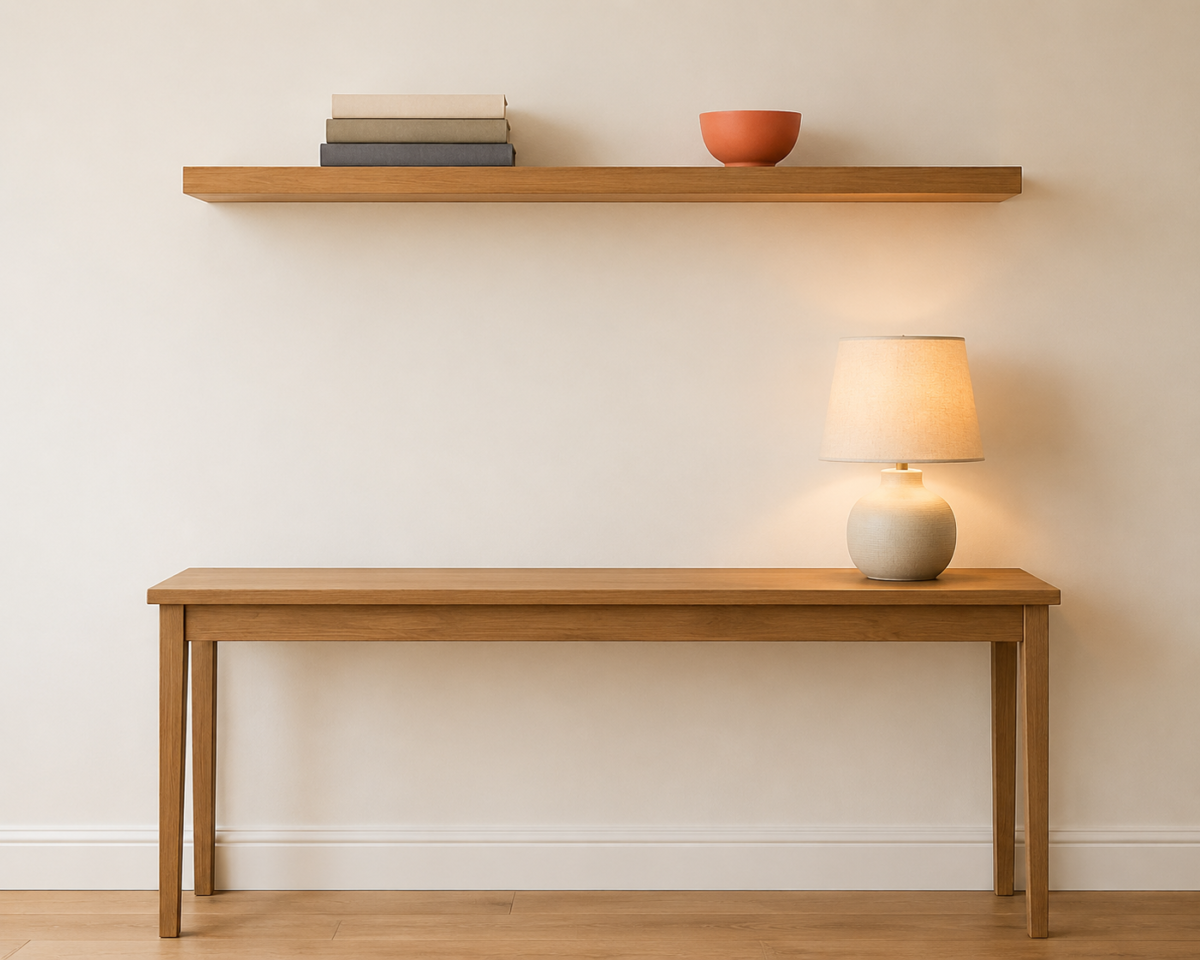
Mount one or two floating shelves above your console table or media stand, spaced at least 10 to 12 inches apart, to add vertical storage in a spot that’s already established as a functional zone rather than opening up an entirely new area of the room.
This is usually the easiest wall to shelf, since the console below it has already trained the eye to expect function in that part of the room. A shelf mounted 8 to 10 inches above the console’s surface keeps the two pieces feeling connected rather than like separate, competing elements. If you’re stacking two shelves, the same 10 to 12-inch gap between them keeps each one usable for a stack of books or a taller object without crowding the shelf above it.
Keep the console’s surface and the shelf above it visually distinct in what they hold. If the console handles daily-use items in its drawers, the shelf above it works best dedicated to books and display objects, so the whole wall doesn’t read as one undifferentiated storage zone.
Shelving Beside a Doorway or Entry Wall
Mount a narrow shelf, roughly 18 to 24 inches, on the wall beside your living room’s main entry point, sized to hold a small catch-all basket, a stack of books, or a single styled object rather than anything wide enough to interfere with the doorway’s swing or the walking path through it.
The wall beside a doorway is one of the most consistently wasted spaces in a small living room, since most people mentally treat it as part of the entryway rather than usable wall for the room itself. A single narrow shelf here does double duty: it adds storage, and it gives you a landing spot for keys or mail right where you actually walk in, instead of letting those items migrate to the coffee table by default.
Keep this shelf’s depth shallow, 6 to 8 inches, so it doesn’t intrude on the doorway’s walking clearance. A deep shelf in this specific spot creates exactly the kind of obstacle a small room’s walking path can’t afford.
Shelving That Flanks a Window
Add a single narrow shelf on one or both sides of a window, sized to the vertical strip of wall between the window frame and the nearest corner, using shallow brackets or a slim floating design that doesn’t compete with the window’s natural light.
Windows often have 6 to 12 inches of wall on either side that goes completely unused, since most furniture arrangements avoid blocking the window and end up avoiding the flanking wall too, out of habit. A narrow shelf here, styled with one or two smaller objects rather than a full stack of books, adds vertical interest without shading the light coming through.
If you’re shelving both sides of the window, keep the styling loosely symmetrical rather than identical. Matching heights with slightly different objects on each side reads as intentional, where two shelves holding the exact same items can start to feel like a matched, showroom set rather than a lived-in room.
Corner Shelving for Rooms Without a Clear Flat Wall
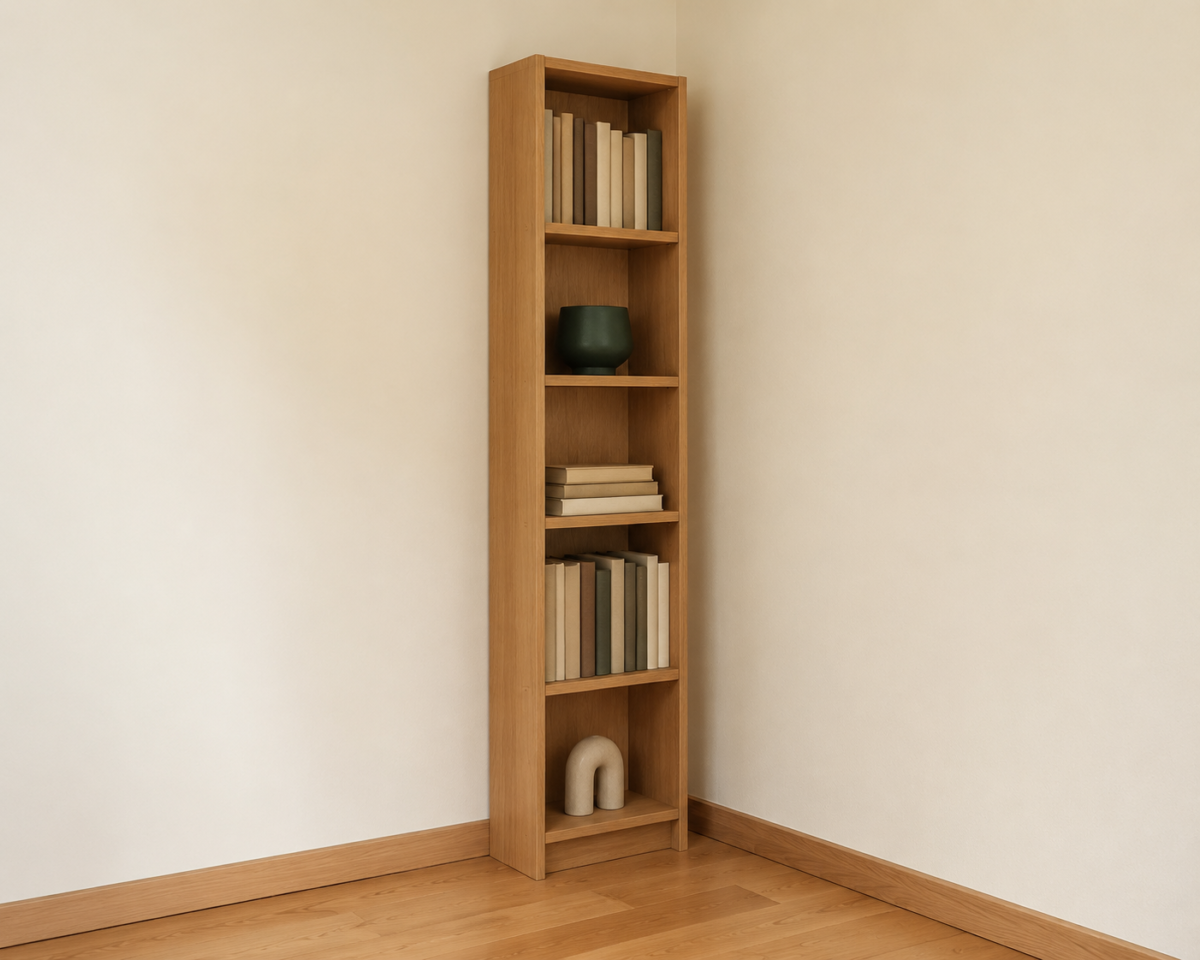
Use a corner shelf unit, either floating triangular shelves or a slim vertical corner bookcase, in rooms where every flat wall is already claimed by furniture, since a corner is one of the few spots in a small living room that’s almost never planned for anything else.
Corners get skipped in most furniture planning because they’re awkward to fill with standard rectangular pieces. That awkwardness is exactly what makes a corner shelf valuable. A tall, narrow corner bookcase, roughly 12 to 16 inches per side, adds real vertical storage in a spot no sofa or media stand was ever going to use. Floating triangular shelves do the same job with a lighter footprint, useful where a full bookcase would feel too heavy.
Rental-Friendly Shelving When You Can’t Drill
If drilling isn’t an option, use adhesive strips rated for at least 15 to 20 pounds for a lightweight floating shelf, or choose a freestanding leaning shelf unit that rests against the wall without any hardware at all, sized to the same unused wall stretches covered above.
Most rental restrictions make wall shelving feel off-limits entirely, but the actual restriction is usually on drilling, not on hanging anything at all. Adhesive strips rated for shelving weight, applied to a clean, flat wall surface, hold a small floating shelf and its typical contents without a single hole. For heavier storage needs, a leaning ladder shelf or a slim freestanding bookcase placed against any of the wall stretches above accomplishes the same vertical storage with zero wall damage, since it’s furniture rather than a mounted fixture.
Check the weight rating on any adhesive product before loading a shelf with books, which are heavier than most people estimate. A shelf holding six hardcovers can easily reach 15 pounds before adding a single decorative object.
How to Style a Shelf So It Reads as Decor First
Mix function and display on every shelf, roughly two-thirds books or storage items and one-third styled objects, with visible negative space between groupings, rather than filling a shelf edge to edge or leaving it purely decorative with nothing functional on it.
A shelf that’s all books reads as utilitarian. A shelf that’s all decor objects reads as precious and slightly impractical in a room people actually live in. The mix is what makes a shelf feel like part of a real home rather than either a library or a showroom display. Group items in twos and threes rather than spacing everything evenly, and leave enough negative space that the eye has somewhere to rest between groupings.
What to Skip When Shelving a Small Living Room
Skip shelving every available wall at once, skip deep shelves in narrow walkway spots, and skip loading a single shelf with more than it can visually or structurally hold.
A few specific habits worth avoiding:
- Filling a new shelf completely on day one, rather than living with a lighter styling for a few weeks and adding only what the space genuinely needs.
- Choosing shelf depth based on what looks proportional rather than what your actual books or objects require, resulting in either a cramped shelf or one with awkward extra depth.
- Mounting shelving without checking the wall type first. Drywall, plaster, and brick all need different hardware, and using the wrong one risks a shelf that fails under real weight.
Frequently Asked Questions
What walls in a living room are worth adding shelving to? Any stretch of at least 18 inches of unbroken vertical wall with no major furniture planned against it, commonly beside a doorway, above a console, flanking a window, or in an unused corner.
How far apart should stacked floating shelves be? Space stacked shelves at least 10 to 12 inches apart to leave room for a stack of books or a taller styled object on the lower shelf without crowding the one above it.
Can I add shelving in a rental without drilling? Yes. Adhesive strips rated for at least 15 to 20 pounds hold a lightweight floating shelf, and a freestanding leaning shelf or corner bookcase adds the same storage with no wall hardware at all.
How do I style a shelf so it doesn’t look cluttered or too bare? Mix roughly two-thirds functional items like books with one-third styled objects, grouped in twos and threes with visible negative space between groupings, rather than filling the shelf edge to edge.
Related Reading
For the full order storage decisions fit into, The Complete Guide to Living Room Storage covers furniture, shelving, and small daily fixes together as one system.
If furniture-based storage is still unsettled, Storage Furniture That Doesn’t Look Like Storage covers ottomans, consoles, and benches that hide clutter before shelving comes into play.
For the small daily fixes that keep a styled shelf from becoming a dumping ground for remotes and cords, Small Storage Wins for Remotes, Cords, and Clutter covers the five-minute additions that finish the job.
For more storage guides, visit Living Room Storage, or explore the wider Small Living Rooms hub for layout, decor, and multi-purpose ideas for the rest of the room.