Table of Contents
Say “storage furniture” and most people picture a plastic bin with a lid, or a particleboard cube shelf with fabric baskets shoved into every square. That’s one option. It’s not the only one, and in a small living room where every piece of furniture is on constant display, it’s usually not the right one.
The furniture that actually solves storage in a small living room, without looking like storage, shares one trait: it closes. An ottoman with a hinged lid, a console with drawers, a bench with a lift-up seat, all hide their contents completely, so the piece reads as a coffee table, a console, or a bench first, and a storage solution second. Open bins and visible baskets, by contrast, always read as storage first, no matter how nicely they’re arranged.
What Actually Makes Storage Furniture Look Like Storage
The difference between furniture that reads as clutter-hiding and furniture that reads as just furniture comes down to whether its contents are visible. A closed drawer, a hinged lid, or a solid cabinet door hides everything inside completely, while an open bin, a woven basket, or a cubby shelf shows exactly what’s inside, no matter how tidy that contents actually is.
This matters more in a small room than a large one, because there’s less visual space to absorb the extra texture and color that open storage adds. A wall of cubby storage with six mismatched baskets works in a mudroom or a garage, where the room’s whole purpose is function. In a small living room meant to feel calm and put together, that same setup competes with everything else in the room for visual attention. Closed storage removes that competition entirely. The room only shows what you choose to leave out.
Storage Ottomans That Read as Real Furniture
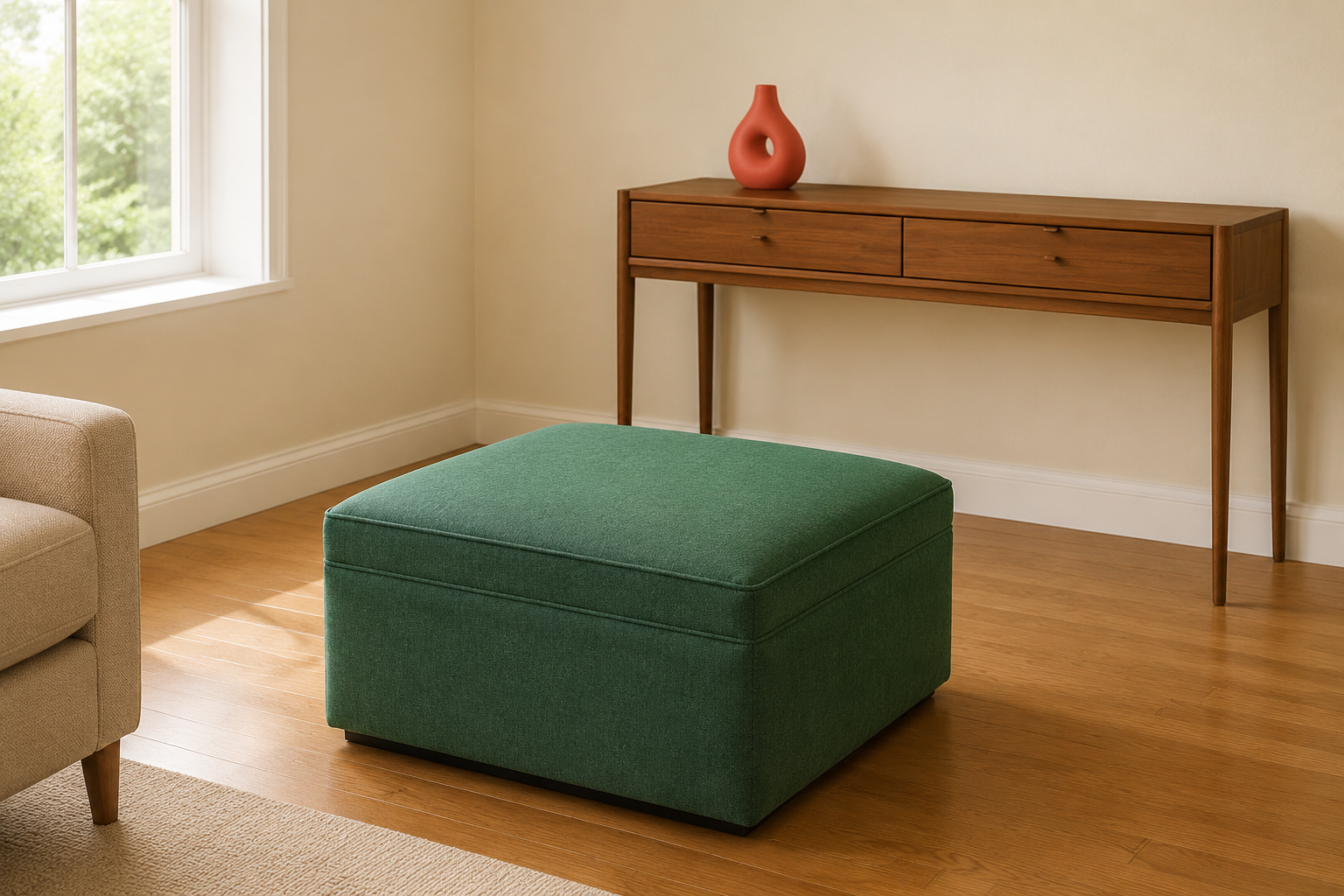
Choose an upholstered storage ottoman in a solid color or subtle texture that matches your existing furniture’s fabric family, sized to double as your actual coffee table, roughly 28 to 36 inches wide, rather than an obviously boxy storage cube in a mismatched finish.
A storage ottoman succeeds at looking like furniture when it’s upholstered in the same general fabric language as the sofa or chairs nearby, rather than a stark contrast that draws the eye to it as a separate, functional object. A linen or bouclé ottoman beside a similarly textured sofa reads as a coordinated seating and surface piece. The same shape in a shiny vinyl or an obviously utilitarian finish reads as a storage bin someone dressed up.
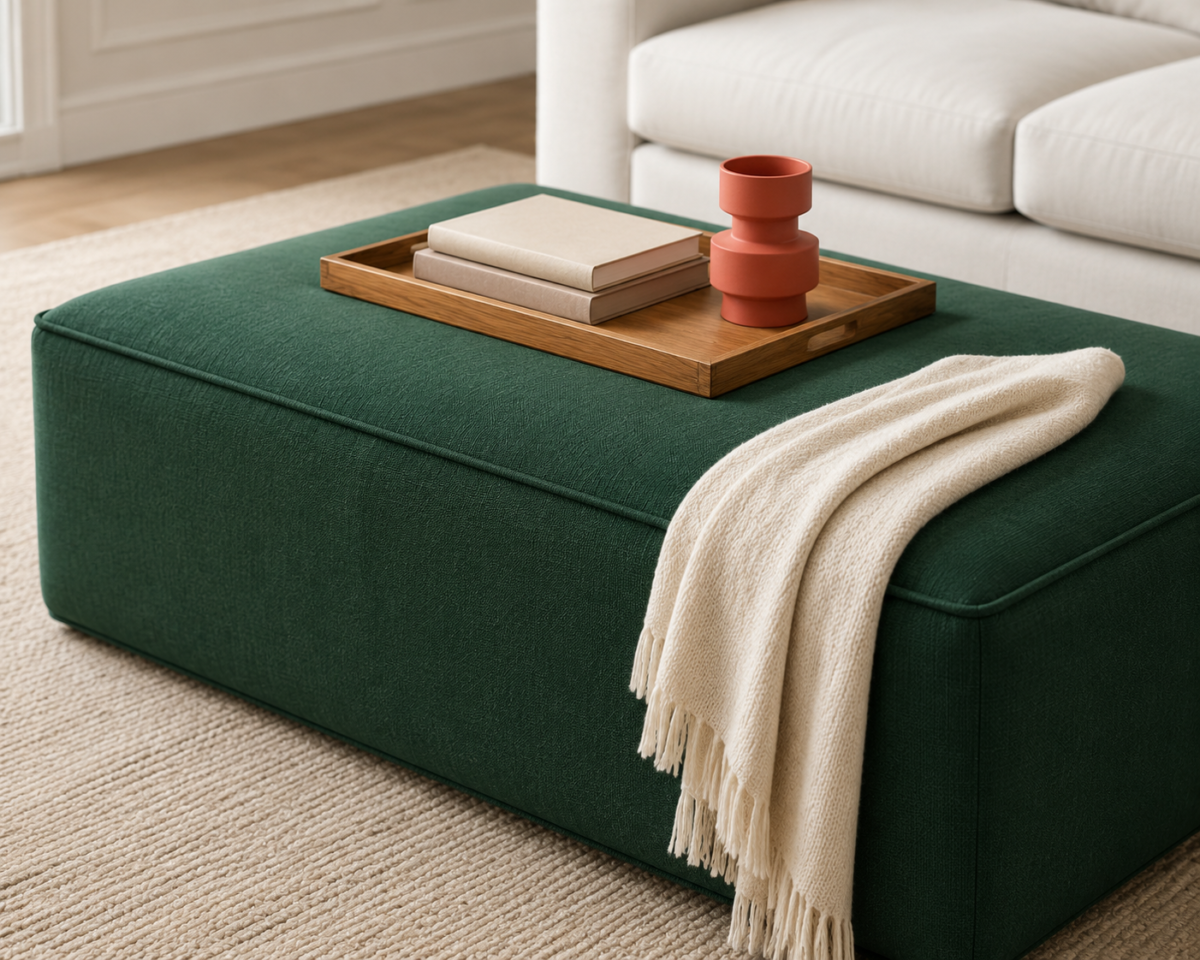
Look specifically for a hinged or fully removable lid, not a fixed cushion top secured on all sides, since a fixed top means lifting the entire ottoman or unzipping a cushion cover every time you need something inside. A tray that sits on top, used for a candle or a stack of books when the ottoman isn’t being accessed, adds the same surface function as a coffee table while the storage stays completely hidden underneath.
Console Tables With Drawers Instead of Open Shelves
Pick a console table with at least one closed drawer for daily items like chargers, coasters, and mail, rather than a console with only open shelving underneath, which tends to accumulate visible clutter within the first few weeks of use.
An open-shelf console looks intentional in a showroom, styled with two baskets and a single plant. In daily use, that open shelf becomes the spot where mail, a spare charger, and whatever doesn’t have another home end up stacked, since there’s no closed surface stopping it. A console with even one shallow drawer solves this specific failure point. The drawer holds exactly the loose items that would otherwise pile on an open shelf, while the surface on top stays styled with two or three intentional objects.
If your console is already open-shelf style and replacing it isn’t in the budget, a single fabric bin with a lid, rather than an open basket, on the lower shelf recovers most of the same benefit. The key difference is a lid, not the container itself.
Benches With Hidden Storage
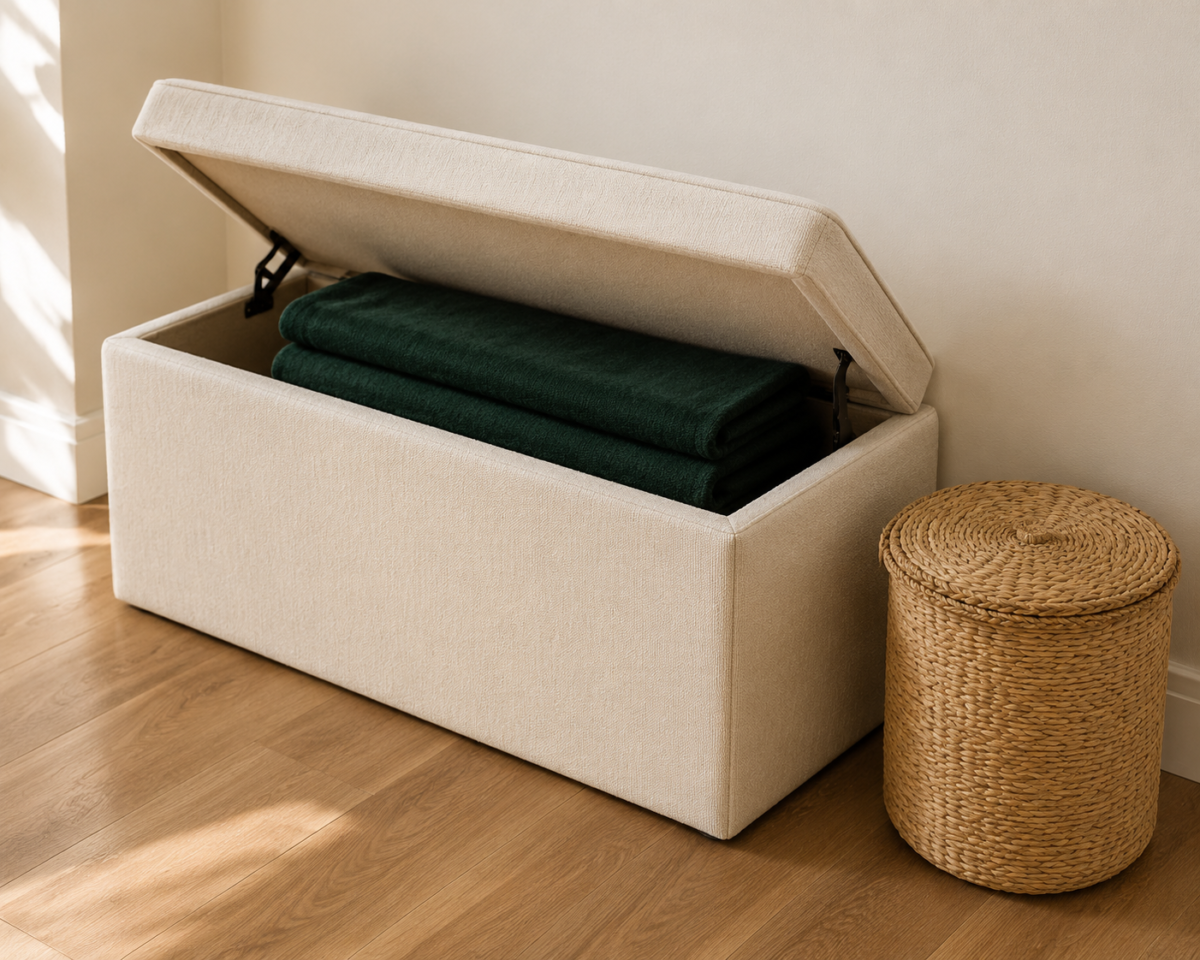
Choose a storage bench with a lift-up upholstered seat for entryway or living room seating that also needs to hold blankets, shoes, or seasonal items, since the bench doubles as extra seating during the day and closed storage the rest of the time.
A storage bench earns its place in a small living room specifically because it solves two problems that would otherwise need two separate pieces of furniture. Seating for guests and hidden storage for extra blankets or throw pillows both live in the same footprint, roughly 40 to 48 inches for a standard bench, rather than competing for separate spots in an already tight room. Placed against a wall or under a window, a storage bench reads as a simple upholstered seat until it’s opened.
Look for a bench rated to hold a person’s weight while seated, not just while closed, since some lower-cost storage benches are structurally rated for storage capacity but not for regular sitting.
Side Tables With a Drawer Instead of an Open Shelf
Choose a side table with one small drawer over a fully open-shelf design, since even a shallow drawer, 3 to 4 inches deep, holds coasters, a remote, or reading glasses out of sight, while an open lower shelf on a side table almost always becomes a visible catch-all within weeks.
Side tables get less attention in most storage planning than ottomans or consoles, but they solve a specific, smaller problem: the handful of items you want within arm’s reach of the sofa but don’t want visible on the table’s top surface. A drawer, even a shallow one, handles that exactly. An open lower shelf, by contrast, tends to collect exactly what a drawer would hide, just in full view instead.
Media Stands With Closed Cabinets, Not Open Cubbies
Choose a media stand with solid cabinet doors over open cubby shelving for anything holding remotes, cords, game consoles, or streaming devices, since closed doors hide the tangle of cords and mismatched electronics that open cubbies leave fully visible under the TV.
A media stand sits directly under the TV, making it one of the most visually prominent pieces in the room. Open cubby shelving photographs well when empty or minimally styled, but in real daily use, it becomes the spot where every cord, remote, and console controller ends up visible at eye level for anyone sitting on the sofa. A cabinet door, even a simple flat panel, hides that entire tangle completely, while still giving cords a route to the TV through a back panel cutout most modern media stands include.
What to Skip When Choosing Storage Furniture
Skip open bins and baskets as your primary storage method in a small living room, skip storage ottomans with fixed, non-removable tops, and skip a media stand with fully open shelving directly under the TV.
A few specific choices worth avoiding:
- An ottoman or bench in a finish or fabric that visibly contrasts with the rest of the room’s furniture, which draws attention to it as a separate functional object rather than a coordinated piece.
- Buying storage furniture sized for a generic room rather than measuring your actual coffee table or console footprint first.
- A console or side table with open shelving in a spot that already tends to collect mail, chargers, or loose items, when a single drawer would solve the exact same problem invisibly.
Frequently Asked Questions
What’s the best storage furniture for a small living room? A storage ottoman used as a coffee table solves the most storage need with the least visual impact, since it hides its contents completely behind a hinged lid while still functioning as a normal coffee table.
Do open shelves or closed drawers work better for hiding clutter? Closed drawers work better for anything you don’t want visible, since open shelves tend to accumulate exactly the loose items, mail, chargers, remotes, that a closed surface would hide completely.
How do I stop cords and remotes from being visible under the TV? Choose a media stand with solid cabinet doors instead of open cubby shelving. Most include a back panel cutout that still routes cords to the TV while keeping the tangle hidden from view.
Are storage ottomans sturdy enough to use as a real coffee table? Most upholstered storage ottomans in the 28 to 36-inch range are built with a reinforced top rated for regular use as a surface, though it’s worth checking the weight rating before setting anything heavy or hot directly on an unprotected lid.
Related Reading
For the full order storage decisions fit into, The Complete Guide to Living Room Storage covers furniture, shelving, and small daily fixes together as one system.
If wall space is still unused, Shelving Ideas for Walls You’re Not Using covers placement and styling for shelves that hold real function alongside display.
For the specific small fixes that keep remotes and cords from piling up even with the right furniture in place, Small Storage Wins for Remotes, Cords, and Clutter covers the five-minute additions that finish the job.
For more storage guides, visit Living Room Storage, or explore the wider Small Living Rooms hub for layout, decor, and multi-purpose ideas for the rest of the room.