Table of Contents
Every apartment eventually runs into the same wall: there’s more stuff than there is dedicated storage for it. Most apartments, especially older buildings and smaller floor plans, come with one modest closet, maybe two, and absolutely nowhere else built specifically to hold anything. Everything else, off-season clothes, extra linens, tools, holiday decorations, the things that don’t have an obvious home, has to find somewhere to live inside a room that’s already busy being a bedroom, living room, or kitchen.
The instinct is usually to buy more storage furniture. That’s not wrong, but it’s incomplete, and it’s also not where the biggest gains actually come from. The real system has an order to it: furniture that earns its footprint by doing double duty, then vertical space that almost every apartment leaves completely untouched, then under-furniture space that’s sitting empty in nearly every room right now. Get the order right and most apartments can absorb far more storage than the closet count would suggest, without a single extra square foot of floor space given up.
Start With Furniture: Every Piece Should Do Two Jobs
Storage furniture in a small apartment earns its footprint by doing at least two jobs at once, storage plus seating, storage plus a display surface, storage plus a room divider. A piece that only stores things, and nothing else, competes for floor space you likely don’t have to spare, which is exactly why this is the first layer to get right before adding anything else.
Ottomans and benches are the most versatile category in this layer. A storage ottoman with a lift-off or hinged lid doubles as a coffee table and extra seating while holding blankets, remotes, or off-season items out of sight. A storage bench at the entry does the same for shoes and bags, giving you a place to sit while putting shoes on and a place to hide the clutter that otherwise piles up by the door.
Bookshelves and open shelving solve two problems at once in an apartment without built-in shelving: storage capacity and, when placed thoughtfully, soft zoning between areas of an open floor plan. A tall, narrow bookshelf positioned perpendicular to a wall can divide a studio’s sleep and living areas the same way a partial wall would, without blocking light or requiring any construction.
Beds with built-in storage convert what’s normally dead space, the 8 to 10 inches of clearance under a standard bed frame, into genuine, substantial capacity. A platform bed with built-in drawers can often hold as much as a small dresser, without adding a single square foot to the bedroom’s footprint.
Nesting and stacking furniture earns its place by collapsing down when not in use. Nesting side tables that stack into one footprint when you don’t need extra surfaces, or stacking storage cubes that can be reconfigured as your needs change, flex with an apartment’s actual day-to-day demands instead of permanently claiming space for an occasional-use function.
For the specific furniture pieces worth buying, sized and rated for real apartment use rather than a showroom photo, and built to actually survive a future move, Storage Furniture That Moves With You covers this layer in full depth.
Layer Two: Vertical Space Almost Every Apartment Wastes
Once furniture-based storage is in place, vertical space is where the next major gain comes from, and it’s the layer most renters never touch, simply because it doesn’t occur to most people that the empty air above eye level is usable storage at all.
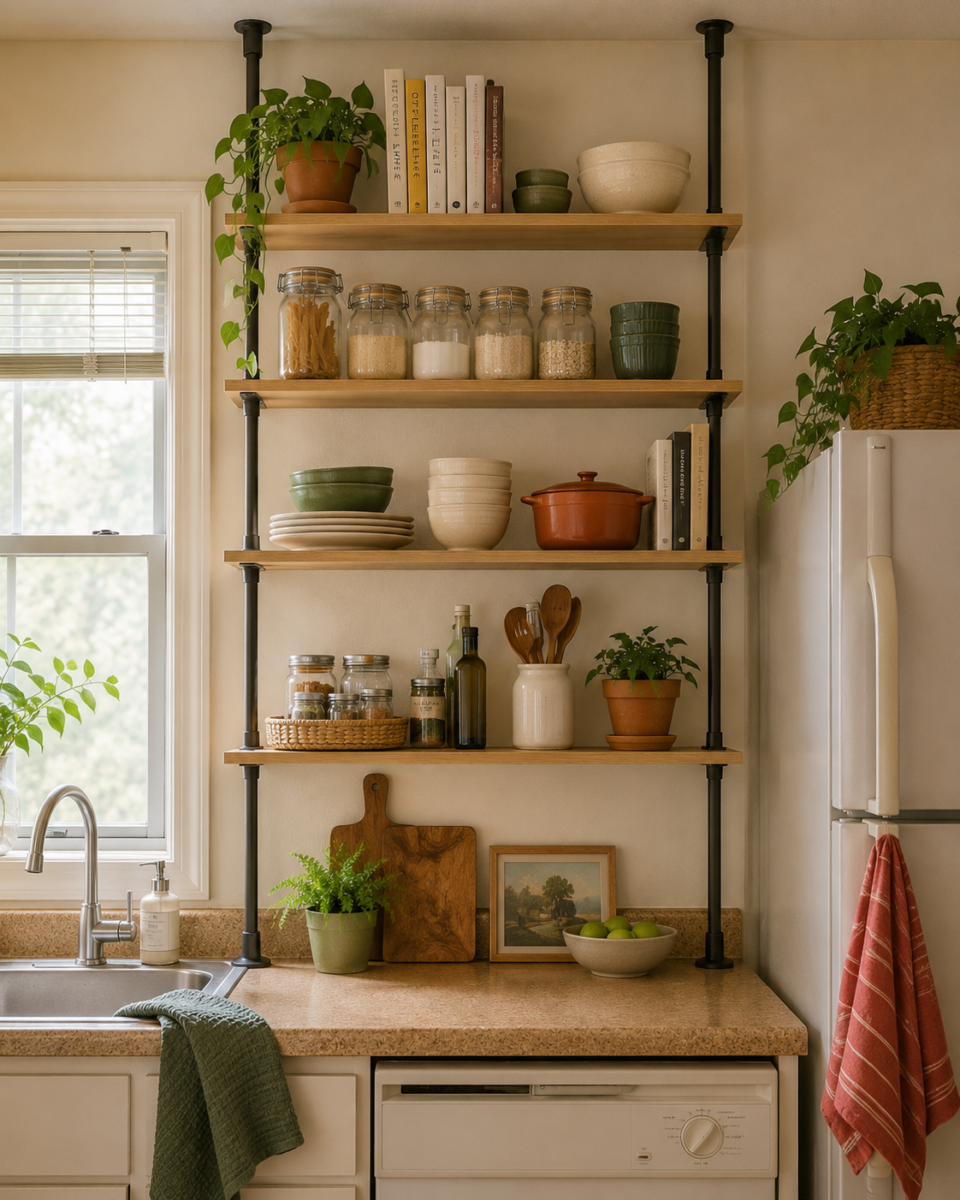
Tension-mounted shelving systems, which wedge between floor and ceiling using spring pressure rather than screws or brackets, add genuine shelf capacity in a kitchen, closet, or bathroom without a single hole in the wall. These systems typically hold real weight, dishes, books, storage bins, when installed correctly and rated appropriately for the load.
Over-the-door organizers recover space that’s almost always completely unused: the back of a closet door, a bedroom door, even a pantry door. Shoe organizers, hanging bins, and slim hook systems mounted over a standard door can hold everything from actual shoes to cleaning supplies, toiletries, or craft materials, all without touching the wall itself.
Wall-mounted shelving with weight-rated adhesive brackets (covered in more depth in Command Strips and Adhesive Hooks Worth Trusting) extends storage above furniture height in any room, kitchen, bathroom, entry, without drilling. Choosing brackets rated with a real buffer above the shelf’s intended load prevents the most common failure in this category.
Above-cabinet and above-closet-rod space is dead air in almost every apartment kitchen and closet. A few stacked, labeled bins on top of kitchen cabinets or above a closet’s hanging rod can hold seasonal items, extra linens, or anything accessed only a few times a year, freeing up more accessible storage for things used regularly.
The full breakdown of which vertical systems actually hold real weight, and which look sturdy but aren’t, lives in Vertical Storage for Apartments With No Extra Closets, including guidance for kitchens, bathrooms, and closets specifically.
Layer Three: Under-Furniture Space, the Most Overlooked Layer of All
Under-bed and under-furniture space is the single most underused storage zone in most apartments, and it’s also the easiest to activate, since in most cases it requires nothing more than the right bins and a bit of measuring.
Under-bed storage alone can absorb an enormous amount of volume: off-season clothing, extra bedding, out-of-rotation shoes, all fit comfortably in flat, rated bins slid under a standard bed frame with adequate clearance. If your current frame doesn’t have enough clearance, bed risers (covered below) solve that in minutes without needing a new frame at all.
Under-sofa and under-console space works the same way on a smaller scale. A low-profile bin or flat storage box that slides under a sofa or console table can hold seasonal decor, extra linens, or anything accessed only occasionally, using square footage that’s otherwise completely wasted under furniture that already has legs tall enough to clear it.
Bed risers add height under any bed frame that doesn’t already have generous clearance, instantly converting a previously unusable gap into functional storage space. Quality risers are rated for real weight, both the bed’s weight and any storage stacked beneath it, which matters more than most people realize until an under-rated riser fails.
Choosing the right bins matters as much as the space itself. Flat, rigid, or semi-rigid bins built specifically for under-bed use maximize the available clearance far better than repurposed cardboard boxes or soft bags, which tend to compress unevenly and waste vertical inches that could hold more.
For exact weight ratings on risers, bin dimensions that fit standard bed clearances, and specific product categories worth the investment versus the ones that underperform, Under-Bed and Under-Furniture Storage That Actually Works covers this layer piece by piece.
Room-by-Room: Where Each Layer Matters Most
The three-layer system applies everywhere, but which layer matters most shifts depending on the room.
Bedrooms benefit most from under-bed storage, since it’s usually the single largest unused volume in the entire apartment. A platform bed with built-in drawers, or a standard frame with risers and rated bins, can often absorb as much as a full dresser’s worth of capacity.
Living rooms lean hardest on furniture-based storage, ottomans, storage benches, and shelving units, since floor space here is usually the most visible and the most contested by seating and walking paths. Vertical shelving adds a secondary layer once furniture-based storage is maximized.
Kitchens depend heavily on vertical space, tension shelving, over-cabinet storage, and wall-mounted racks, since kitchen counters and cabinets are almost always the most space-constrained area in a small apartment, and floor space for furniture is rarely available at all.
Entries benefit most from a combination of furniture (a storage bench) and vertical space (wall hooks, an over-door organizer), since entries are typically the smallest dedicated area in the apartment and need to handle a wide variety of item types, shoes, bags, keys, mail, in a very small footprint.
Bathrooms, often the tightest room of all, rely almost entirely on vertical and over-the-door solutions, since floor space is rarely available and furniture-based storage options are limited by moisture concerns.
Building the System in Your Own Apartment
Start by taking an honest inventory of what genuinely doesn’t have a home right now, the box of winter clothes with nowhere to go, the stack of extra linens on a shelf that’s already full, the tools living in a kitchen drawer because there’s no better spot. This list tells you which rooms need attention first, rather than guessing.
From there, work through the layers in order. Audit your current furniture for pieces that could be swapped for storage-integrated versions (an existing coffee table for a storage ottoman, a basic bed frame for a platform bed with drawers). Add vertical solutions to whichever room felt tightest in your inventory, kitchen shelving if it was kitchen items, closet vertical space if it was clothing. Finally, activate under-bed and under-furniture space with rated bins and risers sized to your specific furniture’s clearance.
This order matters because each layer makes the next one more effective. A room with good furniture-based storage needs less vertical storage to feel resolved. A bedroom with activated under-bed storage needs less closet space for the same amount of clothing. The layers compound, which is exactly why tackling them in sequence outperforms buying storage furniture at random and hoping it adds up to enough.
What to Avoid in Small-Apartment Storage
A few habits consistently undermine an otherwise solid storage system, worth flagging before they become a problem.
Buying storage before measuring. A storage ottoman that looks reasonably sized online can crowd a small living room the moment it arrives. Measure the exact footprint available, including walking paths, before purchasing anything in this category.
Ignoring weight ratings on adhesive and tension systems. Vertical shelving and hanging organizers fail most often because they’re loaded beyond what they’re rated for, not because the product itself is unreliable. Check and respect the rated capacity every time.
Storing rarely-used items in the most accessible spots. The easiest-to-reach storage, eye-level shelves, the front of a closet, should hold what’s used regularly. Seasonal or occasional items belong in harder-to-reach zones, above cabinets, the back of under-bed space, freeing up prime real estate for daily essentials.
Skipping labels and bin systems. Unlabeled storage tends to become a black hole that’s easier to ignore than to use properly. A simple labeling system, even just masking tape and a marker, keeps under-bed and vertical storage genuinely functional instead of becoming a place things disappear into.
Treating every square inch as equally valuable. Not all storage is worth activating right away. A hard-to-reach corner behind a large piece of furniture, or a gap that only fits a single awkwardly shaped item, often isn’t worth the effort or expense of a custom solution when a simpler fix elsewhere in the apartment would free up more usable capacity for less trouble. Prioritize the spaces that give the biggest return, standard-clearance under-bed zones, full closet vertical space, open kitchen walls, before chasing marginal gains in awkward corners.
Renting Versus Owning: What Changes About This System
Almost everything in this three-layer system works identically whether you rent or own, which is part of why it holds up so well across so many different apartment types. A few details shift depending on your situation.
In a rental, lean harder on furniture-based and adhesive-mounted vertical solutions rather than anything requiring drilling, since tension shelving, over-the-door organizers, and weight-rated adhesive brackets all come down completely at move-out without a mark left behind. Command Strips and Adhesive Hooks Worth Trusting covers the exact weight ratings and application technique that keep this layer both effective and deposit-safe.
If you own, or have a landlord who explicitly permits it, permanent shelving and built-in closet systems can add even more capacity than the removable versions covered here, since they’re not constrained by weight limits designed for temporary mounting. Even in that case, though, the same three-layer order, furniture, vertical, under-furniture, still applies; permanence just changes which specific products are available at each layer, not the underlying strategy.
Moving frequency matters too. If a move is likely within the next year or two, prioritizing storage furniture and systems that pack down flat or disassemble easily, covered in more depth in Storage Furniture That Moves With You, protects the investment you’ve made in this system rather than leaving it behind or struggling to transport bulky pieces to the next place.
An Apartment That Finally Has Enough Room
Done in this order, storage furniture that earns its footprint, vertical space that was sitting empty, under-furniture space nearly every apartment wastes, a small apartment can absorb far more than its closet count would ever suggest. None of it requires a bigger unit, a storage unit rental, or getting rid of things that matter. It requires using the space that’s already there more completely, which is exactly what the rest of this guide’s companion articles break down piece by piece.
Frequently Asked Questions
What’s the best storage solution for a small apartment with no closets? Start with furniture that doubles as storage, ottomans, benches, and platform beds with built-in drawers, since it doesn’t require any wall space or vertical installation at all. From there, over-the-door organizers and tension-mounted shelving add real capacity without needing a dedicated closet.
How much weight can under-bed storage bins hold? It depends on the specific bin and any risers used to add clearance, so always check the manufacturer’s rated capacity rather than assuming based on the bin’s size. Flat, rigid bins built specifically for under-bed use generally hold more reliably than repurposed boxes or soft bags.
Do bed risers actually work for adding storage space? Yes, when they’re rated for the combined weight of the bed, mattress, and anything stored underneath. Quality risers can add several inches of clearance, which is often enough to fit standard storage bins that wouldn’t otherwise slide under the frame.
What room in an apartment usually has the most wasted storage potential? The kitchen, typically, since vertical space above cabinets and between counter height and the ceiling is almost always left completely empty. Tension shelving and wall-mounted racks can recover a meaningful amount of usable storage in this exact zone.
Is tension-mounted shelving strong enough for real storage, not just decorative items? Quality tension shelving, installed correctly and rated appropriately for the intended load, can hold genuine weight, dishes, books, storage bins. The key is checking the specific product’s weight rating rather than assuming all tension systems perform the same.
Related Reading
- Storage Furniture That Moves With You — ottomans, benches, and shelving units that earn their footprint and pack flat for the next move.
- Vertical Storage for Apartments With No Extra Closets — tension shelving and over-the-door systems that use height instead of floor space.
- Under-Bed and Under-Furniture Storage That Actually Works — bins and risers rated for real weight, not just a few flat boxes.
- Zoning a Studio Without Walls or Furniture Dividers — how storage furniture doubles as a room divider in an open layout.
- Parent Category: Apartment Storage
- Parent Hub: Apartments & Rentals