Table of Contents
The difference between a good furniture buy and a regretted one is rarely visible from three feet away. It’s in the joint, the frame, the leg attachment, the parts nobody photographs for a listing. A few minutes spent actually checking these details, before money changes hands, catches almost every expensive mistake before it becomes one.
The furniture quality checks worth doing before buying depend on what type of piece it is: wood joints and back panel material for case goods, frame and spring construction for upholstered furniture, and leg attachment method for tables and chairs. Each furniture category has its own specific weak point, and checking the right one takes only a couple of minutes.
Wood Furniture: Dressers, Bookshelves, and Cabinets
For wood case goods, check the joint type, whether the piece is solid wood or veneer, and the back panel material, since these three details predict long-term durability far more reliably than the overall finish or style.
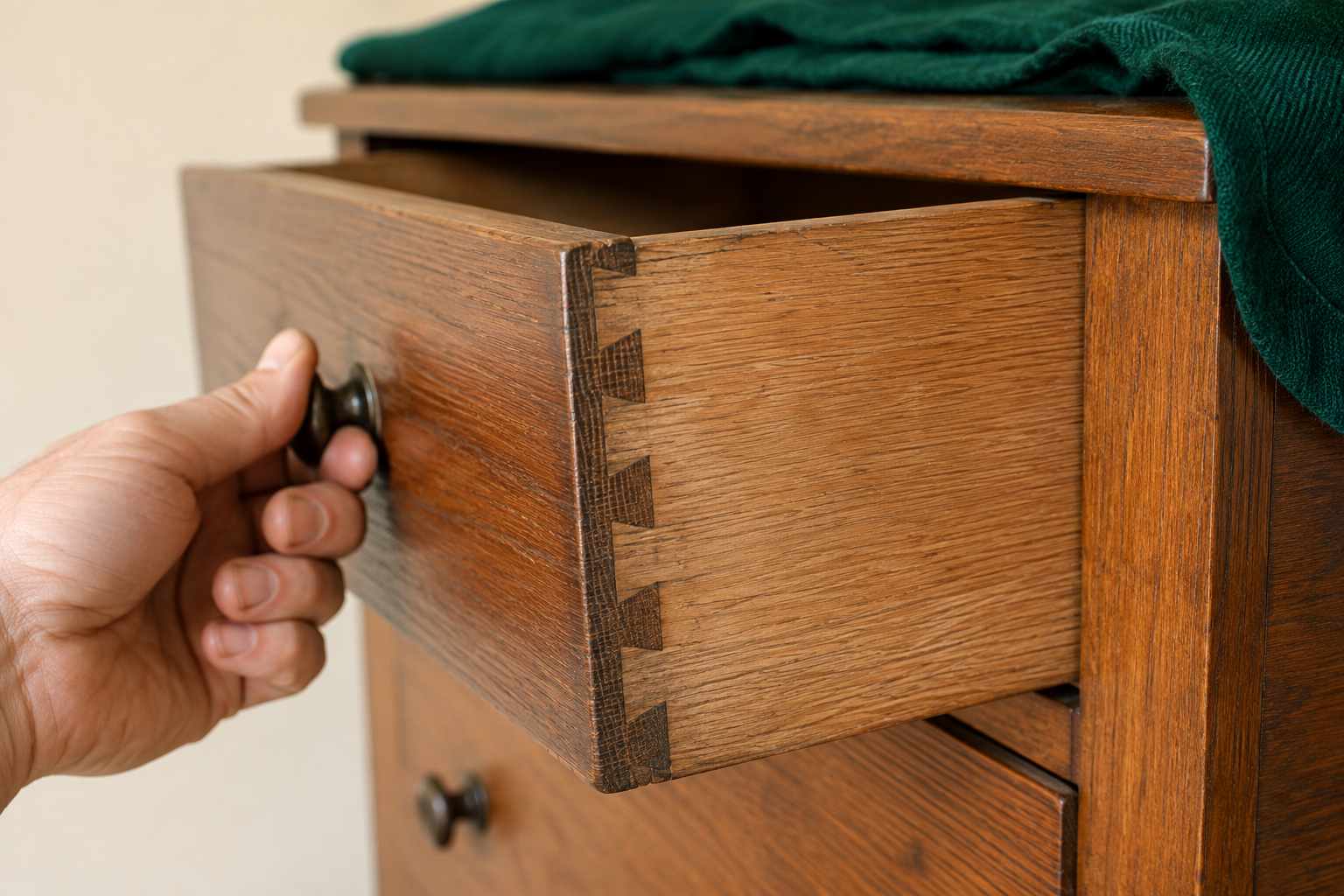
- Look at the joints where a drawer front meets its sides. Dovetail joints, with their interlocking triangular shape, or mortise-and-tenon joints on larger frame pieces both indicate genuine quality construction. Staples, glued butt joints, or visible metal brackets holding a drawer together are a weaker construction method, more prone to loosening with regular use.
- Check whether it’s solid wood or veneer, and don’t assume from the surface alone. Open a drawer and look at an unfinished interior edge or the underside of a shelf. Continuous wood grain running through the piece suggests solid wood. A thin layer of grain pattern over a different-colored material underneath is veneer, which isn’t automatically bad, but it changes what repairs are possible if the surface is ever damaged.
- Check the back panel material. A thin, flexible hardboard panel offers less structural support than a solid wood or plywood back panel, and it’s more prone to bowing or separating from the frame over years of use, especially if the piece gets moved more than once.
- Test the drawers with the piece fully loaded, not empty. An empty drawer can glide smoothly on a track that struggles the moment real weight is added. If possible, apply gentle downward pressure while sliding a drawer to simulate how it’ll behave once it’s actually holding clothes or supplies.
Upholstered Furniture: Sofas and Chairs
For upholstered furniture, check the frame stability, the spring or support system underneath the cushions, and the foam density, since a beautiful fabric can’t compensate for a weak frame or worn-out cushion support underneath it.
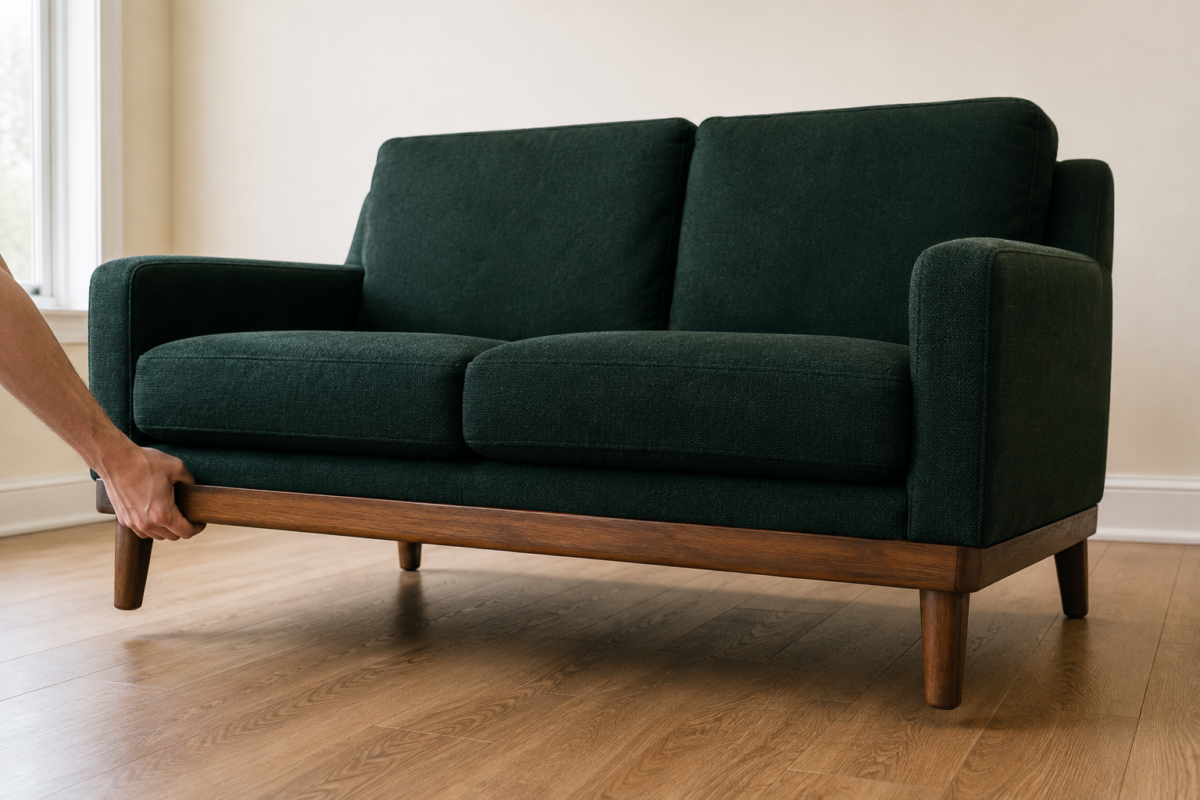
- Lift one corner slightly off the ground. A well-built piece lifts as a single solid unit. If you hear creaking, see the frame flex visibly, or feel one section move independently from the rest, the frame itself has a real structural issue.
- Press firmly into the seat cushion and feel for what’s underneath. Individual coil springs or a taut web of support straps both indicate genuine seating support. A seat that feels like it’s resting directly on a flat wooden platform with no give at all is a sign of minimal or degraded support underneath.
- Check foam density by pressing down and watching how it recovers. Foam that springs back within a couple of seconds is in reasonable shape. Foam that stays compressed, or that feels crumbly and uneven under the fabric, has broken down and will need replacing to restore real comfort.
- Smell before committing, particularly with secondhand pieces. A musty or smoky smell embedded in upholstery is one of the hardest quality issues to fully resolve, even with professional cleaning, and it’s worth walking away from rather than hoping it airs out.
Tables and Case Goods With Legs
For any furniture with legs, check the wobble under gentle pressure, how the legs actually attach to the frame, and the tabletop material, since leg attachment failure is one of the more common and disappointing furniture problems, especially on pieces that get moved occasionally.
- Rock the piece gently in two directions, front to back and side to side, on a flat, level floor. Noticeable wobble in either direction usually points to a loosened joint or leg attachment rather than an uneven floor, especially if the wobble is consistent across different flat surfaces.
- Check how each leg actually attaches. Legs screwed into solid corner blocks are generally more secure long-term than legs attached with simple glued dowels alone, particularly on any piece that will be moved between apartments more than once.
- Check the tabletop material at an edge or underside, the same way you’d check for veneer on a dresser. A laminate surface over particleboard is more prone to chipping at corners and swelling if it ever gets wet, compared to solid wood or a genuine stone surface.
- Look underneath for any existing repairs. Visible extra screws, mismatched wood color, or dried glue in unexpected spots usually indicate a prior repair, which isn’t automatically disqualifying, but it’s worth knowing about before you buy rather than discovering it later.
Small Details That Predict Big Problems
Hardware weight, finish consistency, and any small holes or dark staining on the underside of a piece are minor details that reliably predict bigger, more expensive problems, even though none of them are the first thing anyone notices when browsing.
Heavy, solid metal hinges and drawer slides generally indicate a manufacturer that invested in quality throughout the piece, not just on the visible surfaces. Thin, easily bent stamped metal hardware often signals the same corner-cutting extends to less visible structural choices too. A consistent, even finish across the whole piece, rather than noticeably different sheen or color in one section, suggests the piece hasn’t already been through a rough refinishing attempt. And small round holes in wood, especially paired with a fine sawdust residue nearby, can indicate past or active wood-boring insect damage, which is worth walking away from entirely rather than risking it spreading to other wood furniture in your home.
The Two-Minute Version When You’re Short on Time
When there’s no time for a full inspection, check the joints or frame connection first, do a quick wobble or lift test second, and smell any upholstery last, since these three checks alone catch the large majority of serious quality problems in under two minutes total.
This condensed version won’t catch everything a full inspection would, but it reliably filters out the pieces most likely to become an expensive regret, which is usually enough to make a confident decision on the spot rather than walking away empty-handed out of uncertainty.
Frequently Asked Questions
What’s the fastest way to check furniture quality if I only have a minute or two? Check the joints or leg attachment, do a quick wobble or gentle lift test, and smell any fabric. These three checks together catch most serious quality issues quickly, even without time for a full inspection.
Is veneer furniture automatically lower quality than solid wood? Not automatically. Veneer construction can be quite durable and is often more resistant to warping than solid wood in humid conditions. The main difference is what’s possible if the surface is ever damaged, since solid wood can typically be sanded and refinished more times than veneer.
How do I know if a wobble is the furniture’s fault or just an uneven floor? Test the piece on a couple of different flat surfaces if possible, or check whether the wobble is consistent from multiple directions. A wobble that persists across different spots usually points to the piece itself rather than the floor.
Should I walk away from furniture with a musty smell if I really like it? For anything upholstered, generally yes, unless you’re prepared to budget for professional cleaning and the smell is genuinely mild rather than strong. For wood furniture, a mild musty smell from storage often airs out within a few days outdoors, which is a lower-risk situation.
Related Reading
For the full picture of where to shop and how to weigh a secondhand find’s real cost, The Complete Guide to Thrifting for a Small Space covers sourcing and deal-versus-mistake math in depth.
If you’re deciding which categories are worth spending more on regardless of where you shop, The 5 Places Worth Spending More When You’re on a Budget covers where quality actually shows.
For styling a secondhand piece once it’s home, The Complete Guide to Budget Styling a Small Space covers lighting, textiles, and wall decor in sequence.
Browse the full Thrift & Secondhand category for more sourcing-specific guides, or explore the wider Budget Decor hub for get-the-look guides and DIY-friendly styling ideas.