You don’t need a bigger budget to make a small space look intentional. You need to spend it in the right order.
Most people decorating on a budget do the opposite of what actually works: they buy the cheapest version of everything, all at once, and end up with a room that looks exactly like what it is — a pile of budget purchases with no plan behind them. A better-looking room on the same budget comes down to sequence. Decide the style first. Then find the swaps that get you there for less. Then reach for DIY only where it actually earns its place.
This guide walks through that order, room by room, so every dollar you spend is doing something specific.
Table of Contents
The Three-Step Order: Style, Swap, DIY
Decide your style direction before you spend a single dollar, then look for cheaper versions of that specific look, and only pick up a paintbrush for updates that genuinely need one. Skipping straight to “what’s on sale” is the single biggest reason a budget room ends up looking scattered instead of styled.
This is the Style stage of the Taims Space Method™, and it works the same way whether you’re furnishing an entire studio or just refreshing one corner:
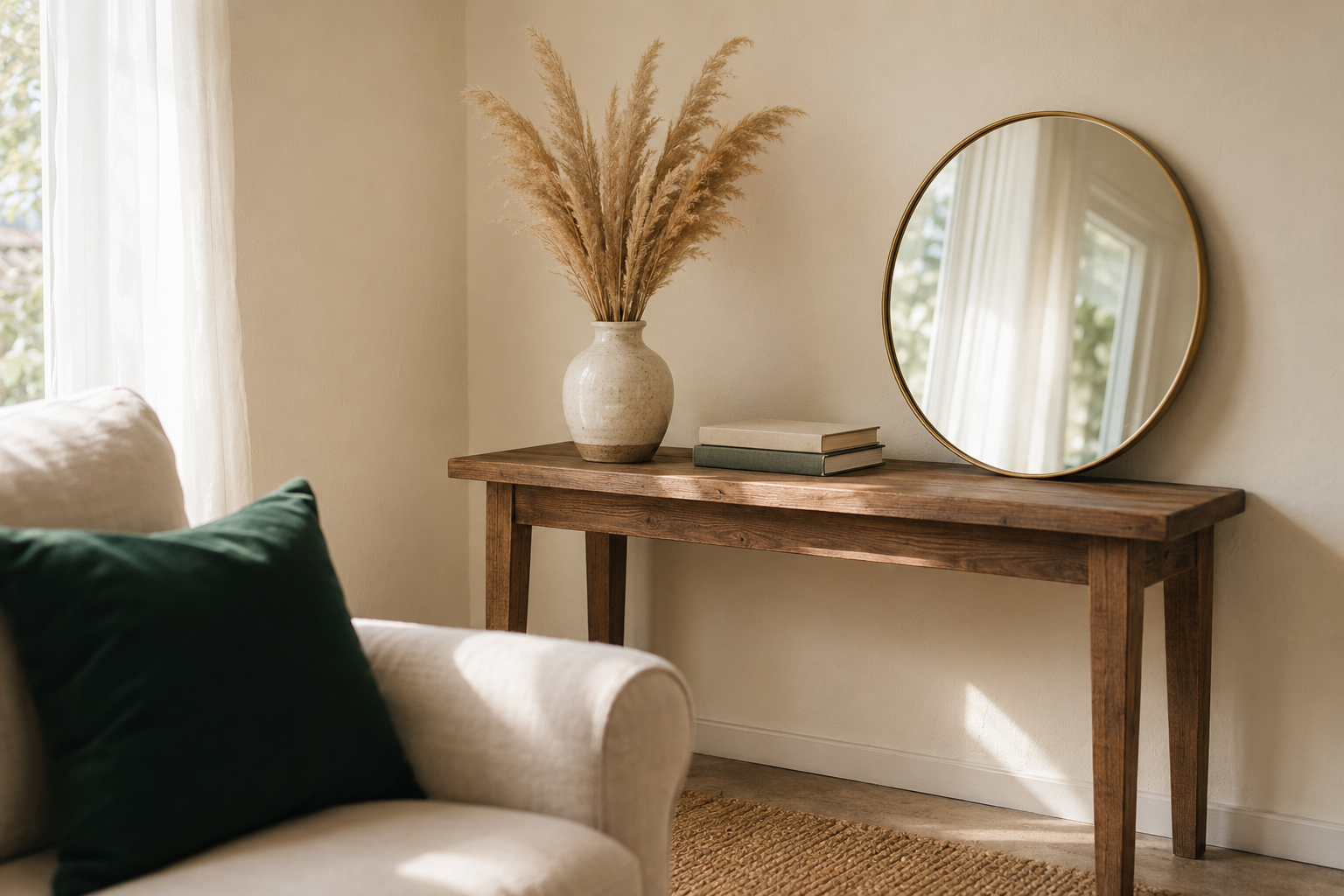
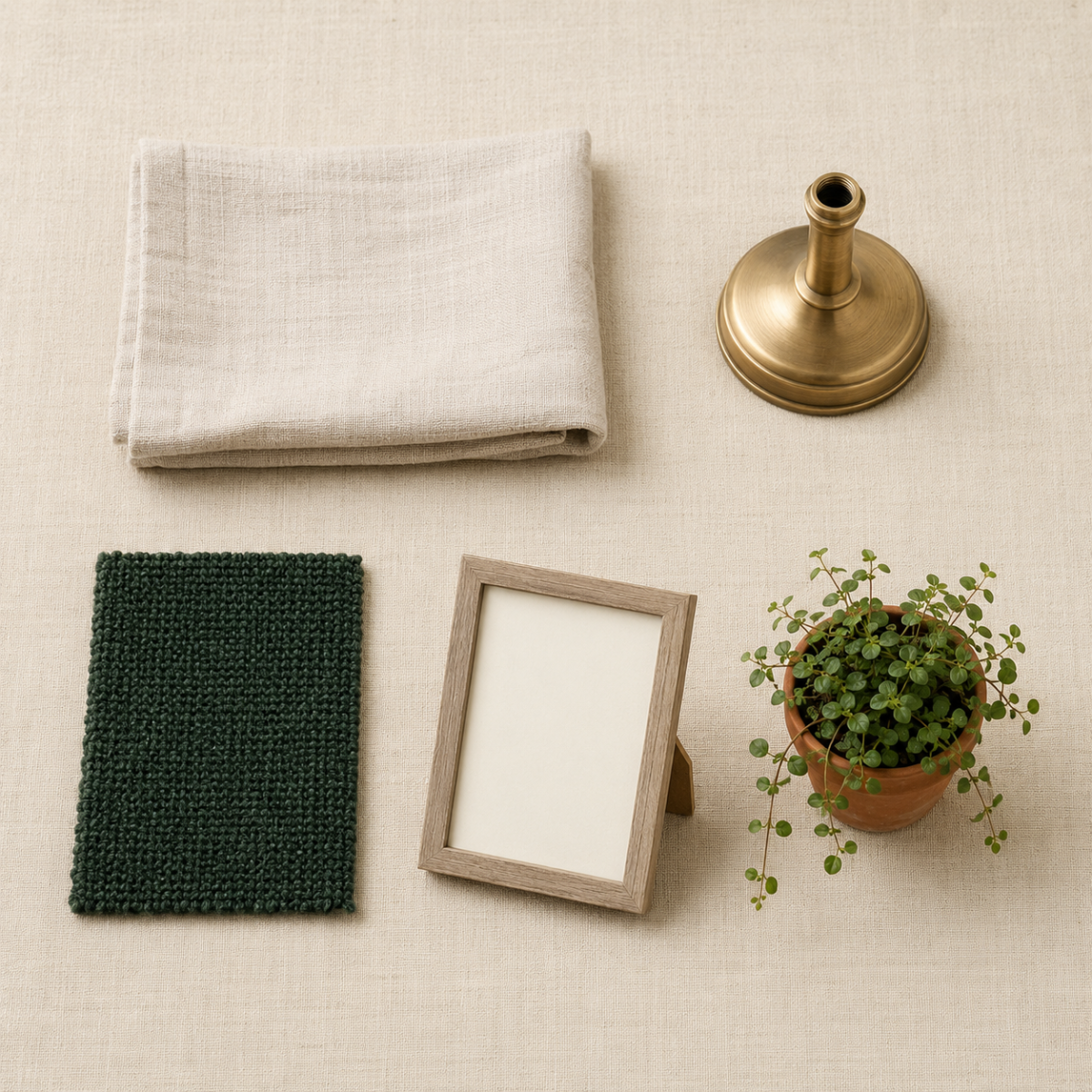
Step 1 — Style. Pick two or three reference images that all agree with each other: same color family, same general mood (warm and layered, or clean and minimal, or something in between). This step costs nothing and it’s the one people skip most often, which is exactly why so many budget rooms feel random. If you can’t describe your room’s style in one sentence, you’re not ready to shop yet.
Step 2 — Swap. Once you know the look, go find the affordable version of the specific pieces that create it — not just “cheap furniture,” but the dupe for the exact chair, lamp, or rug that was doing the work in your reference images. This is where most of your budget should go.
Step 3 — DIY. Only after styling and swaps are locked in do you look at what’s left over. DIY should fill small, specific gaps — not carry the whole room. A room built entirely from DIY projects usually looks like a room built entirely from DIY projects.
Following this order means you’re never buying something and hoping it fits later. Every purchase already has a job.
Where to Spend and Where to Save
Spend on the pieces you touch, sit on, or look at every day, and save on everything that just fills space. A $40 throw pillow and a $40 side table can look identical in a photo, but only one of them gets tested daily by your actual body weight.
A useful split for a typical small living room, working from a $600 total budget as an example:
| Category | Suggested share | Why |
| Seating (sofa, chair) | 35–40% | Most-used surface, hardest to fake quality on |
| Lighting | 15% | Changes the entire mood of a room for relatively little money |
| Textiles (rug, pillows, throws) | 20% | Cheapest way to add color and texture — swap seasonally |
| Wall decor | 15% | One or two intentional pieces beat five small ones |
| Everything else | 10–15% | Small accessories, plants, styling objects |
If you’re not sure where your specific room needs the split adjusted, the full Budget Styling Guide breaks down spend percentages for bedrooms, kitchens, and home offices too.
Renting changes this math slightly, since anything attached to the walls or fixtures needs to be reversible. That’s less about spending more and more about spending differently — you’re paying for removable versions of things a homeowner could install permanently.
The Swaps That Make the Biggest Visual Difference
The three swaps that change a room’s entire feel for the least money are lighting, hardware, and one statement textile — in that order. None of them require tools, a landlord’s permission, or a full weekend.
Lighting swaps. Replacing a builder-grade overhead fixture’s bulb color temperature (warm white, roughly 2700K, instead of the harsh daylight bulbs most rentals ship with) changes how every other object in the room reads, for under $10. A plug-in wall sconce with a cord cover costs $25–$40 and gives you the visual weight of hardwired lighting with zero electrical work.
Hardware swaps. Peel-and-stick or slide-on cabinet hardware covers let you upgrade kitchen or bathroom pulls for $1–$3 per piece, and they come off clean at move-out. This single swap gets referenced constantly because it’s the highest visual-impact-per-dollar change in a rental.
One statement textile. A single rug, an oversized throw blanket, or curtains in a color your reference images agree on does more than five small decorative objects scattered around the room. Buy one thing you’d photograph, not five things you’d forget you own.
For a full list of specific dupes — the actual products people search for when they want “that expensive look” without the expensive price — the Get the Look for Less Guide breaks these down by style, not just by category.
DIY Updates Worth Your Weekend — and Ones to Skip
DIY is worth it when the store-bought version of something is genuinely overpriced for what it is, and not worth it when the DIY version takes three attempts to look intentional. A $15 can of paint on an old picture frame is worth an hour. Reupholstering a couch you’ve never reupholstered before, the week before guests arrive, usually isn’t.
Worth doing:
- Painting or updating thrifted furniture (frames, small tables, dressers)
- No-sew curtain hacks using fabric clips or fusible tape
- Contact paper on shelves, drawer liners, or small surfaces
- Simple wall grids using painter’s tape and a level, no drilling required
Usually not worth it, especially on a first attempt:
- Reupholstering anything with cushions or curves
- Wallpaper installation without prior experience, especially in a rental where a bad peel-back damages the wall beneath it
- Large furniture builds that need power tools you don’t already own
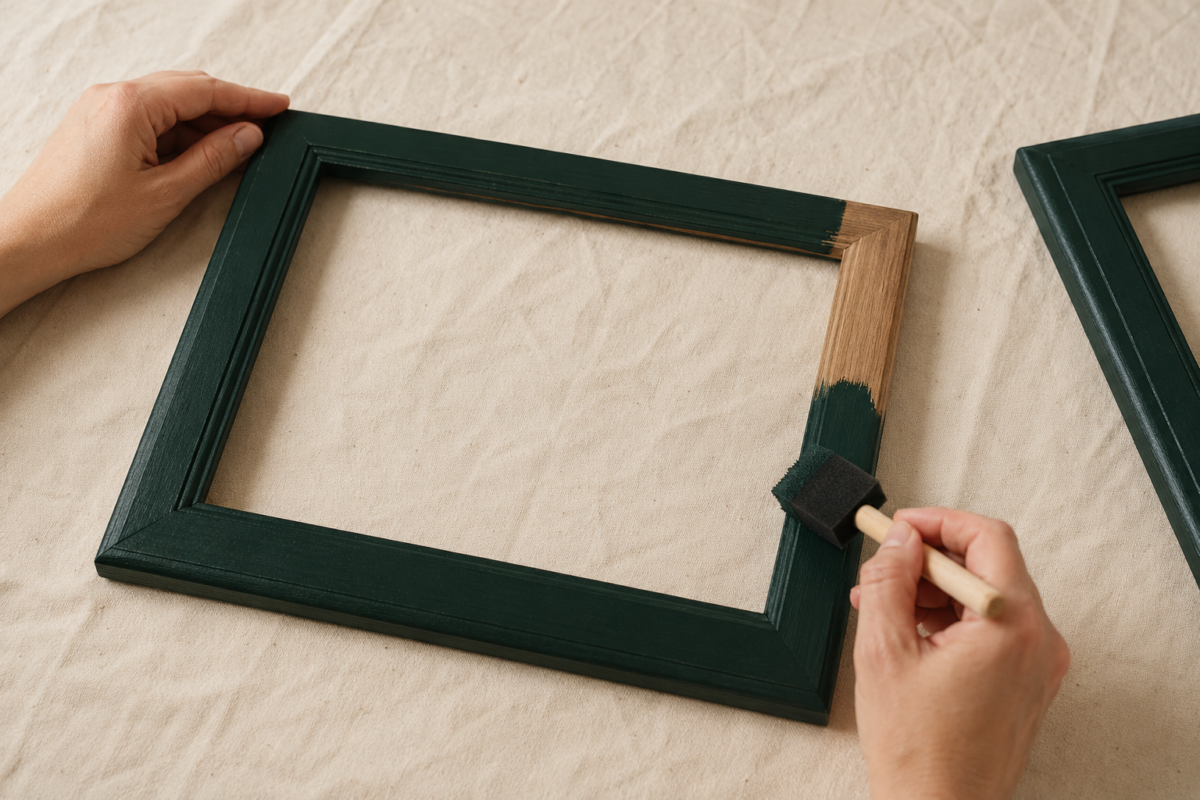
A rough rule that holds up across most small-space DIY projects: if you’ve never done it before, practice on something small and cheap before you attempt it on the piece you actually care about. The DIY-Friendly Updates Guide has a full skill-level breakdown so you know which projects to start with.
Room-by-Room Budget Priorities
Every room has one or two things worth prioritizing first, and everything else can wait. Trying to finish an entire room in one shopping trip is usually how budgets get blown on things that don’t matter yet.
Small bedroom. Prioritize the bed frame and lighting first — they’re what you see every morning and every night. Bedding and wall decor can be added gradually without the room feeling unfinished in the meantime.
Small living room. Prioritize seating and one rug. These two anchor the whole room, and everything else (pillows, wall art, small tables) reads as an addition to an already-grounded space rather than a room still missing its foundation.
Small kitchen. Prioritize lighting and hardware over anything decorative. A kitchen’s “decor” is mostly functional objects you already own, styled better — open shelving, a coordinated set of canisters, one plant. Spend on what changes how the room functions, not just how it photographs.
Small home office. Prioritize the chair before the desk. A $60 desk with a supportive $150 chair beats the reverse every time you’re sitting in it for six hours.
Common Budget Decorating Mistakes That Waste Money
The most expensive mistake in budget decorating isn’t overspending — it’s buying twice. Every one of these mistakes below leads to the same outcome: paying for something a second time because the first version didn’t actually solve the problem.
- Buying the cheapest option in every category. One genuinely well-made piece (usually the seating) matters more than five slightly-cheaper versions of everything.
- Skipping the style step. Shopping by “what’s on sale” instead of “what fits my reference images” is how mismatched rooms happen.
- Decorating in permanent ways as a renter. Paint, drilled shelving, and installed fixtures often cost more at move-out than the reversible version would have cost upfront.
- Buying furniture before measuring. A sofa that’s 4 inches too deep for a small living room turns a good purchase into a returns process.
- Treating DIY as automatically cheaper. Materials, tools, and redo attempts add up. Price out the DIY version honestly before assuming it beats buying.
Building Your Own Budget Decor Plan
A workable budget decor plan fits on one page: your total number, your style references, your room-by-room priority list, and your spend split. Everything after that is just shopping against a plan instead of shopping and hoping.
- Set your total budget for the space.
- Pick 2–3 reference images that agree with each other stylistically.
- Identify your room’s one or two priority pieces (see the room-by-room section above).
- Apply the spend split — most of the budget to what you touch daily, less to what just fills space.
- Shop the swaps before you shop anything else.
- Save DIY for the small gaps left at the end, not the whole room.
Do it in that order and the room comes together as a plan, not a pile.
FAQ
What’s a realistic budget for decorating a small living room? A functional, well-styled small living room can come together for $400–$800 when you’re working with a mix of thrifted seating and a few new key pieces (lighting, rug, one statement item). Full furniture replacement pushes that higher; styling an existing setup pushes it lower.
Should I buy cheap furniture or save up for one good piece? Save up for seating specifically — it’s the piece you test daily and the hardest to fake durability on. Everything else (side tables, decor, shelving) is a much safer place to go budget.
Is DIY actually cheaper than buying? Only sometimes. Add up materials, tools you don’t already own, and the cost of a redo if the first attempt doesn’t work. Small, low-skill projects (painting a frame, no-sew curtains) are reliably cheaper. Large or skill-heavy projects often aren’t.
What should renters avoid when decorating on a budget? Avoid anything that isn’t reversible — drilled shelving, permanent paint on fixtures, adhesives that pull paint off on removal. The reversible version usually costs about the same and doesn’t risk your deposit.
How do I keep a budget room from looking mismatched? Pick your style references before you shop, not after. Mismatched budget rooms are almost always the result of buying whatever was cheap in the moment instead of shopping against a plan.
Related Reading
- Budget Styling Guide — where to spend and where to save, broken down room by room
- Get the Look for Less Guide — the specific dupes for popular expensive looks
- DIY-Friendly Updates Guide — which projects are worth a weekend, ranked by skill level
- Complete Guide to Budget Styling a Small Space — related Taims Space guide.
- Complete Guide to Getting the Look for Less — related Taims Space guide.
- Complete Guide to DIY-Friendly Updates — related Taims Space guide.
- Complete Guide to Thrifting for a Small Space — related Taims Space guide.
- Styling One Focal Point on a Budget — related Taims Space guide.
- Best Places for Secondhand Furniture and Decor — related Taims Space guide.