Table of Contents
Walk into a thrift store without a plan and it’s easy to leave either empty-handed or with something that doesn’t actually fit your apartment, your doorway, or your budget once you factor in what it’ll take to clean or fix. Thrifting for a small space rewards a specific kind of preparation that regular thrift shopping doesn’t require, mostly because small spaces have almost no room to absorb a mistake.
Thrifting for a small space works best when you know which type of source to visit for which type of item, run every piece through a short inspection before buying, and calculate the real cost of a find, including any cleaning or repair, before deciding it’s actually a deal. Skip any of these three steps and thrifting stops saving money and starts costing storage space and second-guessing instead.
What Actually Makes Thrifting Work for a Small Space
Thrifting works for a small space when you shop with exact measurements already in hand and a specific short list of what you’re looking for, rather than browsing broadly and deciding once something catches your eye whether it might fit somewhere. A small apartment has far less room to correct a sizing mistake than a larger home does, which makes preparation matter more here than it would anywhere else.
This is the single biggest difference between thrifting that saves real money and thrifting that quietly costs it. A beautiful dresser that’s four inches too deep for the only wall it could go on isn’t a deal, no matter how low the price tag reads. Measuring first and shopping with intention is what keeps a secondhand find a genuine win instead of a return trip to sell it again.
Where to Shop, Ranked by What Each Source Is Actually Good For
Different secondhand sources are reliably good at different categories of item, and knowing which source to visit for which need saves far more time than treating every thrift stop as a general browse.
Thrift Stores (Goodwill, Salvation Army, and Similar)
Thrift stores are best for small decor items, kitchenware, textiles, and the occasional furniture find, since inventory turns over constantly and pricing tends to be the lowest of any secondhand source, but selection is unpredictable and requires patience across repeat visits rather than one productive trip.
Visit regularly rather than treating it as a one-time errand. New donations get put out daily in most locations, and the best furniture and larger decor pieces often sell within hours of hitting the floor. A short, frequent visit tends to outperform one long, exhaustive trip.
Estate Sales
Estate sales are best for real wood furniture and better-constructed older pieces, since estate sale inventory typically comes from a single household’s full collection built up over decades, often including furniture made to a higher construction standard than most current budget furniture. Pricing starts higher than a thrift store but is almost always negotiable, especially toward the final hours of a multi-day sale.
Arrive with cash and go early for the best selection, or arrive on the final day for the steepest discounts if you’re willing to risk narrower selection. Both strategies work. They just optimize for different things.
Facebook Marketplace and Local Listing Sites
Facebook Marketplace and similar local listing sites are best for larger furniture pieces, since local pickup avoids shipping costs entirely and listings typically include real photos and measurements you can check against your space before ever leaving home. Pricing is negotiable more often than not, and free or heavily discounted listings for people simply trying to clear a move are common.
Message quickly on anything genuinely promising. Well-priced furniture in good condition, especially anything free, tends to disappear within hours of being posted.
Consignment and Vintage Shops
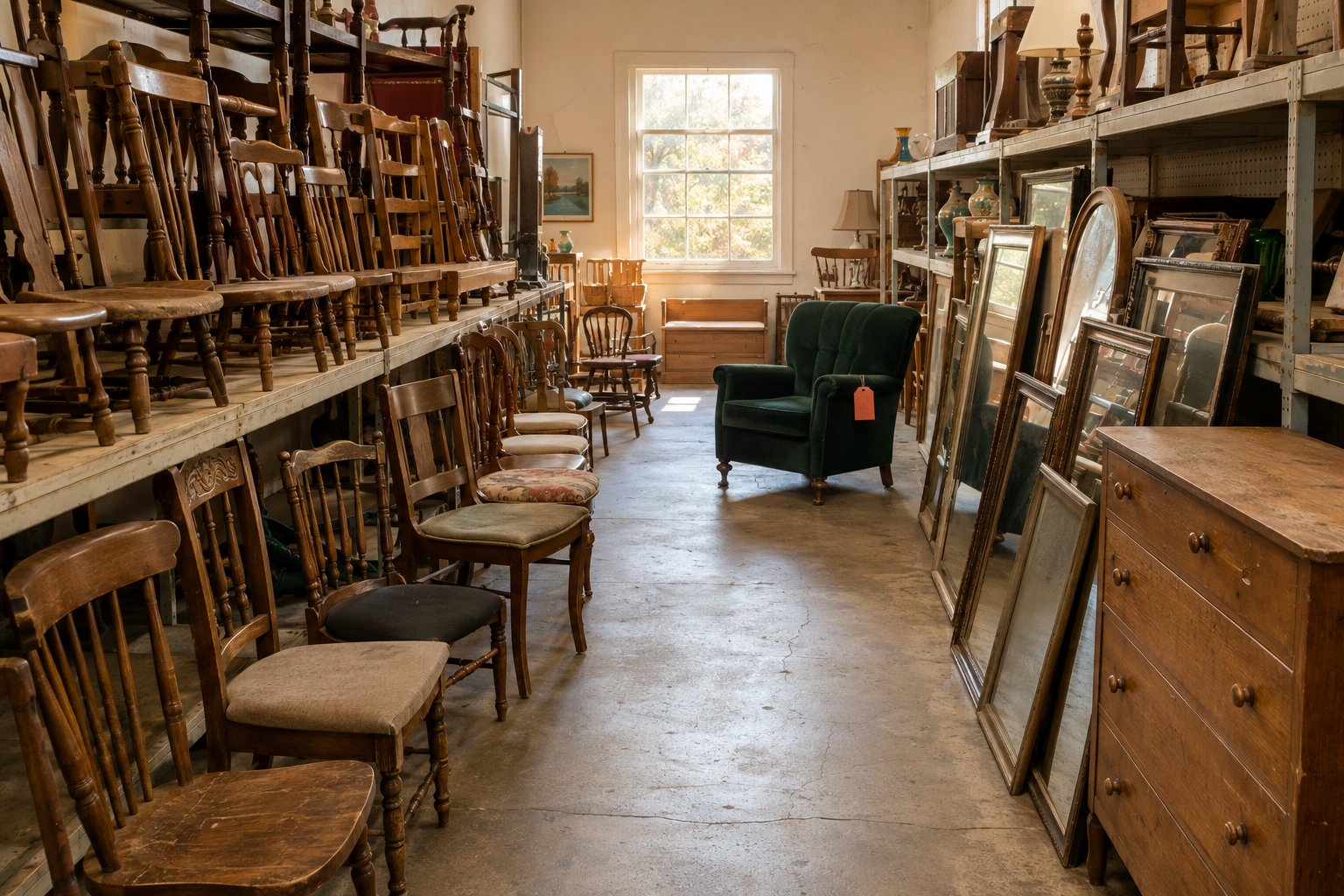
Consignment and vintage shops carry pre-vetted, generally higher-quality pieces at a higher price point than a thrift store or marketplace listing, since the shop has already screened for condition and often style before accepting an item for resale. This is the right source when you want a specific, well-made piece and are willing to pay closer to, though still usually below, retail for the confidence that it’s already been checked over.
Yard and Garage Sales
Yard and garage sales are best for small, low-stakes decor purchases, since pricing is typically the lowest of any secondhand source and negotiation is expected, but selection at any single sale is limited and entirely unpredictable, making this a source for casual browsing rather than a targeted shopping trip for a specific need.
What to Check Before You Buy
Run a short physical inspection on every secondhand piece before buying, checking construction, stability, and smell, since these three checks catch the vast majority of thrifted items that look fine on the shelf but turn into a problem once they’re actually in your apartment.
- Check the joints, not just the surface finish. Dovetail joints, mortise-and-tenon construction, or solid wood corner blocks generally indicate better original construction than staples, glue alone, or visible particleboard edges. A quick look at any drawer’s corner joint tells you more about a piece’s actual quality than its overall appearance does.
- Do the wobble test. Gently rock any chair, table, or shelf unit from a couple of directions. A stable piece with tight joints won’t shift noticeably. Looseness here often signals a repair project, not a functioning piece of furniture.
- Smell before you commit, especially with upholstery. A musty, smoky, or heavily perfumed smell on any fabric piece is a real signal, since smoke and mustiness in particular are difficult and sometimes impossible to fully remove, even with professional cleaning.
- Open every drawer and door. Drawers should glide, not stick or drag, and doors should close flush without visible gaps or warping. A sticking drawer can sometimes be fixed with a little wax on the runners, but a badly warped door is a harder, more expensive repair.
- Look for water damage on wood surfaces. Cloudy white rings, dark stains, or a slightly soft feel to the wood surface usually indicate water damage that goes deeper than the visible finish, which affects both appearance and structural integrity over time.
- Check upholstery fabric condition realistically, not optimistically. Small stains or minor wear can often be lived with or covered. Sagging cushions, broken springs felt through the seat, or heavily worn fabric across a wide area usually mean a reupholstering cost that changes the entire value equation.
How to Tell a Deal From a Mistake
A genuine deal is the sale price plus any real cleaning or repair cost, compared honestly against what a similar new piece would cost, while a mistake is a low sale price that ignores the time, money, or effort still required to make the piece usable, which quietly erases most or all of the apparent savings.
Do this math before buying, not after. A dresser priced at $40 with two sticking drawers and a musty smell might need a professional cleaning at $60 to $100 and new drawer glides, pushing the real cost well past a similar quality piece bought new on sale. The same $40 dresser with solid joints, a clean smell, and drawers that glide easily is a genuine deal at that price, with no hidden cost still owed.
A few reliable warning signs that a listed price is hiding real cost:
- “As-is” language paired with visible damage in the photos. This usually means the seller already knows about a problem and isn’t planning to negotiate around it.
- Furniture marketed as “vintage” or “solid wood” without visible joint detail in photos. Ask directly, or check in person, since this description gets used loosely and doesn’t always hold up under inspection.
- Heavily discounted upholstered pieces with an unknown smoking or pet history. Budget realistically for professional cleaning here, or pass, rather than assuming a home cleaning attempt will fully resolve it.
- A price that seems unusually low for a well-known quality brand or era. This is sometimes a genuine find, but it’s also sometimes a sign of hidden damage not visible in the listing photos, so ask specific questions before committing to a purchase you haven’t inspected in person.
Measuring and Fit Before You Shop
Bring exact measurements of your space, your doorways, and any hallways or stairwells the piece needs to travel through, before you start shopping, not after finding something you like, since a piece that measures perfectly for the room itself can still fail to make it through the actual path required to get it there.
Keep a running list on your phone with the maximum width, depth, and height for each spot you’re shopping for, plus your narrowest doorway or stairwell width. A gorgeous secondhand dresser that’s twenty-nine inches wide is worthless if your apartment door frame only clears twenty-eight. This single step prevents more thrifting regret than any other habit on this list.
A Sample Thrifting Trip, Done Right
Picture a Saturday spent looking for a small dresser for a studio bedroom corner. Measurements are already saved: a maximum of thirty-two inches wide, twenty inches deep, and a doorway that clears twenty-nine inches. The first stop is a thrift store, browsed quickly since inventory turns over daily and nothing quite fits today. The second stop is a nearby estate sale, where a solid wood dresser with dovetail drawer joints, a light musty smell that airs out within a day, and dimensions that fit both the corner and the doorway turns up for a fraction of a comparable new piece’s price.
The inspection takes under two minutes: wobble test passed, drawers glide smoothly, no water damage visible on the top surface. The math checks out too, since even factoring in an afternoon of airing it out and a light wipe-down, the total cost lands well below anything comparable available new. That’s what a genuine thrifting win looks like in practice: measured first, inspected honestly, and priced out including the real cost of getting it ready, not just the sticker on the tag.
Frequently Asked Questions
What’s the single most important thing to check before buying secondhand furniture? The joints. Dovetail joints, solid corner blocks, or mortise-and-tenon construction generally indicate better original quality than staples or visible particleboard, and this one check predicts a piece’s long-term durability better than almost anything else you can assess quickly in a store.
Is Facebook Marketplace safe for buying furniture? Generally yes, for local pickup with in-person inspection before paying. Meet in a public place when possible, bring your measurements, and inspect the piece in person rather than relying solely on listing photos before completing the purchase.
How do I know if a musty smell on upholstery will actually go away? Mild mustiness from storage sometimes airs out within a few days outdoors. A strong smoke smell or a smell that persists after a full day of fresh air usually indicates it’s embedded in the padding, not just the surface fabric, and is unlikely to fully resolve without professional cleaning.
Should I negotiate on thrift store prices? Thrift store pricing is typically fixed, unlike estate sales, yard sales, and most marketplace listings, where negotiation is expected and often successful, especially toward the end of a sale.
What should I always bring with me on a thrifting trip? A tape measure, your saved list of maximum dimensions for the spaces you’re shopping for, and your doorway and hallway measurements. These three things prevent the most common and expensive thrifting mistake: buying something that simply doesn’t fit.
Related Reading
For the handful of items worth spending more on even when thrifting everything else, The 5 Places Worth Spending More When You’re on a Budget covers which categories still deserve a closer look at quality.
If you’re sourcing texture and textiles secondhand as part of a broader styling plan, Layering Texture on a Budget Without Buying More Stuff covers where to look before buying anything new.
For the full order to style a room once your secondhand pieces are home, The Complete Guide to Budget Styling a Small Space covers lighting, textiles, and wall decor in sequence.
Browse the full Thrift & Secondhand category for more sourcing-specific guides, or explore the wider Budget Decor hub for get-the-look guides and DIY-friendly styling ideas.