Table of Contents
You open the closet, and it fights you for space. You look under the bed and it’s either empty or a graveyard of half-used gift bags. You buy a “space-saving” dresser and it turns out to be exactly as big as the one you already own. Small bedroom storage doesn’t fail because you don’t have enough stuff-holding furniture. It fails because of the order you tackle it in.
Fix your closet first. Then use the dead space under your bed. Only after those two are handled should you spend a single dollar on new furniture. By then, you’ll know exactly how much storage you actually still need, instead of guessing and buying twice.
This guide walks through that order, start to finish, with real dimensions and real decisions, not a vague list of “hacks.”
Why the Order Matters More Than the Products
Fix storage in this sequence: closet, then under-bed, then furniture. Skip the order and you’ll buy furniture sized for a problem your closet could have solved for free, or bins that don’t fit the one gap under your bed frame. Handling the free space first tells you the true size of what’s left to solve, and that’s what actually saves money.
Most small bedroom storage advice starts with a shopping list. That’s backward. A queen bed alone takes up close to 30 square feet in a room that might only have 100 square feet total, so every storage decision after the bed goes in is competing for what’s left. Your closet and the space under your bed frame are the only storage in the room that costs nothing extra, so they get solved before you spend on anything else. Once you know what those two zones can actually hold, you’ll know if you need a dresser at all, or just a slimmer nightstand and one wall shelf.
There’s a second reason to go in this order: closet and under-bed storage are also the two zones a landlord can’t object to. No drilling, no paint, no permanent changes. That matters if you’re one of the roughly 36% of U.S. households currently renting and likely to move again within a few years.
Start With the Closet: It’s Almost Always Underused
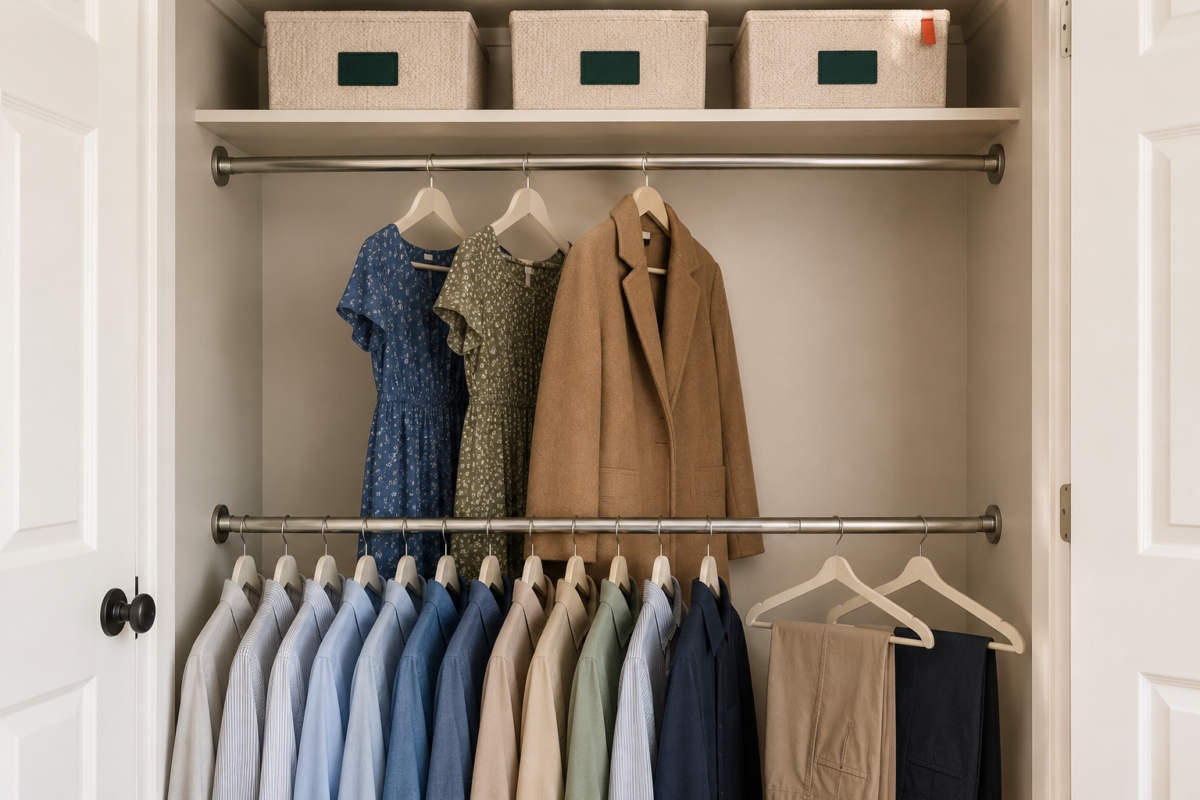
Most small bedroom closets waste 30–40% of their usable space because they rely on a single rod and one shelf. Add a second lower hanging rod for shorts, folded pants, and shirts, install slim velvet hangers to reclaim width, and use the top shelf for labeled, stackable bins instead of loose piles. That alone usually creates space for an entire second category of clothing without touching the rest of the room.
Here’s the part almost nobody does: measure before you buy anything. A standard reach-in closet is 24 inches deep and somewhere between 4 and 6 feet wide. That depth matters, because most closet organizer systems are designed for a 24-inch depth. If yours is shallower (some older apartments run 20–22 inches), a bulky double-rod kit will jut into the room and eat your walking space instead of saving it.
The three moves that do the most work, in order:
- Double the hanging space first. A second rod hung roughly 40 inches below the existing one turns one row of hanging clothes into two, usually enough room for shirts, folded pants, and shorts on top, with dresses and coats staying on the original rod above.
- Switch to slim hangers. Standard wooden hangers run about 1.5 inches thick. Velvet or slim plastic hangers run closer to 0.5 inches. On a 4-foot rod, that’s the difference between hanging roughly 30 items and hanging closer to 60.
- Use the dead zone above the shelf. The space between your existing shelf and the ceiling is almost always empty. Stackable, labeled fabric bins here hold off-season clothing, extra bedding, or luggage: items you need four times a year, not four times a week.
If your closet still has a single fixed shelf-and-rod combo from the 1990s, a tension-rod or over-the-rod system is the rental-friendly fix. No drilling required, and it comes down cleanly when you move. For the deeper dive on getting every inch of a small reach-in or walk-in working this hard, the Closet Organization hub has the full system, including layout options for closets under 3 feet wide.
Next, Claim the Space Under Your Bed
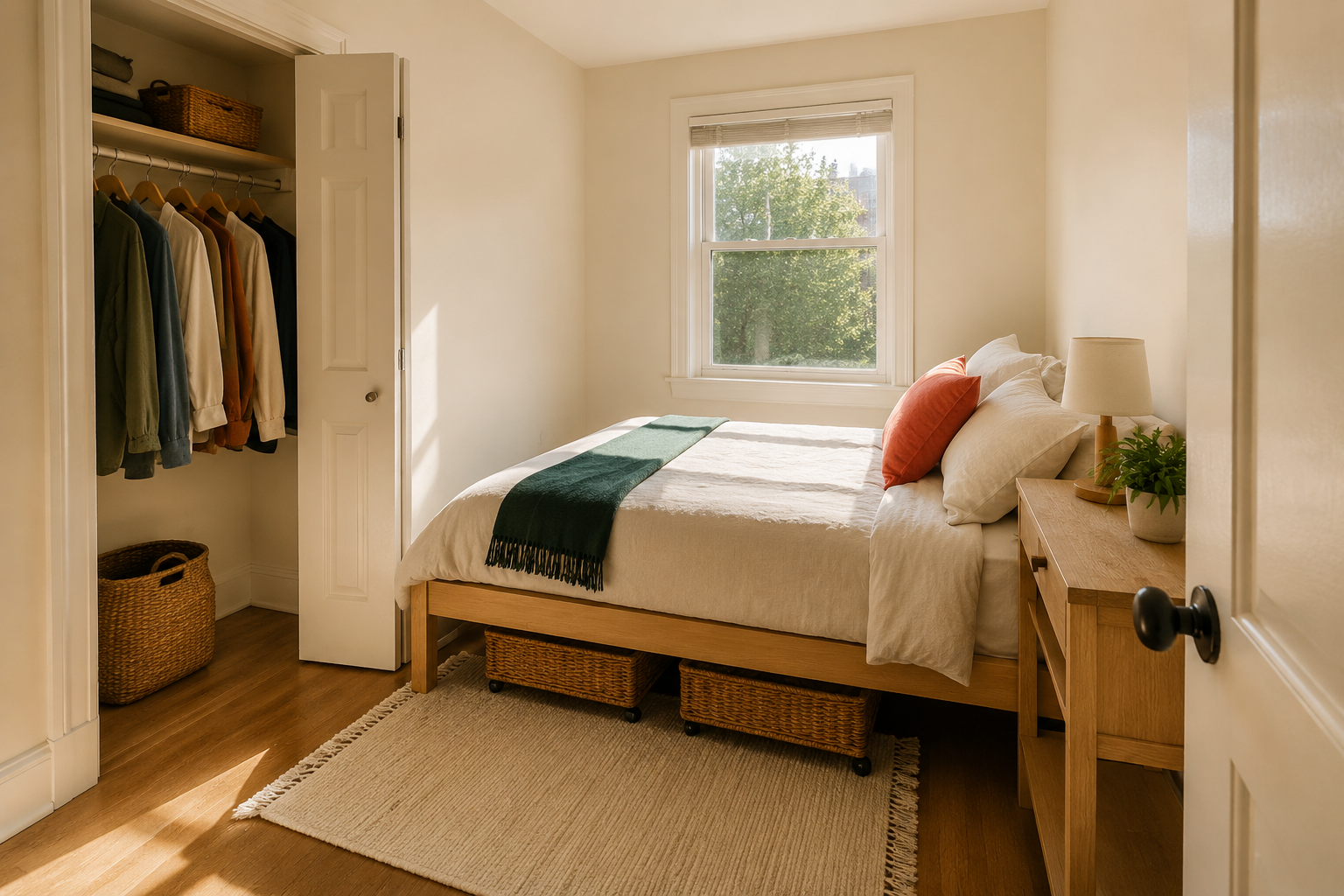
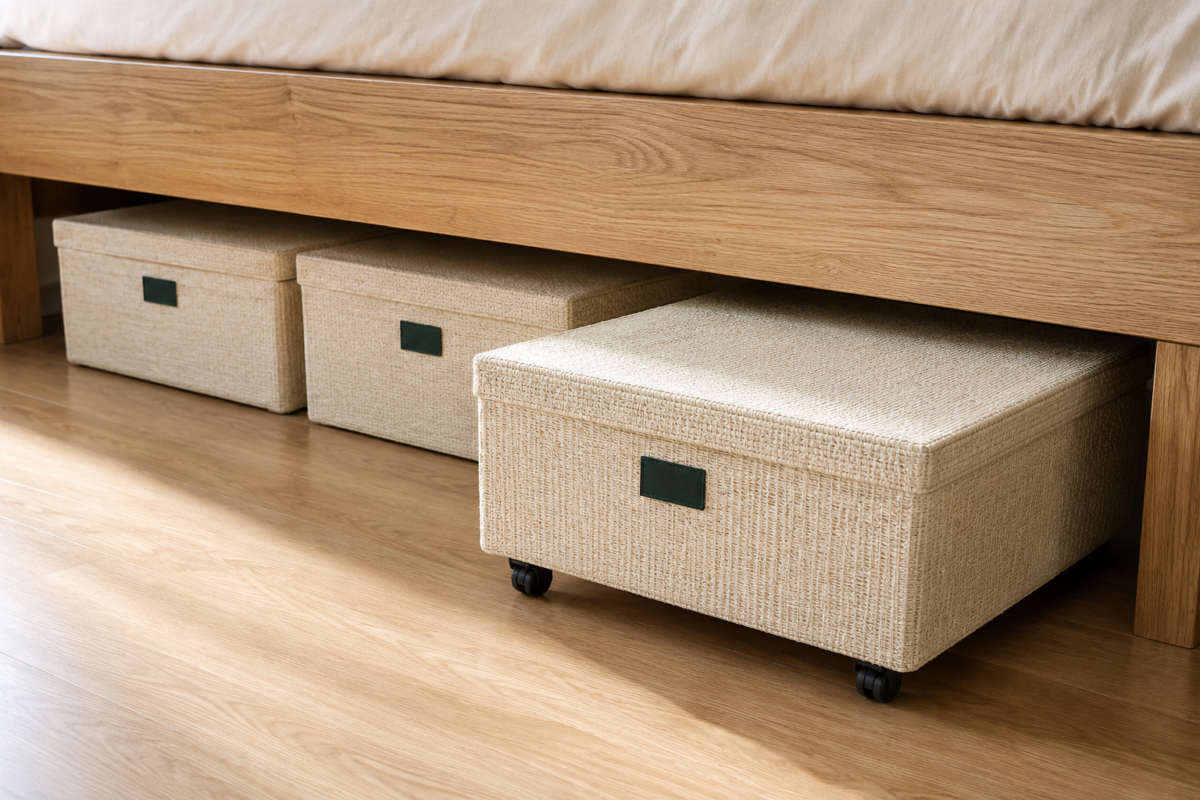
A standard queen bed frame with an 8-inch clearance underneath holds roughly 6–8 medium storage bins, enough for a full off-season wardrobe rotation, extra linens, or out-of-season shoes. Measure your actual clearance before buying anything. Bed frame heights vary from 4 inches (platform beds) to 14+ inches (traditional frames with box springs), and that number determines whether you need flat under-bed bins or can use rolling storage drawers.
This is the step people skip because it feels like the least glamorous square footage in the room. It’s also usually the most wasted. If your bed frame sits low to the ground, don’t force it. A bed riser kit (typically adding 3–5 inches of clearance per leg) turns an unusable gap into working storage, and it’s one of the few upgrades that’s fully reversible when you move out.
Match the bin to the clearance you actually have, not the one you wish you had:
- Under 6 inches of clearance: Flat, zippered under-bed bags. These compress with the zipper and slide out flat, which is really the only format that works in a tight gap.
- 6–10 inches: Standard under-bed storage bins with lids, ideally on caster wheels so you’re not army-crawling to reach the back one.
- 10+ inches: Rolling drawer units, which function almost like a second dresser and can hold folded clothing instead of just off-season overflow.
Once the bins are in, the trick that actually keeps this system working is labeling by season, not by category. “Winter” is easier to grab from than “sweaters,” because you’re never digging through last season’s stuff to find this season’s. If your rental has a queen or full bed and you want the exact bin dimensions and clearance math for your specific frame, the Studio Apartments category covers small-footprint bed setups in more detail.
Only Now Should You Think About Furniture
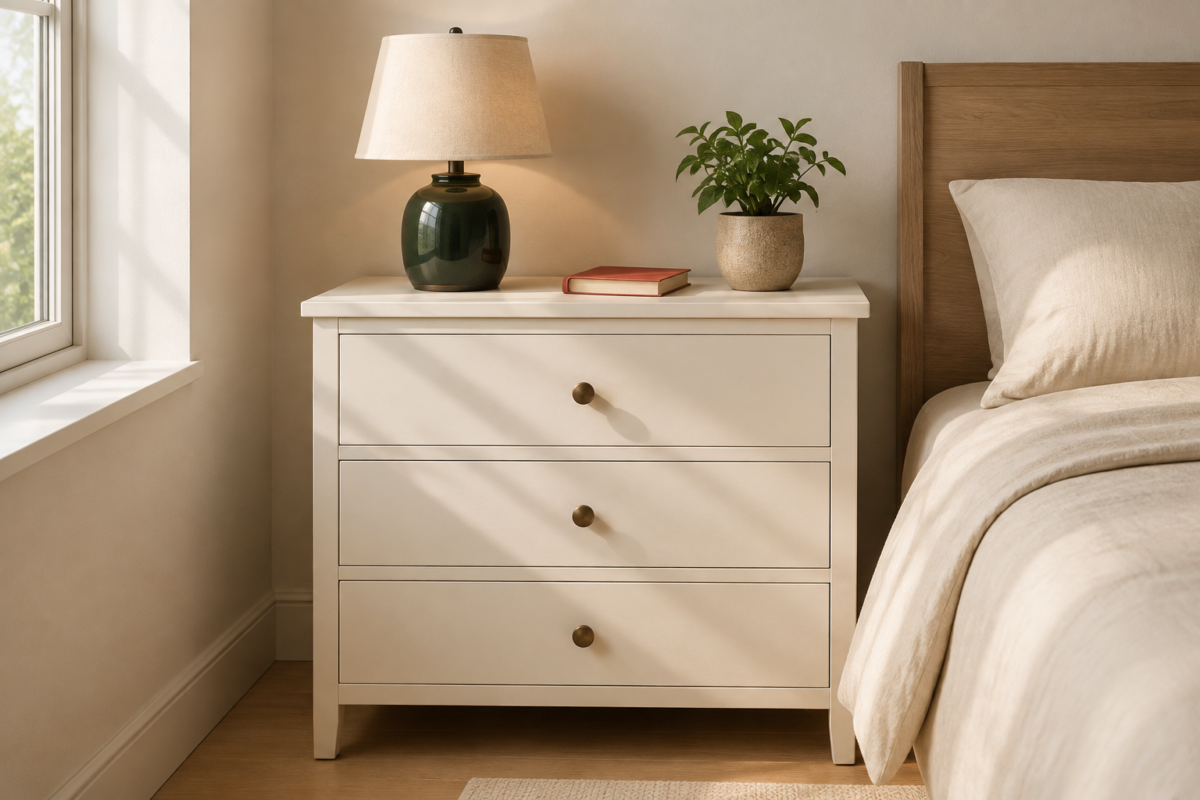
Buy furniture based on what your closet and under-bed storage didn’t cover, not the other way around. If your closet now handles hanging clothes and off-season items, and under-bed storage handles bulk overflow, you likely need less dresser than you think, often a slim 3-drawer unit for daily basics instead of a full 6-drawer dresser that eats several feet of floor space.
This is where small bedroom shopping usually goes wrong. Furniture gets bought first, based on a guess at how much storage the room needs, and then the closet and under-bed space sit half-used because there was never a real inventory of what was left to solve. Do the math after the first two steps and you’ll almost always need a smaller footprint than the “small space dresser” ads are trying to sell you.
A few furniture moves that earn their square footage:
- A dresser doubling as a nightstand. In a bedroom under 100 square feet, a slim 2–3 drawer dresser pushed against the side of the bed does the job of both pieces, freeing up the floor space a separate nightstand would take.
- A bed frame with built-in drawers, if you’re due for a new frame anyway. This only makes sense as a replacement, not an add-on. It’s solving the same problem as loose under-bed bins, just with a hinged or drawer-based system built in.
- An ottoman or storage bench at the foot of the bed, sized to the walkway you actually have. Measure the clear floor space at the foot of the bed first; if it’s under 24 inches, skip this one and use a wall shelf instead.
Whatever you land on, measure the walking path around the bed before you commit. Twenty-four inches is the minimum for a room to feel functional rather than cramped, and it’s easy to lose that clearance to one oversized piece bought without a tape measure. For more on matching specific furniture pieces to a small footprint, the Bedroom Layouts category has room-by-room breakdowns by square footage.
Don’t Forget the Walls: the Storage You’re Not Counting
Wall space above furniture height (roughly 48 inches up) is almost always empty in a small bedroom, and it’s the one storage zone that doesn’t compete with your floor space at all. Command-strip floating shelves, an over-the-door organizer, or a slim wall-mounted jewelry cabinet all add real storage without shrinking the room the way a new floor-standing piece would.
This is the step to do last, and only if you still need it. If your closet, under-bed space, and furniture are handling everything, don’t force extra wall storage just because a shelf looks nice in a photo. Empty wall space in a small room often does more for how calm it feels than one more thing to organize would. But if you’re still short on storage after the first three steps, this is where to look before buying more furniture, because it’s rental-safe and reversible.
Where wall storage actually earns its place:
- Above the closet door or above the closet itself, for bins you access a few times a year.
- Behind the bedroom door, using an over-the-door organizer for shoes, accessories, or cleaning supplies, space that’s otherwise completely wasted.
- A single floating shelf above a dresser, for items you want visible and grabbable, not items you’re trying to hide.
A System to Maintain, Not Just a One-Time Fix
This whole sequence, closet, then under-bed, then furniture, then walls, is the Simplify stage of the Taims Space Method™: simplify what you own and where it lives before you style anything on top of it. Skipping straight to furniture and decor without doing this first is the single most common reason a small bedroom looks “organized” for two weeks and then slides right back to cluttered.
Once everything has a home, the system only holds if putting things back is as easy as taking them out. That usually means one final pass: is the bin you use daily on the bottom of a stack you have to unpack every time? Move it to the front. Is the closet’s top shelf holding things you actually need weekly, not seasonally? Swap it with something you touch less often. A five-minute Sunday reset, putting stray items back into their assigned zone, keeps the whole system from quietly drifting back into chaos, and it’s a much smaller job than the original overhaul ever was.
Frequently Asked Questions
What’s the correct order to organize small bedroom storage? Start with your closet, since it’s usually 30–40% underused and costs nothing to fix. Move to the space under your bed next, since it’s free square footage most people ignore entirely. Only buy new furniture after those two are handled, sized to whatever storage need is actually left. Wall storage comes last, and only if you still need it.
How much storage can I actually fit under a bed? A standard queen bed frame with 8 inches of clearance holds roughly 6–8 medium storage bins. If your frame sits lower than that, bed risers typically add 3–5 inches of clearance per leg, which is usually enough to switch from flat zippered bags to proper lidded bins.
Do I need bed risers if my frame is already low to the ground? Only if you plan to use rigid bins instead of flat, zippered under-bed bags. Platform beds with 4 inches of clearance or less can’t fit standard bins, but flat bags still work in that gap without any modification to the frame.
What size dresser actually fits in a small bedroom? It depends entirely on what your closet and under-bed storage are already handling. Once those two zones are optimized, most small bedrooms only need a slim 2–3 drawer dresser for daily basics rather than a full-size 6-drawer piece, which frees up several feet of floor space for walking room instead.
Is it worth buying a bed frame with built-in storage drawers? Only if you’re already due for a new frame. It solves the same problem as under-bed bins, just built in, so it’s not worth replacing a perfectly good bed frame purely for the drawers. But if you’re shopping for a new one anyway, it’s a smart way to combine two purchases into one.
Related Reading
If your closet is the real bottleneck and not just one piece of the puzzle, the full Closet Organization guide breaks down layouts for closets under 3 feet wide, plus the exact hardware that works in a rental.
If you’re furnishing the whole room from scratch rather than retrofitting what you have, Small Bedroom Layouts for Under 100 Square Feet walks through furniture placement before you buy anything.
And if this bedroom is inside a studio or one-bedroom rental where every room is pulling double duty, Studio Apartment Storage: A Room-by-Room System covers how bedroom storage decisions change when there’s no separate living room to absorb the overflow.
For the full picture of how bedroom storage fits into simplifying the rest of your home, the Small Bedrooms hub has every guide in this category, from closet systems to full room layouts.