Table of Contents
There’s a specific kind of tired that comes from a bedroom that never quite settles. You tidy it on Sunday, and by Wednesday the chair in the corner has a pile on it again, the drawer that never fully closes is fighting you, and the floor of the closet has three things on it that don’t belong there. That’s not a discipline problem. It’s an order problem. Most small bedroom organizing efforts fail because they start in the wrong place and skip the part that actually keeps things organized once the initial burst of motivation wears off.
Organize a small bedroom in this sequence: start with the closet, since it holds the most and drifts the fastest. Move to drawers next, since they’re the second-biggest source of daily friction. Then build a small set of habits that take less than five minutes and keep both from sliding backward. Skip straight to buying bins and baskets before doing that first pass, and you’ll end up organizing clutter instead of removing it, which is why so many “organized” bedrooms look tidy for two weeks and then quietly fall apart.
Why the Order Matters More Than the Products
Closet first, then drawers, then habits. Organize in a different order and you’ll spend money on bins sized for a mess you haven’t actually sorted through yet, or build habits around a system that isn’t set up to support them. The closet and drawers need to be genuinely decluttered and arranged before any daily habit has something worth maintaining.
This is the step most organizing content skips entirely, jumping straight from “before” photos to color-coded bins. But a habit only works if there’s a real system underneath it. Telling yourself to “put things away every night” means nothing if there’s no obvious home for half of what’s on the floor. Sort the closet and drawers first, and the daily habit becomes almost automatic, because everything already has a place to go back to.
Start With the Closet: Sort Before You Store
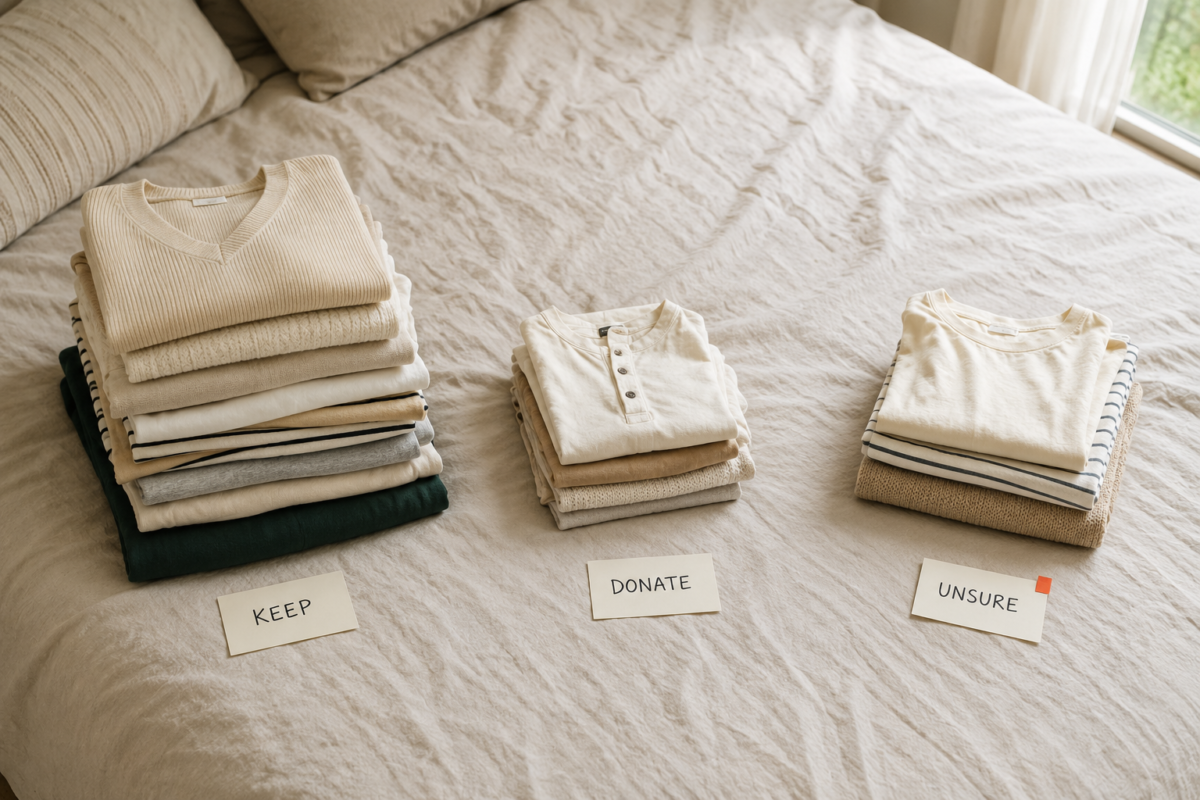
Before buying a single organizer, take everything out of the closet and sort it into three piles: keep, donate, and unsure. This step alone typically removes 20–30% of what’s currently in a small bedroom closet, since clothes that no longer fit, haven’t been worn in a year, or were bought for a season that’s long past tend to accumulate without anyone noticing.
This is the part people skip because it’s slower than buying a shelf system. But organizing a closet that’s still full of things you don’t wear just means neatly arranged clutter, not an actual fix. Give yourself an honest deadline for the “unsure” pile, two weeks is usually enough, and if something hasn’t been touched by the time it’s up, it goes in the donate pile without a second round of deliberation.
Once you’ve sorted, arrange what’s left by how often you actually reach for it:
- Daily-wear items at eye level and within easy reach. Work clothes, everyday basics, whatever you grab without thinking should be the easiest thing to access, not buried behind seasonal pieces.
- Occasional-wear items on the upper or lower edges. Dressier pieces, workout gear, anything you wear a few times a month can sit slightly outside the prime zone without adding friction to your morning.
- Rarely-worn and off-season items on the top shelf or in labeled bins. These get touched a handful of times a year, so they belong furthest from daily reach, not competing for the same space as what you wear on Tuesday.
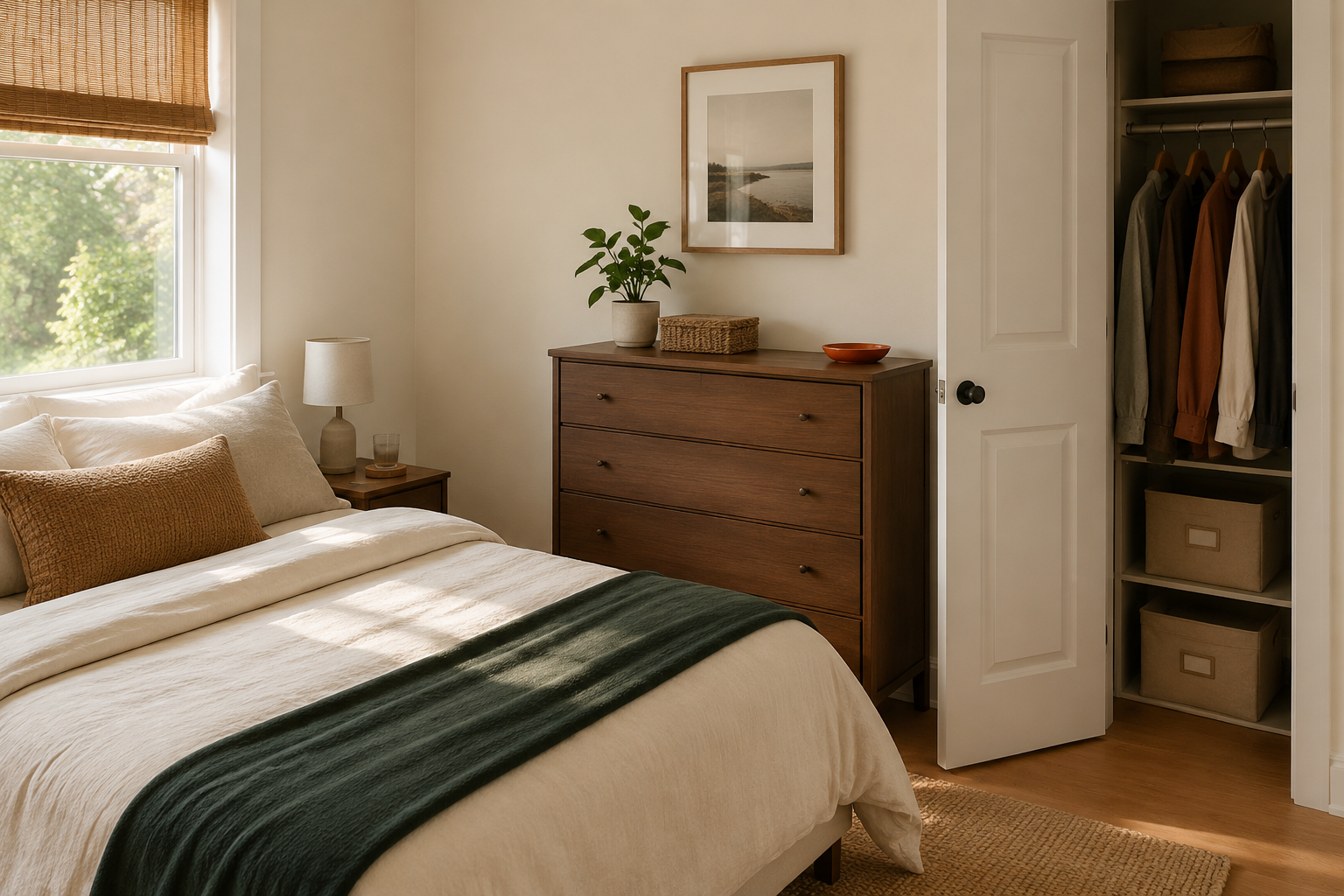
If your closet still needs more physical storage capacity after the sort, a second hanging rod or slim velvet hangers can genuinely add space, but that’s a step-two decision. Buying more closet hardware before sorting almost always means organizing things you were going to donate anyway.
Then Tackle the Drawers
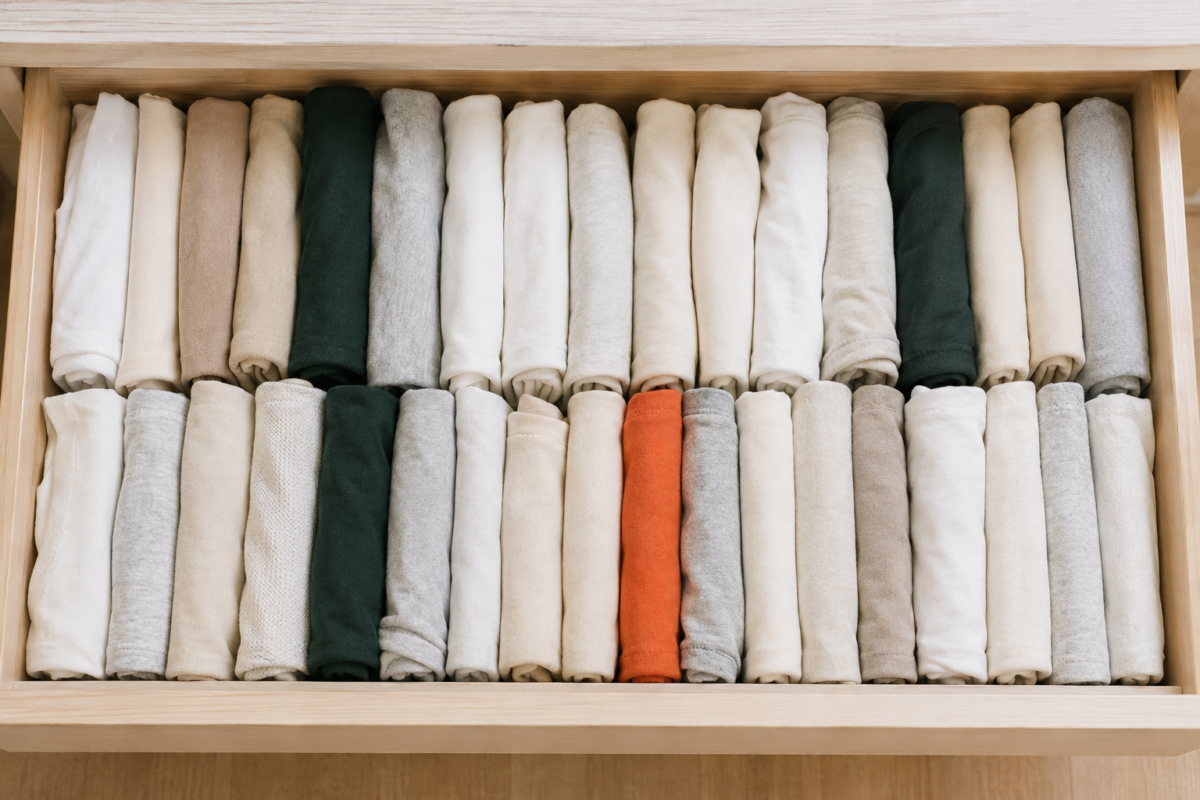
Organize drawers using vertical folding instead of stacking, so every item is visible at a glance without unpacking the ones on top. A drawer that’s stacked flat hides everything below the top layer, which is exactly why the same three shirts get worn on repeat while the rest of the drawer goes untouched.
This single change does more for daily drawer function than any organizer insert. Fold each item into a rectangle roughly the height of the drawer, then stand it on its edge instead of laying it flat. The result looks almost like files in a filing cabinet, and it means you can see every item without disturbing the rest of the drawer.
A simple system for dividing drawer space:
- Group by category first, not by color or season. All t-shirts together, all socks together, so your brain only has to search one section instead of the whole drawer.
- Use drawer dividers for small items. Socks, underwear, and accessories drift and tangle without a physical boundary, and a simple divider insert solves that for a few dollars.
- Leave one drawer, or one section, genuinely empty. A little slack space makes putting things away faster than a drawer packed edge to edge, where every item has to be wedged back into place.
If a drawer still won’t close properly after sorting and folding, that’s a signal you have more clothing than the drawer can hold, not a signal to buy a stronger drawer organizer. At that point, either the closet needs to absorb the overflow, or it’s genuinely time to donate more from that category.
A quick note on accessories drawers specifically: these tend to become the catch-all for everything that doesn’t have an obvious home, chargers, old receipts, a single earring waiting for its pair. Give this drawer the same keep-donate-unsure sort as the closet, and add small dividers or a shallow tray so items stay in their own lane instead of sliding into one loose pile every time the drawer opens and closes.
The Daily Habits That Actually Make It Stick
A small bedroom stays organized through one habit more than any other: putting things away at the point of use instead of setting them down “for now.” That single shift, closing the drawer instead of leaving it half-open with one item hanging out, hanging up a jacket instead of draping it on the chair, prevents almost all of the slow drift that turns a tidy room back into a cluttered one within a few weeks.
This is the habit most organizing advice glosses over, because it’s not a purchase or a system, it’s a two-second choice repeated dozens of times a day. But it’s also the entire reason some bedrooms stay organized for months and others slide back within two weeks of the big cleanup. The system you built in the closet and drawers only holds if things actually go back into it.
Three small habits that do most of the work:
- The one-minute end-of-day reset. Before bed, put back anything that’s landed on the floor, chair, or dresser top during the day. It takes under a minute if it’s done daily, and closer to twenty minutes if it’s saved up for the weekend.
- A designated landing spot for daily carry items. Keys, a bag, a jacket, whatever you’re holding when you walk in the door needs one specific spot, a hook, a small tray, a chair reserved for exactly that. Without one, those items end up wherever you happen to be standing.
- The “one thing out, one thing away” rule for the closet. When you pull something new to wear, put the previous day’s worn item into the hamper or back on its hanger before you leave the room, rather than draping it somewhere “temporary.”
The Weekly Reset That Prevents Backsliding
Set aside five to ten minutes once a week to check the spots that don’t get touched daily, the closet floor, the back corner of a drawer, the top of the dresser. Daily habits handle the obvious surfaces, but a weekly pass catches the slow accumulation that happens in less visible spots before it becomes a bigger cleanup.
Pick a consistent day, Sunday evening works well for most people, since it sets the room up clean for the week ahead rather than starting Monday already behind. This doesn’t need to be a deep clean. It’s a quick scan: is anything on the closet floor that shouldn’t be there? Did a drawer start looking stacked instead of vertical again? Catching drift weekly means it never turns into a project.
This weekly pass is also the right moment to notice patterns, not just tidy the mess. If the same spot keeps collecting clutter week after week, a chair, the closet floor, the top of the dresser, that’s usually a sign the system needs a small adjustment, not more willpower. Maybe that chair needs a designated basket instead of staying empty and inviting a pile, or the closet floor needs a low shoe rack so shoes have a specific spot instead of getting kicked off wherever. Treat repeat trouble spots as information about the system, not evidence that the habit isn’t working.
When Organizing Stalls Halfway Through
The most common reason a small bedroom organizing project stalls is starting with drawers or decor before the closet is actually sorted, which means there’s still no real system for where things go when the motivation to organize inevitably dips. If you find yourself with a beautifully arranged nightstand next to a closet that’s still a mess, the order got skipped somewhere.
This is worth naming directly, because it’s an easy trap: organizing the visible, easy wins first feels productive, but it doesn’t solve the underlying clutter. A styled dresser top means nothing if the closet behind it is still overflowing. If a project has stalled, the fix usually isn’t more motivation, it’s going back to the closet, finishing the sort that got skipped, and letting the rest of the room follow from there.
This whole approach, closet, then drawers, then habits, is the Simplify and Organize stages of the Taims Space Method™ working together: simplify what you own first, then build the systems and routines that keep it that way without needing another weekend overhaul every few months.
Frequently Asked Questions
What’s the right order to organize a small bedroom? Start with the closet, since it holds the most and drifts the fastest. Move to drawers next, since they’re the second-biggest source of daily friction. Build daily and weekly habits last, once there’s an actual system in place worth maintaining.
How do I stop my closet from getting messy again after I organize it? Sort by keep, donate, and unsure before arranging anything, then build the one-minute end-of-day habit of putting worn items back on their hanger or in the hamper instead of draping them somewhere temporary. Most closet backslide happens from skipped daily habits, not a bad initial system.
Should I buy storage bins before or after decluttering? After. Buying bins first almost always means organizing things you would have donated anyway, since you haven’t yet seen how much you’re actually keeping. Sort first, then buy only what the remaining items genuinely need.
How long does it take to organize a small bedroom properly? A full closet and drawer sort usually takes two to four hours for one bedroom, depending on how much needs sorting into the donate pile. The daily and weekly habits that keep it organized take under ten minutes total per week once they’re in place.
What if I don’t have time for a full weekend organizing project? Break it into the same order across smaller sessions: one evening for the closet sort, a second for drawers, then start the daily habits immediately rather than waiting for a full free weekend. The order matters more than doing it all at once.
Related Reading
If your closet needs a deeper system beyond the initial sort, hanging space, shelf dividers, and hardware that fits a rental, the Closet Organization hub covers the full setup in more detail.
If the sort reveals you genuinely need more physical storage, not just a better system, The Small Bedroom Storage Guide (In the Right Order) covers closet, under-bed, and furniture storage in the sequence that actually saves money.
And if drawers are still overflowing after the fold-and-sort system here, Storage Furniture Guide: Beds, Benches, and Ottomans covers which furniture pieces genuinely add capacity versus which ones just look like they do.
For the rest of the organization library, the Bedroom Organization category has every guide in this series, and the Small Bedrooms hub covers storage, decor, and layouts for the whole room beyond organization alone.