Table of Contents
Laundry day is the real test of any closet system. You fold a full basket of clean clothes, carry it to the closet, and that’s the exact moment a system either holds or falls apart. If putting everything away means shuffling hangers to make room, guessing which shelf something belongs on, or just setting the basket on the floor because there’s no obvious spot left, the system was never actually built to survive daily use. It was built to look good for the first week.
Most closet organizing advice solves for the “after” photo: everything sorted, folded, and photographed on day one. It doesn’t solve for what happens six weeks later, once real laundry, gifted clothes, and seasonal swaps start moving through the space. A closet system that actually stays organized has to be built around the disruptions, not just the initial sort.
Why Most Closet Systems Fail on Laundry Day
A closet system fails on laundry day when there’s no defined space left for what’s coming back in, so clean clothes get wedged wherever they fit instead of returned to a specific spot. That single moment of improvisation is usually where the whole system starts to drift, since one item in the wrong place makes the next one easier to misplace too.
This is the piece almost every closet organizing guide skips. They cover the initial sort and the label system, then stop before addressing what happens when the closet has to absorb new items on a weekly basis. A closet with zero slack space looks impressively tight on day one and becomes unmanageable by week three, because there’s nowhere for anything new to land without displacing something else.
Build in slack space from the start, not as an afterthought:
- Leave roughly 15–20% of hanging space empty when you first set up the closet. It’ll look slightly underfilled at first, but that gap is what absorbs laundry day without a shuffle.
- Don’t fill bins to the brim. A bin packed edge to edge means every new item requires repacking the whole thing. One with a little room lets you drop something in without a fight.
- Resist the urge to “finish” the closet completely. A system that looks 100% full on setup day has nowhere to go but backward the first time real life adds something to it.
Build Zones, Not Just Categories
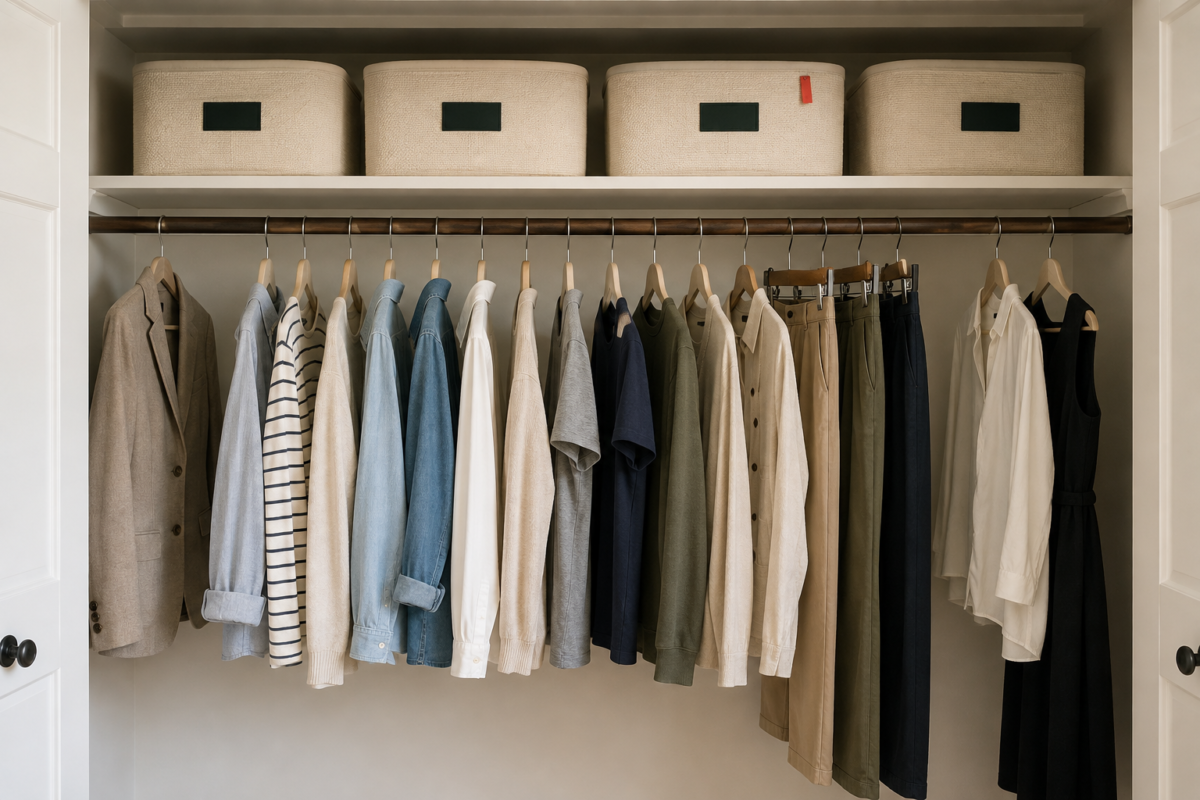
Organize a closet by zone, based on how often you touch each area, not just by clothing category. Daily-wear items belong in the easiest, most central zone. Occasional-wear items sit slightly outside that zone. Rarely-worn and off-season items go furthest from reach, on a top shelf or in bins.
This matters more than category alone because it’s what determines how much friction laundry day creates. If everyday t-shirts and rarely-worn formal wear are competing for the exact same rod space, putting laundry away means constantly navigating around things you don’t touch daily. Separate by zone first, then by category within each zone, and the daily-use area stays uncluttered because nothing that belongs elsewhere is crowding it.
A simple three-zone layout works for almost any reach-in closet:
- Center zone, eye level: daily-wear clothing, whatever you reach for most mornings without thinking.
- Edge zones, upper and lower: occasional-wear pieces, dressier items, workout gear, things worn a few times a month.
- Top shelf or high bins: off-season and rarely-worn items, touched only a handful of times a year.
A Label System That Survives Being Restocked Weekly
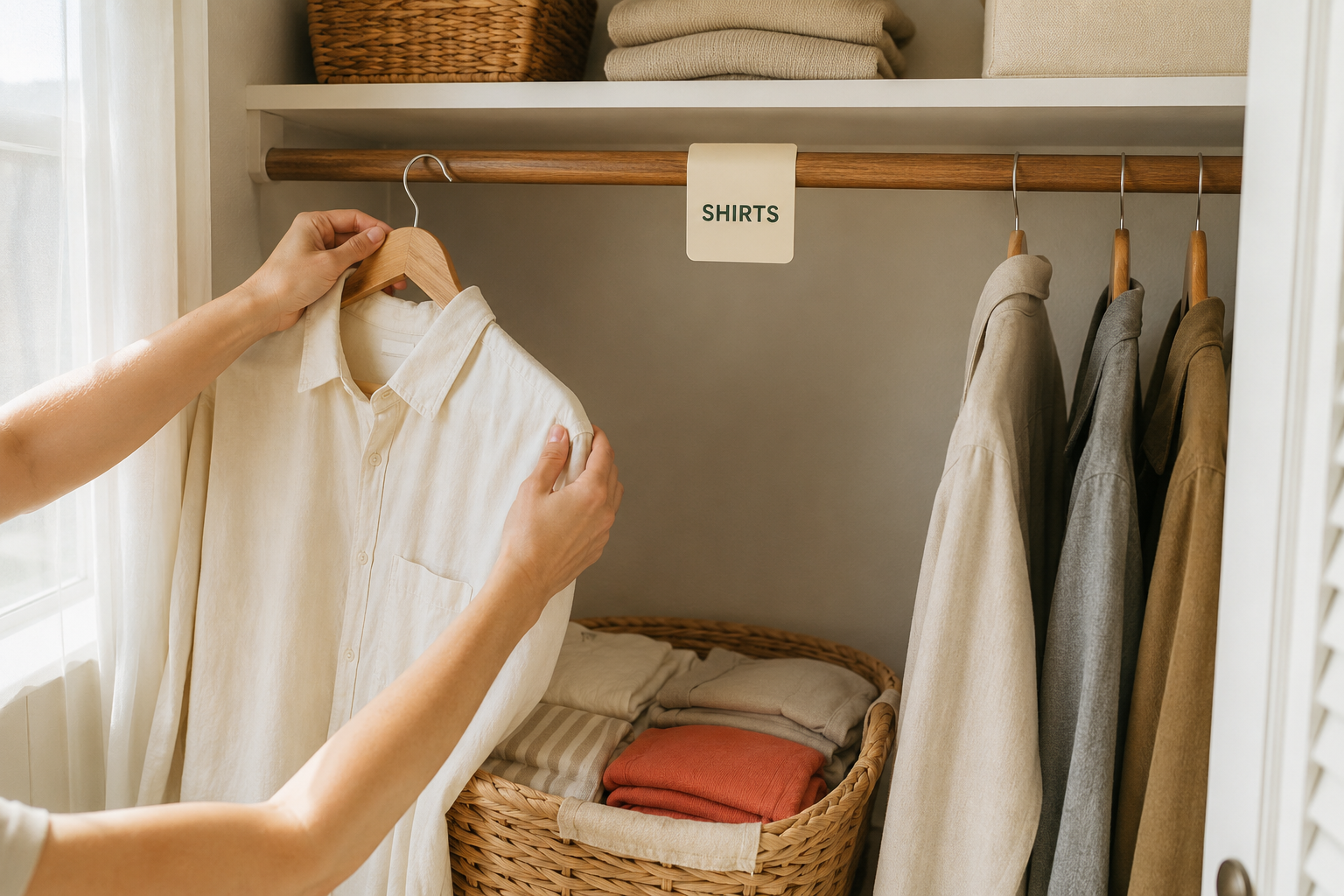
Label by zone and category, not by exact item, so a label stays accurate even as the specific contents shift week to week. A bin labeled “winter sweaters” survives laundry day and a new sweater joining the pile. A bin labeled with the exact five items currently inside it becomes wrong the moment anything changes.
This is where a lot of label systems quietly break down. Precise labels look satisfying on day one but demand constant upkeep, and the moment a label stops matching reality, people stop trusting it, which means they stop using it. A broader, category-level label stays true regardless of what’s added or removed, so it keeps working without any maintenance at all.
What actually makes a label durable:
- Category-level, not item-level. “Off-season clothing” instead of “3 sweaters, 2 scarves, 1 coat.”
- Large enough to read from across the room, especially for anything on a top shelf you’re not standing directly in front of.
- Placed on the front of the bin, not the lid, so it’s visible even when bins are stacked.
The One Rule That Keeps Laundry Day From Undoing Everything
Every item goes back to its assigned zone the same day laundry is folded, not “eventually.” A basket of clean clothes sitting on the floor for even a day tends to become a second, informal storage spot, and once that happens, the actual closet system starts losing its role as the single place things live.
This is the single habit that determines whether a closet system survives past the first month. It doesn’t need to be elaborate. It just needs to happen the same day, every time, so the closet stays the one true home for everything instead of competing with a laundry basket, a chair, or the floor. If laundry regularly sits unfolded or unhung for more than a day, that’s usually a sign the put-away step needs to move earlier in the routine, not a sign the closet system itself is failing.
Handling the Other Stress Tests
A closet system also needs a plan for seasonal swaps and new items entering the space, not just laundry day. When the seasons change, move the outgoing category to the top-shelf zone and bring the incoming category down to the daily zone, rather than trying to keep both fully accessible at once and running out of room for either.
New items, gifts, a shopping trip, hand-me-downs, deserve the same one-in-review as the initial closet sort. Before adding something new to the daily zone, ask whether something currently there should move out to make room, either to a lower-priority zone or out of the closet entirely. Treating every new item as an automatic addition is exactly how a closet with carefully built slack space fills back up within a season.
Frequently Asked Questions
Why does my closet get messy again so quickly after I organize it? Most closet systems fail because they’re built with zero slack space, so the first time laundry or a new item needs to go somewhere, there’s no obvious spot and things get wedged in wherever they fit. Leaving 15–20% of hanging space empty when you first set up the closet gives the system room to absorb real use.
Should I label bins by exact contents or by category? By category. A label like “off-season clothing” stays accurate even as specific items rotate in and out. A label listing exact items becomes outdated the moment anything changes, and once a label stops matching what’s inside, people stop trusting or using it.
How do I keep my closet organized after doing laundry? Put everything away the same day it’s folded, directly into its assigned zone, rather than letting a laundry basket sit for a day or more. That basket becoming a second storage spot is one of the most common ways an organized closet starts to drift.
How often should I redo my closet’s zones for the season? At each seasonal changeover, swap the outgoing category to the top-shelf or high-bin zone and bring the incoming category down to the daily-use zone. This keeps whichever season you’re actually in easiest to reach, rather than splitting the prime space between two seasons at once.
Related Reading
If you haven’t done the initial keep-donate-unsure sort yet, The Complete Guide to Organizing a Small Bedroom covers that first pass, plus the daily habits that keep the whole room, not just the closet, from sliding back into clutter.
If the zone system here still leaves you short on physical hanging or shelf space, The Small Bedroom Storage Guide (In the Right Order) covers double-rod setups, slim hangers, and where to add capacity without crowding the new system.
And if off-season bins are what’s filling your top shelf, Under-Bed Storage Ideas That Actually Hold Things covers an alternative zone for the same category of items, worth comparing if your closet’s top shelf is already at capacity.
For the rest of the organizing library, the Closet Organization category has every guide in this series, and the Organization & Storage hub covers decluttering and daily systems for the rest of the home beyond the closet.