Table of Contents
Three remotes, a phone charger with nothing plugged into it, a stack of mail from last Tuesday, and a coaster that’s somehow ended up under the couch. None of it is big. None of it took more than a minute to accumulate. And none of it gets solved by buying a bigger basket, because the problem was never volume. It was that nothing had an assigned spot.
The small stuff cluttering a living room, remotes, cords, mail, loose odds and ends, gets solved with specific, five-minute fixes matched to what each item actually is, not one large catch-all container. A remote caddy, a set of cord clips, and a single shallow tray by the entry solve four different clutter habits that a single big basket would just relocate instead of fix.
Why Small Stuff Needs Its Own Fix, Not a Bigger Bin
A large catch-all basket feels like a solution because it clears the surface in one motion, but it usually just moves the same clutter into a container instead of assigning it a real home, which means you’re digging through the same pile to find a remote a week later.
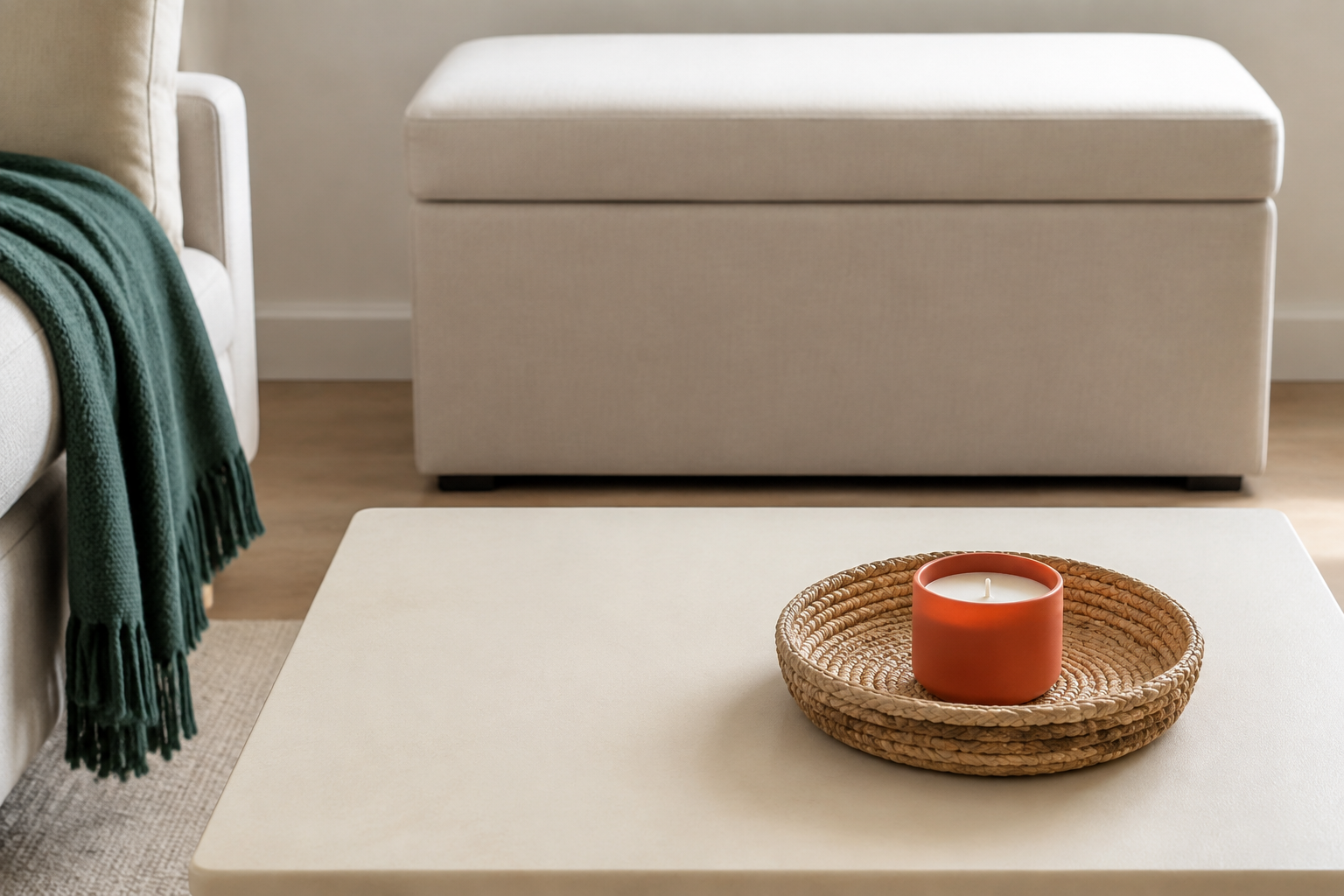
This is the trap most small living rooms fall into after the bigger furniture and shelving decisions are already handled. The coffee table is finally clear of the ottoman’s old job, and a decorative basket seems like the obvious next step for whatever’s left. But a basket holding six unrelated items, a remote, a charger, a coaster, a candle lighter, solves the visibility problem without solving the actual friction of using any of those items. The fix that sticks is smaller and more specific: each type of clutter gets its own tiny, purpose-built spot.
Remotes: The Five-Minute Caddy Fix
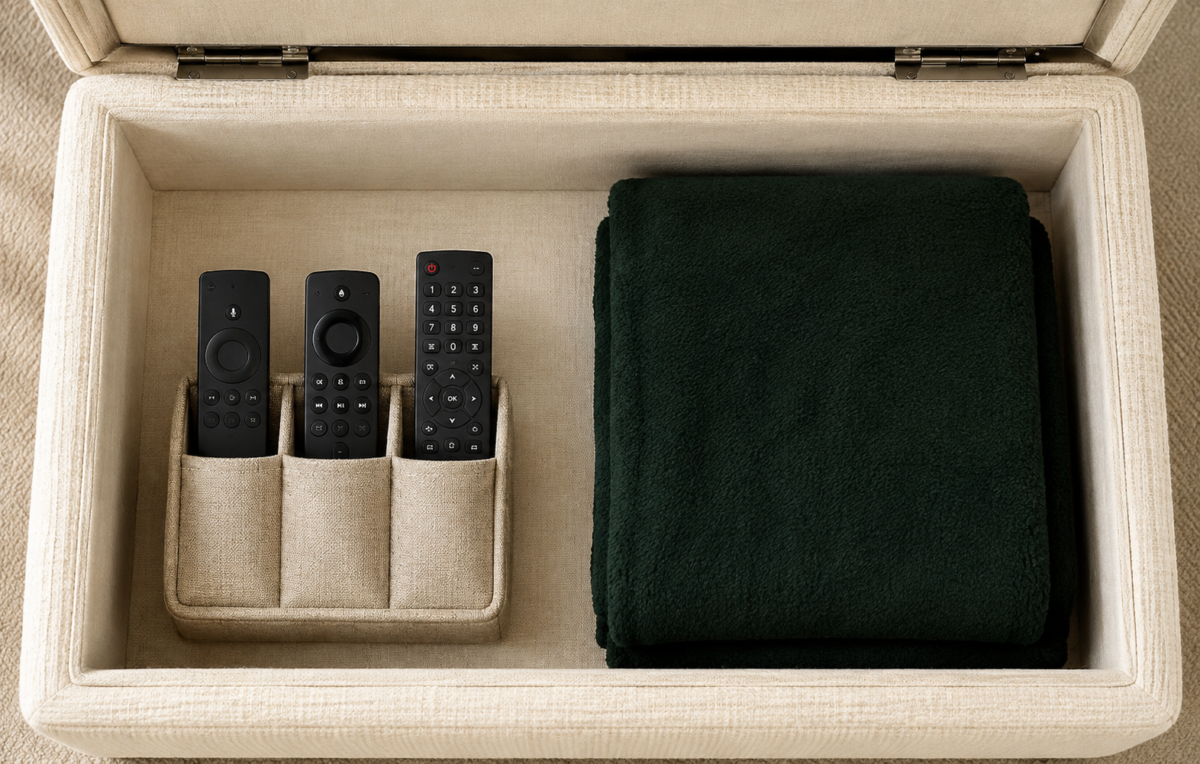
Put a small remote caddy, either a fabric organizer with individual slots or a shallow tray sized to fit three or four remotes standing upright, inside your coffee table’s storage ottoman or a nearby drawer, rather than leaving remotes loose on the table’s top surface.
Loose remotes on a coffee table are one of the most common small-clutter habits, and they’re also one of the easiest to fix permanently, since the solution doesn’t require finding a new spot in the room, just a container in a spot you likely already have. If your coffee table is a storage ottoman, a caddy sized to fit just inside the lid keeps remotes upright and visible the second you open it, rather than loose at the bottom where they slide around every time the lid closes.
If your coffee table doesn’t have hidden storage, a single small tray on the table’s surface, dedicated only to remotes, still solves most of the visual clutter. The difference between a remote tray and remotes scattered loose is entirely about whether there’s a defined boundary they live inside.
Charging Cords: Clips, Not Coils
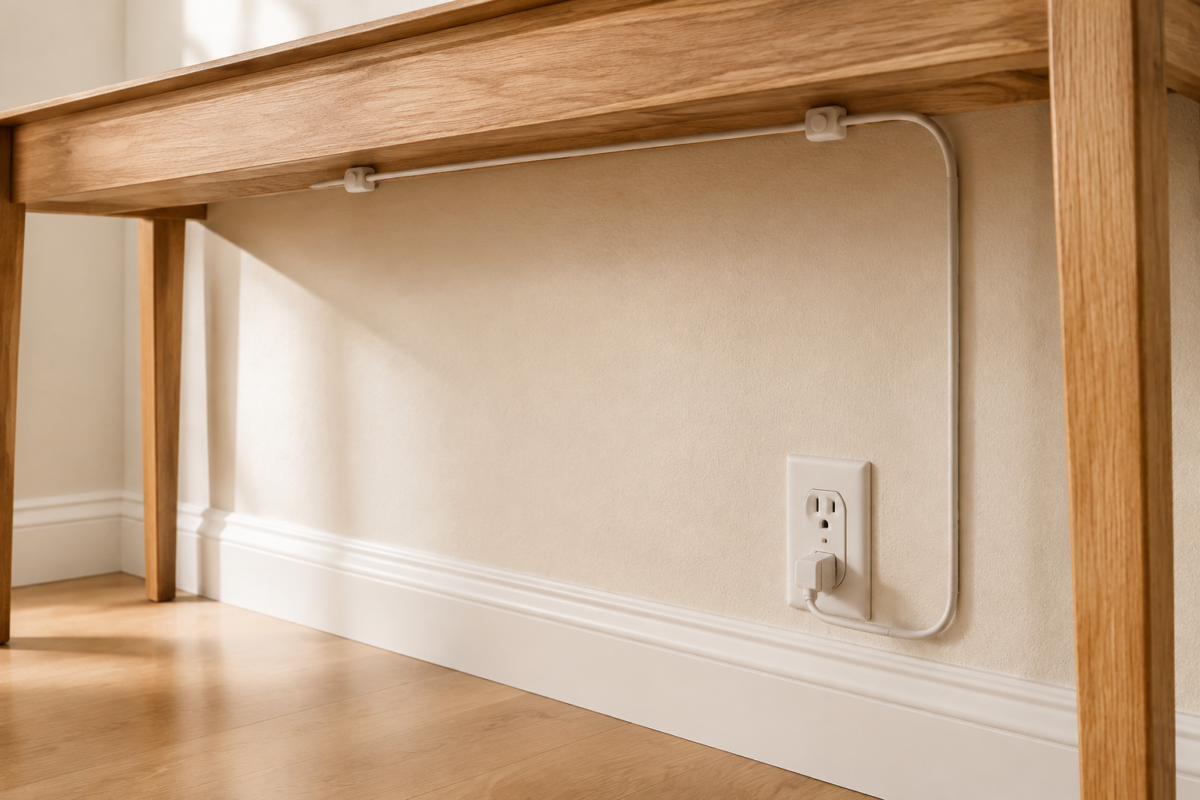
Attach adhesive cord clips to the back or underside edge of a console, side table, or media stand, spaced every 6 to 8 inches along the cord’s path, to keep charging cables running along furniture edges instead of trailing across the floor or coiling visibly on a tabletop.
A charging cord left loose on a side table does two things: it clutters the visible surface, and it becomes a genuine tripping or snagging hazard in a small room where furniture is already close together. Cord clips solve both at once, and they cost only a few dollars for a set that handles an entire room. Run the cord from the outlet along the back edge of the nearest furniture piece, using a clip every 6 to 8 inches to keep it flush against the surface rather than sagging in loops.
For a charger that gets used daily near the sofa, a small cord organizer box, which houses the excess length and the plug itself, keeps the whole setup contained in one spot rather than a cord snaking across the floor to reach an outlet.
Mail and Keys: One Shallow Tray, Not a Pile
Place a single shallow tray, sized for one day’s worth of mail and a set of keys, at your main entry point, and commit to emptying it at the same time each day, rather than letting mail accumulate into a stack that eventually spreads across the coffee table.
Mail piles happen because there’s rarely a hard stop built into the habit. Without a defined, small container, mail lands wherever’s closest, usually the nearest flat surface, and grows until it’s addressed in a larger cleanup. A tray sized for one day, not a week, forces a natural reset: when it’s full, it gets sorted, rather than allowed to overflow onto the console or table beside it.
Keep this tray genuinely small, roughly the size of a single sheet of mail folded once. A larger tray invites the same slow accumulation a full basket would, just in a slightly more contained shape.
Loose Odds and Ends: The One Junk Drawer Rule
Designate exactly one drawer, in your console or media stand, as the home for loose odds and ends, coasters, a spare charger cable, a candle lighter, and enforce a hard limit: if it doesn’t fit with the drawer closed comfortably, something gets removed rather than the drawer being forced shut.
Every home ends up with a handful of small items that don’t belong to any single category. The mistake is either scattering them across multiple surfaces or letting them expand into more than one drawer. One defined spot, with a real limit on what fits, keeps this category of clutter contained without it slowly claiming more of the room’s storage than it actually needs.
Coasters and Small Electronics Near the Sofa
Keep a small stack of two to three coasters directly on or inside whatever surface sits closest to the sofa, so reaching for one is faster than reaching for a bare tabletop, which is usually the real reason coasters go unused even when a household owns plenty of them.
Coasters get skipped constantly, not because people don’t own them, but because the ones they own are stored somewhere less convenient than the table itself. Keeping two or three directly on the coffee table or ottoman’s surface, or in the same drawer as remotes, removes the extra step that usually makes people skip using one entirely.
What to Skip When Solving Small Living Room Clutter
Skip one oversized catch-all basket for everything loose, skip letting a mail pile grow past a single day before sorting it, and skip cord management that only handles the visible portion of a cord while leaving excess length coiled out of sight but still tangled.
A few specific habits worth avoiding:
- Buying a large decorative basket before identifying what specific items actually need a home, which usually results in a basket that becomes its own kind of clutter.
- Placing a mail tray somewhere other than the actual entry point, which breaks the habit loop that makes the tray effective in the first place.
- Running a charging cord loose across the floor rather than clipped along a furniture edge, even temporarily, since temporary habits are the ones that stick the longest.
Frequently Asked Questions
How do I stop remotes from cluttering the coffee table? Use a small remote caddy with individual slots, kept inside a storage ottoman’s lid or a nearby drawer, rather than leaving remotes loose on the table’s surface.
What’s the best way to hide charging cords in a living room? Adhesive cord clips attached to the underside or back edge of nearby furniture keep cables running flush along the edge instead of trailing across the floor or coiling on a tabletop.
How do I stop mail from piling up on the coffee table? Place one shallow tray at your entry point, sized for a single day’s mail, and sort it at the same time each day so it never grows into a larger pile that migrates to other surfaces.
Is a junk drawer a good idea for small clutter? Yes, as long as it’s exactly one drawer with a hard limit. If the drawer won’t close comfortably, something needs to be removed rather than letting it expand into a second drawer or spread back onto visible surfaces.
Related Reading
For the full order storage decisions fit into, The Complete Guide to Living Room Storage covers furniture, shelving, and these small daily fixes together as one system.
If the furniture handling your bigger storage needs isn’t settled yet, Storage Furniture That Doesn’t Look Like Storage covers ottomans and consoles that give these small fixes somewhere to live.
If wall space could take some of this weight off the coffee table entirely, Shelving Ideas for Walls You’re Not Using covers turning empty wall stretches into real storage.
For more storage guides, visit Living Room Storage, or explore the wider Small Living Rooms hub for layout, decor, and multi-purpose ideas for the rest of the room.