Table of Contents
The instinct when a small living room feels unfinished is to add something. A new throw pillow, another candle, one more framed print for the empty spot near the window. Buy enough of those one-more-things and the room doesn’t feel finished. It feels crowded, and somehow still not quite right, because the problem was never the amount of stuff in the room.
Decorating a small living room works best in this order: layer the lighting first, add texture next through rugs and textiles, and finish with the small personal details last. Each layer changes how much the next one needs to do. Skip the order and even good decor, chosen with real taste, ends up fighting the room instead of finishing it.
Why Lighting Comes Before Anything You Buy
Lighting goes first because it changes how everything else in the room reads, without you spending a dollar on decor itself. A room lit only by a single overhead fixture flattens color, washes out texture, and makes even expensive decor look like it’s under interrogation. The same room with layered, warm light makes a $15 throw pillow look intentional.
This is the layer people skip most often, because it doesn’t feel like decorating. Swapping a bulb or adding a lamp doesn’t show up on a shopping list the way a new rug or a piece of art does. But nearly everything that follows in this guide, the texture, the wall decor, the personal touches, gets judged under whatever light is already in the room. Fix that first and every later purchase performs better than it would have otherwise.
This is the same layered logic behind the Taims Space Method™: Simplify, then Organize, then Style. Lighting is the foundation the styling layer sits on top of, and it holds up better when it’s addressed before the visible decor rather than as an afterthought once the room already feels off.
Step 1: Layer the Lighting Before You Buy a Single Decor Item
Replace any bulb over 3000K with a warm 2700K bulb, and add at least one floor or table lamp so the room has two separate light sources instead of relying on a single ceiling fixture. This single change, usually under $40 total, affects how every other purchase in the room looks.
Most small living rooms, especially rentals, come with one overhead fixture throwing flat, often cool-toned light straight down. That kind of lighting works fine for finding your keys. It does nothing for a room you’re trying to make feel considered. A warm bulb swap is the cheapest, fastest change on this entire list, and it’s also the one most likely to be skipped, since it doesn’t feel like “decorating” the way a new rug does.
A few specifics worth getting right:
- Add a floor lamp near your main seating area, positioned at roughly seated eye level rather than towering over the sofa, so the light falls where you’re actually spending time.
- Use a smaller table or clip lamp anywhere you read or work up close, like beside a chair or on a console.
- Aim for at least two separate light sources in the room, so no single point of light dominates every corner equally.
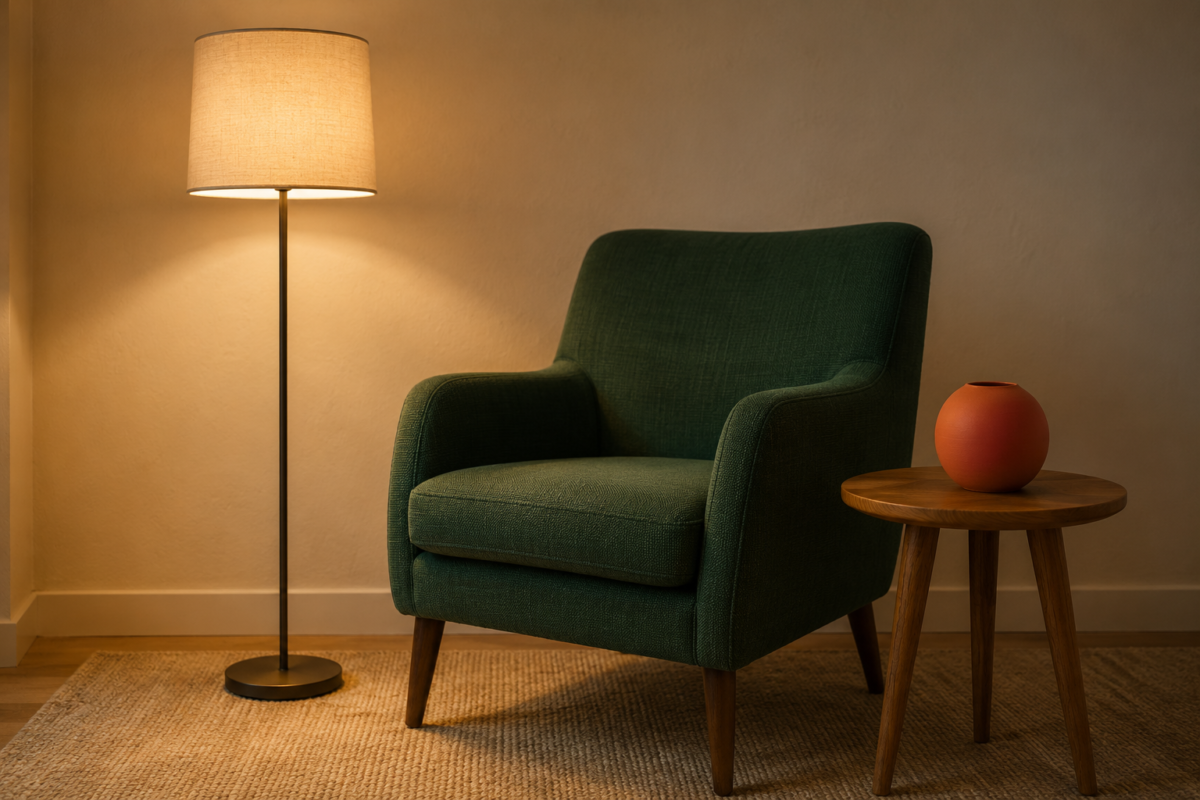
For the full breakdown of lamp placement, bulb temperature, and layering by room zone, Lighting Ideas That Make a Small Living Room Feel Bigger covers exactly how much light each seating area actually needs.
Step 2: Add Texture Next, Not More Objects
Once lighting is handled, add texture through a rug, a throw blanket, and pillow covers, choosing pieces that contrast in material rather than match in color, since texture does more to make a small room feel finished than adding more individual objects ever will.
Texture is the layer most likely to get skipped in favor of buying more small decor items, because a throw pillow feels like a smaller, safer purchase than a rug. But a room with five small matching decor objects and no texture still reads as flat. A room with one good rug, one substantial throw, and pillow covers in a contrasting material reads as layered and considered, even with far fewer individual items in it.
A rug anchors the whole seating area and does more to visually unify mismatched furniture than any single decor piece could. Size it so the front legs of your main seating pieces sit on it, not floating off the edge, since a too-small rug reads as disconnected no matter how nice it is on its own. Layer a chunky knit throw against a smoother sofa fabric, or a linen pillow cover against a velvet chair, so the textures actually contrast rather than blending into sameness.
Skip buying a matching pillow-and-throw set from a single collection. Mixed textures and sources almost always read as more collected and less like a showroom display, which is exactly the feeling a small, lived-in living room benefits from most.
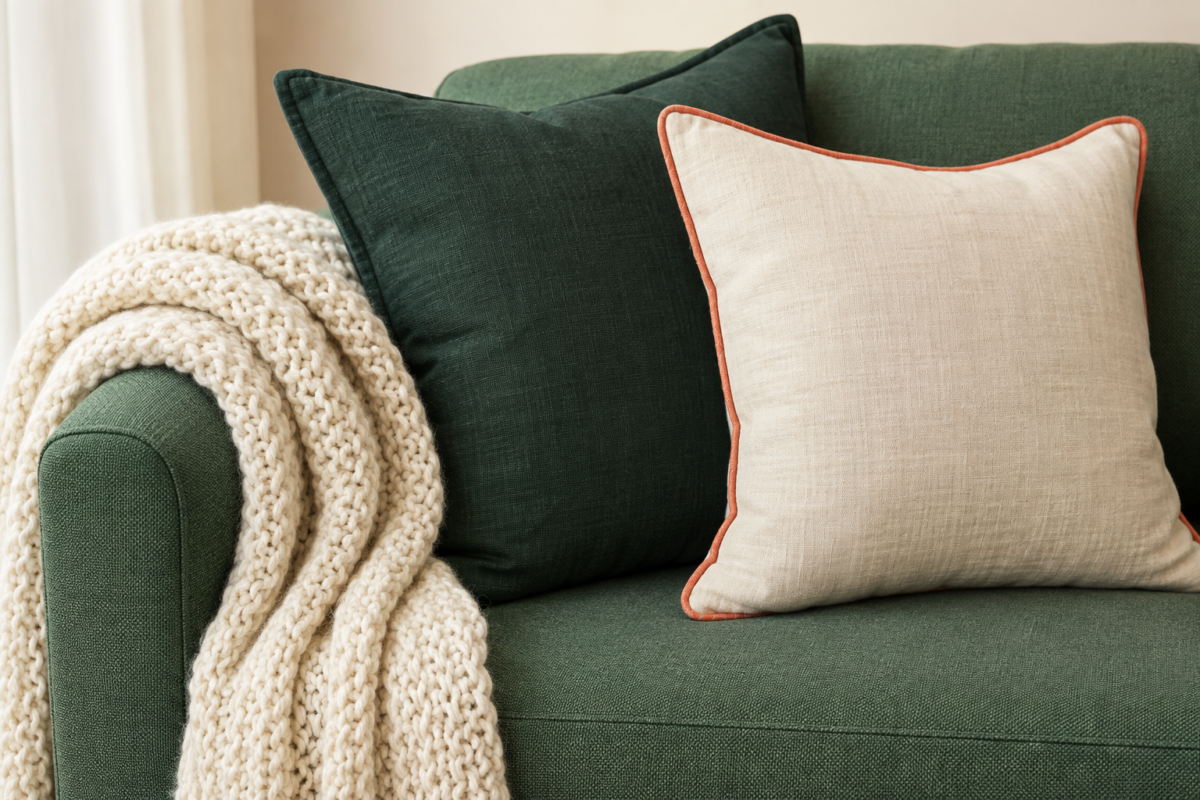
For the specific rug sizing, throw pairing, and pillow-layering rules that add warmth without adding clutter, Layering Texture Without Adding Clutter covers exactly how much texture is enough before a room starts to feel busy instead of finished.
Step 3: Finish With the Details That Make It Feel Like Yours
Add wall decor, personal objects, and greenery last, after lighting and texture are already working, choosing a small, curated handful of items rather than filling every visible surface with something.
This is the layer that makes a technically well-decorated room feel like it belongs to you specifically. It’s also the layer people either rush through too early or skip entirely. Done first, before lighting and texture, meaningful objects get buried under bad conditions where they can’t stand out. Done last, on top of a room that’s already working, the same objects finally get the attention they deserve.
For wall decor in a rental, lean a framed print against a low console or dresser rather than hanging it, or use a large mirror to bounce your new lamp light around the room while adding a genuine focal point. For personal touches, one shelf with a single framed photo, one small object with real meaning, and visible negative space around both will always look more considered than a shelf packed with everything you own. Negative space is what lets the eye land on the one or two things that actually matter.
For greenery, one well-placed plant, a trailing pothos on a shelf or a single larger floor plant in an awkward corner, does more for a room than three small plants scattered across different surfaces.
Keep the Room’s Color Story to Three Tones
Pick one dominant neutral, one secondary tone, and one accent color, then apply that same three-color story across lighting, texture, and finishing details rather than letting each new purchase introduce its own separate palette.
A small living room has less visual space to absorb competing colors than a larger one, which means a scattered palette reads as busy far faster. A cream or warm white as the dominant tone, a deeper neutral like a forest green or a warm brown as the secondary, and a single accent color, used sparingly across a pillow, a vase, or one small object, gives the eye a consistent story to follow through the room. Add a new item in a fourth or fifth color because it caught your eye in a store, and the room starts working against itself, no matter how nice that one piece is on its own.
This doesn’t mean every item has to match exactly. A rug in a slightly different cream than the walls, or a throw in a slightly deeper green than a chair, still reads as cohesive as long as it stays within the same three-tone family. What breaks the cohesion is introducing an unrelated fourth color as a one-off accent, which tends to happen most with wall art or a single “fun” object bought on impulse rather than chosen against the room’s existing palette.
Three Decor Approaches by How Much You’re Adding
| Approach | Lighting | Texture | Finishing Details |
| Minimal refresh | 1 lamp, warm bulb swap | 1 rug or 1 throw, not both | 1 leaned frame, 1 plant |
| Standard update | 2 lamps, warm bulbs throughout | Rug, throw, pillow covers | Leaned frame or mirror, plant, 1 curated shelf |
| Full room decorating | Full layered lighting, every fixture warm | Rug, curtains, throw, pillows | Gallery-style leaning wall, plant, styled shelf |
Every approach follows the same three-step order. What changes is how much you do within each step, never the sequence itself.
What to Skip When Decorating a Small Living Room
Skip buying decor before the lighting is fixed, skip filling every wall and surface at once, and skip matching decor sets that read as purchased rather than styled.
Specifically worth avoiding in a small footprint:
- Hanging or leaning wall decor before the lighting underneath it is settled, since even good art looks flat under a single harsh overhead bulb.
- Buying multiple small decorative objects to fill a shelf all at once, rather than adding a curated few and letting the shelf breathe.
- A full matching furniture-and-decor set from one collection, which tends to read as a showroom display rather than a room someone actually lives in.
- Skipping texture entirely in favor of more small objects, which leaves a room feeling flat no matter how many individual pieces are in it.
What the Finished Room Actually Looks Like
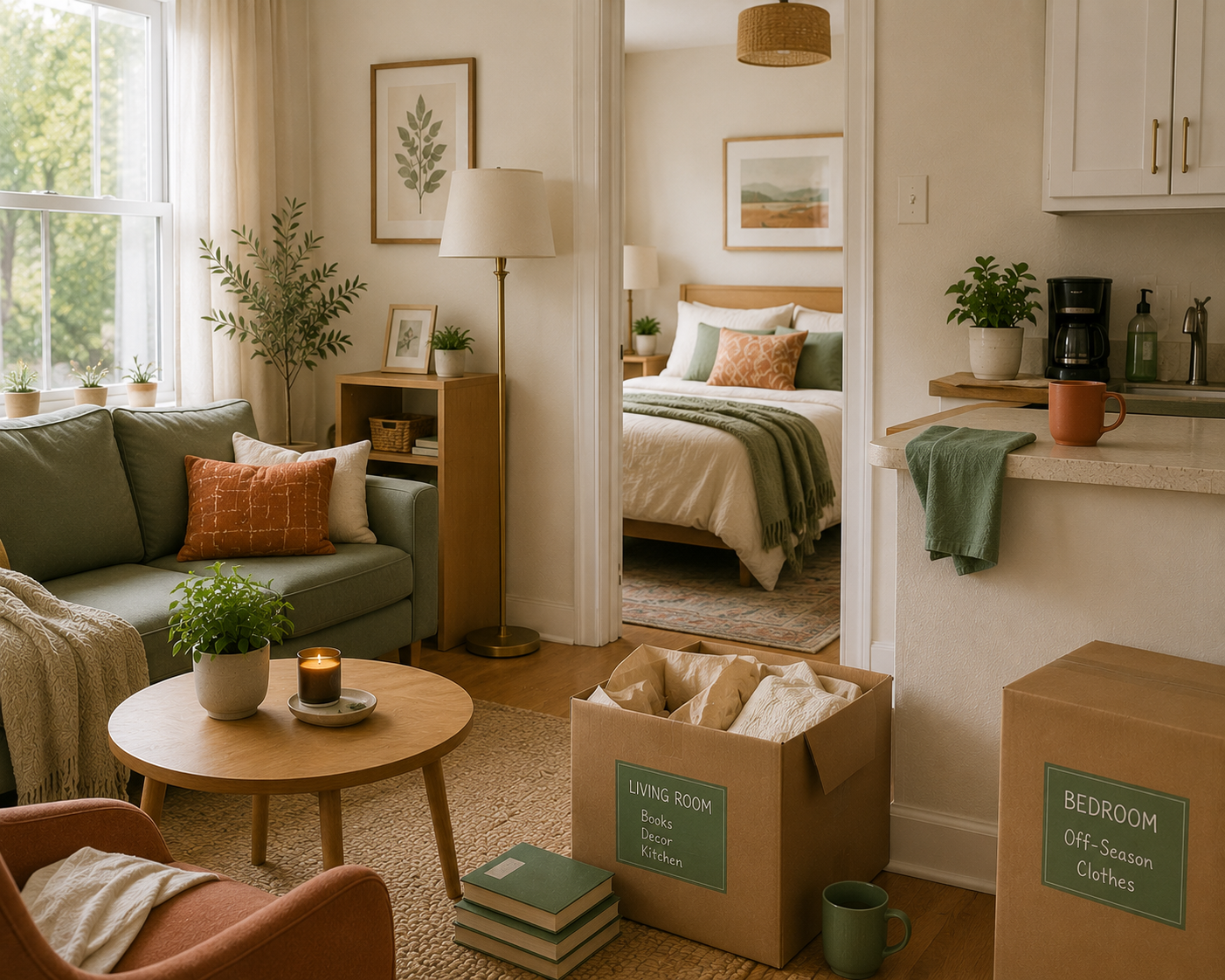
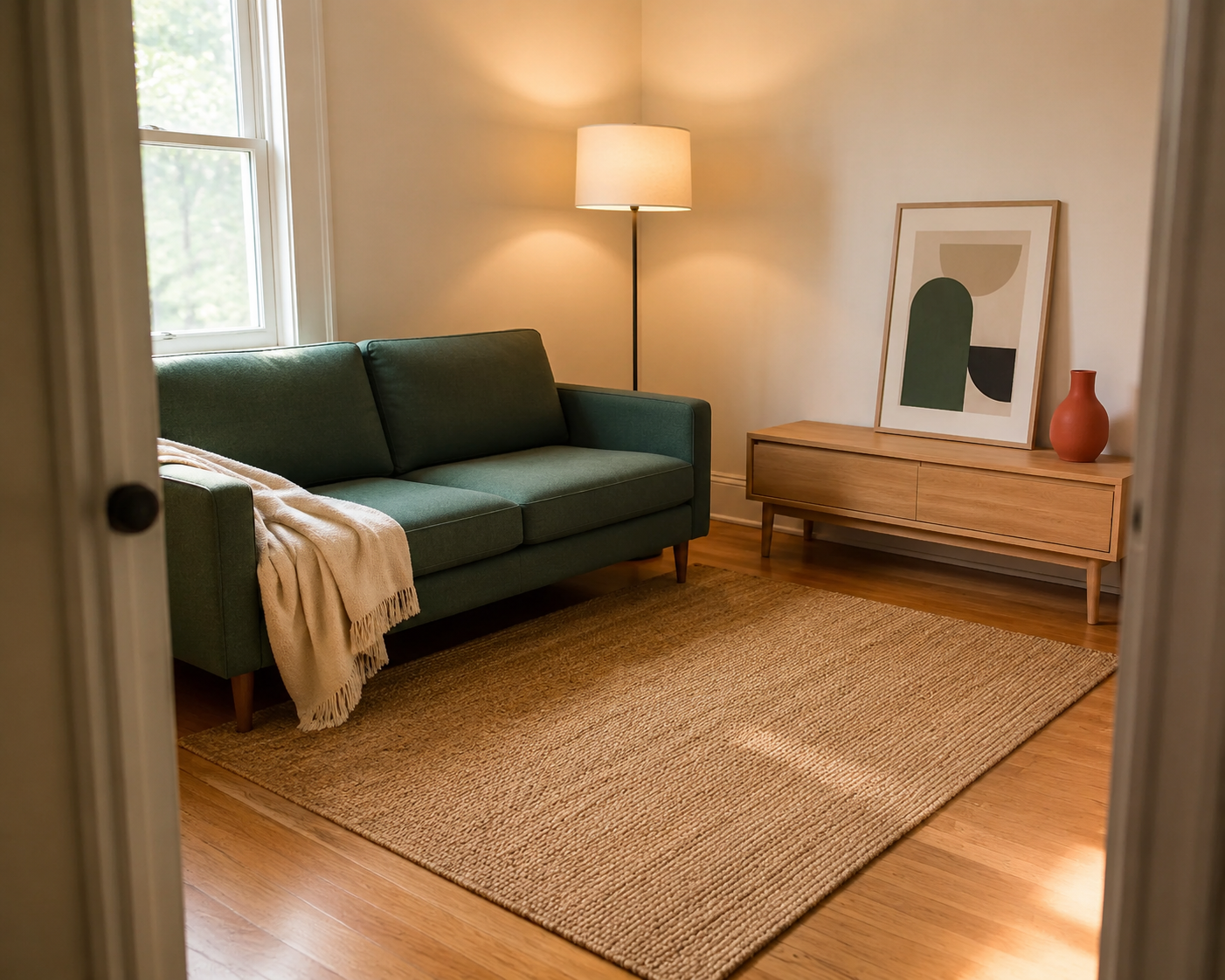
Walk back into that same small living room once all three layers are done and it reads completely differently. The lamp is doing what the overhead fixture never could. The rug ties the mismatched furniture together into one considered seating area. The throw and pillow covers add warmth without adding a single extra object. And the one framed photo on the shelf, surrounded by real breathing room, is the first thing anyone actually notices when they walk in.
None of it required buying more than the room needed. It required doing three ordinary things in the right order, and stopping once each layer was genuinely working before adding the next.
Frequently Asked Questions
What should I decorate first in a small living room? Start with lighting. Warm 2700K bulbs and at least one floor or table lamp cost under $40 total and change how every other decor purchase in the room looks, before you’ve spent anything else.
How do I make a small living room feel less cluttered while still decorating it? Add texture through a rug, throw, and pillow covers before adding more individual decor objects. A room with real texture and fewer objects almost always reads as more finished than a room with many small matching items and no texture.
Can I decorate a small living room without hanging anything on the walls? Yes. Lean framed prints against a console or dresser, use a large mirror leaned or hung with a rated adhesive strip, and rely on textiles like rugs and throws for most of the visual change, since none of it requires drilling.
Is it better to buy a few nice decor pieces or several cheaper ones? A few well-chosen pieces, one real plant instead of three small ones, one substantial throw instead of several thin ones, almost always outperforms several cheaper items competing for the same visual space in a small room.
How much should I spend decorating a small living room? It depends on how much you’re changing, but the order matters more than the amount. A minimal refresh with one lamp, one rug or throw, and one plant can genuinely finish a room for under $150 if the lighting and texture layers are prioritized first.
Related Reading
For the specific lamp placement and bulb temperature rules this guide’s first step is built on, Lighting Ideas That Make a Small Living Room Feel Bigger covers layering by room zone.
If texture is the layer you’re stuck on, Layering Texture Without Adding Clutter covers rug sizing and fabric pairing that adds warmth without eating floor space.
If budget is the real constraint, Small Living Room Decor on a Real Budget covers exactly where to spend and where to skip at every price point.
For more decorating guides, visit Living Room Decor, or explore the wider Small Living Rooms hub for layout, storage, and multi-purpose ideas for the rest of the room.