Table of Contents
Flip on the overhead light in most small living rooms and the whole room flattens at once. Every corner gets the same flat wash of light, every shadow disappears, and the room somehow feels smaller for it, the way a photo taken with a flash squashes a face instead of flattering it. Turn that same overhead light off and light two lamps instead, and the room gains depth it didn’t have a second ago.
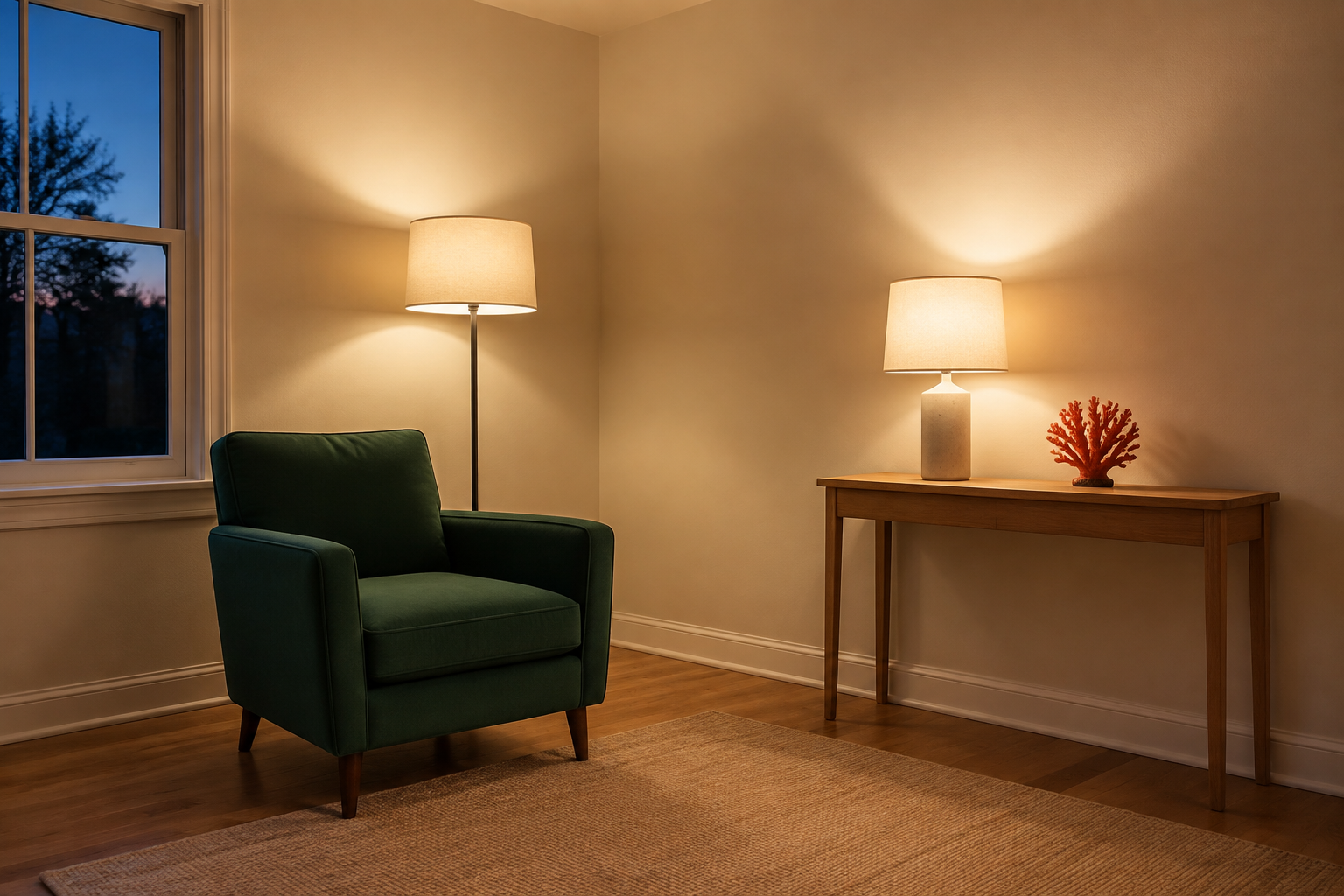
A small living room feels bigger with layered lighting, meaning at least two separate light sources at different heights around the room, using warm 2700K bulbs instead of the cooler, harsher light most overhead fixtures come with by default. A single ceiling light flattens a room’s depth. Multiple lower, warmer light sources create the shadow and contrast that make a room read as larger than its actual square footage.
Why One Overhead Fixture Makes a Small Room Feel Smaller
A single overhead light source removes shadow and depth from a room by lighting every surface at the same flat intensity, which is exactly what makes a small room feel like it has nowhere further to go. Layered lighting, at varying heights and intensities, recreates the depth an overhead fixture erases.
Depth is what convinces the eye a room is bigger than its actual dimensions, and depth depends on contrast, some areas brighter, some in soft shadow, rather than a uniform level of brightness everywhere at once. A single ceiling fixture removes that contrast entirely. Two lamps at different heights, one at seated eye level and one slightly higher on a console, immediately reintroduce it, even in a room with the exact same square footage.
Warm Bulbs Change Everything Before You Buy Anything
Replace any bulb above 3000K with a warm 2700K bulb throughout the room, since color temperature affects how a small room feels more than almost any other single lighting decision, and it’s the cheapest one to change.
Most overhead fixtures and older lamps ship with bulbs in the 3500K to 5000K range, which reads as cool, clinical, and closer to office lighting than home lighting. A 2700K bulb, sometimes labeled “soft white” or “warm white” on the packaging, shifts that same fixture toward a residential, golden tone that makes skin, wood, and fabric all read warmer and more inviting. This swap costs a few dollars per bulb and requires no new fixtures at all, which makes it the highest-value lighting change available before spending on anything else.
Check every bulb in the room, not just the main fixture. A warm floor lamp paired with a cool-toned bulb still hiding in an old table lamp undercuts the whole effect, since the two competing color temperatures read as mismatched rather than layered.
Layer Light by Zone, Not by Room
Assign a light source to each zone the room actually uses, seating, reading, a console or entry table, rather than trying to light the whole room evenly from one or two fixtures, since zone-based lighting matches light to where it’s actually needed.
Most rooms don’t need uniform brightness everywhere at once. A seating area used mostly in the evening benefits from a warm, lower-intensity floor lamp. A reading chair needs a brighter, more direct source close to eye level. A console near the entry might need very little light at all beyond what spills over from elsewhere. Thinking in zones, rather than trying to evenly light the entire room’s square footage, uses fewer total light sources more effectively and creates the natural contrast that makes a small room feel larger.
Floor Lamps for the Seating Area
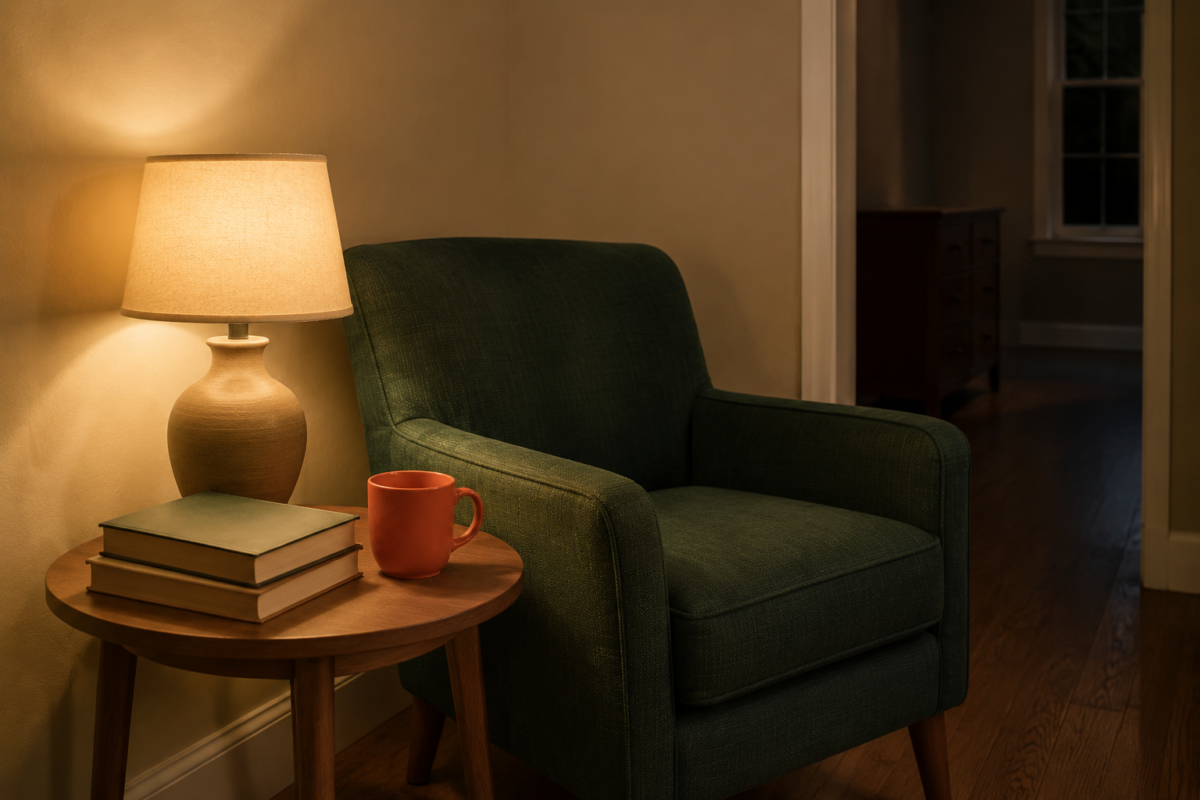
Place a floor lamp beside your primary seating, positioned so the light source sits roughly at or slightly above seated eye level, rather than a tall lamp towering well above head height, which throws light down onto the floor instead of across the seating area where people actually spend their time.
A floor lamp’s height matters more than most people account for when buying one. A lamp with its shade sitting 50 to 55 inches from the floor generally lands close to the right height for lighting a seated adult’s face and the immediate seating area, rather than casting a pool of light on the floor several feet away. One well-placed floor lamp beside a sofa or chair does more to make an evening seating area feel warm and usable than a brighter but poorly positioned overhead fixture ever will.
Table and Clip Lamps for Reading and Close Work
Add a smaller table or clip lamp anywhere you read, work, or spend time close-up, like beside a chair or on a console near the seating group, since close-up tasks need more direct, brighter light than the ambient glow a floor lamp provides across the wider room.
A floor lamp lighting a whole seating area is rarely bright enough, on its own, for reading fine print or focused close work. A smaller secondary lamp, positioned closer to where the actual task happens, fills that gap without needing to brighten the entire room to match it. This is also where a slightly cooler bulb, closer to 3000K rather than 2700K, can work well specifically for the task lamp, while the rest of the room’s lighting stays warmer, as long as the difference is subtle rather than jarring.
Using Mirrors to Double Your Light Source
Position one mirror, ideally 30 inches or larger, across from or near a window or a lamp, so it reflects and effectively doubles the light already in the room, rather than adding another fixture where one might not fit.
A mirror is one of the few decor choices that directly improves a room’s lighting rather than just adding to it. Placed to catch either natural daylight from a window or the warm glow from a lamp, a large mirror bounces that light further into the room, brightening corners a single lamp alone couldn’t reach. This works especially well in a small living room, where adding a fourth or fifth physical light fixture starts to feel excessive, but the room still has a dim spot or two that could use more light.
Dimmers and Layering for Evening Versus Daytime
Add a dimmer switch or dimmable smart bulbs to at least your main lamp, so the room’s lighting can shift from brighter, functional daytime light to a lower, warmer evening setting without needing a second set of fixtures.
A room that needs to function differently across the day, bright for tidying or working, warm and low for relaxing in the evening, doesn’t need separate lighting setups for each. A single dimmable lamp or a smart bulb controlled by an app or voice assistant covers both needs with one fixture, adjusted rather than replaced. This is a small investment, usually under $20 for a basic dimmable smart bulb, that extends the usefulness of lighting you’ve already layered into the room.
What to Skip When Lighting a Small Living Room
Skip relying on a single overhead fixture as the room’s only light source, skip mismatched bulb temperatures across different lamps, and skip buying a floor lamp without checking its height against your seating first.
A few specific habits worth avoiding:
- Leaving the original cool-toned bulb in an older lamp while adding warm bulbs everywhere else, which undercuts the layered effect with one mismatched fixture.
- Choosing a floor lamp based on its look in a listing photo rather than measuring where its light will actually fall relative to your seating.
- Adding more lamps than the room’s outlets can realistically support without visible extension cords crossing the walking path.
Frequently Asked Questions
What bulb temperature makes a small living room feel warmer? A 2700K bulb, often labeled “soft white” or “warm white,” reads as residential and inviting rather than clinical, and it’s the single cheapest lighting change available in most small living rooms.
How many light sources does a small living room need? At least two, positioned at different heights and zones, works better than one bright overhead fixture, since multiple sources create the contrast and depth that make a room feel larger than its actual square footage.
Where should a floor lamp go in a small living room? Beside the primary seating, with the light source sitting roughly at or slightly above seated eye level, so the light falls across the seating area rather than pooling on the floor several feet away.
Do mirrors actually help with lighting in a small room? Yes. A mirror placed near a window or lamp reflects and effectively doubles the existing light source, brightening corners a single lamp couldn’t otherwise reach without adding another fixture.
Related Reading
For the full three-step order this lighting layer fits into, The Complete Guide to Decorating a Small Living Room covers lighting, texture, and finishing details together as one system.
Once lighting is handled, Layering Texture Without Adding Clutter covers the rugs, throws, and pillow layering that come next.
If budget is the deciding factor in how far to take this, Small Living Room Decor on a Real Budget covers exactly where lighting fits into a real spending plan.
For more decorating guides, visit Living Room Decor, or explore the wider Small Living Rooms hub for layout, storage, and multi-purpose ideas for the rest of the room.