Table of Contents
Your sister texts that she’s coming for the weekend, and the living room has about six hours to become a place someone can actually sleep comfortably. An air mattress dragged out of a closet solves the immediate problem. It doesn’t solve it well, and it definitely doesn’t solve it the tenth time she visits.
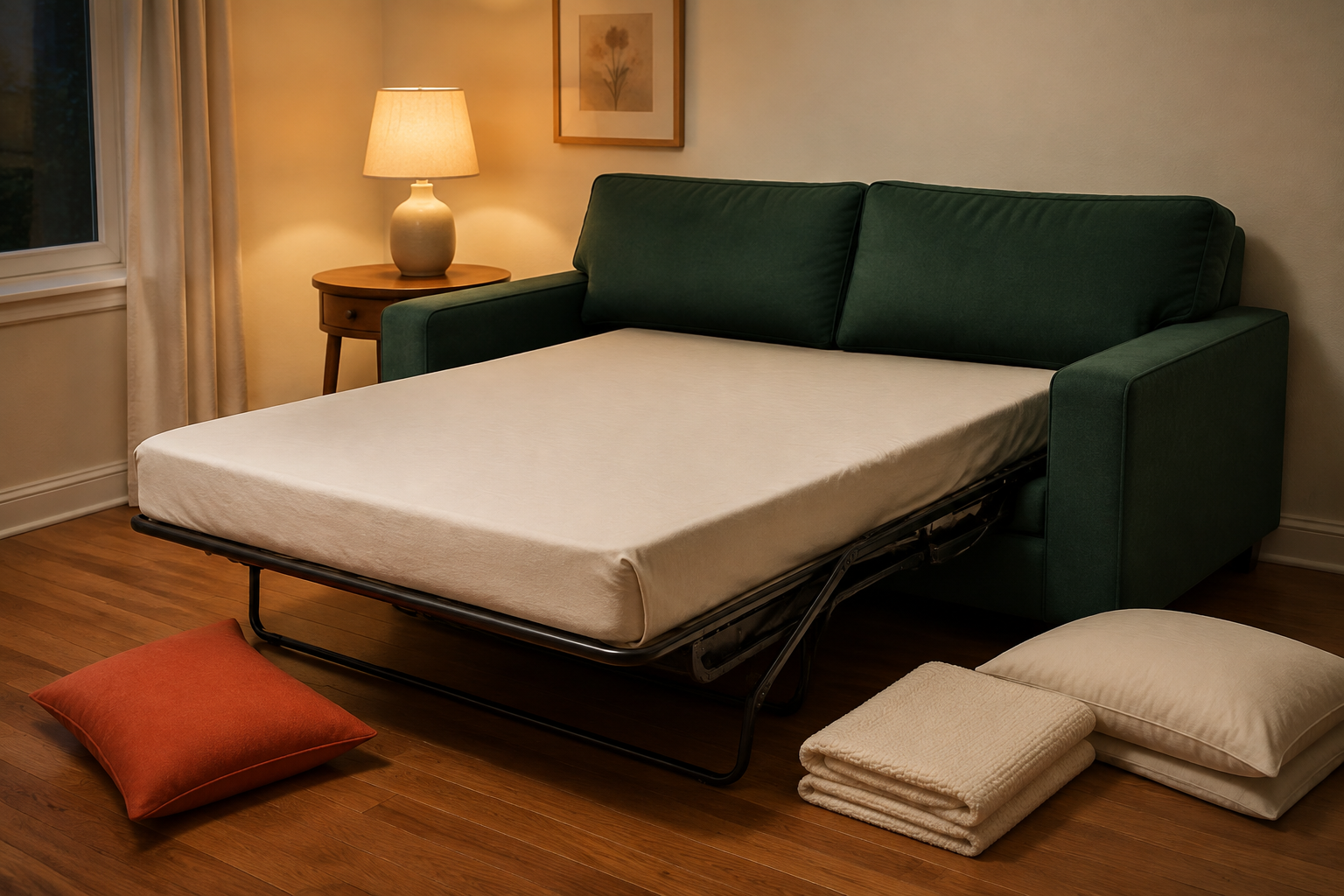
A living room that genuinely doubles as a guest room needs three things settled in advance: a sleeper sofa or daybed with a comfortable mattress, bedding stored close enough to grab in minutes, and a couple of small comfort details that make the difference between a guest who slept fine and one who’s quietly counting down until they’re home. None of it requires a dedicated room. It requires deciding these three things once, ahead of the next time someone actually stays over.
Sleeper Sofas vs Daybeds: Which Fits Your Room
Choose a sleeper sofa if the room needs full, comfortable seating for three or more people daily and only converts to a bed occasionally, and choose a daybed if the room’s daily seating needs are smaller and the piece can afford to read more like a bed with pillows than a full sofa.
A sleeper sofa is built first as a sofa, with the bed mechanism as a secondary function tucked inside. That makes it the better choice when the room’s everyday seating capacity matters more than the guest-bed function, since the daily comfort of the sofa itself isn’t compromised by the mechanism inside it. A daybed works the opposite way: it’s closer to a single bed styled with bolster pillows to read as a couch during the day, which suits a smaller room or a secondary seating spot better than a room’s main sofa.
If your living room only needs to seat one or two people regularly, a daybed frees up more floor space than a full sleeper sofa footprint, while still converting to genuine overnight sleeping when needed. If the room is the household’s main gathering spot most evenings, the sleeper sofa’s full-size seating usually matters more than the daybed’s smaller footprint.
Mattress Thickness and Comfort Actually Matter
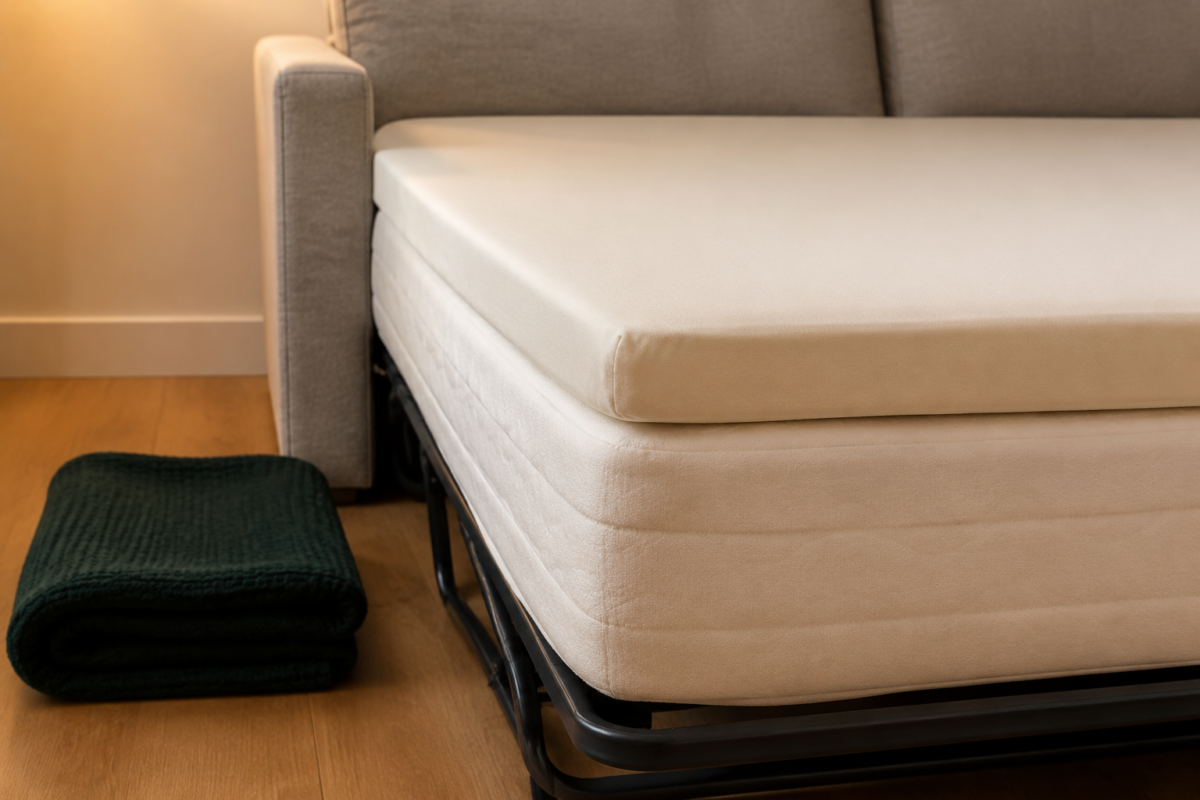
Choose a sleeper sofa with a mattress at least 4 inches thick, ideally memory foam or a hybrid design, rather than the thin foam pad that comes standard with many budget pull-out models, since mattress thickness is the single biggest factor in whether an overnight guest actually sleeps well.
This is the detail most people skip when buying a sleeper sofa, focusing instead on the sofa’s look or price and treating the pull-out mattress as an afterthought. A standard 2 to 3-inch foam pad over a metal bar frame is genuinely uncomfortable for anyone spending a full night on it, and it’s the most common reason overnight guests report sleeping poorly even in an otherwise nice-looking setup. Many sleeper sofa manufacturers now sell aftermarket foam toppers specifically sized for their pull-out mattresses, which is a worthwhile upgrade if your current sofa’s mattress is on the thinner side and replacing the whole piece isn’t in the budget.
For a daybed, this concern is less about a pull-out mechanism and more about mattress quality generally, since a daybed’s mattress is used both for daytime lounging and overnight sleep. A medium-firm twin mattress, roughly 6 to 8 inches thick, works well for both uses without feeling either too soft to sit on comfortably or too firm to sleep on.
Where to Store Bedding So Setup Takes Minutes
Keep a complete guest bedding set, sheets sized for the sleeper mattress, one pillow, and a folded blanket, stored inside the room’s existing storage, a storage ottoman or a console drawer, rather than in a closet elsewhere in the home.
The difference between a guest bed that gets set up smoothly and one that becomes a scramble usually comes down to where the bedding lives. If sheets are stored in a hallway linen closet and the guest bed is in the living room, setup requires a trip across the home mid-conversation with your guest standing there. If the same bedding lives inside the storage ottoman already doubling as the coffee table, the whole setup happens in the same room, in under five minutes, without interrupting anything.
Keep this bedding set separate from everyday blankets and pillows used for daily lounging, so it’s always complete and ready rather than partially borrowed for another use when a guest actually arrives.
Creating a Little Privacy Without a Separate Room
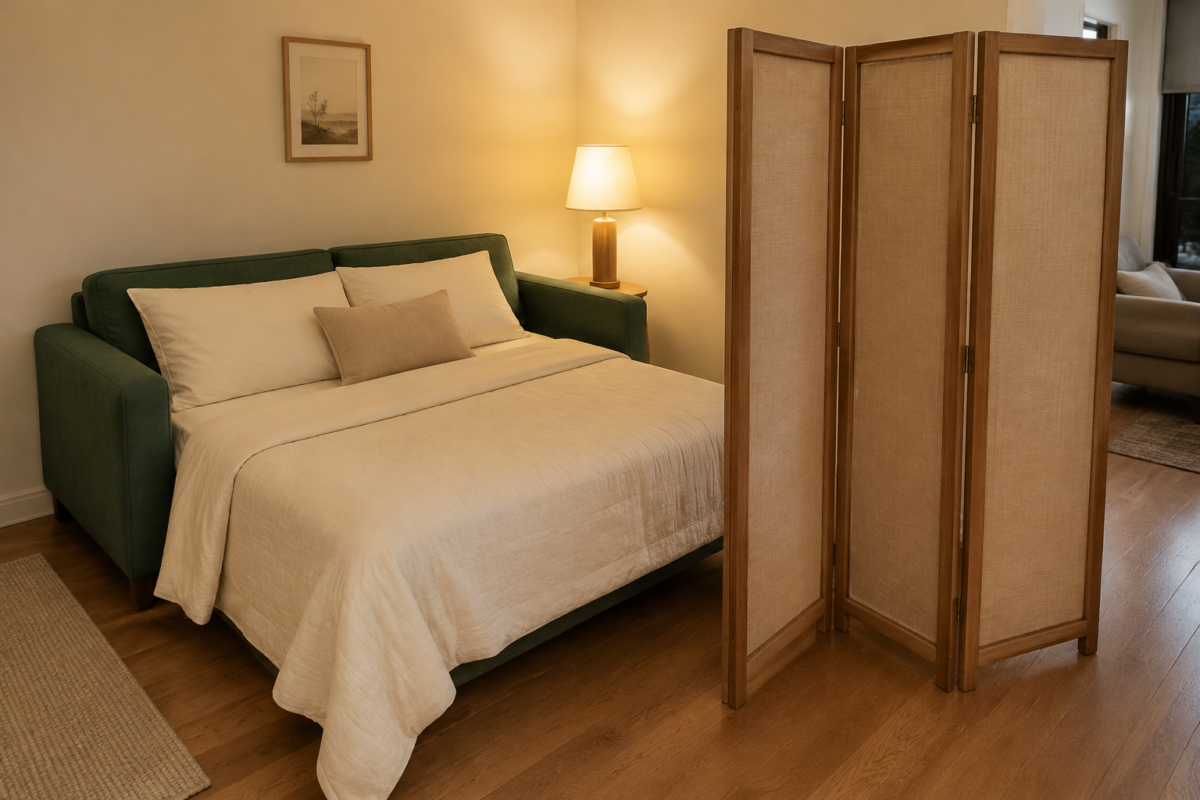
Add a simple room divider, a folding screen, tall curtain panel on a tension rod, or even a bookshelf positioned to break sightlines, near the guest bed if the living room is visible from other parts of the home, since a small amount of visual separation makes a significant difference in how comfortable an overnight guest feels.
A living room doubling as a guest room usually lacks a door, which means a guest sleeping there has essentially no privacy from the rest of an open living space. A folding screen or a curtain panel hung from a ceiling-mounted tension rod doesn’t need to fully enclose the space to help. Even a partial visual break, positioned near the head of the sleeper sofa or daybed, gives a guest a sense of their own defined space rather than sleeping in the middle of a shared room.
This matters most in open-plan apartments or studios where the living room is visible from the kitchen or a hallway. In a fully separate living room with its own door, this step matters less, since closing the door already provides the separation a folding screen would otherwise add.
Small Comforts That Make Overnight Guests Feel Considered
Add a few small, low-cost details specifically for guests, a reading lamp within reach of the bed, a spot to set a phone or glasses, and a spare charger left visible, since these small comforts matter more to how a guest experiences the stay than the bed itself.
A guest sleeping on a well-chosen sleeper sofa with a comfortable mattress can still have a rough night without a light they can reach without getting up, or somewhere to set their glasses down before falling asleep. A small clip lamp or a battery-powered table lamp placed within arm’s reach of the bed solves this without needing a permanent bedside table in a room that doesn’t have space for one. A spare phone charger, even a basic one left in the same storage as the bedding, removes one more thing a guest has to ask for or go without.
What to Skip When Combining a Living Room and Guest Room
Skip an air mattress as your standing solution, skip a sleeper sofa chosen purely for its daytime look without checking the mattress inside it, and skip leaving guests to figure out bedding, lighting, and charging on their own without a few details already prepared.
A few specific habits worth avoiding:
- Buying a sleeper sofa without ever testing or researching its actual pull-out mattress thickness, which is the detail most likely to be disappointing after the purchase.
- Storing guest bedding somewhere inconvenient, which turns a five-minute setup into a longer, more disruptive one every time.
- Skipping any privacy consideration entirely in an open-plan space, leaving a guest sleeping in full view of the rest of the home’s daily activity.
Frequently Asked Questions
Is a sleeper sofa or a daybed better for a small living room guest bed? A sleeper sofa works better if the room needs full daily seating capacity, while a daybed suits a smaller room or lighter daily seating needs, since it takes up less floor space while still converting to a real bed.
How thick should a sleeper sofa mattress be for overnight guests? At least 4 inches, ideally memory foam or a hybrid design. Many standard pull-out mattresses come thinner than that, and an aftermarket foam topper is a worthwhile upgrade if replacing the whole sofa isn’t an option.
Where should guest bedding be stored in a small living room? Inside the room’s existing storage, like a storage ottoman or console drawer, rather than a closet elsewhere in the home, so setup takes minutes instead of requiring a trip across the house.
How do you add privacy for a guest sleeping in an open living room? A folding screen or a curtain panel on a ceiling-mounted tension rod near the bed creates a partial visual break, which matters most in open-plan spaces where the living room is visible from the kitchen or hallway.
Related Reading
For the full principle this guest-room combination is built on, The Complete Guide to Multi-Purpose Living Rooms covers guest, office, and dining combinations together as one system.
If a home office is the other function this room needs to cover, Living Room and Home Office, Without It Looking Like an Office covers desk setups that disappear at the end of the workday.
For which convertible furniture pieces are genuinely worth the extra cost, Furniture That Does Two Jobs at Once covers sleeper sofas, daybeds, and other dual-purpose pieces in detail.
For more multi-purpose ideas, visit Multi-Purpose Living Rooms, or explore the wider Small Living Rooms hub for layout, storage, and decor guides for the rest of the room.