Table of Contents
The advice you’ll see everywhere for small kitchens is to keep everything white, keep everything matching, and keep everything as plain as possible so the room “feels bigger.” Follow that advice to the letter and you’ll end up with a kitchen that’s technically inoffensive and completely forgettable, the kind of room that photographs fine and feels like nobody actually lives there.
Decorating a small kitchen well comes down to sequence: fix the lighting first, since it changes how every other decision reads in the room, then style what’s on display (open shelves, if you have them), then layer in the smaller details, hardware, textiles, a few objects with real personality, that make the space feel finished rather than staged. Skip straight to the small details without fixing lighting first and you’re decorating a room that still doesn’t feel good to stand in.
This guide walks through that order, start to finish, for a kitchen you didn’t build and probably can’t renovate.
Start With Lighting, Not Paint or Decor
Most small kitchens run on a single flat overhead fixture, and it’s the single biggest reason an otherwise decent kitchen feels cold, dim, or oddly institutional. Fixing lighting before touching anything else matters because every other decorating choice, wall color, shelf styling, the dish towels you pick, reads differently depending on the light it’s sitting in.
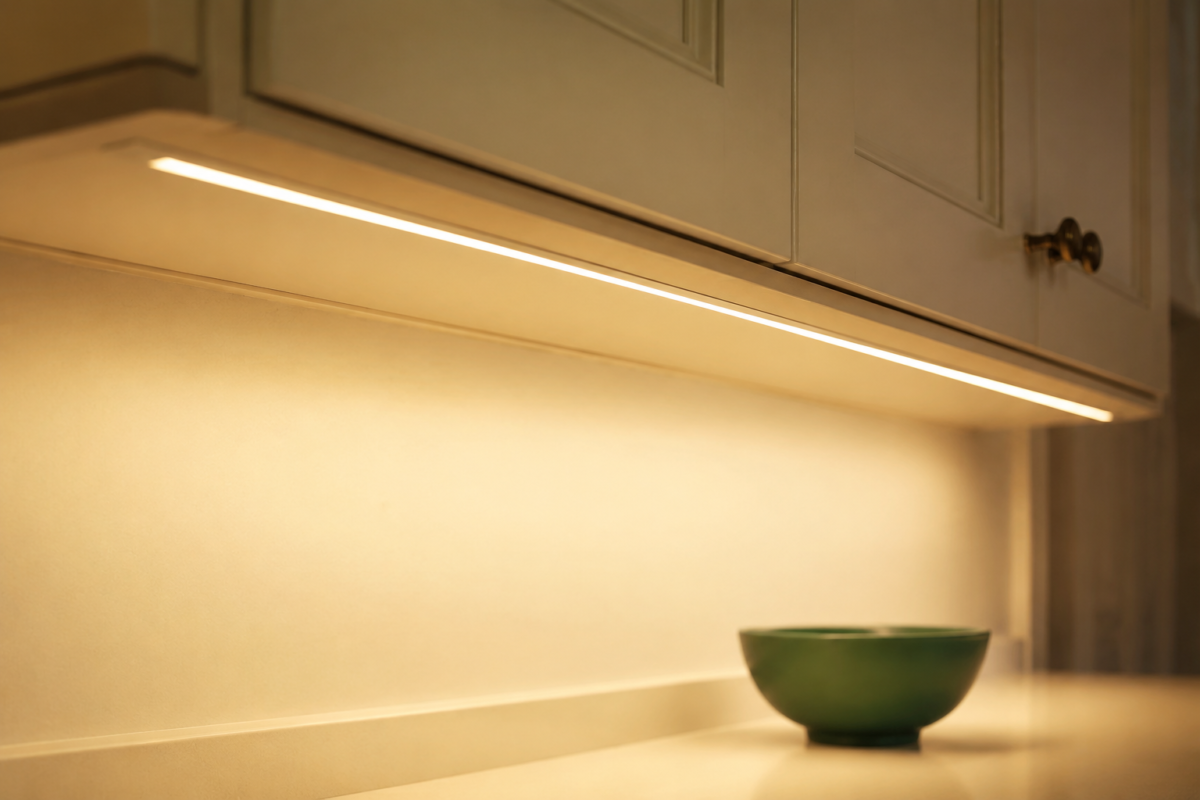
A single overhead fixture creates flat, shadowless light that flattens texture and makes even nice materials look cheap. Layering in at least two additional light sources, task lighting under cabinets and one warm accent source like a pendant or plug-in sconce, changes the entire feel of the room without touching a single wall.
Under-cabinet lighting is the highest-impact, lowest-effort change available in most kitchens. A plug-in LED strip light, no electrician and no wiring required, mounted under upper cabinets throws warm, even light across the counter exactly where you’re cutting, cooking, and actually looking. Most kitchens see a real difference with strips in the $20-$40 range per run.
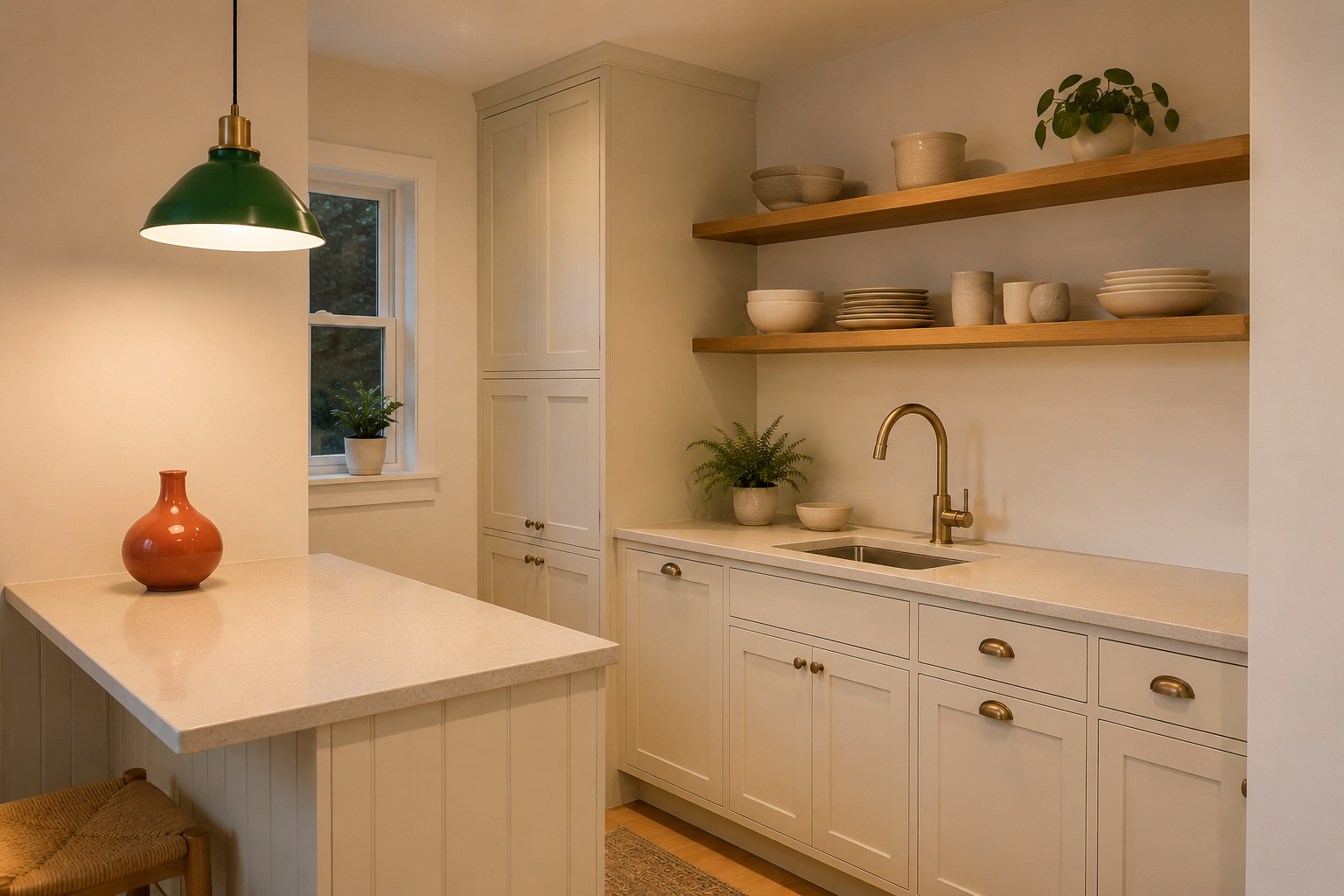
A pendant light over a peninsula, island, or even a stretch of counter without one adds a second light source at a different height, which is what breaks up the flat, single-source glow of the standard overhead fixture. Plug-in pendant kits exist specifically for renters, hanging from a hook rather than requiring any wiring change.
If your kitchen’s lighting situation goes beyond just adding a strip or a pendant, meaning you’re working with a genuinely dim room or awkward fixture placement, Small Kitchen Lighting That Changes the Whole Room breaks down the full layered lighting approach room by room.
Style Open Shelving So It Reads as Decor, Not Storage
If your kitchen has open shelving, whether it came that way or you’ve added a floating shelf or two, it becomes one of the most visible decor elements in the room the moment lighting is handling it well. Open shelves styled with intention look like a deliberate design choice. Open shelves used purely for overflow storage look like a shelf you haven’t gotten around to hiding yet.
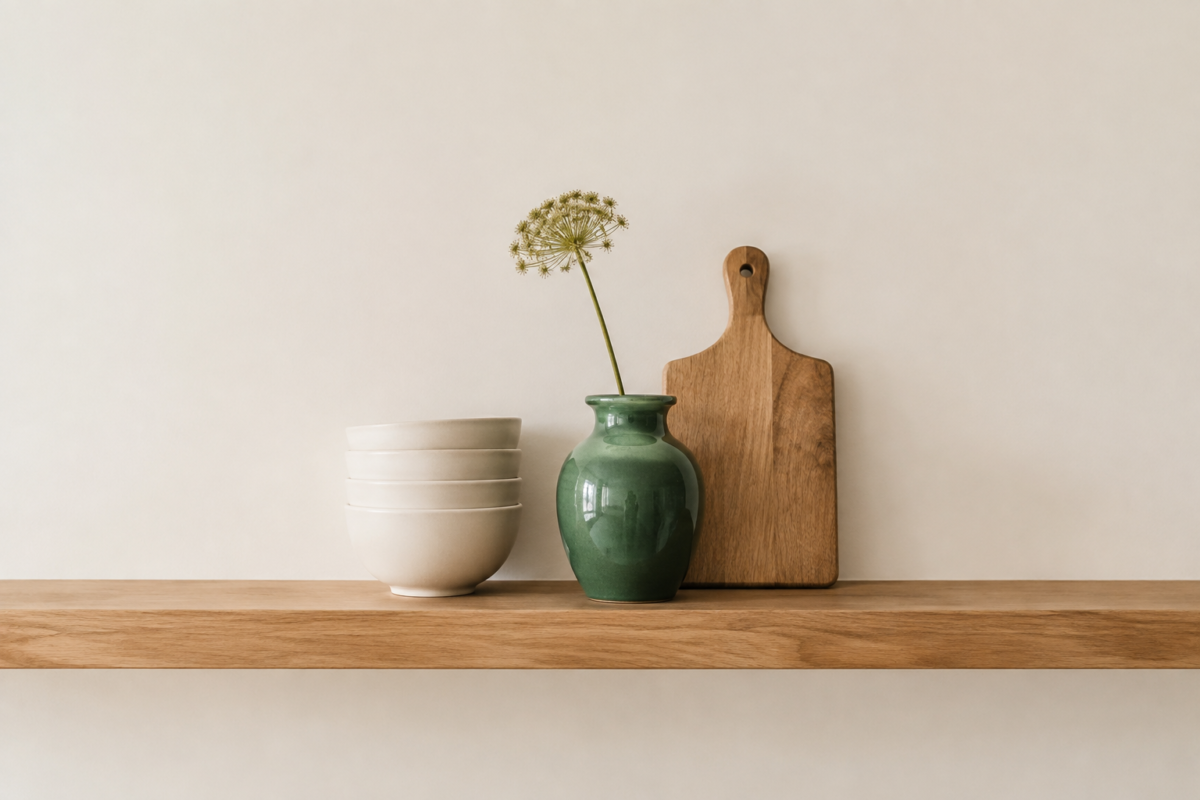
The difference comes down to a simple rule: not everything you own belongs on an open shelf, only the items that are genuinely nice to look at. Everyday plastic containers, mismatched mugs, and anything visually busy belong behind a cabinet door. What goes on the open shelf is a curated, smaller selection: your nicest dishware, a couple of plants, one or two objects with real texture or color.
Group items in odd numbers, threes work especially well, and vary height across the grouping rather than lining everything up at the same level. A stack of bowls, a single tall vase, and a small plant reads as composed. Six identical mugs in a perfect row reads as storage.
Leave visible negative space between groupings. A shelf packed edge to edge, even with genuinely nice items, starts to look cluttered again. The empty space between groupings is doing real visual work, giving your eye somewhere to rest between one styled moment and the next.
The complete approach to grouping, spacing, and choosing what belongs on display versus what stays behind cabinet doors is covered in full in Open Shelving Styling That Doesn’t Look Cluttered.
Add Color and Texture Through Small, Swappable Layers
Once lighting and any open shelving are handled, the smaller layers are what actually give a kitchen personality: a runner or rug, dish towels, a plant or two, hardware, and one or two genuinely bold objects instead of a dozen small, timid ones.
A single bold accent color used sparingly, coral shows up this way across Taims Space’s palette, does more visual work as one dish towel and one small vase than the same color spread thin across ten small items. Restraint with color makes the one bold choice actually register instead of getting lost.
Textiles are the fastest, cheapest swap available. A runner in front of the sink, a set of dish towels that coordinate rather than match exactly, and a couple of cloth napkins on open display change the room’s feel in an afternoon, with zero commitment and zero wall damage.
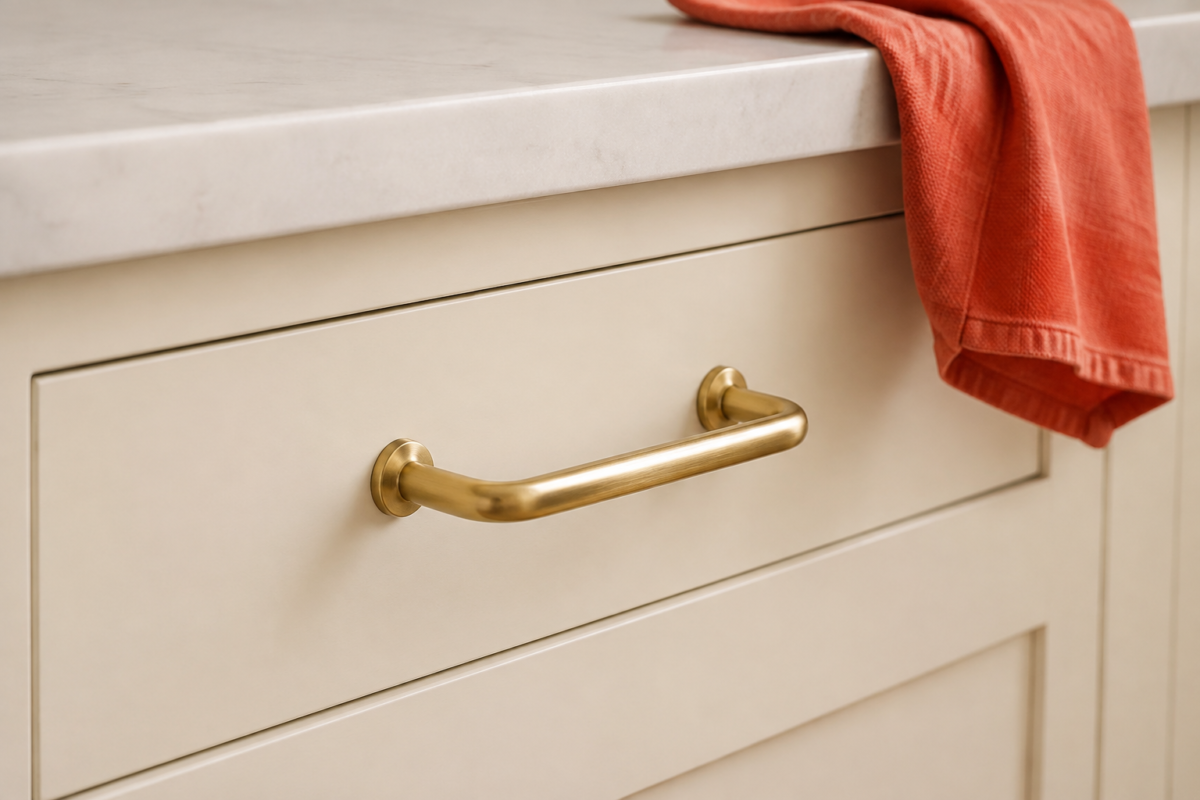
Hardware is the highest-impact rental-safe upgrade if your cabinets currently have builder-grade knobs. Swapping knobs and pulls for a style that fits your kitchen’s overall feel, and keeping the original hardware in a labeled bag for move-out, is one of the few changes that reads as a genuine design upgrade rather than a decor add-on. Most cabinet hardware swaps run $2-$6 per knob and take an afternoon with a screwdriver.
Plants do more per square inch than almost any other decor item in a kitchen. One or two low-maintenance plants, a small herb pot on the counter or a trailing plant on an open shelf, add real color and life without competing for counter space the way a larger decor object would.
Where to Actually Spend, and Where to Skip It
Not every decorating decision deserves the same budget, and knowing which changes are worth spending on versus which ones you can skip or DIY entirely is what keeps a full kitchen refresh from becoming an expensive project it didn’t need to be.
Lighting and hardware are worth real investment, since both make a visible difference every single day and both travel with you if you move. A genuinely nice pendant light or a full set of quality cabinet hardware pays off in daily use in a way a decorative item you glance at occasionally doesn’t.
Textiles, small decor objects, and plants are the easiest places to go budget-conscious without the room looking cheap, since these are also the items you’ll want to rotate and refresh seasonally anyway. Spending less here isn’t a compromise. It’s the smarter place to spend less, because these items aren’t meant to be permanent.
A full breakdown of exactly where to spend and where to skip, plus specific price ranges for each category of small kitchen decor, lives in Kitchen Decor on a Real Budget.
Treat the Window and Any Open Wall Space
A kitchen window with a bare pane or a builder-grade mini blind is one of the most overlooked decor opportunities in a small kitchen, mostly because it feels functional rather than decorative. A simple café curtain, mounted with a tension rod so nothing goes into the window frame, covers the lower half for privacy while leaving the top open for light, which matters more in a small kitchen than almost any other room since natural light is doing real work for both the cooking task and the mood of the space.
Choose a fabric with texture or a subtle pattern rather than a flat solid, since the window is often the one soft surface in a room otherwise made up of hard cabinet fronts, tile, and counter material. A linen-blend café curtain in a warm cream or soft green tone adds visual softness without competing with anything else in the room.
If your kitchen has a stretch of open wall, above the stove, at the end of a run of cabinets, or beside the fridge, resist the instinct to leave it bare “for a cleaner look.” A single piece of art or one well-chosen object (a wall-mounted wood cutting board display, a small floating shelf with one or two objects) fills the gap without cluttering it. The rule from the open shelving section applies here too: one intentional choice beats several small, timid ones.
Removable wallpaper on a single accent section, the space between the counter and upper cabinets if you don’t have a full backsplash, or the back wall of open shelving, is one of the few genuinely renovation-level changes available to renters. A small section, rather than an entire wall, keeps both the cost and the removal effort manageable, and it’s one of the highest-impact changes available if your kitchen currently reads as visually flat.
Bring It Together Without Overdoing It
The mistake that undoes a lot of otherwise good small kitchen decorating is trying to do everything at once. A kitchen with new lighting, fully restyled shelves, new textiles, new hardware, and three new plants all added in the same weekend can tip into feeling busy rather than finished, especially in a room this size where every surface is already doing double duty.
Add changes in the order this guide followed: lighting first, since it’s the foundation everything else is seen through, then shelving if you have it, then the smaller layers one or two at a time. Live with each stage for a few days before adding the next. What feels like restraint while you’re doing it usually reads as intentional, considered design once it’s finished.
What a Finished Small Kitchen Actually Feels Like
Picture the same kitchen from the start of this guide, evening light now coming from a warm pendant instead of one flat overhead fixture, an open shelf holding three carefully chosen pieces instead of your everyday mismatched mugs, one coral dish towel and a small plant doing more visual work than a dozen scattered decor items ever did. Nothing about the square footage changed. The room just finally looks like someone decided what it should feel like, on purpose.
Frequently Asked Questions
What’s the single highest-impact change for decorating a small kitchen? Lighting, specifically adding under-cabinet task lighting and one warm accent source like a pendant. It’s rental-friendly, affordable, and changes how every other decor choice in the room reads.
Do I need open shelving to decorate a small kitchen well? No. Open shelving is one opportunity, not a requirement. If your kitchen is fully closed cabinets, lighting, textiles, hardware, and plants can carry the full decorating effort just as effectively.
How much should I budget for decorating a small kitchen? A meaningful refresh, lighting, a few textile swaps, and hardware, typically runs $100-$250 depending on how many cabinet pulls need replacing. Plants and small decor objects can be added gradually beyond that.
Can I decorate a rental kitchen without losing my deposit? Yes. Plug-in pendant lights, adhesive LED strips, swappable hardware (with originals saved for move-out), and freestanding decor items all add real style without a single permanent change to the space.
How long does a full small kitchen decorating refresh take? Spread across the staged approach in this guide, most kitchens take two to three weekends done gradually, though the lighting stage alone, the highest-impact change, can be finished in a single afternoon.
Related Reading
- Open Shelving Styling That Doesn’t Look Cluttered
- Small Kitchen Lighting That Changes the Whole Room
- Kitchen Decor on a Real Budget
- Kitchen Decor (parent category)
- Small Kitchens (parent hub)