Table of Contents
It’s 6pm and you’re cooking dinner under one flat overhead bulb that makes the counter look gray, casts your own shadow across the cutting board every time you lean forward, and somehow makes even a genuinely nice kitchen feel like a hallway you’re passing through rather than a room worth being in. That’s not your kitchen’s fault. It’s the lighting doing exactly what a single overhead fixture is built to do, which is not much.
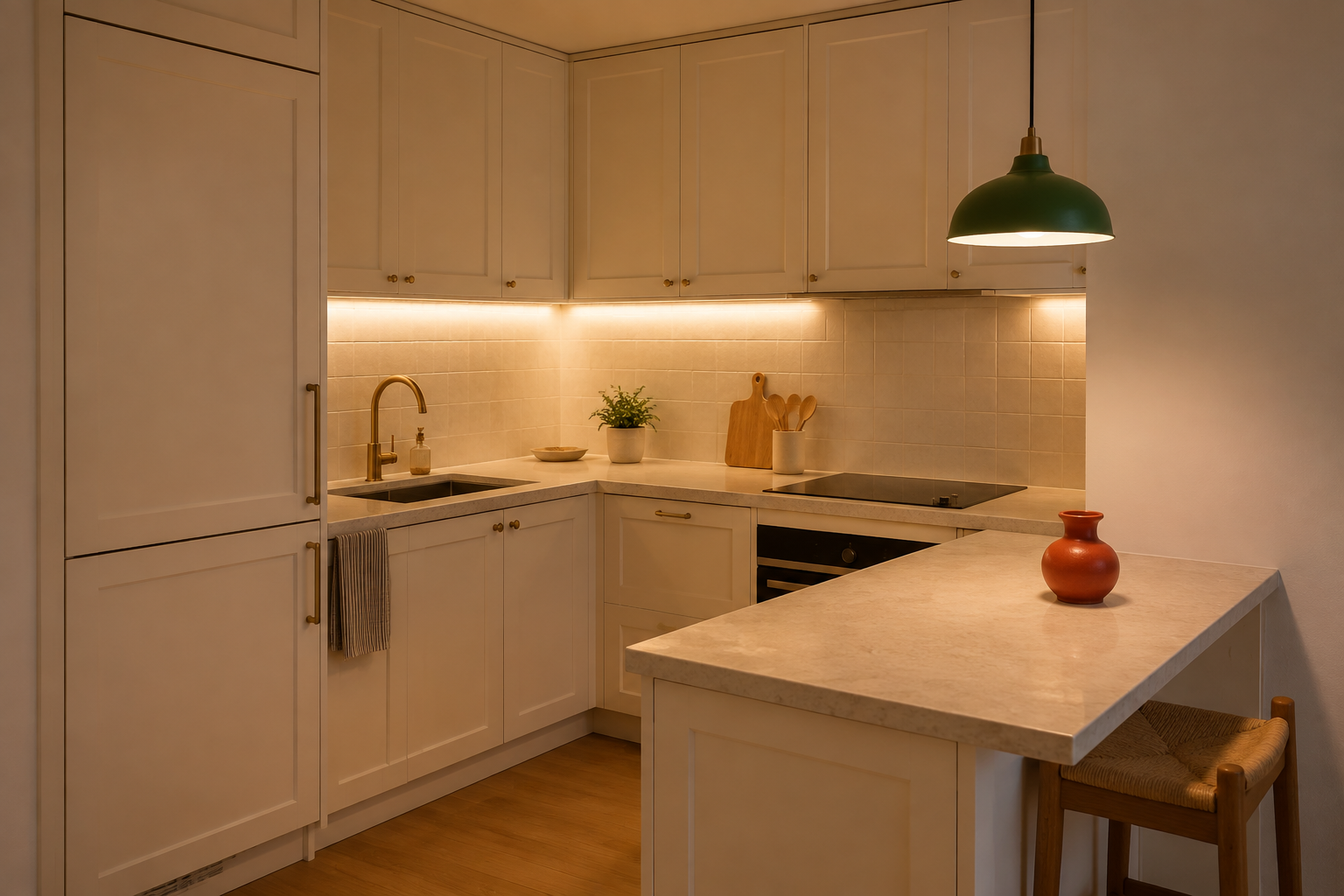
A small kitchen changes completely with three layers of light instead of one: task lighting where you actually work (under the cabinets, over the sink), one warm accent source at a different height than the ceiling fixture, and whatever natural light the room already gets used to its full potential. None of these require an electrician or a landlord’s permission. All three together do more for how a kitchen feels than paint, decor, or new hardware ever could on their own.
Why One Overhead Fixture Isn’t Enough
A single ceiling fixture creates flat, shadowless light from directly above, which sounds like it should be enough until you’re actually standing at the counter and your own body is blocking the light onto exactly the spot you’re cutting on. Overhead-only lighting also flattens texture across the whole room, wood grain, tile, even skin tone under it look duller than they do under layered light.
The fix isn’t a brighter bulb in the same fixture. It’s adding light sources at different heights and for different purposes, so no single source is doing all the work and no single shadow, yours included, can block the light where you actually need it.
If lighting is one part of a bigger decor refresh you’re planning, meaning shelving, hardware, and color are changing too, The Complete Guide to Decorating a Small Kitchen covers the full order to tackle those changes in, with lighting first for exactly this reason.
Add Task Lighting Where You Actually Work
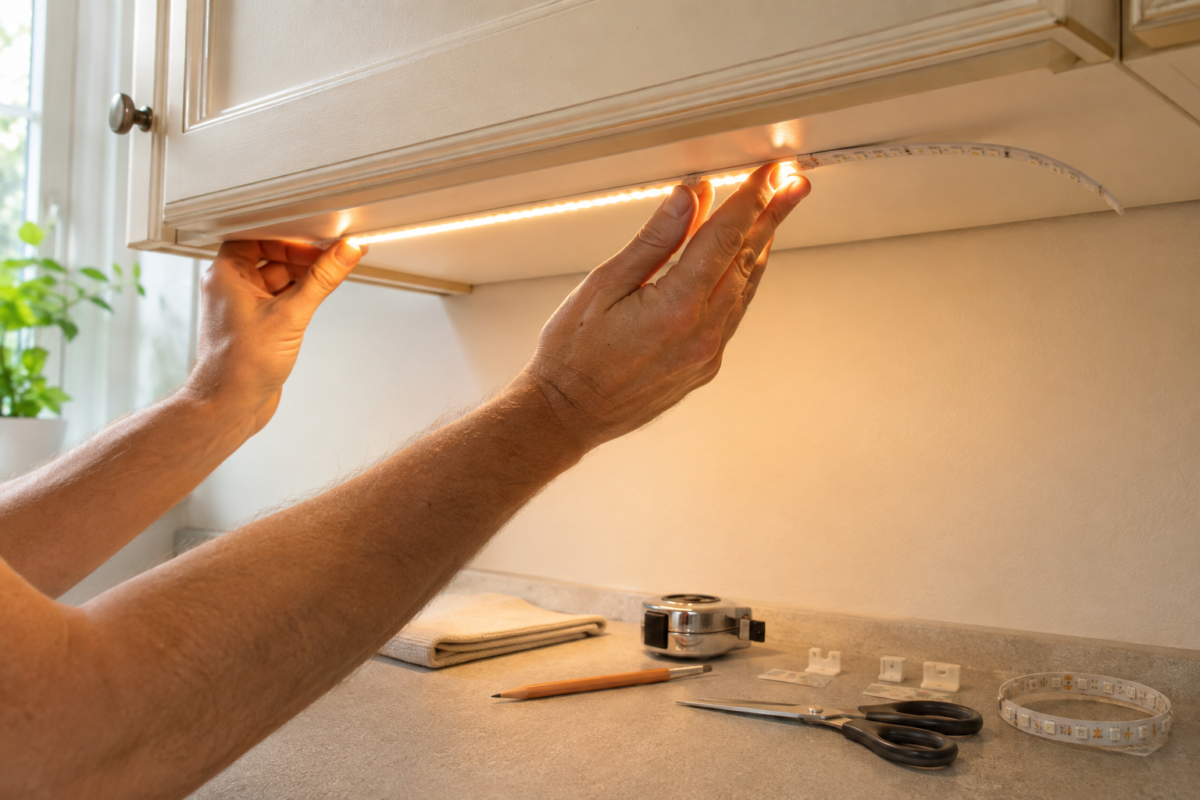
Under-cabinet lighting is the single highest-impact, lowest-effort lighting upgrade available in most small kitchens. A plug-in LED strip mounted under the upper cabinets throws warm, even light directly onto the counter below, exactly where you’re chopping, reading a recipe, or wiping up a spill, without any wiring or electrician involved.
Most under-cabinet strip kits run $20-$40 and install with adhesive backing in under thirty minutes. Look for a warm color temperature, roughly 2700K to 3000K, rather than the cooler, bluer light common in office lighting, since warm tones read as inviting in a kitchen where cooler ones tend to feel clinical.
If your sink sits under an upper cabinet, a small puck light or the same LED strip aimed down over the sink solves a second common dead zone, since sinks are frequently the darkest working spot in a small kitchen even with the main overhead fixture on.
Add One Warm Accent Source at a Different Height
A pendant light, a plug-in sconce, or even a well-placed lamp on an open shelf adds a second light source at a height and angle the ceiling fixture can’t provide, which is what actually breaks up the flat, single-source glow most small kitchens are working with.
A plug-in pendant kit, hung from a hook rather than wired into the ceiling, is the rental-friendly version of this upgrade. Hang it over a peninsula, a small kitchen table, or any stretch of counter that could use a warmer, lower light source in the evening. These kits typically run $40-$90 and require zero electrical work, just a hook, a cord, and an outlet within reach.
A plug-in wall sconce works the same way for a kitchen without the counter space for a hanging pendant, adding warm, directional light from the wall rather than straight down from the ceiling.
Use Natural Light Before Adding More Artificial Light
Before layering in new fixtures, take stock of what natural light your kitchen already gets and whether it’s being blocked or muted unnecessarily. A heavy curtain, a dark window film, or furniture positioned in front of a window can cut a room’s daylight by half or more, in a kitchen that’s often already working with just one window to begin with.
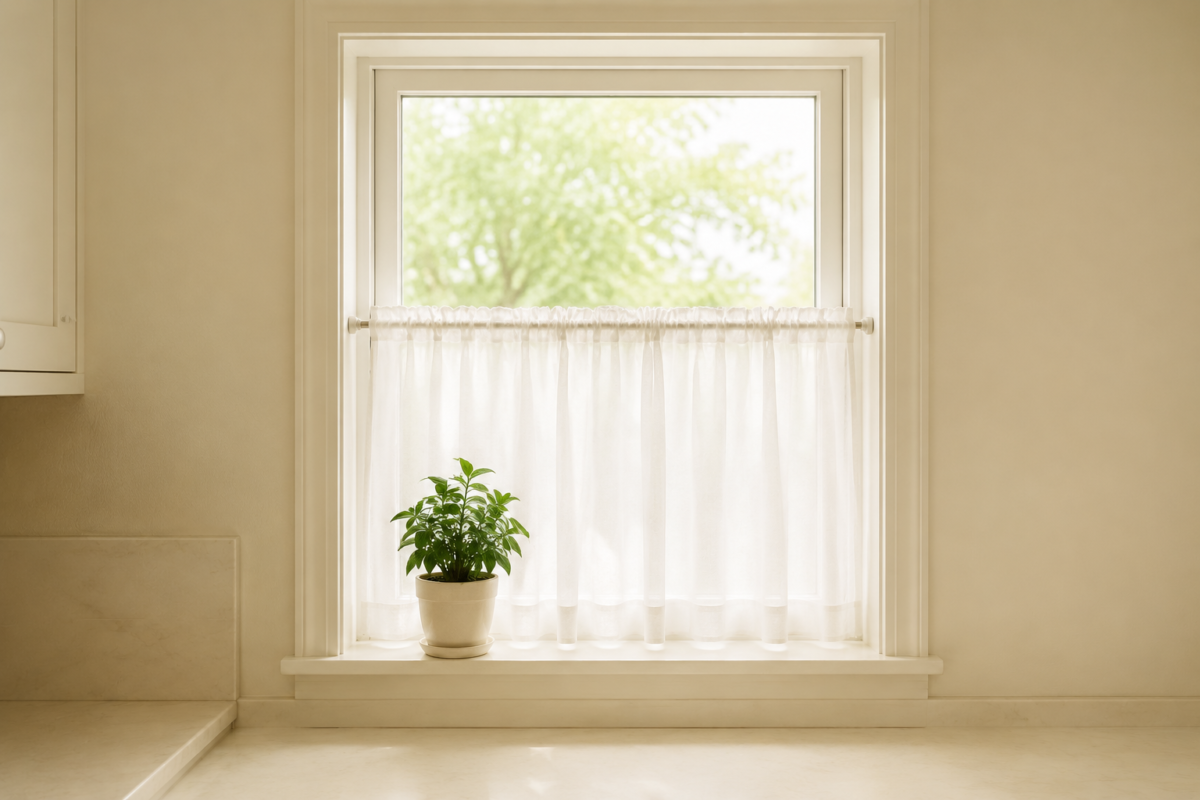
A sheer or café-style curtain, rather than a heavy blackout panel, lets daylight through while still offering privacy, and it’s a simple swap if your current window treatment is doing more blocking than filtering. Mirrors or reflective surfaces, a small mirror on an open wall, glass-front cabinets, light-colored countertops, all bounce whatever natural light the room does get further into the space rather than letting it stop at the first surface it hits.
Get the Bulb Temperature Right Across Every Fixture
Mismatched bulb temperatures across a kitchen’s different light sources, one cool white overhead bulb and one warm LED strip, for example, create a visually jarring effect where the room feels unfinished even with enough total light. Consistency matters here more than brightness.
Stick to warm white, roughly 2700K to 3000K, across every fixture in the kitchen for a cohesive, inviting feel. If you genuinely need brighter, cooler light for a specific task, like reading fine print on a recipe, a small dimmable or adjustable-temperature bulb in just that one fixture is a better fix than mismatching the whole room’s overall tone.
What a Well-Lit Small Kitchen Actually Feels Like
Picture that same 6pm dinner prep again, now with warm light spilling across the cutting board from under the cabinets, no shadow from your own body blocking the counter, and a pendant glowing softly over the peninsula behind you. The room isn’t bigger. It just finally has enough light, in the right places, to actually feel good to stand in.
Frequently Asked Questions
What’s the fastest lighting upgrade for a small kitchen? Adhesive under-cabinet LED strip lighting. It requires no wiring, installs in under thirty minutes, and directly fixes the most common dead zone in a small kitchen, the counter itself.
Can I add pendant lighting to a rental kitchen without wiring? Yes. Plug-in pendant kits hang from a hook and run on a standard cord to a nearby outlet, giving you the visual effect of a hardwired pendant without any electrical work or landlord approval needed.
What bulb temperature works best in a small kitchen? Warm white, roughly 2700K to 3000K, across every fixture for a cohesive, inviting feel. Cooler, bluer light tends to read as clinical rather than warm in a kitchen setting.
Does better lighting actually make a small kitchen feel bigger? Layered lighting doesn’t add square footage, but it does eliminate the shadows and flat glare that make a small kitchen feel dim and cramped, which often reads as the room feeling more open even though nothing physically changed.
Related Reading
- The Complete Guide to Decorating a Small Kitchen
- Open Shelving Styling That Doesn’t Look Cluttered
- Kitchen Decor on a Real Budget
- Kitchen Decor (parent category)
- Small Kitchens (parent hub)