Table of Contents
Walk into two rentals with identical floor plans, identical white walls, identical basic mini-blinds, and one will feel like a real home while the other feels like a waiting room. The wall color is the same. The layout is the same. What’s different, almost every time, is the rug, the curtains, and the lighting.
These three purchases do more visual work per dollar than anything else in a rental, and unlike wallpaper or hardware swaps, none of them require any permission, any tools beyond what fits in a junk drawer, or any risk to a security deposit. This guide covers all three in the order that gives you the most impact for the effort: rugs first, since they anchor the whole room, then curtains, then lighting.
Rugs: The Foundation Everything Else Sits On
A rug does more than cover flooring you might not love. It defines a room’s zones, softens hard surfaces underfoot, and gives the whole space a sense of intentional grounding that bare floor simply doesn’t. In a rental, it’s also entirely reversible, which makes it close to zero-risk as a decorating investment.
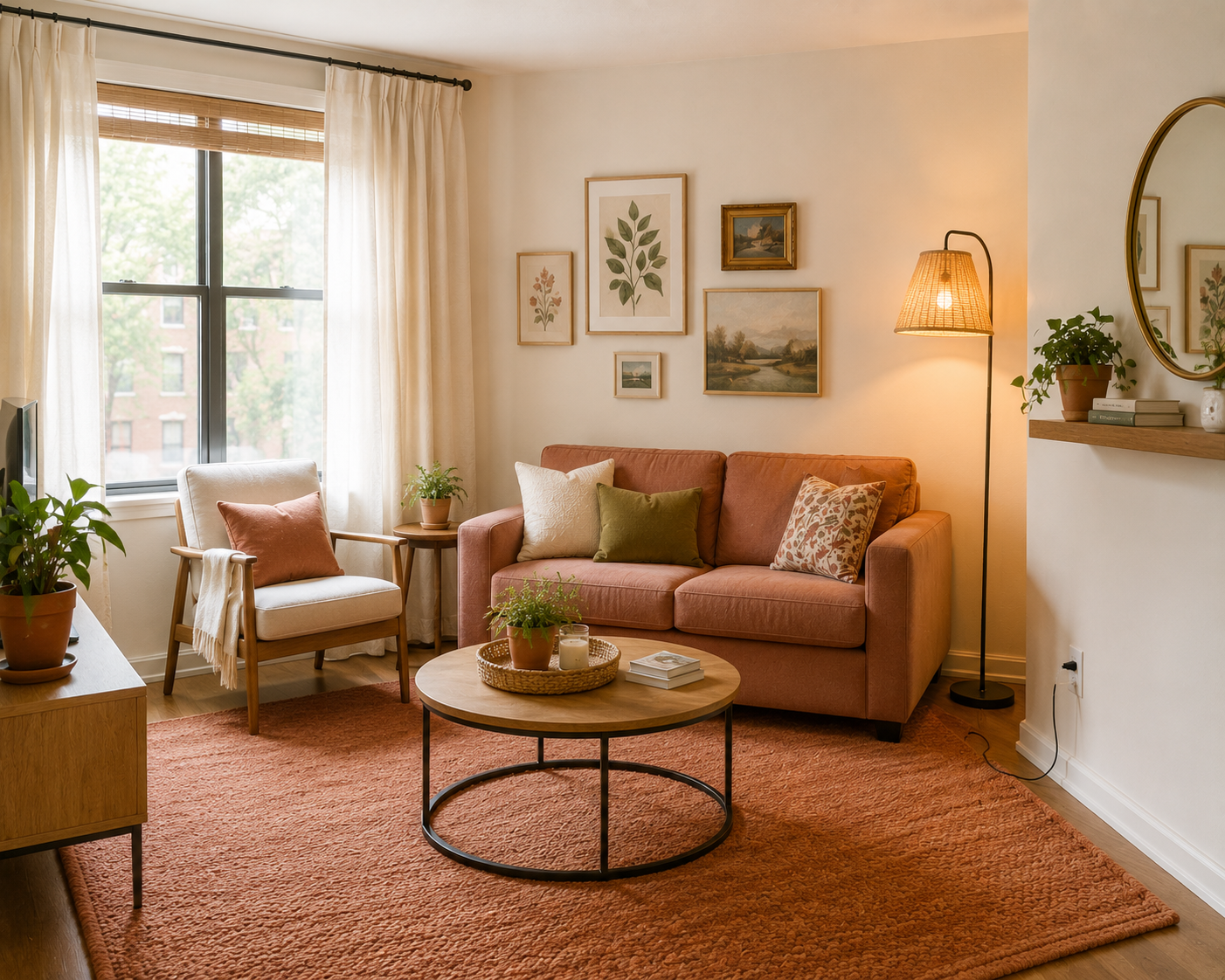
Size correctly, or the effect falls apart. The single most common rug mistake is buying too small. A rug that only reaches the front legs of a sofa reads as an afterthought no matter how nice the rug itself is. For a living area, aim for a rug large enough that all major seating pieces sit at least partially on it, ideally with the front legs of every chair and the sofa resting on the rug’s surface. For a bedroom, a rug that extends at least 18 to 24 inches beyond the sides and foot of the bed creates the same grounded effect.
Choose material based on the room, not just the look. A wool or wool-blend rug holds up well in a living room with regular foot traffic and resists staining better than many synthetic options. Jute and other natural fibers bring texture and warmth but can be harder to clean if spills happen often, better suited to lower-traffic areas or under a dining table where a rug pad can help. Washable rugs, an increasingly available category, are worth the slightly higher price in high-traffic zones like an entry or in front of a kitchen sink.
A rug pad isn’t optional. Beyond preventing slipping, a quality rug pad protects rental flooring from wear patterns and can prevent color transfer from certain rug dyes onto vinyl or laminate flooring underneath. This is a small additional cost that meaningfully reduces the risk of a flooring-related deposit deduction.
Layer rugs deliberately in open layouts. In a studio or open-plan rental, using a distinct rug for each zone (living, sleep, dining) is one of the most effective non-permanent zoning tools available, covered in more depth in Zoning a Studio Without Walls or Furniture Dividers. Choose rugs within a similar tone family so the transition between zones feels coordinated rather than visually chopped up.
Curtains: The Single Highest-Impact Textile Swap
Most rental units come with basic mini-blinds or, in some cases, nothing at all on the windows, and curtains are consistently one of the most underused upgrades available, given how much they change a room’s overall feel for a relatively modest cost.
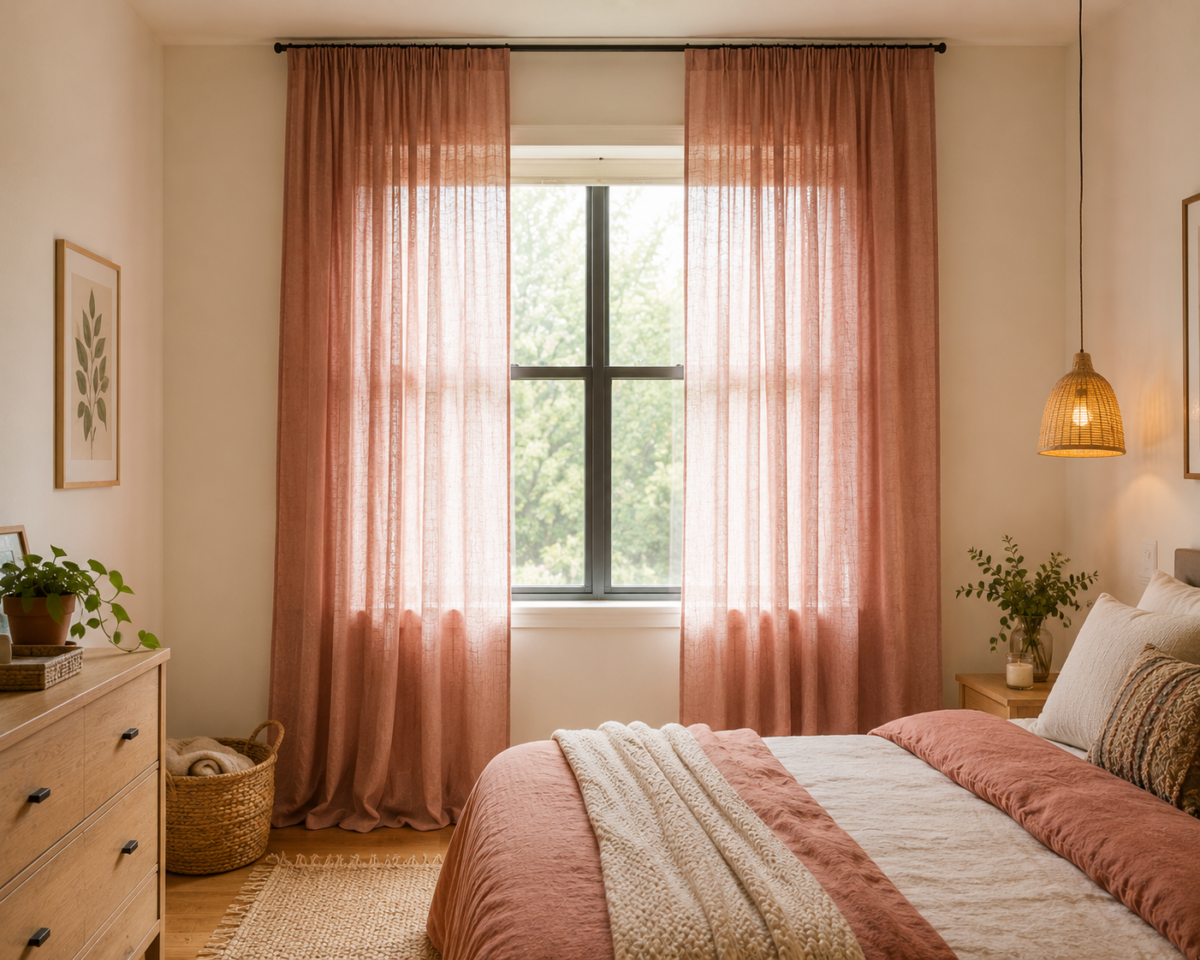
Hang high, not at the window frame. Mounting curtain rods close to the ceiling, rather than directly above the window itself, stretches the room’s vertical sightline and makes ceilings feel taller than they are. This single placement decision matters more than the fabric choice or color in terms of overall visual impact.
Tension rods and Command-rated brackets both work. A tension rod, wedged between two walls or inside a window frame, requires zero permanent installation and works well for lightweight to medium curtain fabric. For a rod mounted directly on the wall above the window, weight-rated Command hooks or brackets (covered in more depth in Command Strips and Adhesive Hooks Worth Trusting) handle most standard curtain rod weights without issue.
Match curtain color to wall color for a continuous sightline. Curtains in a close or identical tone to the wall color blend into a single uninterrupted surface rather than creating a visual break partway across the room. This is especially useful in a small studio or apartment where every visual “stop” the eye makes reads as the room ending sooner than it actually does.
Choose fullness over a single thin panel. A single skimpy panel barely covering the window reads as unfinished no matter how well it’s hung. Two panels with enough width to fully cover the window when closed, or a single panel roughly one and a half to two times the window’s width when gathered, gives curtains the fuller, more finished look that makes the biggest visual difference.
Blackout liners are worth adding separately if privacy or light control matters. Rather than buying a heavier, less flexible blackout curtain outright, a separate blackout liner clipped behind a lighter decorative curtain gives you both function and style without compromising on either.
Lighting: The Layer That Changes How a Room Feels After Dark
Most rentals default to a single, harsh overhead light source per room, and it’s one of the most fixable problems in the entire apartment, since almost none of the solutions require any electrical work at all.
Plug-in pendant lights solve the “no ceiling fixture” problem. A pendant light designed to plug into a standard outlet, with the cord routed along the ceiling using small adhesive clips or hooks, brings genuine ambient lighting to a room that either has no ceiling fixture or one you don’t want to permanently alter. This is one of the highest-impact lighting upgrades available in a rental and requires no electrician, no landlord approval, and no permanent change.
Layer three light sources per main room, when possible. A single overhead fixture creates flat, shadowless light that reads as clinical rather than warm. Adding a floor lamp, a table lamp, and one accent source (a plug-in sconce, a small string of warm-toned lights) creates layered pools of light that make a room feel considered and lived-in, especially in the evening.
Choose warm-toned bulbs consistently. Bulbs rated around 2700K to 3000K produce a warm, inviting light closer to candlelight or early evening sun, compared to the cooler, bluer light of bulbs rated 4000K and above, which reads as more clinical or office-like. Keeping every bulb in a room at a consistent warm temperature avoids the visually jarring effect of mismatched lighting.
Dimmer plugs add control without rewiring anything. A plug-in dimmer, positioned between the lamp and the outlet, lets you adjust brightness on any lamp without touching the actual wiring or fixture, useful for a floor or table lamp that needs to work for both bright daytime tasks and low evening ambiance.
Address dark corners specifically. Every room has at least one corner that stays dim regardless of the main light source. A single well-placed floor lamp in that exact spot does more to make the whole room feel finished than an additional overhead fixture would, since it’s solving the specific problem rather than just adding more general brightness.
Budgeting Across the Three: Where to Spend and Where to Save
Not all three purchases need equal investment, and knowing where quality genuinely matters versus where a budget option performs just as well helps stretch a decorating budget further without a weaker result.
Spend more on the rug. A rug covers the largest surface area of the three and takes the most physical wear, foot traffic, furniture legs, the occasional spill. A higher-quality wool or wool-blend rug genuinely lasts longer and resists matting and staining better than a budget synthetic option, which matters since a worn-looking rug undercuts the polish of everything else in the room. This is the one place in this trio where the price difference tends to show up visibly over time.
Save on curtain hardware, spend on the fabric. A basic tension rod or a simple, weight-rated bracket performs just as well functionally as an expensive designer rod, since its job is purely structural and mostly hidden once curtains are hung. The fabric itself is what’s visible and what affects how the room feels, so it’s worth prioritizing fuller panels in a quality, opaque-enough fabric over an expensive rod holding thin, skimpy curtains.
Spend on bulbs, save on fixtures. A basic, inexpensive lamp with a consistently warm-toned, quality bulb will look and feel better than an expensive designer fixture paired with a mismatched or overly cool-toned bulb. Bulb temperature affects the entire room’s mood far more than the fixture’s design does, which makes it the smarter place to prioritize spending within the lighting category.
Rugs, curtains, and lighting aren’t separate decisions made in isolation, they compound. A well-chosen rug grounds a seating area; curtains hung at ceiling height stretch the room upward and frame the window; layered lighting fills in the warmth that daylight alone can’t provide once the sun goes down. Done together, in a coordinated tone palette per the color continuity principle covered in Making a Studio Feel Bigger Than It Is, these three purchases consistently do more to make a rental feel like an actual home than any single larger investment would on its own.
A Practical Order to Tackle This In
If budget or time means doing this in stages rather than all at once, start with lighting, specifically one warm-toned floor or table lamp in whichever room feels the most flatly lit right now. It’s the cheapest single fix on this list and has an immediate, noticeable effect the very first evening. Curtains come next, since ceiling-height placement is free if you already own curtains and just need to reposition the rod. Rugs, generally the largest single expense of the three, round out the room once the other two are in place.
Frequently Asked Questions
What’s the single best decor purchase for a rental apartment? Curtains hung close to the ceiling rather than at the window frame. They stretch the room’s vertical sightline more than almost any other single change, cost relatively little, and require no permanent installation with a tension rod or weight-rated adhesive bracket.
How do I choose the right rug size for a rental living room? Size it so all major seating pieces, at minimum the front legs of the sofa and any chairs, rest on the rug. A rug that only partially reaches under the furniture reads as too small no matter how nice the rug itself is.
Can I add better lighting to a rental without an electrician? Yes. Plug-in pendant lights with the cord routed along the ceiling, floor and table lamps with warm-toned bulbs, and plug-in dimmers all add real ambient lighting without touching any wiring or requiring landlord approval.
Does curtain color matter if I can’t paint the walls? It does. Matching curtain color to your existing wall color creates a continuous, uninterrupted sightline across the room, which is especially useful in a small space where visual “stops” make the room read as smaller than it is.
How many light sources should a rental living room have? Aim for at least three: an overhead or general source, a floor or table lamp for warmth, and one accent source like a plug-in sconce. A single overhead fixture alone tends to create flat, clinical-feeling light, especially after dark.
Related Reading
- The Complete Guide to Rental-Friendly Decor — the full system this textile and lighting guidance fits into, covering walls and hardware too.
- Command Strips and Adhesive Hooks Worth Trusting — weight-rated hanging solutions for curtain rods and any wall-mounted lighting.
- Removable Wallpaper That Actually Comes Off Clean — the wall layer that pairs with these textiles for a fully finished room.
- Making a Studio Feel Bigger Than It Is — the color and sightline principles that inform curtain and rug tone choices.
- Parent Category: Rental-Friendly Decor
- Parent Hub: Apartments & Rentals