Table of Contents
Waiting for a free Saturday to declutter is one of the most reliable ways to make sure decluttering never actually happens. A genuinely open, unscheduled day is rare, and even when one shows up, it’s easy to spend it recovering from the week rather than tackling a project that feels like it needs hours of sustained energy to even start.
The twenty-minute method works because it removes that requirement entirely. It treats decluttering as a series of small, contained sessions that fit into a normal week rather than one large project that needs a dedicated block of free time. Twenty minutes, done consistently, adds up to real, lasting change in a way that waiting for the perfect free day almost never delivers.
Why Twenty Minutes Specifically
Twenty minutes isn’t an arbitrary number. It sits at a specific point that makes it both genuinely useful and genuinely low-pressure, long enough to complete a real, defined task, short enough that starting doesn’t require significant motivation or a cleared schedule.
It’s short enough to fit almost anywhere. Before making dinner, during a work break, while waiting for laundry to finish, twenty minutes slots into gaps that already exist in a normal day without requiring any schedule rearranging.
It’s long enough to finish something. Unlike a five-minute session, which often ends right as real progress starts happening, twenty minutes is enough time to fully sort a drawer, a shelf, or a small defined area from start to completion, including putting items away or setting them aside for donation.
It creates a natural stopping point. A timer running out gives permission to stop, even mid-task if needed, without the guilt of an “unfinished” open-ended project. This matters more than it seems, since open-ended decluttering sessions are far more likely to be abandoned partway through out of sheer fatigue.
It forces faster decision-making, which is often exactly what’s needed. With unlimited time, it’s easy to overthink every single item. A defined time limit shifts decisions toward quicker, more confident ones, which tends to produce results people are actually happy with rather than choices agonized over for no real benefit.
Setting Up a Session for Success
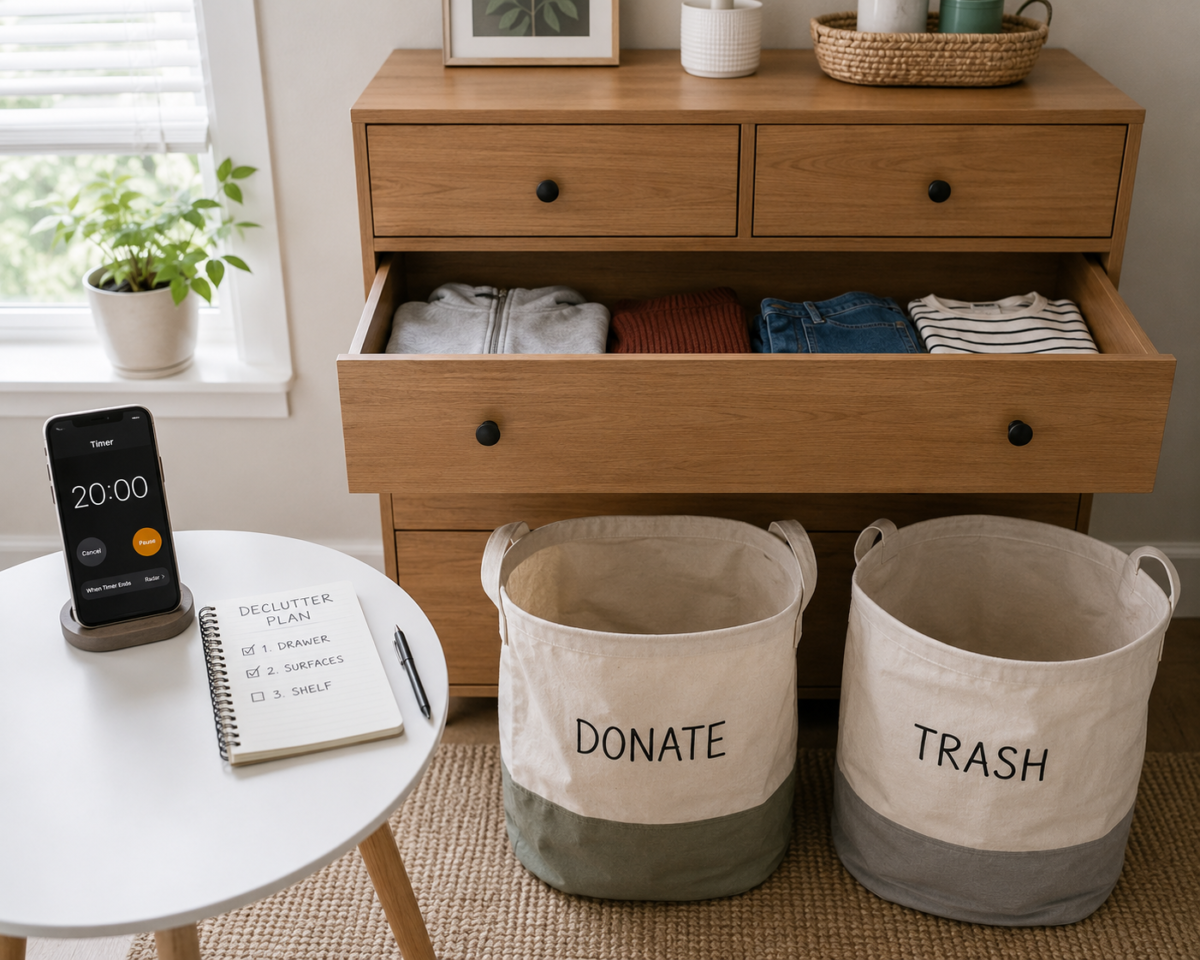
A few small preparation steps, done before the timer even starts, make the actual twenty minutes noticeably more productive.
Pick the specific space before starting the timer. Deciding what to tackle while the clock is already running wastes minutes that should go toward actual sorting. Choose one drawer, one shelf, or one small, well-bounded area in advance, ideally the night before or the morning of the session.
Have two or three bags or boxes ready: keep, donate, discard. Setting these up before starting means there’s no pause mid-session to go find a bag, which can be enough of an interruption to lose momentum entirely.
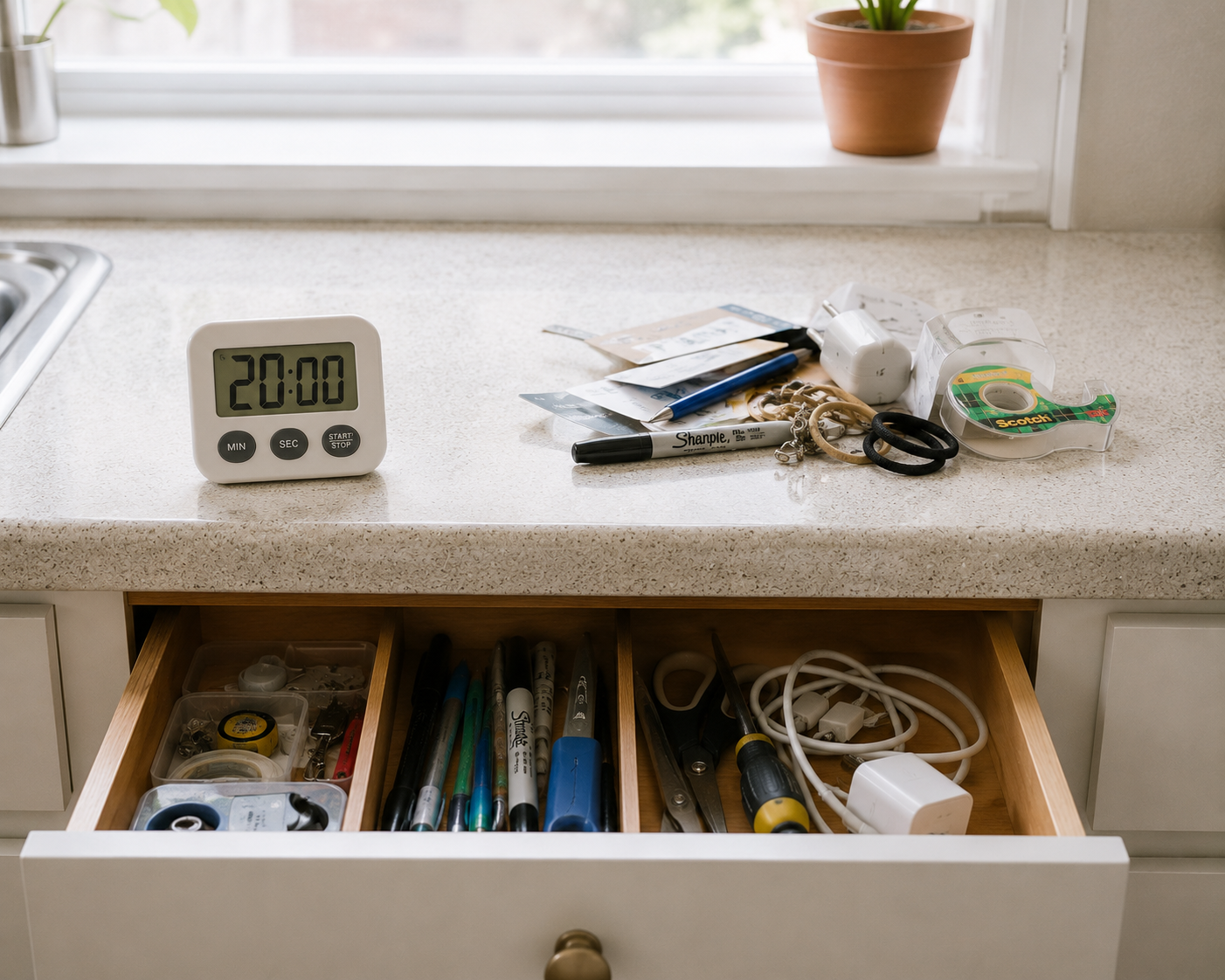
Set a visible timer, not just a mental estimate. A phone timer, a kitchen timer, anything with a clear countdown keeps the session honest and prevents it from either running short (losing the benefit of a real, sustained push) or running long (defeating the purpose of a low-pressure, time-bound session).
Remove obvious distractions for the twenty minutes. Phone notifications, a show playing in the background, anything that competes for attention reduces how much actually gets accomplished in the limited window. Twenty minutes of genuine focus accomplishes more than forty minutes of distracted, start-stop effort.
What to Tackle in a Single Session
Choosing the right scope for a twenty-minute session matters as much as the session structure itself. Too large a space and the timer runs out before real progress is visible; too small and the session ends feeling like it barely did anything.
Right-sized for one session: A single dresser drawer, one kitchen cabinet, a bathroom shelf, a section of a closet (like just the shoes, or just one hanging rod’s worth of clothing), a junk drawer, one shelf of a bookcase, a car’s glove compartment or console.
Too large for one session: An entire closet, a full kitchen, a whole bedroom. These need to be broken into the smaller sub-tasks above, treating each drawer or shelf as its own separate twenty-minute session rather than attempting the whole space at once.
Too small to be worth a dedicated session: A single small basket or a nearly empty drawer that would take three minutes. These can be combined with an adjacent space to make better use of the full twenty minutes, or saved as a quick five-minute task squeezed in separately.
A Simple Structure for the Twenty Minutes
Having a rough internal structure for the session, rather than just diving in without a plan, keeps the time genuinely productive rather than spent deliberating over how to even start.
Minutes zero to two: pull everything out, if the space allows. Seeing the full contents of a drawer or shelf at once makes duplicates and forgotten items far more obvious than sorting piece by piece while everything is still crammed together.
Minutes two to fifteen: sort into keep, donate, discard. This is the bulk of the session, and the goal is fast, confident decisions rather than deliberating extensively over each item. If something takes more than a few seconds of genuine hesitation, set it in a small separate “decide later” pile rather than letting it stall the whole session.
Minutes fifteen to eighteen: put back what’s staying, in an organized way. Returning kept items neatly, rather than just shoving them back in, means the space actually looks and functions better at the end of the session, which reinforces the value of having done it at all.
Minutes eighteen to twenty: bag up donations and trash, and note what’s left for next time. A quick mental or written note on anything in the “decide later” pile, or on the next space to tackle, sets up the following session to start faster.
Making It a Repeatable Habit, Not a One-Time Push
A single twenty-minute session helps, but the real value of this method comes from repeating it consistently, which requires making it easy to return to rather than something that has to be planned fresh every time.
Attach it to an existing habit or routine. Doing a session right before or after something already happening daily or weekly, morning coffee, a specific day’s laundry routine, a regular work break, removes the need to remember or specifically schedule it separately.
Aim for two to three sessions a week rather than daily. Daily sessions sound ambitious but often become the first thing skipped when a day gets busy, which can undermine the whole habit. Two or three sessions a week is genuinely sustainable and still adds up to meaningful progress over a month.
Keep a running list of spaces still needing attention. A simple note, physical or digital, listing which drawers, shelves, or areas haven’t been tackled yet removes the “what should I even do today” hesitation that can otherwise eat into the twenty minutes before the actual sorting even starts.
Note the small wins as they happen, not just a hypothetical finished state. A single organized drawer is a genuine accomplishment on its own, not just a small piece of a much larger unfinished project. Recognizing that keeps the process feeling rewarding rather than like an endless list of tasks still ahead.
When Twenty Minutes Isn’t Enough
Some categories and spaces genuinely don’t fit well into this method, and recognizing those exceptions prevents frustration from trying to force a fast, time-bound approach onto something that needs a different pace entirely.
Sentimental items need a different structure entirely. Rushing decisions about items connected to memories or people under time pressure tends to produce either regret or avoidance, neither of which serves the goal. How to Declutter Sentimental Items Without the Guilt covers a framework built specifically for this category, without the same time constraints.
Large furniture decisions deserve more consideration. Deciding whether to keep, replace, or remove a significant piece of furniture involves practical factors, cost, how it fits the space, whether a replacement is realistic, that don’t resolve well in a fast, twenty-minute window.
A genuinely overwhelming space might need a first, longer session to get oriented. For an area that’s been neglected for a long time, a slightly longer initial session, perhaps thirty to forty-five minutes, just to sort into rough categories, can set up faster twenty-minute follow-up sessions afterward. This is the exception rather than the rule, and it’s worth returning to the standard twenty-minute structure as soon as the space feels more approachable.
How This Method Compares to a Full Weekend Declutter
It’s worth being honest about the trade-offs between this approach and the more traditional full-day decluttering push, since each has situations where it genuinely works better.
A full-day session can cover more ground at once, when it actually happens. If a whole weekend is genuinely free and the motivation is there, tackling an entire room in one sustained push does produce faster overall results than the same room broken into a dozen twenty-minute sessions spread across several weeks.
The twenty-minute method wins on reliability. A full free day, especially one with enough energy left over to spend it decluttering rather than resting, is genuinely rare for most people with jobs, family responsibilities, or simply a full life. A method that doesn’t depend on that rare circumstance gets far more consistently applied over time, even if any single session accomplishes less.
The two approaches aren’t mutually exclusive. A occasional longer session, when a free block of time genuinely does show up, can tackle a bigger space in one push, while the twenty-minute method handles everything else in between. Treating this as an either-or choice isn’t necessary; using both as they fit naturally into a given week or weekend tends to produce the best overall results, and neither approach is inherently more correct than the other, only more or less suited to the actual time available in a given week.
Fitting This Into a Genuinely Packed Week
The method works, but only if it actually gets scheduled realistically around a busy week rather than treated as one more thing competing for time that doesn’t exist.
Look for natural in-between moments rather than carving out new time. The twenty minutes between finishing work and starting dinner, or while a video call waits for other participants to join, are exactly the kinds of pockets this method is designed to use, rather than requiring a fresh block of dedicated time on an already full calendar.
Lower the bar on weeks that are genuinely too packed for even that. One session in a busy week is still progress, and treating a lighter week as a failure rather than simply a lighter week undermines the sustainability that makes this method work in the first place.
Batch sessions on days that naturally have more flexibility. A weekend morning or a lighter weekday evening can sometimes accommodate two sessions back to back, tackling two small spaces rather than one, without turning into the same overwhelming multi-hour project this method is specifically designed to avoid.
Tracking Progress Without Overcomplicating It
A light way of tracking sessions helps sustain the habit over weeks and months, though the tracking itself should stay simple enough that it never becomes its own source of friction.
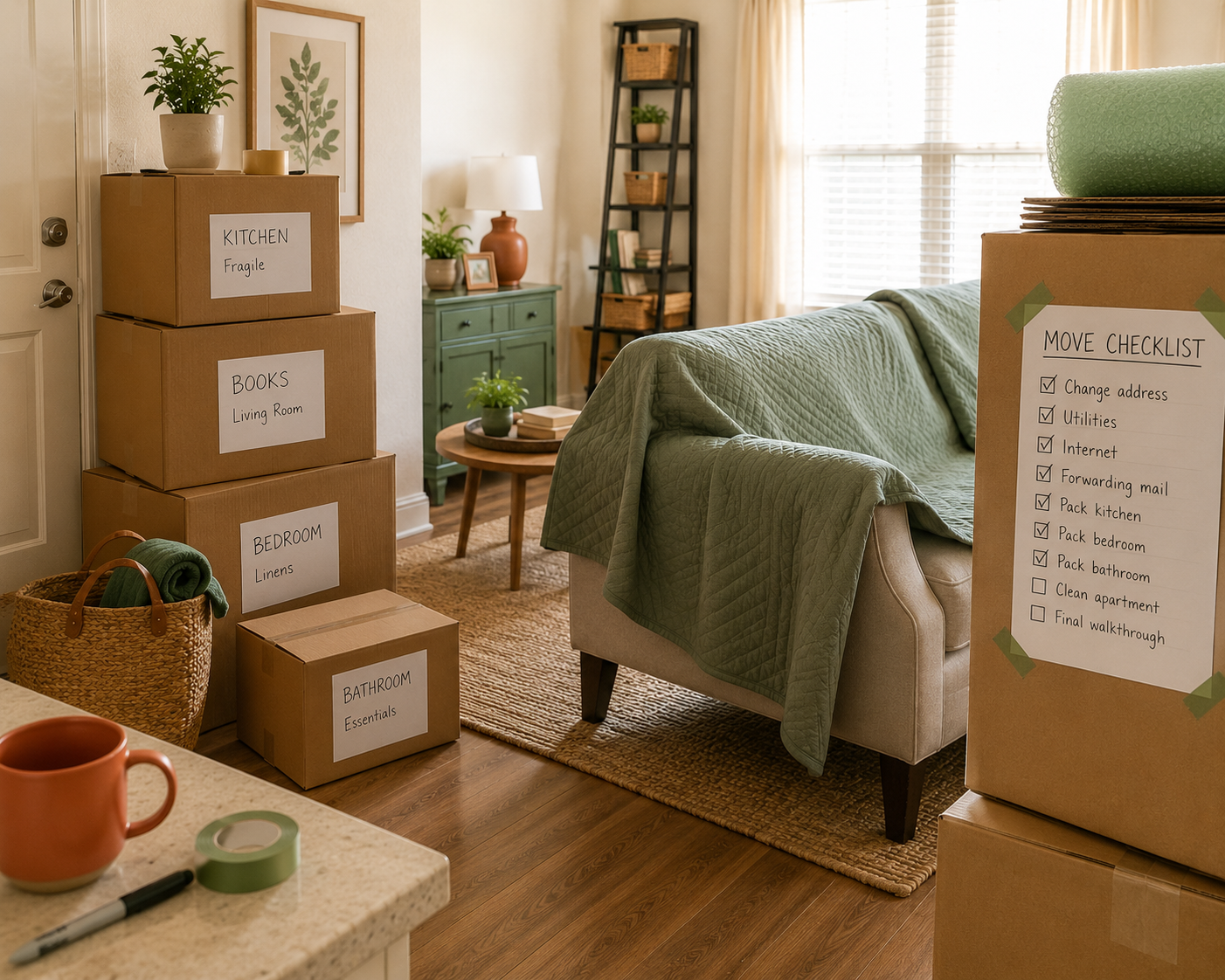
A simple checklist works better than a detailed log. Listing the spaces to tackle, one drawer, one shelf, one cabinet at a time, and checking each off as it’s completed provides enough visible progress to stay motivated, without the overhead of journaling every session in detail.
Before-and-after photos are optional but genuinely motivating. A quick phone photo of a cluttered drawer before starting, and another once it’s sorted, creates a visible record of progress that’s easy to look back on during a week when motivation is lower than usual.
Resist the urge to track every single item removed. Counting exactly how many things were donated or discarded can turn into its own time-consuming task that eats into the twenty minutes meant for actual sorting. A rough sense of progress, this drawer’s done, that shelf’s done, is enough to sustain the habit without adding unnecessary overhead.
Frequently Asked Questions
Can twenty minutes actually make a real difference in decluttering a whole apartment? Yes, when done consistently. A single twenty-minute session fully sorts a drawer, shelf, or small defined space, and two to three sessions a week compound into meaningful progress across an entire apartment within a few weeks.
What should I declutter first using the 20-minute method? Start with a single small, contained space like a junk drawer or a bathroom cabinet, since these are low-stakes and can be fully completed within the time limit, building confidence for larger or more difficult spaces later.
How do I stay consistent with short decluttering sessions? Attach sessions to an existing daily or weekly habit rather than scheduling them separately, and aim for two to three sessions a week rather than daily, which tends to be more sustainable over time.
What if I can’t finish a space in twenty minutes? That’s completely normal for larger areas. Note what’s left, stop when the timer ends, and pick up exactly where you left off in the next session, treating the larger space as several smaller sessions rather than one continuous task.
Is the 20-minute method good for decluttering sentimental items? Not usually. Sentimental items typically need more time and a different decision framework than the fast pace this method is built around. It’s better to set those items aside for a dedicated, unhurried session instead.
Related Reading
- The Complete Small-Space Decluttering Guide — the full system this short-session method fits into, covering room order and sentimental items too.
- Where to Start Decluttering When Everything Feels Like Clutter — the room-by-room order to apply this twenty-minute structure to.
- How to Declutter Sentimental Items Without the Guilt — the different, slower approach for the one category this method doesn’t fit well.
- Closet Organization — where to focus a session once a space has been decluttered and it’s time to organize what’s left.
- Parent Category: Decluttering
- Parent Hub: Organization & Storage