Table of Contents
There’s a common misconception that fall reset can wait until the first genuinely cold day. In a small home, that’s usually too late. Fall is the season a small space gets used the hardest, since cold weather pushes everything indoors that summer let spill outside: cooking, hosting, hobbies, and simply spending time at home instead of away from it. Getting the space ready before that shift happens, rather than scrambling once it’s already cold, is what makes the difference between a home that handles the season well and one that feels cramped by mid-November.
This checklist works in three stages tied to how fall actually unfolds: what to do at the first hint of the season changing, what to handle once the transition is fully underway, and what to finish just before winter fully arrives. Each stage builds on the last, so nothing gets rushed all at once on the first cold morning.
Stage One: The First Hint of the Season Changing
The earliest fall signals, cooler mornings, shorter days, the first sweater weather, are the cue to start the swap gradually rather than waiting for a hard freeze. This stage is about bringing warmth back into reach without fully committing the space to winter yet, since early fall often swings between genuinely warm afternoons and cool mornings for several weeks.
Bring one warm throw blanket and a slightly heavier layer of bedding into the bedroom and living room, while keeping lighter summer bedding and throws accessible rather than packed away completely. This overlap period matters more than it might seem, since storing everything from summer on the first cool morning often means digging it back out during a warm afternoon two weeks later.
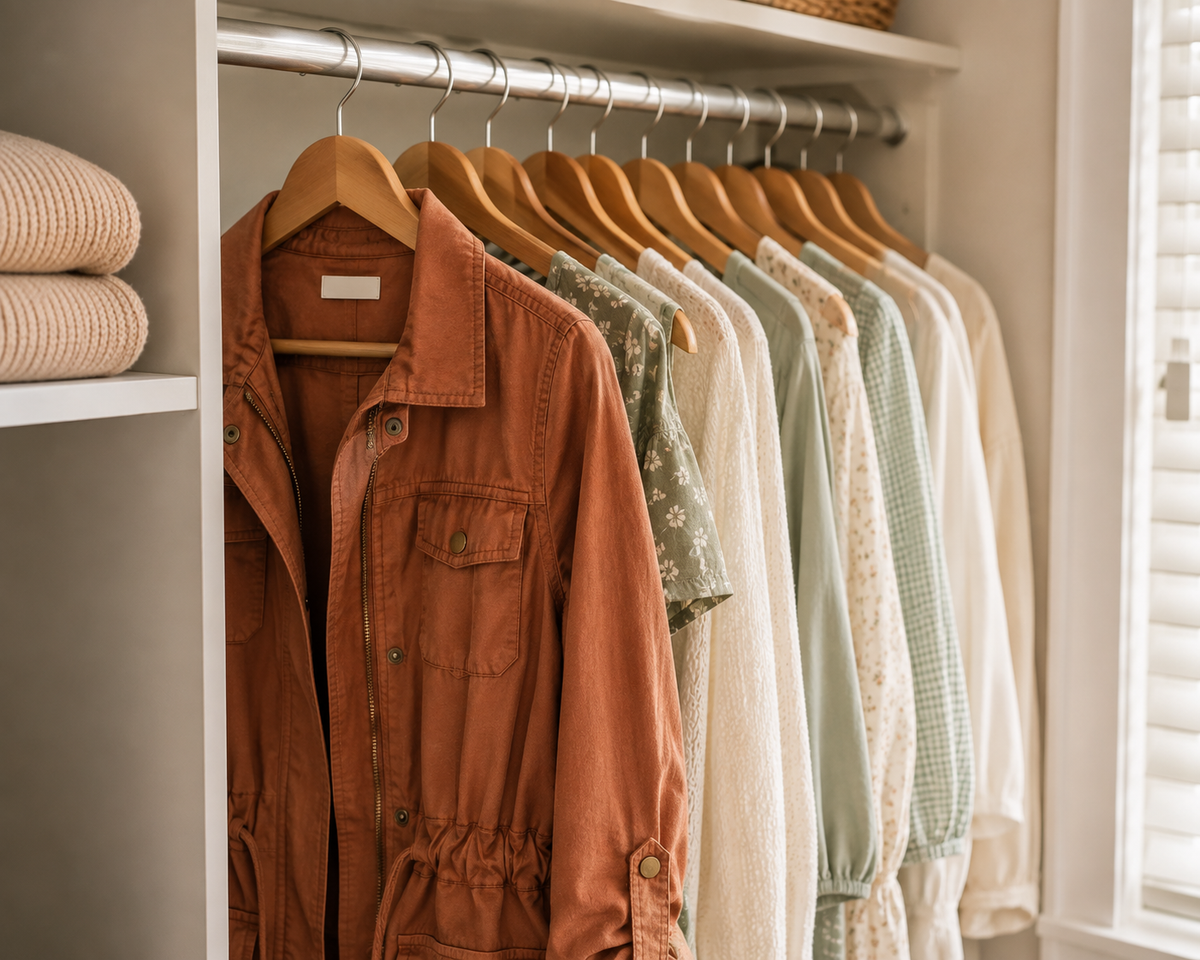
Check the closet for a light-to-medium jacket and move it to the front of the rod, ahead of full winter coats that aren’t needed yet. This is also the moment to do a first pass through summer-specific gear, beach items, sandals, lightweight dresses, and sort into keep, store, and donate, the same three-pile system used at any seasonal transition. Anything not worn even once over the summer is a strong candidate to donate rather than store for another year.
Stage Two: The Transition Is Fully Underway
Once cooler weather has genuinely settled in rather than swinging back and forth, this is the point to complete the full swap rather than continuing to keep both seasons’ items accessible. Summer clothing, sandals, and lightweight bedding move to off-season storage, either vacuum-sealed for soft items or bagged for anything structured, and winter clothing, boots, and heavier bedding take their place on the rod and bed.
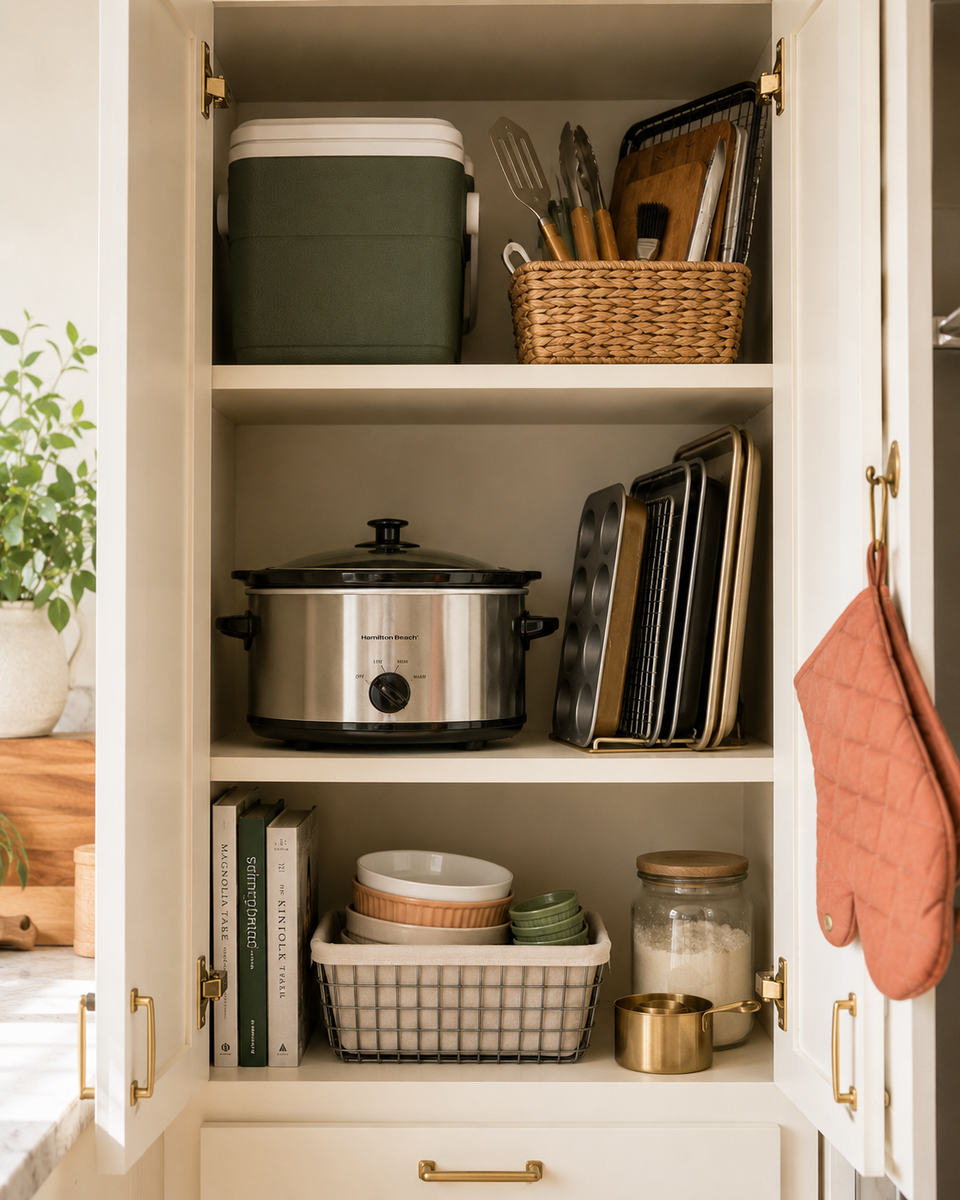
This stage is also when a small home’s cooking and hosting patterns shift noticeably, since fall tends to bring more time spent indoors cooking, baking, and having people over compared to a summer that pulled activity outside. Check the kitchen for anything that got pushed to the back of a cabinet over summer but gets heavy use in fall: a slow cooker, baking sheets, a stockpot for soup season. Move these back to an accessible spot, and move summer-specific items, a cooler, grilling tools, anything tied to outdoor eating, to deeper storage instead.
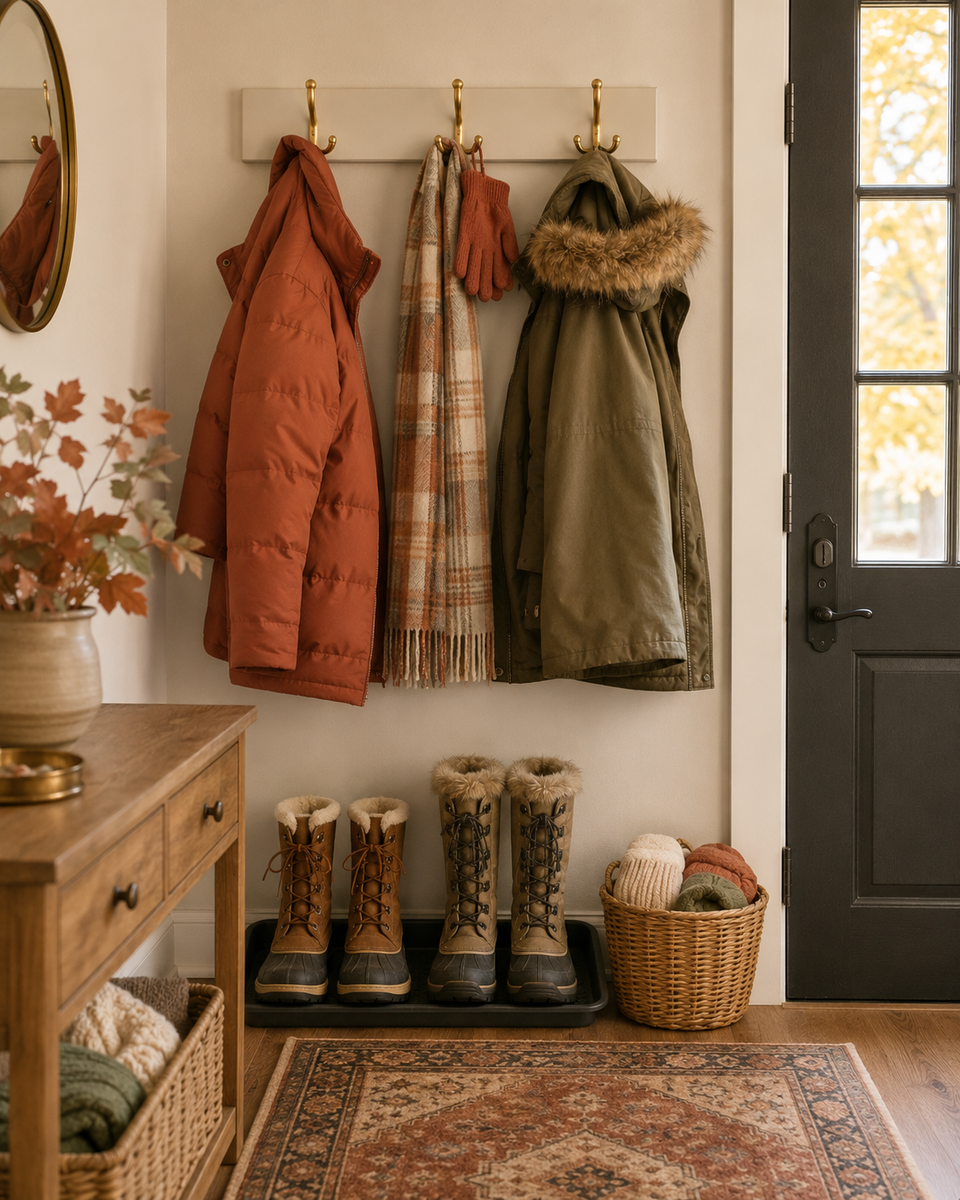
The entryway needs the same full swap. Light jackets and sandals move out, replaced by warmer coats, boots, and an umbrella that’s easy to grab as fall rain becomes more frequent than summer’s occasional storm. An entryway that’s still holding summer gear well into fall becomes cluttered fast, since it’s now handling both the leftover summer items and the new fall additions at once.
Stage Three: The Final Push Before Winter
The last stage happens just before the coldest weather sets in, when a small home needs to be fully ready for the season it’s about to spend the most time in. This is less about swapping clothing (already done in stage two) and more about the maintenance and readiness tasks that matter most once the home is being used constantly for weeks at a time.
Check window seals and any drafts, since a small space loses heat fast through a poorly sealed window, and a draft that’s tolerable in October becomes a real comfort and cost problem by January. A simple draft check, holding a hand near the window frame on a windy day, catches most obvious gaps before they become a full winter of discomfort.
Do a final closet check to confirm winter coats, boots, and cold-weather accessories (hats, gloves, scarves) are all genuinely accessible rather than still buried behind fall transition pieces. A coat that’s technically in the closet but three layers deep behind other clothing might as well not be there on a genuinely cold morning when speed matters.
This is also the point to restock anything specific to winter that runs out fast once the season is in full swing: extra blankets for guests, any weather-specific cleaning supplies (a boot tray for melting snow, for instance), and pantry staples for the kind of slower, heavier cooking that fall and winter both bring.
Why the Three-Stage Order Matters
Doing all of this in a single weekend, waiting for the first cold snap and scrambling to catch up all at once, is the most common reason a fall reset feels overwhelming. Spreading it across the three stages above means each one only asks for a small amount of effort at the moment it’s actually needed, rather than compressing an entire season’s worth of changes into a single rushed day once the cold has already arrived.
The overlap period in stage one specifically exists because fall weather is unpredictable, and committing fully to winter mode too early means undoing that work on an unseasonably warm week. Waiting for stage two’s genuine settling-in point avoids that back-and-forth, while still leaving stage three’s readiness tasks for the moment they matter most, right before the home needs to function at full winter capacity for months at a stretch.
What to Prepare in the Living Room Before the Season Fully Shifts
The living room deserves its own pass in the three-stage sequence, since it’s the room that carries the heaviest daily use once the weather pushes activity indoors. In stage one, bring in one warm throw and a set of slightly heavier pillow covers while keeping the summer versions accessible for any lingering warm evenings. By stage two, once the transition has fully settled, swap the rest of the room’s textiles over completely: lighter rugs get replaced with something warmer underfoot if the home has hardwood or tile floors, and any remaining summer-toned decor moves to storage.
Lighting matters more in fall and winter than most small-home checklists account for, since shorter days mean the living room gets used after dark far more often than it did over summer. Check that lamps and any string or accent lighting are working and positioned where they’ll actually get used through the darker months, rather than discovering a burnt-out bulb on the first genuinely dark evening.
If the living room doubles as a workspace or a place for hobbies, as it often does in a small home, stage three is the moment to make sure that setup is genuinely ready for months of heavier indoor use: a comfortable chair, adequate lighting, and enough surface space for whatever the colder months bring more of, whether that’s reading, a craft project, or simply spending more evenings at home than a summer spent mostly outdoors required.
Hosting Season Starts Earlier Than It Feels Like
Fall brings more indoor hosting than any other season in most small homes, between early holiday gatherings, weekend visitors escaping the cold, and simply more people choosing to meet up indoors once outdoor plans stop being the default. Getting ready for that before it starts, rather than scrambling the week of the first gathering, is worth folding into the three-stage sequence.
By stage two, check that extra seating options (a folding chair, a stool, anything that lives in storage the rest of the year) are accessible rather than buried behind other seasonal items. Stage three is the point to confirm the home has enough extra bedding and towels on hand for an overnight guest, since fall and winter visits are more likely to turn into an overnight stay than a summer visit that ends with someone driving home the same evening.
None of this needs to be elaborate. A single set of guest sheets, one spare blanket, and a folding chair stored somewhere accessible cover most small-home hosting needs without requiring dedicated guest-room space that a small home typically doesn’t have to spare.
FAQ
When should I start my fall reset? Start stage one at the first consistently cool morning, typically several weeks before the season fully turns. Waiting for the first cold snap to start the whole process at once is what makes fall reset feel like a scramble.
What if fall weather in my area swings back and forth for weeks? Keep both a light and a warm layer accessible during that swing period rather than fully committing to one season’s wardrobe. Move to the full stage two swap only once the cooler weather has genuinely settled in.
Do I need to check window seals every single fall? Yes, especially in a rental where you may not know the window’s maintenance history. A quick draft check takes under ten minutes and catches most issues before the coldest weeks of winter make them a bigger problem.
What’s the biggest mistake people make with a fall reset? Waiting until it’s already cold to start any of it. By that point, the closet swap, the kitchen swap, and the entryway swap all compete for the same limited time, turning a gradual process into an overwhelming single-day project.
Related Reading
For the full four-decision framework this checklist follows, The Complete Seasonal Reset Guide covers decluttering, storing, swapping in, and maintenance in more depth.
For the spring version of this same process, The Spring Reset Checklist for a Small Home covers clearing out winter buildup room by room once the season turns again.
For where all this seasonal gear should actually live in a home with no basement or attic, Rotating Seasonal Storage Without a Basement or Attic goes deeper on the storage side of the swap.
For the full category, browse Seasonal Resets under the Seasonal & Maintenance hub, home to every reset checklist and maintenance routine on the site.