
Table of Contents
By March, most small homes are carrying an entire winter’s worth of buildup: heavy blankets that never left the couch, a coat closet packed past capacity, and a general heaviness in every room that’s hard to name but easy to feel the moment the first warm day actually arrives. Spring reset is the moment to clear that out, room by room, before summer’s own version of clutter starts stacking on top of it.
This checklist works through the four rooms that carry the most winter weight in a small home: the bedroom, the living room, the entryway, and the kitchen. Each section covers what to declutter, what to store, and what to bring forward for the season ahead.
Bedroom: Where Winter Bedding and Heavy Clothes Pile Up
The bedroom usually holds the single heaviest concentration of winter buildup in a small home, since both the closet and the bed itself are loaded with cold-weather gear that’s about to become unnecessary for the next six months.
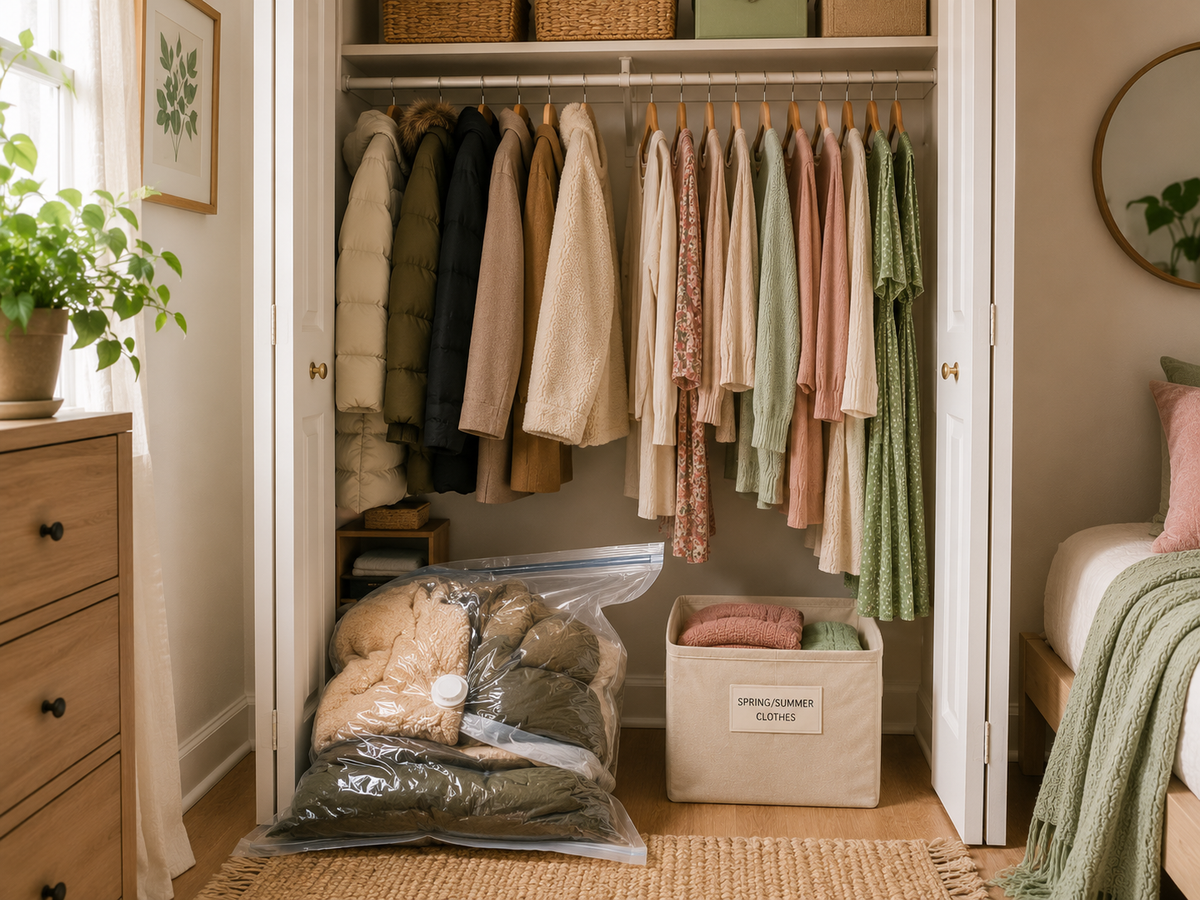
Start with the bed. Heavy comforters, flannel sheets, and extra throw blankets come off and get replaced with lighter bedding, a cotton or linen comforter and a lighter top sheet, that suits warmer nights. Vacuum-seal the winter bedding once it’s clean (never store bedding that hasn’t been washed, since stains and odors set permanently over months of storage) and slide it flat under the bed or onto a high closet shelf.
Move to the closet next. Heavy coats, boots, and bulky sweaters get sorted into three piles: worn regularly and worth keeping for next winter, not touched all season despite being accessible, and genuinely unsure. Anything in the middle pile is a strong candidate to donate rather than store again, since a coat that sat on the rod all winter without getting worn once is unlikely to get worn next winter either. What’s left gets vacuum-sealed or bagged and moved to under-bed storage, freeing the rod and shelf for lighter spring clothing.
Check dresser drawers too, since winter often means thicker socks, long underwear, and heavier pajamas taking up drawer space that spring and summer clothing needs. A quick swap here, moving winter drawer items into the same storage system as the closet’s off-season clothes, frees up the drawers that get opened every single morning.
Living Room: Where Heavy Textiles and Winter Decor Settle In
The living room accumulates a different kind of winter weight: heavy throw blankets left permanently on the couch, winter-specific decor (candles, dark-toned pillow covers, seasonal accents) that’s been sitting out since November, and often a buildup of items that migrated there during colder months when the rest of the home felt less inviting to spend time in.
Swap heavy knit or faux-fur throw blankets for a lighter cotton or linen version, and store the winter ones in a bin or ottoman rather than leaving them draped over furniture where they add visual and physical weight to a small space. Pillow covers work the same way. Rotating from darker, heavier-textured covers to lighter, brighter ones costs very little and changes how the whole room feels within minutes.
Check for any winter-specific decor that’s overstayed its welcome: a scented candle collection leaning into cinnamon and pine, a wreath still on the door, seasonal accent pieces on a shelf or mantel. These get packed away with the rest of the seasonal storage rather than lingering into a season they no longer match.
This is also a good moment to declutter anything that migrated into the living room over winter simply because it felt easier than putting it back where it belonged: stray mail, extra blankets that ended up there instead of the linen closet, board games or projects that took over a corner during months spent mostly indoors.
Entryway: Where Winter Gear Blocks the Door
A small entryway fills up fast in winter with bulky coats, boots, umbrellas, and gloves, often to the point where the space barely functions as a place to actually enter and exit the home. Spring reset is the moment to reclaim it.
Move heavy winter coats out of the entryway entirely and into bedroom closet storage, leaving only a lighter jacket or two accessible for cooler spring mornings and evenings. Winter boots follow the same path, moving to under-bed or closet storage rather than sitting in a pile by the door through a season they’re no longer needed for.
Check umbrellas and rain gear next. Spring typically means more rain than winter in most climates, so this is the moment to make sure a working umbrella and a lighter rain jacket are genuinely accessible rather than buried behind winter gear that’s due to be stored anyway.
If the entryway has any hooks or a bench, this is a good point to check that they’re not overloaded. An entryway that’s easy to move through in thirty seconds sets the tone for the rest of the home’s reset far better than one that’s still cluttered with three months of winter gear nobody’s touched since February.

Kitchen: Where Winter Cooking Habits Leave Their Mark
The kitchen doesn’t carry winter clutter the same visible way the other rooms do, but a season of heavier, slower cooking, soups, roasts, baking, tends to leave specific traces worth addressing at the reset: a crowded spice rack from holiday baking, extra baking sheets and heavy pots pulled out more often than usual, and pantry stock built up for cold-weather comfort meals that won’t get used as often once the weather turns.
Check the pantry for anything genuinely tied to winter cooking that’s unlikely to get used again until next fall, and move it to the back of a shelf rather than the front, where spring and summer staples (lighter grains, fresh produce storage, grilling supplies) can take the more accessible spot.
A quick check of frequently-used tools also pays off here. If a slow cooker or a heavy stockpot got pulled out weekly all winter and is now sitting on the counter unused, it’s worth moving back to deeper storage to free up counter space for whatever gets more use in the warmer months.

A Room-by-Room Order That Actually Sticks
Working through all four rooms in the order above, bedroom first, then living room, then entryway, then kitchen, isn’t arbitrary. The bedroom holds the heaviest concentration of items and the biggest storage payoff, so tackling it first frees up under-bed and closet space the other rooms can use if their own storage runs short. The living room and entryway come next because they’re the rooms guests and family notice first, so clearing them early makes the whole home feel reset even before the kitchen’s smaller adjustments are done. The kitchen comes last because its changes are the lightest touch of the four, more about accessibility than volume.
Doing all four in a single day works for some households, but splitting them across a weekend, two rooms on Saturday and two on Sunday, avoids the burnout that turns a genuinely quick reset into a task people dread repeating next season. The goal isn’t finishing fast. It’s finishing in a way that makes the next seasonal swap easier instead of harder.
What to Skip This Time If You’re Short on Time
Not every part of a spring reset needs to happen in the same weekend, and knowing what’s safe to postpone keeps the task from feeling all-or-nothing. The bedroom closet swap and bed linen change matter most, since they free up the most space and directly affect daily comfort as the weather warms. These are worth prioritizing even if nothing else gets done this round.
The kitchen pantry adjustment and the deeper living room decor swap (pillow covers, candles) are the easiest to push to a second pass later in the month if time runs short. Neither affects daily function the way a crowded closet or an overloaded entryway does, so they can wait a week or two without the home sliding back into winter clutter in the meantime.
What shouldn’t get skipped, even in a short version of the reset, is the declutter step itself. A rushed reset that swaps bedding and coats without pausing to sort the genuinely-unsure pile just delays the same decision to the next seasonal transition, when the pile will be bigger and the decision harder to make with any clarity.
FAQ
How long does a full spring reset take for a small home? Working through all four rooms, bedroom, living room, entryway, and kitchen, typically takes two to three hours if items are already sorted into keep, store, and donate piles as you go rather than all at the end.
What should I do with clothes I’m genuinely unsure about keeping? Set a real deadline. If a coat or sweater has been in the “unsure” pile for two consecutive seasonal resets without being worn, it’s a strong candidate to donate rather than store a third time.
Do I need to wash bedding and coats before storing them for spring? Yes. Anything going into vacuum storage or a bin should be clean first, since stains and odors set permanently over months of storage and are much harder to remove after the fact.
What if my entryway has no closet at all? A slim wall-mounted hook rail and a shoe tray cover most of what a spring entryway needs: a place for a light jacket, an umbrella, and a pair of shoes, without requiring an actual closet.
Related Reading
For the full four-decision framework this checklist follows, The Complete Seasonal Reset Guide covers decluttering, storing, swapping in, and maintenance in more depth.
When the season turns again, The Fall Reset Checklist Before Everything Moves Indoors covers the reverse swap, bringing warmer gear back to the front.
For where all this off-season gear should actually live in a home with no basement or attic, Rotating Seasonal Storage Without a Basement or Attic goes deeper on the storage side of the swap.
For the full category, browse Seasonal Resets under the Seasonal & Maintenance hub, home to every reset checklist and maintenance routine on the site.