Table of Contents
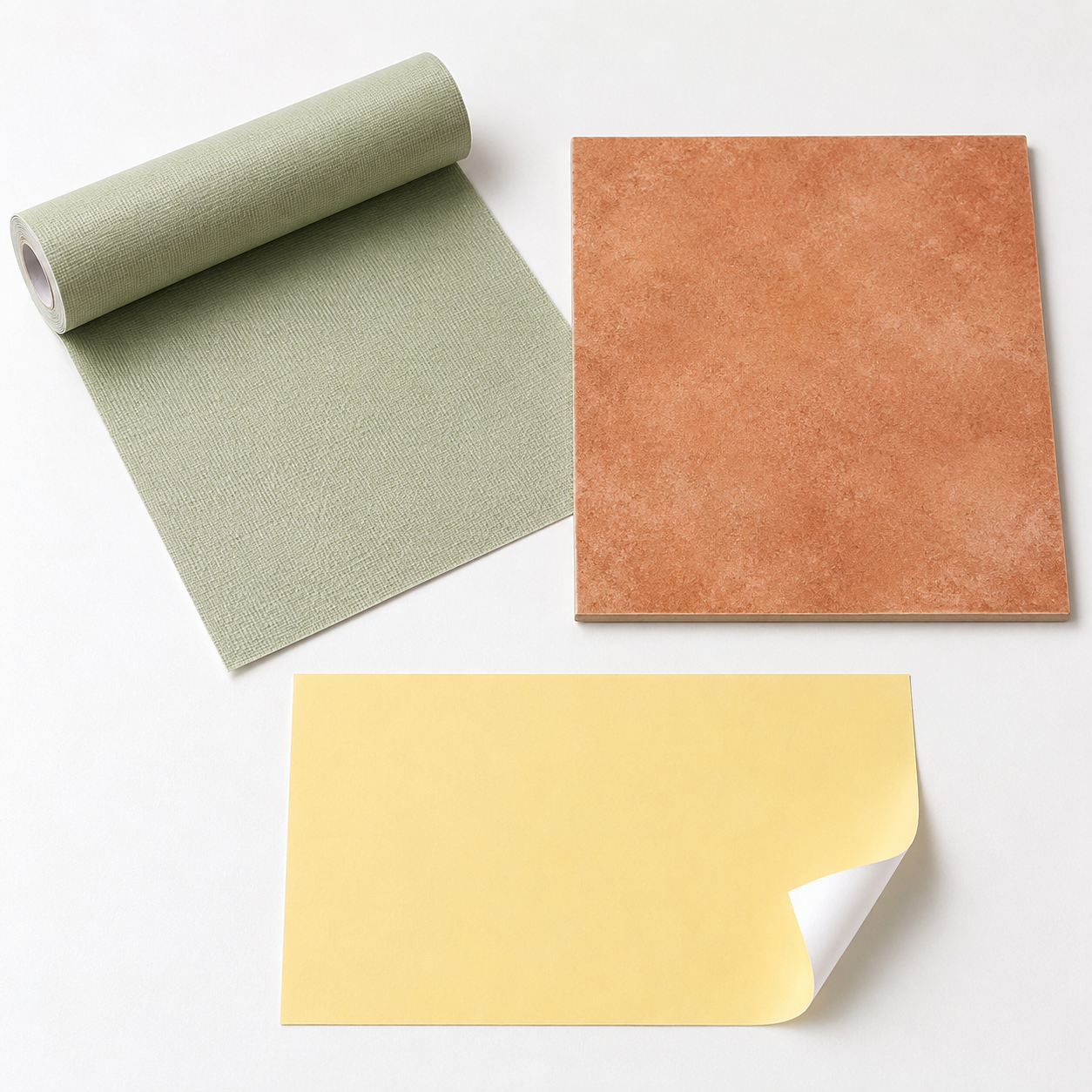
The peel-and-stick products actually worth buying share a few traits: they’re rated specifically for kitchen use rather than general craft or wall decor, they’re thick enough to hold real texture and resist tearing at the edges, and they use a genuinely removable adhesive designed to come off clean rather than a permanent bond marketed as “temporary.” Everything in this guide gets sorted against those three standards, category by category.
What Separates a Good Product From a Bad One
Before getting into specific categories, a few general markers apply across almost every peel-and-stick product. Thickness is the first tell. A product that feels flimsy or paper-thin in the package will behave that way once it’s installed, tearing at corners, showing seams, and generally reading as temporary rather than intentional.
Adhesive quality is the second marker, and it’s harder to judge before purchase, which is where reviews become genuinely useful. Search specifically for reviews mentioning how long a product lasted and whether it removed cleanly, rather than just star ratings, since a product can earn plenty of five-star reviews from people who only used it for a few weeks before moving out.
Kitchen-specific rating is the third and most important marker. A product built for a craft project or a bedroom accent wall is engineered for a completely different environment than a kitchen, where heat, grease, moisture, and daily handling all put real stress on adhesive and material that general-purpose products were never tested against.
If you’re building out a full rental kitchen refresh and want to see where these upgrades fit relative to bigger changes like a backsplash or hardware swap, The Complete Guide to Rental Kitchen Upgrades covers the complete sequence from start to finish.
Worth It: Drawer and Shelf Liner
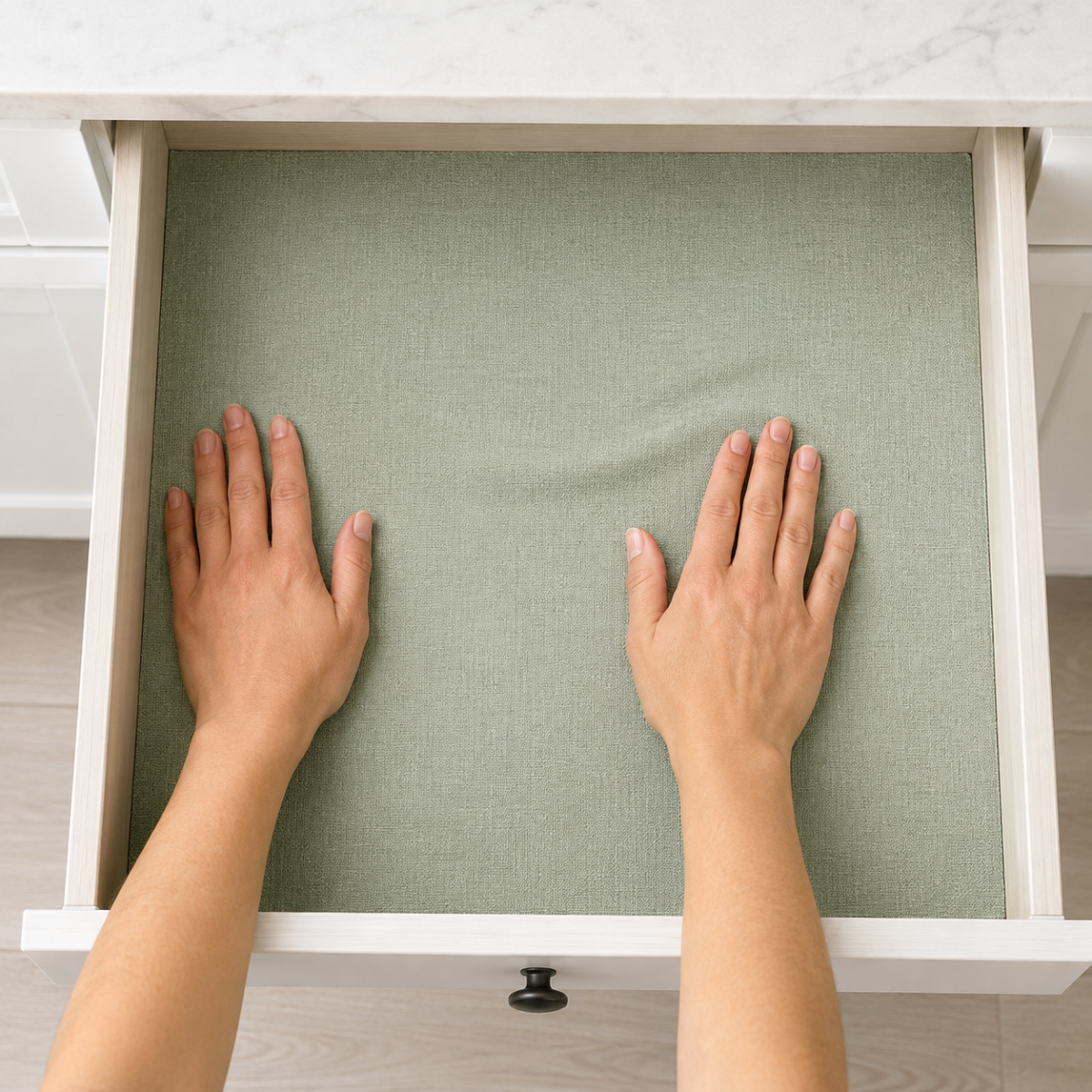
Removable drawer and shelf liner is one of the best returns available in this entire category, cheap, fast to install, and solving a genuinely functional problem, sticky or stained cabinet interiors, at the same time it adds visual polish. A single roll typically runs $10-$20 and covers an entire kitchen’s worth of drawers and shelves.
Look for liner marketed as “removable” or “repositionable” specifically, rather than the older-style adhesive shelf paper that bonds permanently and requires scraping to remove. Modern removable liner peels up in full sheets with essentially no residue, even after a full year of daily use.
Cutting to fit is genuinely simple, most liner can be trimmed with regular household scissors, and installation for a full kitchen’s drawers and shelves usually takes under an hour.
Worth It: Appliance Panels for Fridges and Dishwashers
Magnetic and adhesive panels designed to cover a dated appliance front, an off-color fridge, a scratched dishwasher panel, can genuinely transform how a large appliance looks without touching the appliance underneath. Magnetic versions work only on appliances with a magnetic surface (most standard white or stainless steel models), while adhesive versions work more broadly but require more careful, permanent-feeling application.
Magnetic panels are the stronger choice for renters specifically, since they involve zero adhesive at all and can be added or removed in seconds with no risk to the appliance surface underneath. Adhesive versions, while still generally removable, carry slightly more risk of residue or surface interaction over a long installation period, so they’re best reserved for appliances you’re comfortable committing to for the length of your lease.
Budget $30-$70 depending on appliance size and panel material, with magnetic sheet versions typically on the lower end of that range.
Conditional: Countertop Contact Paper
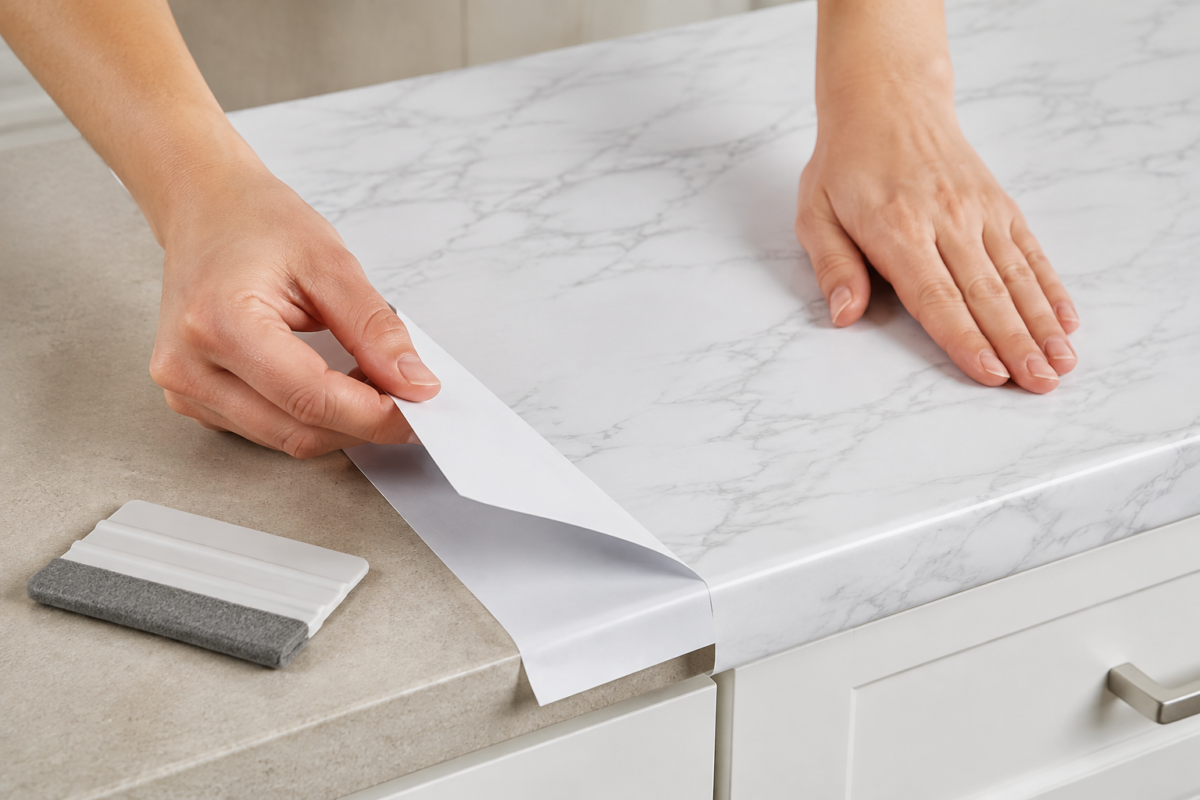
Countertop-specific peel-and-stick film sits in a genuinely mixed category. On a counter that gets light use, a secondary prep counter, a small bar area, a good-quality product can hold up reasonably well. On a primary daily-use counter, especially one exposed to knife work, hot pans, and constant wiping, even high-quality countertop film tends to show wear, scratching, and edge lifting faster than any other product in this guide.
If your main concern is simply the color or pattern of an existing countertop rather than protecting a damaged surface, countertop film can work as a temporary cosmetic fix, with the honest expectation that it may need reapplication or touch-up before your lease ends, particularly around the sink and stove areas that see the heaviest use.
For a counter you’re genuinely unhappy with and plan to cover for a full lease term, a large table runner, cutting boards displayed as counter protection, or simply accepting the existing counter and investing your budget in the backsplash and hardware instead often produces a better result for the same money.
Worth It, With Care: Peel-and-Stick Floor Tile
Vinyl peel-and-stick floor tiles have improved considerably in recent years, and applied to a small, defined area, in front of the sink, a narrow galley kitchen floor, they can genuinely refresh a dated or damaged floor without the cost or commitment of real flooring. Quality matters enormously here. Thin, budget tiles show seams and wear quickly in a high-traffic kitchen floor, while thicker, textured products hold up to real daily foot traffic.
Proper subfloor prep matters just as much as it does for a backsplash: clean, dry, and free of wax or existing floor finish that would prevent proper adhesion. Skipping this step is the single most common reason floor tile installations fail early, with tiles lifting at seams within weeks of installation.
Budget $60-$150 depending on kitchen floor size and tile quality, with installation taking a full day for proper prep, cutting, and setting time before the floor sees regular foot traffic again.
Skip It: Fixture and Faucet Wraps
Adhesive wraps marketed for covering an outdated faucet or fixture finish are one of the few products in this category genuinely not worth the money for most kitchens. Faucets handle constant water exposure, temperature changes, and daily physical contact, conditions that peel-and-stick adhesive products struggle with more than almost any other surface in a kitchen.
These products typically start showing wear, peeling, or discoloration within a few weeks of installation, well before a full lease term. For an outdated faucet finish, a full faucet swap, covered in detail in Cabinet Hardware Swaps That Come Off Clean alongside the broader hardware-swap process, is a better investment of both money and effort, with the original faucet stored safely for reinstallation at move-out.
How to Choose Where to Spend Your Budget
Across every category in this guide, the products that hold up longest and look best are the ones designed specifically for kitchen use, applied to properly prepped surfaces, with realistic expectations about which surfaces see the heaviest daily wear. A backsplash and drawer liner, both lower-wear surfaces relative to a primary countertop or faucet, are consistently the strongest investments in this entire category.
If you’re working with a limited budget, prioritize in this order: drawer and shelf liner first, since it’s cheapest and most reliably durable, then appliance panels if a dated fridge or dishwasher front is bothering you daily, then floor tile in a small, defined area if your kitchen floor genuinely needs it. Save countertop film and fixture wraps for last, or skip them entirely in favor of the more durable alternatives covered in this guide and in The Complete Guide to Rental Kitchen Upgrades.
Frequently Asked Questions
What’s the most durable peel-and-stick product for a rental kitchen? Drawer and shelf liner consistently holds up best, since it’s protected inside cabinets rather than exposed to daily heat, moisture, and heavy foot or hand traffic the way countertops, floors, and faucets are.
Are peel-and-stick appliance panels actually worth buying? Yes, particularly magnetic versions for appliances with a magnetic surface, since they involve zero adhesive risk and can transform how a dated fridge or dishwasher front looks in minutes.
Does peel-and-stick floor tile hold up to real kitchen foot traffic? Quality, properly installed products applied to a small, well-prepped area can hold up reasonably well for a lease term, though thin budget tiles tend to show seams and wear within a few months in high-traffic spots.
Why do faucet and fixture wraps fail so quickly? Constant water exposure and temperature changes are harder on adhesive products than almost any other kitchen surface, which is why most fixture wraps start peeling or discoloring within weeks rather than lasting a full lease.
How much should I budget for a full peel-and-stick kitchen refresh? A combination of drawer liner, an appliance panel, and a small floor tile section typically runs $100-$250 total, depending on kitchen size and product quality chosen within each category.
Related Reading
- The Complete Guide to Rental Kitchen Upgrades
- Removable Backsplash Options That Actually Look Real
- Cabinet Hardware Swaps That Come Off Clean
- Rental Kitchen Upgrades (parent category)
- Small Kitchens (parent hub)