Table of Contents
There’s a specific kind of hesitation that comes with a blank rental wall. You want it to look like yours, but every instinct says don’t, because somewhere in the back of your mind is a security deposit and a landlord who might not see “creative expression” the way you do.
Here’s the part that actually solves that hesitation: almost everything that makes a wall or a room feel personal was never about permanence to begin with. Art, texture, lighting, and a handful of small upgrades do the vast majority of the visual work in any space, and every one of them has a version that goes up now and comes down completely clean later. The blank-wall anxiety isn’t really about decor. It’s about not knowing which specific products and techniques are actually built for renters versus which ones were borrowed from homeowner projects that were never designed to be undone.
This guide sorts that out, starting with the upgrades that deliver the most visual impact for the least risk, and ending with the specific products that get marketed as removable but don’t actually hold up to that promise.
What Actually Counts as Damage-Free
A genuinely damage-free decor upgrade leaves the wall or surface exactly as it was, with no residue, discoloration, or hole larger than what typical wall anchors already require, and it comes down within a normal lease term without professional repair. That’s a meaningfully higher bar than “removable,” a word that gets stretched to cover products leaving faint marks, sticky patches, or peeled paint that still costs part of a deposit to fix.
The safest bet, nearly always, is a product built specifically for rental use, with manufacturer instructions covering both application and removal. The riskiest bet is a product designed for permanent installation that someone’s repurposing with the assumption it’ll come off fine, without anything from the manufacturer actually confirming that.
Two checks catch most problems before they happen. Test any adhesive product on a hidden section of wall first, ideally behind furniture or inside a closet, and leave it for as long as you’d realistically leave the real installation. And read your actual lease’s language on wall decor rather than assuming a blanket “no alterations” clause applies to small, reversible changes, since plenty of leases explicitly distinguish cosmetic changes from structural ones.
The Highest-Impact Decor Upgrades, Ranked
These are ranked by how much visual transformation they deliver relative to the cost, effort, and risk involved, starting with the ones that change a room the most.
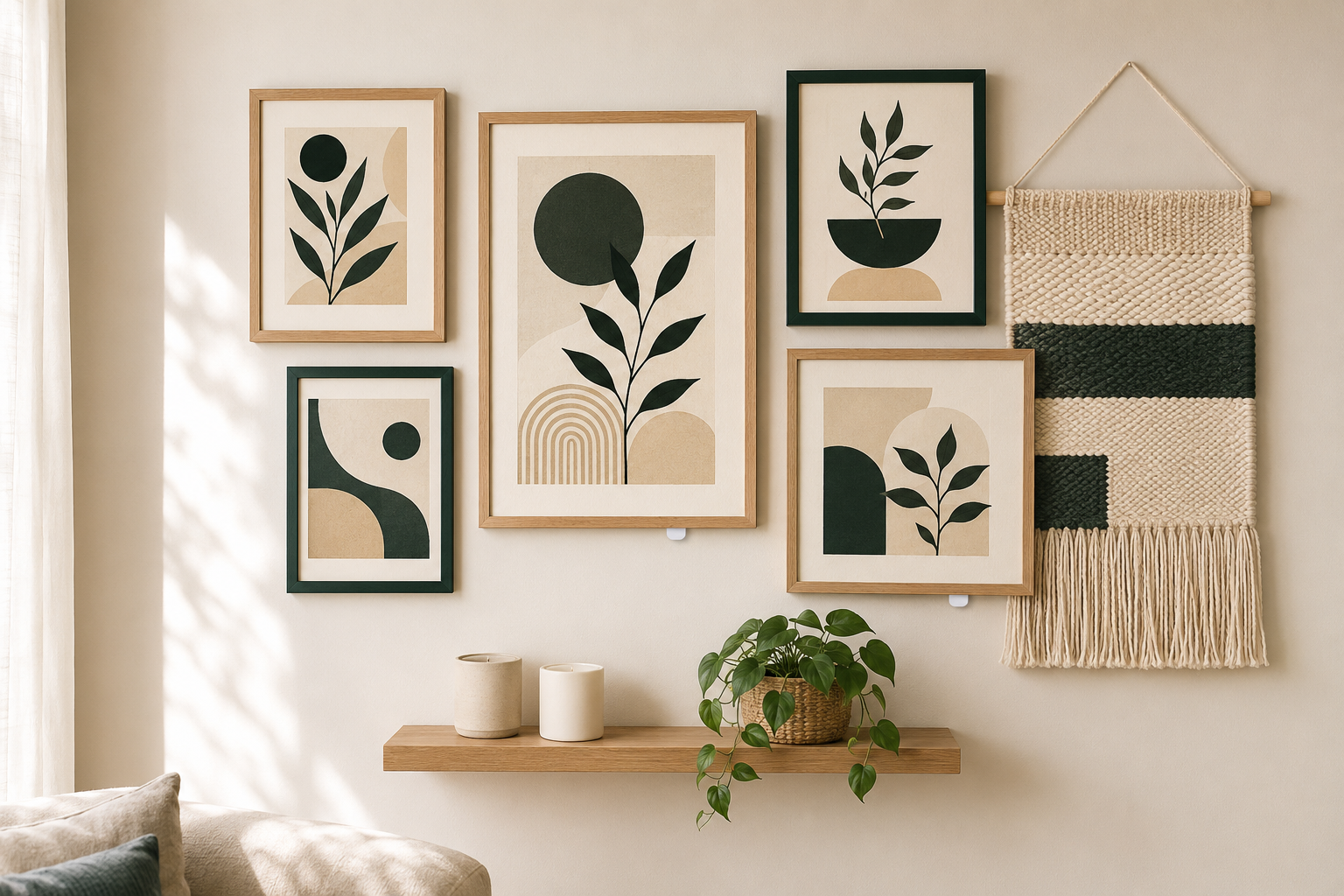
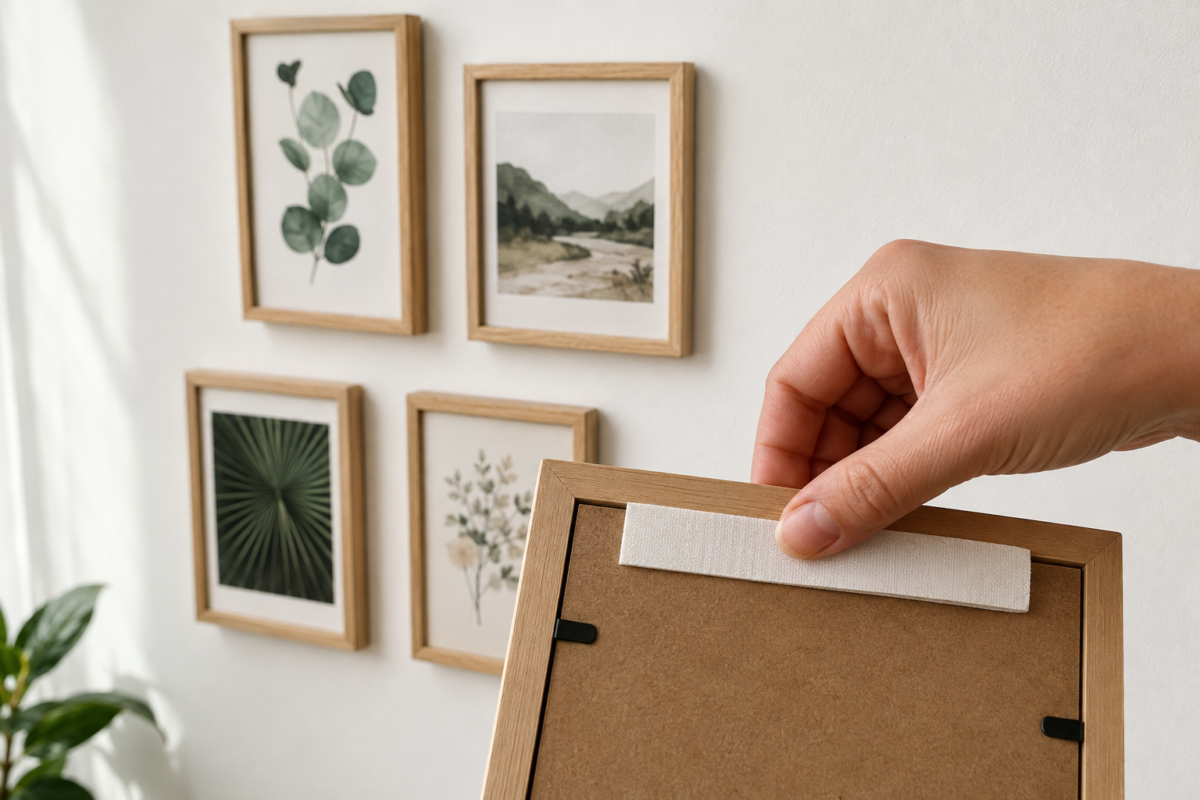
Gallery walls hung with adhesive strips are close to the single highest-return decor move in a rental. Rated adhesive picture-hanging strips, sized to the frame’s weight, hold real art securely and remove without leaving a mark or taking paint with them, as long as the wall surface is smooth and the weight rating isn’t exceeded. A cluster of five to seven frames does more to make a room feel intentional than almost any single larger piece.
Removable wallpaper on one accent wall transforms a room’s whole mood without the time or risk of a full-room application. Applied over a clean, primed, non-textured surface and removed within the recommended window, quality removable wallpaper comes off without residue. Smaller applications, like the back of an open shelving unit or inside a closet door, carry even less risk while still adding real personality.
Plug-in lighting layered over existing fixtures solves the flat, uninviting light most rental living rooms are stuck with. A plug-in pendant hung from a ceiling hook, a floor lamp with a warm bulb, or string lights along a shelf all add mood and warmth without touching any wiring at all.
Curtains hung on a tension rod instead of drilled hardware change a window’s entire feel, softening hard blinds or bare glass, and come down in seconds with zero holes. Floor-length curtains in particular make ceilings read taller and rooms feel more finished, disproportionate to how simple the change actually is.
Textiles and objects layered throughout the room, meaning throw pillows, a runner rug, a stack of books, and a few well-chosen decorative pieces, require zero installation at all and are entirely reversible by definition. This category gets underrated because it feels too simple to matter, but a room with thoughtfully chosen objects reads as considerably more finished than the exact same room without them.
What to Skip: Decor That Only Claims to Be Reversible
A handful of categories consistently disappoint renters who trusted “removable” branding without checking further, and they’re worth naming directly so the mistake doesn’t repeat.
Adhesive hooks and strips rated below the actual weight they’re holding. These tend to fail in a specific, frustrating way: not falling off cleanly, but peeling paint or drywall texture off with them once the adhesive finally gives out. Always round up on weight rating, and avoid mounting anything heavier than a light frame on paint that’s less than a year cured.
Contact paper or adhesive film on unsealed or painted wood surfaces, whether that’s a cabinet, a shelf, or trim. On a smooth, sealed laminate it typically comes off clean. On unsealed wood or certain painted finishes, it can pull the finish off with it, leaving a patchy surface that takes more work to fix than the original blank spot did.
Wallpaper applied over textured walls, like popcorn ceilings or heavily textured “orange peel” paint. The adhesive can’t lay flat against the texture, which means both a worse-looking application and a much messier removal. This works best on smooth drywall, not textured surfaces.
Command strips or adhesive products left up well past their recommended removal window. Most manufacturers specify a timeframe, often a year or two, for the cleanest removal. Left up significantly longer, especially in humid or sun-exposed spots, adhesive can bond more permanently than intended, turning an easy removal into a genuinely difficult one.
Building a Room, Not Just a Wall
A rental room feels finished when the decor layers work together across the whole space, not just on one impressive feature wall. A stunning gallery wall next to bare, uncurtained windows and a completely empty shelf still reads as unfinished, because the eye notices the imbalance even if it can’t name exactly what’s missing.
The fix isn’t spending more. It’s spreading the same budget across a few different layers rather than concentrating it all in one spot. A modest gallery wall, simple curtains, one small lighting layer, and a handful of curated objects on any open shelving, together, read as considerably more complete than an expensive single feature with everything else left bare.
This is also where sequencing helps. Start with whatever the room’s biggest visual gap actually is, whether that’s bare windows, a blank wall, or flat lighting, rather than defaulting to whatever decor trend is easiest to find online. The upgrade that fixes the room’s actual weakest point does more work than the one that’s simply the most popular that season.
Refreshing Decor Without Starting Over Each Season
A rental’s decor doesn’t need a full overhaul every few months to stay feeling current, and treating it that way tends to waste both money and effort that a lighter touch would handle just as well.
Rotating textiles is the easiest seasonal refresh available. Swapping throw pillow covers, a runner rug, or a lightweight throw blanket takes minutes and changes a room’s whole feel without touching a single wall or fixture. Storing the off-season set in a bin under the bed or on a closet shelf means nothing gets discarded, just rotated.
Rearranging existing objects before buying new ones solves more seasonal staleness than people expect. Moving a plant from the shelf to the floor, swapping which frames hang where in a gallery wall, or regrouping the same candles and books into a different cluster can make a room feel refreshed using items you already own.
Adding, rather than replacing, one seasonal accent keeps a space feeling intentional without erasing the work already done. A single new item, whether that’s a seasonal candle scent, a small wreath, or a new throw, layers into the existing decor rather than competing with it.
The goal with any refresh is subtlety. A room that gets fully redecorated every season starts to feel unsettled rather than personal, since nothing has time to feel established before it changes again. A lighter, rotating touch keeps the space feeling alive without undoing the intentional layering built up over the months before it.
Frequently Asked Questions
Will removable wallpaper actually come off without damaging rental walls? On a clean, smooth, properly primed wall, and removed within the manufacturer’s recommended timeframe, most quality removable wallpaper comes off without residue or paint damage. The risk rises significantly on textured or poorly primed walls, which is worth checking before committing to a full application.
How much weight can adhesive picture-hanging strips actually hold? This varies by brand and strip size, with most rated somewhere between a few pounds and around 16 pounds per set of strips. Always check the specific product’s rating against your frame’s actual weight, including the glass, and round up rather than assuming a lighter strip will hold.
Is it worth hanging curtains in a rental if the windows already have blinds? Yes. Curtains and blinds solve different problems: blinds control light and privacy, while curtains add softness, height, and finished visual weight to a room. A tension rod avoids any drilling, so there’s no real downside to layering curtains over existing blinds.
Can I hang string lights in a rental without damaging the ceiling or walls? Yes, using adhesive clips rated for the light strand’s weight, or by draping them along existing furniture and shelving rather than drilling hooks into the ceiling. Both routes avoid any permanent marks.
What’s the single best upgrade for someone with a tiny decor budget? A small, curated gallery wall using adhesive strips. It’s one of the cheapest options here relative to its visual impact, requires no special tools, and comes down completely clean whenever the lease ends.
Related Reading
- The Complete Apartment & Rental Guide — the full layout → decor → storage sequence this guide fits into
- Studio Apartment Guide — how to zone a room first so decor choices land in the right spot
- Apartment Storage Guide — storage solutions that pair with these decor layers instead of cluttering them
- Complete Guide to Rental-Friendly Decor — related Taims Space guide.
- Command Strips and Adhesive Hooks — related Taims Space guide.
- Removable Wallpaper That Comes Off Clean — related Taims Space guide.
- Rugs, Curtains, and Lighting — related Taims Space guide.
- Complete Guide to Rental Kitchen Upgrades — related Taims Space guide.
Category: Rental-Friendly Decor Hub: /apartments-and-rentals/
Reviewed by the Taims Space editorial team.