Table of Contents
A desk pushed flush against a wall runs out of usable surface fast, and the instinct is almost always to keep adding trays and organizers directly onto that same shrinking footprint. The actual fix is usually right above it. Most small desks have four or five feet of completely unused wall space between the surface and the ceiling, and that space can hold nearly everything currently competing for room on top of the desk itself.
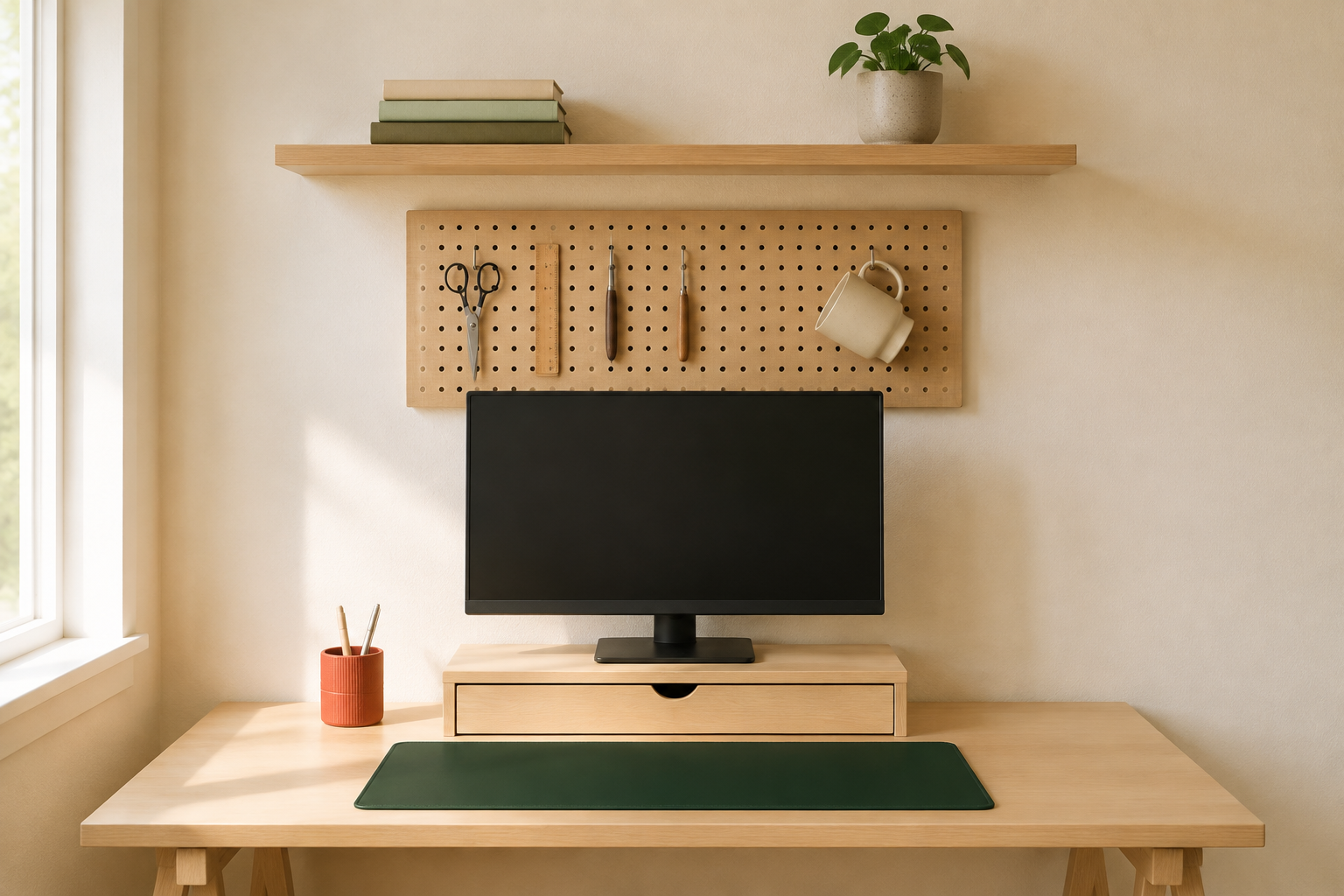
Vertical desk storage works best when divided into four height zones, each suited to a different type of item: desktop-level risers for things used constantly, a low wall zone for daily-reach items, a mid wall zone for less-frequent reference materials, and a high zone near the ceiling for anything rarely needed. Matching the right item to the right zone, based on how often it’s actually used, is what makes vertical storage genuinely functional instead of just visually busy.
Zone 1: Desktop Level, for Constant Use
The desktop-level zone, roughly the first few inches directly above the surface, is best suited to items in near-constant use throughout the workday, like a monitor riser with a built-in drawer or a stacked set of shallow trays holding daily supplies.
A monitor riser lifts the screen to a proper eye-level height while reclaiming the space underneath for a drawer or a slim tray, solving an ergonomic need and a storage need with the same single object. Stackable trays work well here too, holding small daily items like sticky notes, a stapler, or loose office supplies in a compact vertical footprint rather than spread flat across the surface. Keep this zone limited to items you’d otherwise be reaching for multiple times a day, since anything used less frequently belongs higher up, out of this immediate, valuable space.
Zone 2: Low Wall, for Daily-Reach Items
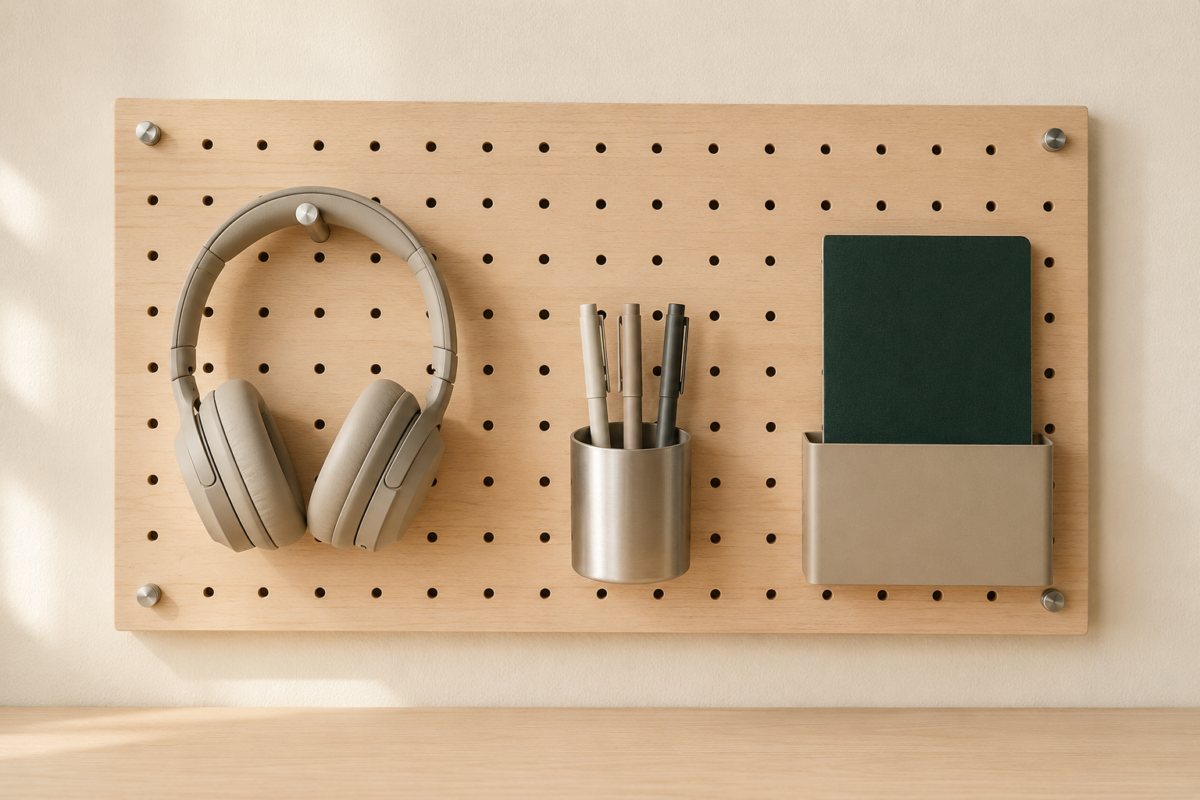
The low wall zone, roughly six to twenty-four inches above the desk surface, works well for a pegboard, a grid panel, or a single floating shelf holding items you reach for often but don’t need directly on the desk itself, like headphones, a mug, small tools, or frequently used reference notes.
A pegboard mounted in this zone is especially flexible, since hooks and small shelves can be rearranged as your specific daily needs change, without needing new holes or hardware each time. A single floating shelf works just as well for anyone who prefers a simpler setup, holding a small collection of daily-use items within easy reach without requiring a full pegboard system. This zone sits close enough to grab something without standing up, which makes it the right home for anything used several times a day but not constantly enough to justify desktop space.
Zone 3: Mid Wall, for Reference Materials
The mid wall zone, roughly two to four feet above the desk, suits shelving for books, binders, and reference materials used regularly but not multiple times a day, along with closed bins for supplies that need to stay accessible without being visible from a seated position.
This is the zone for a small shelf of reference books, project binders, or closed storage bins holding backup supplies like extra notebooks or printer paper. Since this zone sits above easy seated reach, it works best for items retrieved a few times a week rather than daily, keeping the lower, more convenient zones free for items that genuinely need faster access.
Zone 4: High Zone, for Rarely Needed Storage
The high zone, near the ceiling and above easy standing reach, is the right home for anything used only occasionally, like seasonal supplies, archived reference materials, or backup equipment that doesn’t need to be retrieved without a step stool, since this is genuinely the least convenient storage zone and should be reserved accordingly.
A decorative basket or closed bin works well here specifically because contents aren’t meant to be visible or easily reached day to day. This zone is also a reasonable spot for sentimental or rarely used items you want to keep without giving them any of the more valuable, easily reached space below.
Weight and Mounting Considerations for Rental Walls
Check the weight rating of any adhesive mounting product against the actual combined weight of the shelf or organizer plus everything you plan to store on it, since a shelf that looks lightweight empty can exceed a rated adhesive strip’s limit once books or supplies are added, and this is the single most common reason a vertical storage installation fails after the fact rather than during setup.
For heavier shelving meant to hold books or bins, wall anchors and screws generally provide more reliable support than adhesive alone, and the resulting holes are minor and easily patched at move-out. For lighter items, like a small pegboard or a single floating shelf holding only a few ounces of decor, a properly rated adhesive mounting system works well and removes without any wall damage at all.
How Much Vertical Storage Is Too Much
Leave visible open wall space between at least two of the four zones, since filling every inch of vertical space from desktop to ceiling creates a different kind of clutter, one that’s simply been moved upward instead of resolved, and a wall completely covered in storage often feels just as overwhelming as a cluttered desk surface did before.
A reasonable target is using two, maybe three, of the four zones described above, rather than filling all four completely. Choose based on what you genuinely have enough items to justify storing vertically, and let the remaining zones stay open. A wall with breathing room between its storage sections reads as organized. A wall packed edge to edge reads as busy, regardless of how neatly each individual item is arranged.
Frequently Asked Questions
What’s the best vertical storage option for a rental where I can’t drill? A monitor riser with a built-in drawer solves the desktop-level zone without any wall mounting at all, and a rated adhesive-mounted floating shelf or pegboard works well for the low wall zone, both fully reversible at move-out.
How do I decide what goes in which vertical zone? Match frequency of use to reach. Items used constantly belong at desktop level, items used daily but not constantly belong in the low wall zone within easy seated reach, items used weekly belong in the mid wall zone, and items used rarely belong near the ceiling.
Is it safe to mount a heavy shelf with adhesive strips? Generally, no, if the shelf will hold books or bins with real combined weight. Adhesive strips work well for lighter loads, but a heavier shelf is more reliably supported with wall anchors and screws, even in a rental, since the resulting holes patch easily at move-out.
Can vertical storage make a small room feel more cluttered instead of less? Yes, if every available zone gets filled completely. Leaving visible open space between storage sections, rather than covering the entire wall from desktop to ceiling, keeps vertical storage reading as organized rather than simply relocated clutter.
Related Reading
For the full seven-step order to organizing a small desk overall, The Complete Guide to Organizing a Small Desk covers where vertical storage fits alongside surface zoning and cord management.
For rental-friendly mounting methods specific to shelving and pegboards, DIY Projects That Won’t Cost You Your Security Deposit covers the reversibility test worth running before installing anything above the desk.
If cords are competing for the same wall space as your storage plans, Cable Management for a Desk With Too Many Cords covers getting them routed out of the way first.
Browse the full Desk Organization category for more daily-use systems, or explore the wider Home Office & Small Workspaces hub for full setup and shared-space guides.