Table of Contents
Mail set down “just for today” rarely stays a single envelope. It becomes a stack within a week, and the stack becomes a pile that migrates from the entry table to the desk to the counter, absorbing more paper along the way, until it’s genuinely unclear what’s actually important buried somewhere inside it. The fix isn’t a better tray. It’s catching most of that paper before it ever reaches the desk in the first place.
A working paper and mail system intercepts junk mail at the door before it enters the apartment at all, sorts everything else into exactly three categories, act now, hold, and file, and gives each category its own specific physical location rather than one shared pile. Most paper clutter comes from skipping the interception step and letting everything, junk included, travel all the way to the desk before any sorting happens.
Intercept Paper Before It Reaches the Desk
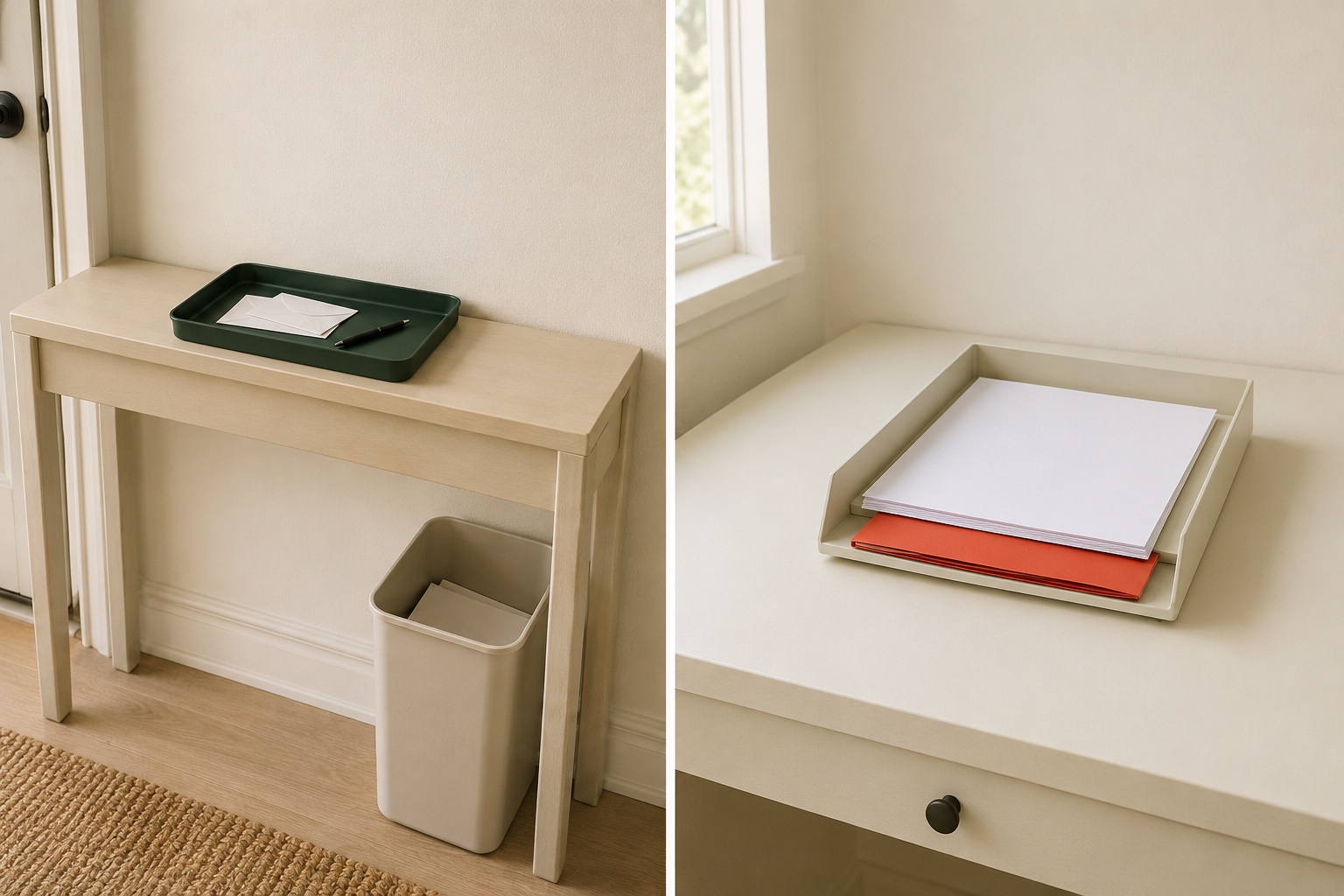
Sort mail immediately at the door or entry table, recycling anything that’s obviously junk, an ad, a catalog, a pre-approved offer, before it travels any further into the apartment, since the fastest way to prevent a paper pile is stopping most of it before it ever reaches a surface where it could accumulate.
A small recycling or shredding bin positioned right at the entry point, close enough that sorting takes ten seconds on the way in, catches the majority of paper that never needed to enter the living space at all. This single habit, done consistently every time mail comes in, prevents more clutter than any desk organization system downstream of it, since it stops volume at the source rather than managing it after the fact.
The Three-Category System: Act Now, Hold, File
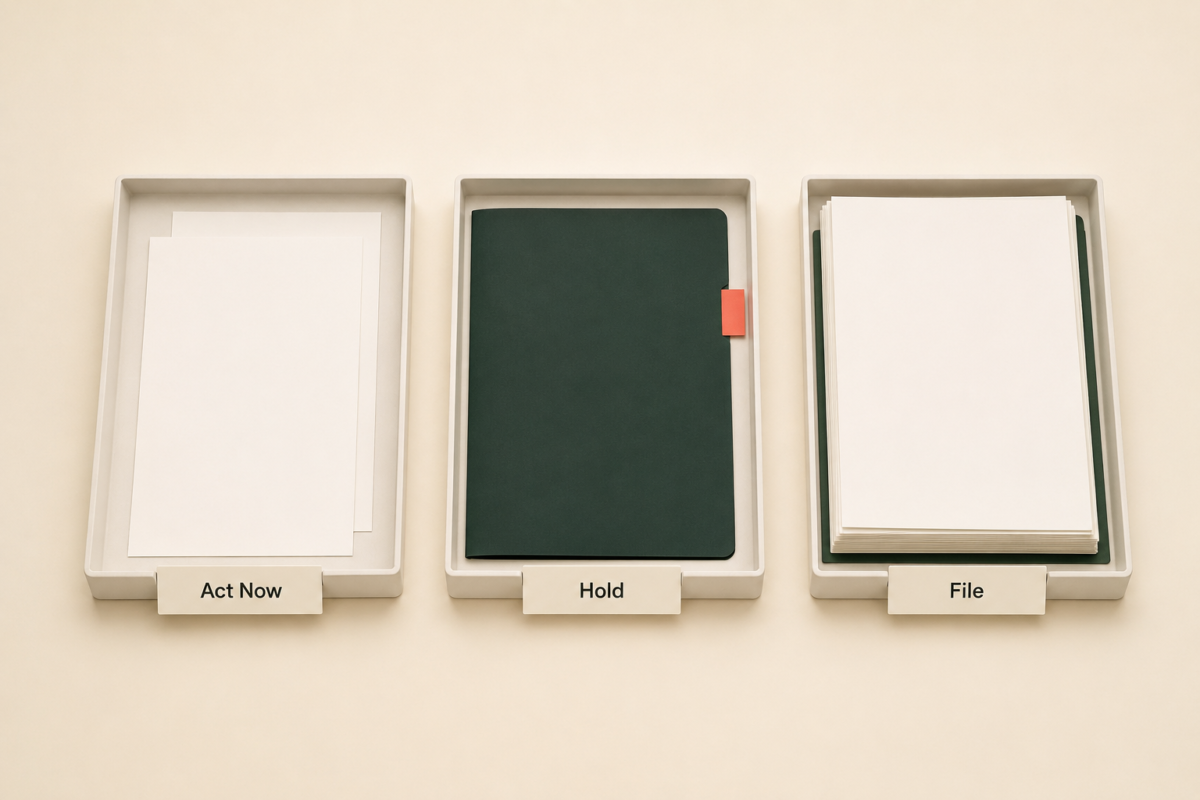
Everything that makes it past the door sorts into exactly three categories: act now for anything requiring a response within the next day or two, hold for anything needing attention but not urgently, and file for anything that just needs to be kept for reference or records, since collapsing paper into a single undifferentiated pile is what makes it feel overwhelming and impossible to process.
- Act now covers bills close to their due date, anything requiring a same-week response, or a document you’re actively working with. This category should stay small by design, since anything sitting in it too long has effectively become a hold item instead.
- Hold covers paper that matters but doesn’t need immediate action, like a bill due in three weeks, an event invitation for next month, or a form you’re waiting on more information to complete.
- File covers anything you’re required or want to keep for reference, like a lease, a receipt for a return window, or a tax document, without any pending action attached to it at all.
Sorting into these three categories takes only a few seconds per item once the habit is established, and it’s the single biggest shift between a desk that manages paper and one that’s slowly being taken over by it.
Where Each Category Actually Lives
Each category needs its own specific, separate location rather than all three sharing a single tray, since a shared container quietly turns back into one undifferentiated pile the moment the sorting distinction gets lost in practice.
Act now lives in a single small tray directly on the desk, kept visible and checked daily, since these items need to stay in immediate view until they’re resolved. Keep this tray genuinely small, holding only a handful of items at once, since a large act-now tray is really just a hold pile wearing a more urgent-sounding label.
Hold lives in a labeled folder or a slightly larger tray, positioned near the desk but not directly on its main surface, checked on a set weekly schedule rather than daily. This keeps hold items accessible without letting them compete for the same immediate visual space as genuinely urgent items.
File lives entirely off the desk, in a filing box, a drawer, or a dedicated storage bin elsewhere in the room, since file items have no pending action and don’t need daily or even weekly visibility at all. This is the category most often mistakenly left on or near the desk, where it contributes to visual clutter without ever needing to be there in the first place.
What Should Never Touch the Desk Surface at All
Long-term reference documents, like tax records, warranties, or lease paperwork, should move directly from the entry point to file storage without ever landing on the desk surface, even temporarily, since these documents have no active task attached to them and their presence on the desk only adds visual noise to a space meant for current work.
The test here is straightforward: if a document has no pending action and won’t need to be referenced again for weeks or months, it shouldn’t occupy desk space even for a day. Walking a new tax document or a signed lease directly to its file location, rather than setting it down on the desk “to file later,” prevents exactly the kind of well-intentioned pile that develops from otherwise organized paper simply waiting for a trip that keeps getting postponed.
The Weekly Reset
Set aside a few minutes once a week specifically to review the hold folder, moving anything now due into the act-now tray, filing anything that’s been resolved, and discarding anything no longer relevant, since the hold category is the one most likely to quietly grow without a scheduled check-in.
This weekly review is different from a daily desk reset, which mostly maintains the act-now tray and clears anything that landed outside its assigned spot. The weekly version goes a layer deeper, specifically preventing the hold folder from becoming a second, slower-forming pile that undermines the entire system months after it was first set up.
Frequently Asked Questions
What’s the fastest way to reduce paper clutter if I only change one habit? Sort mail at the door, recycling obvious junk immediately rather than carrying it further into the apartment. This single habit intercepts the largest volume of paper before it ever has a chance to pile up anywhere else.
How do I know if something belongs in “act now” or “hold”? Ask whether it needs a response within the next day or two. If yes, it’s act now. If it matters but has more time, even just a week or two, it belongs in hold, checked during your weekly review instead of daily.
Should file storage be on the desk for easy access? No, generally. File items have no pending action attached to them, so they don’t need daily visibility. Keeping file storage off the desk, in a drawer or box elsewhere in the room, keeps the desk surface focused on current, active items only.
How often should I check the hold folder? Weekly works well for most people. Checking too infrequently lets items slip past their actual deadline, while checking daily often isn’t necessary, since hold items by definition don’t require immediate action.
Related Reading
For the full seven-step order to organizing a small desk overall, The Complete Guide to Organizing a Small Desk covers where this paper system fits alongside zoning and cable management.
If cord clutter is competing with paper for the same limited desk space, Cable Management for a Desk With Too Many Cords covers getting cords out of the way entirely.
For setting up the desk area this system will live on, The Complete Guide to Setting Up a Small Home Office covers placement and storage basics from the start.
Browse the full Desk Organization category for more daily-use systems, or explore the wider Home Office & Small Workspaces hub for full setup and shared-space guides.