Table of Contents
The best secondhand furniture rarely shows up because someone browsed harder. It shows up because someone was watching the right source at the right moment, often somewhere that has nothing to do with a traditional thrift store at all. A neighbor’s move, a college move-out week, a nonprofit building supply store nobody thinks to check for decor. These sources reward timing and awareness more than patience.
Beyond thrift stores, the most reliable sources for secondhand furniture and decor are local Buy Nothing and giveaway groups, the college move-out season each spring, nonprofit building supply stores like Habitat for Humanity ReStore, architectural salvage yards, and storage unit or liquidation auctions. Each rewards a different kind of attention, and most people only ever check one or two of them.
Buy Nothing and Local Giveaway Groups
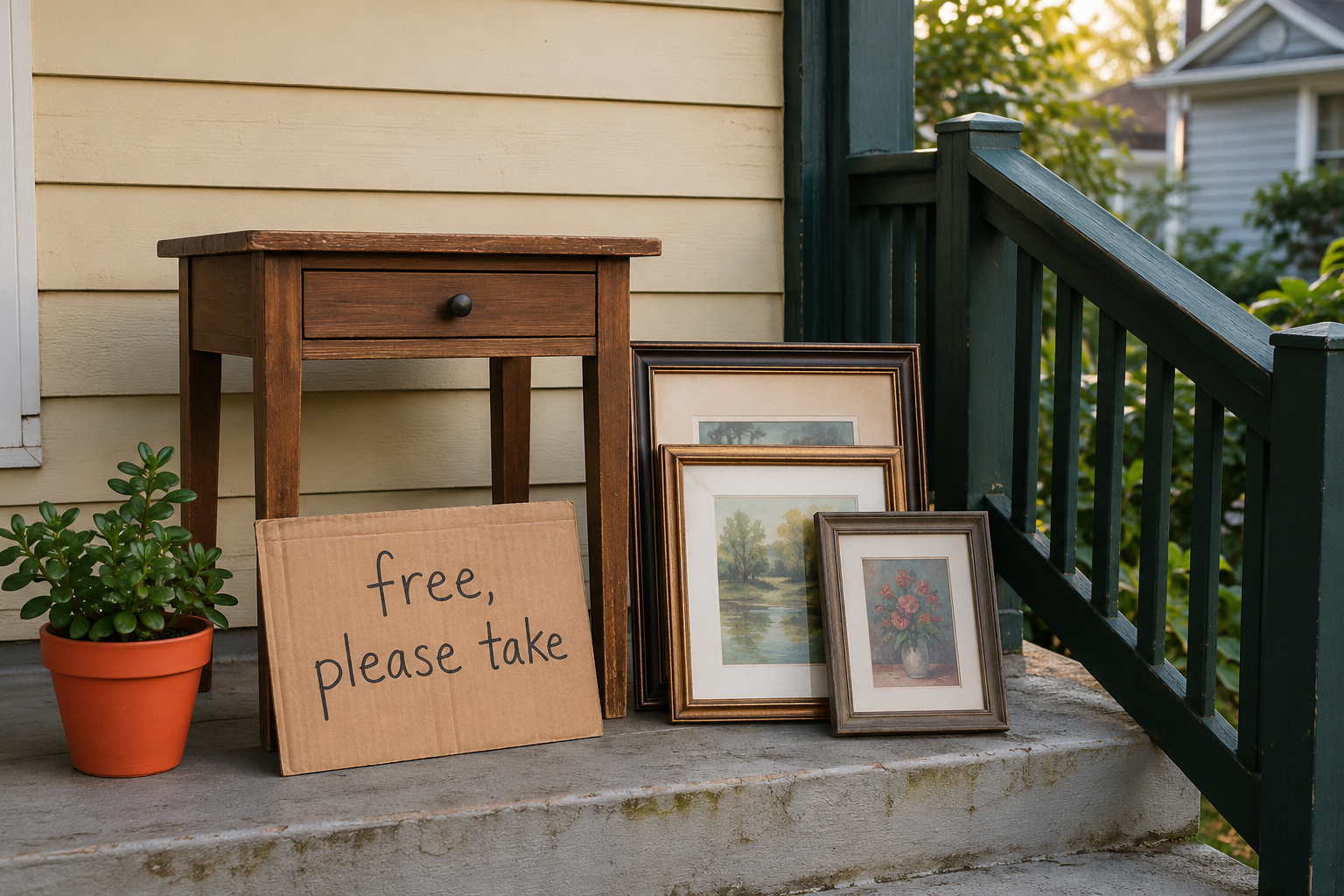
Local Buy Nothing groups and neighborhood giveaway pages consistently turn up genuinely good furniture for free, since these groups exist specifically for neighbors clearing out items during a move, downsize, or general decluttering, and furniture in usable condition gets posted constantly, often disappearing within the hour.
These groups work best with notifications turned on and a quick response time, since good furniture posts rarely last more than an hour or two before someone claims them. Search the group’s own post history for terms like “moving” or “downsizing” as well, since these posts often include multiple furniture pieces at once rather than a single item, and they’re easy to miss in a fast-moving feed.
College Move-Out Season
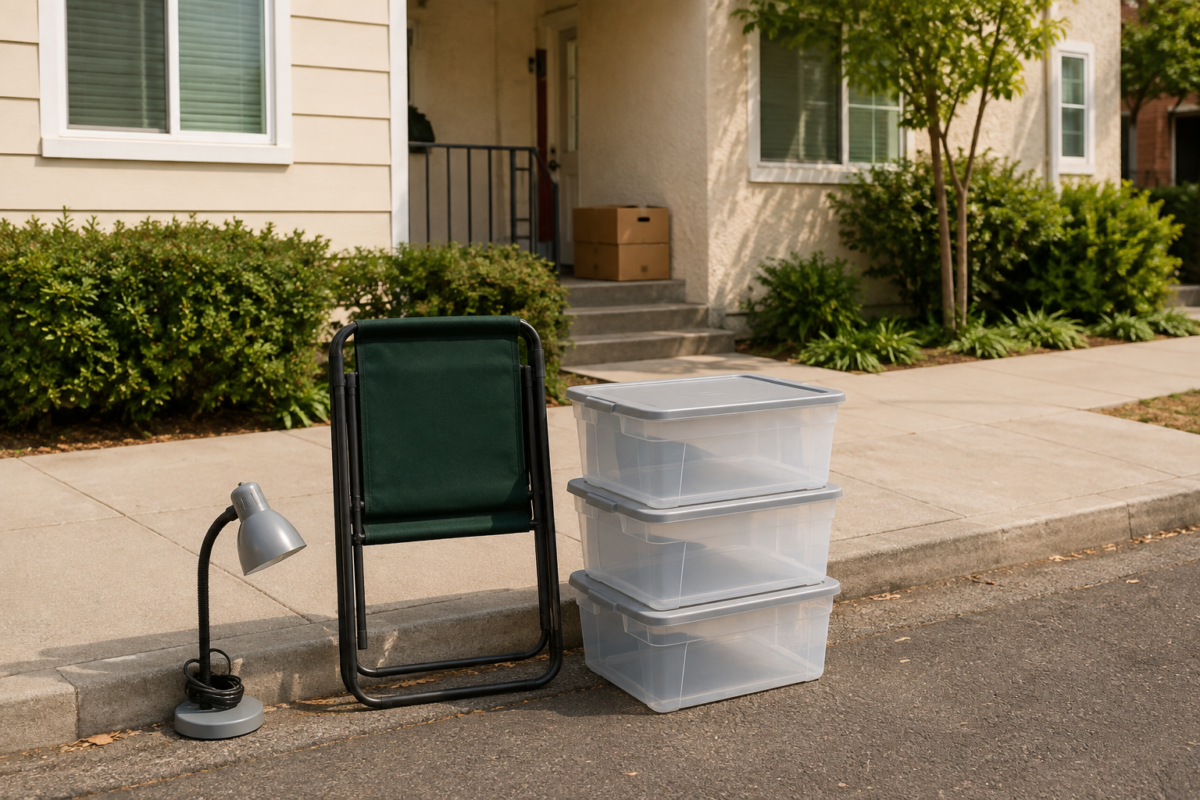
The last two weeks of a college spring semester, typically in early-to-mid May, is one of the highest-yield windows of the entire year for furniture and small decor, since departing students routinely leave behind desks, chairs, small dressers, lamps, and decor items rather than pay to ship or store them for the summer.
Check university-adjacent neighborhoods and off-campus apartment complexes specifically during this window, either by walking curbside on move-out days or by watching local Buy Nothing and marketplace groups, which see a sharp spike in listings during this exact period. Items found this way skew toward smaller, apartment-appropriate furniture, which makes this an especially good window if you’re specifically furnishing a small space rather than a full house.
Habitat for Humanity ReStore and Similar Nonprofit Shops
Nonprofit building supply stores, most notably Habitat for Humanity ReStore locations, sell donated furniture, home goods, and building materials at prices generally well below retail, with proceeds going directly toward the organization’s building projects rather than a private business.
These stores are worth checking specifically for solid wood furniture and larger case goods, since donated inventory here often comes from full household donations similar to what an estate sale would carry, but at thrift-store pricing. Inventory varies significantly by location and week, so this is a source that rewards a regular check-in rather than a single visit, similar to a traditional thrift store but with a narrower, often higher-quality furniture selection.
Architectural Salvage Yards
Architectural salvage yards specialize in doorknobs, hinges, light fixtures, mantels, and other structural or hardware pieces pulled from renovated or demolished buildings, making them a distinct source from general furniture thrifting, better suited to specific decor and hardware details than full furniture pieces.
This is the source to check when a specific detail is missing from an otherwise finished project, like a set of vintage-style cabinet pulls, an unusual light fixture, or a genuinely old mirror frame with character a new piece can’t replicate. Pricing here tends to run higher than a thrift store for comparable-looking items, since the pieces are often genuinely old and sourced from a specific building’s history, but the selection is usually far more distinctive than what a general secondhand store carries.
Storage Unit and Liquidation Auctions
Storage unit auctions, both in-person and online, and general liquidation auctions offer furniture and household goods in bulk lots, often significantly below individual-item pricing, but they carry more risk than any other source on this list since contents aren’t always fully visible or guaranteed before purchase.
In-person storage unit auctions typically allow a brief visual inspection from the doorway only, without handling individual items, which makes this a higher-risk, higher-reward source best suited to someone comfortable with some uncertainty rather than someone shopping for one specific piece. Online liquidation auctions, by contrast, often include full photos and item lists, reducing the guesswork considerably, though shipping or pickup logistics for furniture-sized items can add real cost and complexity worth checking before bidding.
Apartment Community Boards and Nextdoor
Apartment complex bulletin boards, building group chats, and neighborhood apps like Nextdoor surface hyperlocal furniture finds specifically from neighbors moving in or out of the same building or block, often before an item ever gets posted more broadly, since these platforms are the first place many people think to post rather than a general marketplace.
This is a particularly strong source if you live in a larger apartment complex, since move-out timing tends to cluster around lease renewal periods, creating predictable windows worth watching. A quick introduction post in a building group chat, mentioning specifically what you’re looking for, sometimes turns up a match even before anything gets formally listed.
How to Actually Catch These Before Someone Else Does
Turn on notifications for every group and app relevant to these sources, respond within the first hour of any promising post, and check in on a regular schedule rather than waiting for a specific need to arise, since the sources above reward speed and consistency far more than a single, well-timed search ever will.
Most of these sources aren’t secret. They’re simply underused, because they require ongoing, low-effort attention rather than one focused shopping trip. A five-minute check of a Buy Nothing group most mornings, done consistently over a few weeks, tends to outperform a single exhaustive weekend spent driving between thrift stores.
Frequently Asked Questions
Is Buy Nothing actually free, or is there a catch? It’s genuinely free. Buy Nothing groups operate on a strict no-money, no-trading model, where members give items away simply to keep them out of landfills and pass them along to someone who can use them.
When exactly does college move-out season happen? Typically the last two weeks of the spring semester, usually early-to-mid May in most regions, though it’s worth checking the specific academic calendar for any university near you, since exact dates vary by school.
Are storage unit auctions worth the risk for furniture specifically? They can be, especially for bulk lots, but the uncertainty is real. If you’re shopping for one specific piece rather than general inventory, a source with full photos and item descriptions, like an online liquidation auction or a standard marketplace listing, carries far less risk.
Do architectural salvage yards only sell expensive, high-end pieces? Not necessarily, though pricing does tend to run higher than general thrift sources for comparable items. Smaller hardware pieces like knobs, hinges, and pulls are often quite affordable even at a salvage yard, making this a good source for small detail upgrades even on a tight budget.
Related Reading
For the full picture of general secondhand sourcing and how to weigh a find’s real cost, The Complete Guide to Thrifting for a Small Space covers thrift stores, estate sales, and marketplace listings in more depth.
Once you’ve found a promising piece through any of these sources, The Furniture Quality Checks Worth Doing Before You Buy covers exactly what to inspect before committing.
For styling a secondhand find once it’s home, How to Style One Focal Point When You Can’t Redo the Whole Room covers how to build the rest of a room around one strong piece.
Browse the full Thrift & Secondhand category for more sourcing-specific guides, or explore the wider Budget Decor hub for get-the-look guides and DIY-friendly styling ideas.