Table of Contents
Picture the version that goes wrong: a folding table wedged behind the couch, a tangle of cables running along the baseboard, a stack of files that’s been “temporary” for three months. Then picture the other version: a guest walks in, glances at the same corner, and has no idea it was a full-time desk an hour earlier.
The difference between those two scenes isn’t a bigger living room. It’s a handful of specific decisions about furniture, placement, and what happens to the desk zone once the workday ends. This guide covers those decisions for a living room specifically, since a room built for guests, a couch, and a TV comes with a different set of problems than a bedroom or a spare corner does.
What’s the most common mistake people make with a living-room desk?
The most common mistake is treating the desk as a permanent fixture instead of something that needs to disappear, which means choosing furniture, cable setups, and storage that can’t fully clear out of view once the day is done. A desk that’s always visible, whether or not it’s actually being used, keeps the room feeling like an office even during the hours it’s supposed to be a living room.
This mistake usually starts with a good intention: buying a proper desk instead of working from the coffee table, which is genuinely the right first step. But a full-size desk with an open shelf, visible cables, and papers left out defeats the purpose almost as fast as the coffee table did, just with better ergonomics. The desk itself isn’t the problem. What’s left visible on and around it is.
What kind of furniture actually disappears at the end of the day?
Furniture that disappears either folds flat against the wall, closes with a drop-front or cabinet door, or rolls into a closet or corner out of the main sightlines. A wall-mounted, hinged desk collapses to a few inches deep and can sit behind a piece of art or a mirror when closed, so it reads as a decor element rather than furniture waiting to be noticed.
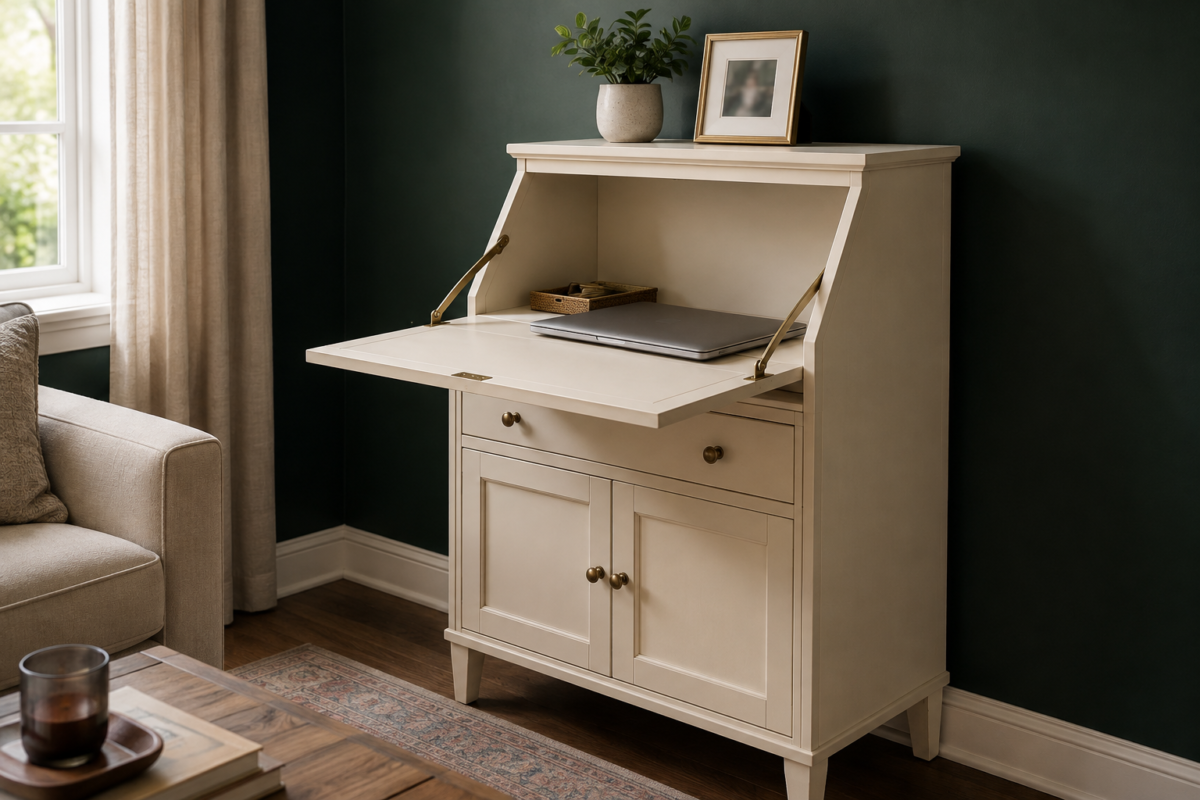
A secretary desk with a drop-front panel works especially well in a living room, since it looks like a piece of case furniture, the kind you’d expect to hold linens or dishware, right up until you open it. Everything inside, laptop included, disappears the moment the panel closes. <a href=”/shared-space-home-office-guide”>This complete guide to a shared-space home office covers the full range of furniture options if you’re deciding between a bedroom and a living room setup.</a>
If a closing desk isn’t realistic for your space or budget, a rolling cart with a closed top surface does a similar job. Roll it to your desk zone during work hours, then roll it into a closet, behind a couch, or against a wall it’s not obvious against when you’re done. The wheels do the disappearing act that a fixed desk can’t.
How do you handle a living room that gets used by roommates, kids, or guests during the day?
Set clear, simple expectations about the desk zone the same way you would about any other shared furniture in the room, and choose a spot that isn’t directly in the path between the couch and the kitchen or front door. A desk positioned in a high-traffic corridor gets bumped, interrupted, and treated as available surface space far more than one tucked along a side wall.
Interruptions in a shared living space are common enough that they’re not really a personal failure to manage better. A survey on remote work found that close to half of remote workers have had a video meeting interrupted by a pet, and roughly a third have been interrupted by a spouse or partner. Planning around this instead of being surprised by it makes a real difference: closed doors aren’t available in an open living room, but a simple visual signal, headphones on, a specific lamp lit, a small sign on the desk, communicates “mid-call” almost as effectively.
If kids are part of the household, a desk zone with a closing surface also keeps small hands away from cables and equipment between uses, which solves a safety concern alongside the aesthetic one.
How do you keep TV and living room noise from disrupting your calls, and calls from disrupting everyone else?
Position your desk so the TV and main seating area sit behind your camera rather than facing it, and use headphones with a built-in microphone for any call that needs real focus. This does more for both sides of the noise problem than trying to physically separate the space, since it controls what your microphone picks up and what other people in the room have to work around while you’re on a call.
If your schedule includes regular calls at the same time the TV tends to be on, a rough shared agreement, quiet hours between certain times, or headphones as the default rather than the exception, prevents the daily negotiation over whose noise takes priority.
How do you make the desk match the room instead of standing out?
Style the desk zone using the same colors, materials, and level of intentionality as the rest of the living room, and treat it as a piece of furniture with a function rather than a workstation that happens to sit in a nice room. This is the Style stage of what we call the Taims Space Method: once the space is simplified with the right furniture and organized so cables and supplies stay out of sight, styling it to match the room is what makes it disappear convincingly.
If your living room leans toward Warm Cream upholstery with Mid Forest Green and coral accents, carry that same palette into the desk zone, down to the tray or organizer you use for pens and cables. A desk styled in a completely different palette from the rest of the room reads as an intrusion no matter how tidy it is.
One object that has nothing to do with work, a small plant, a piece of art, a candle, does the same job here it does in a bedroom setup: it signals that this corner belongs to the whole room, not just your job.
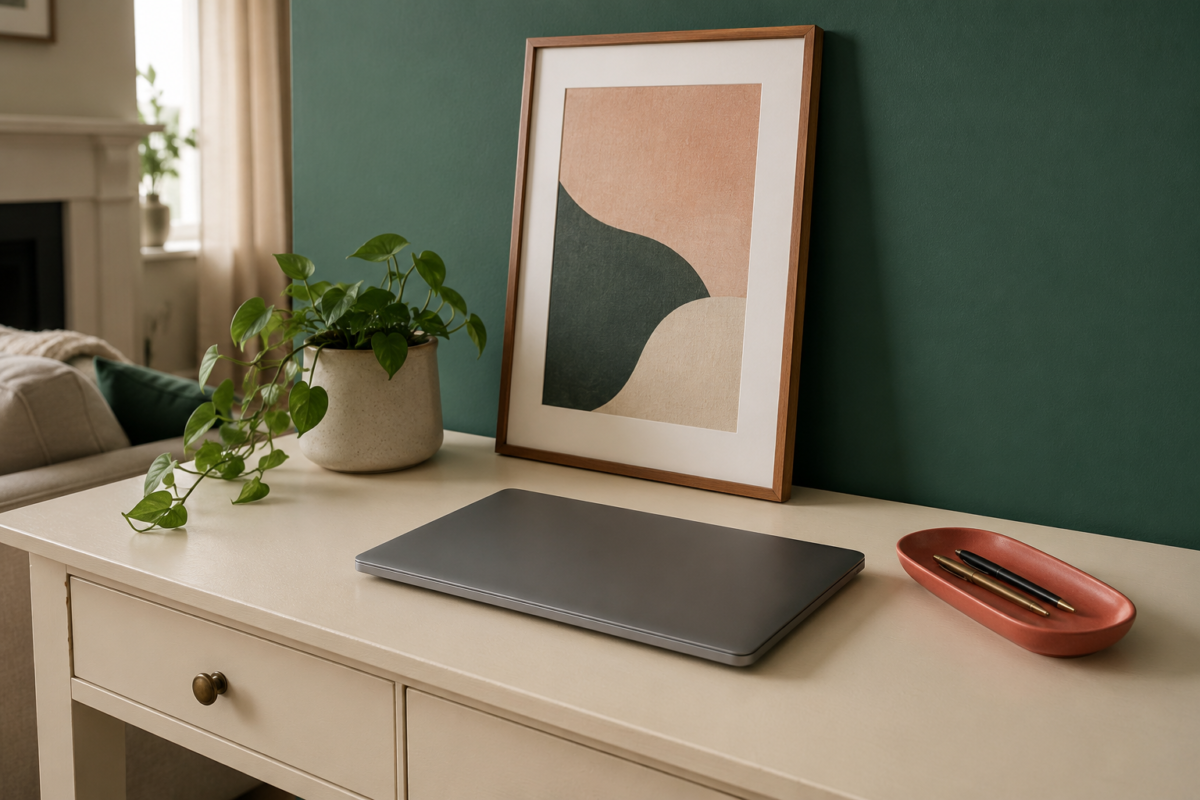
What this actually looks like once it’s working
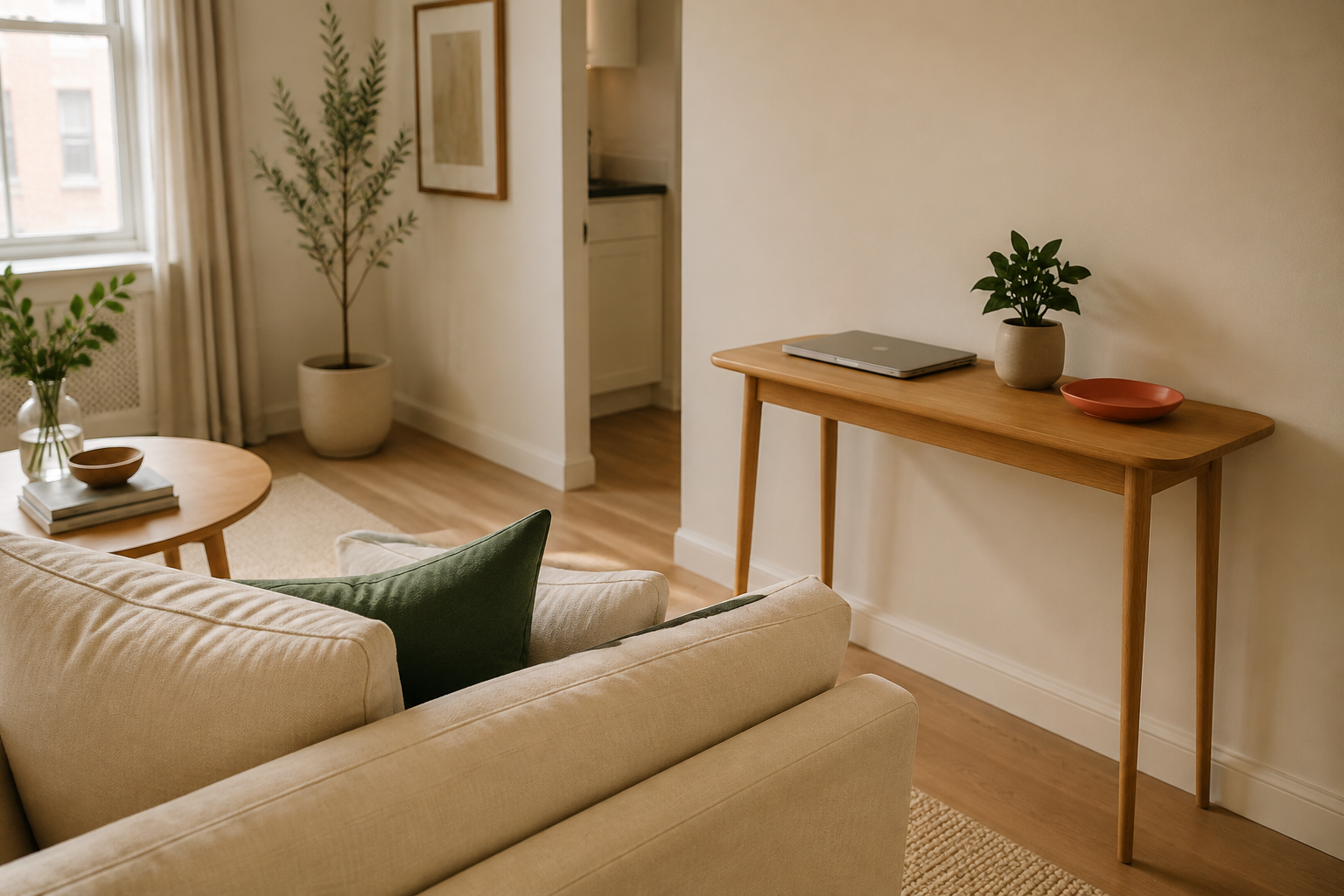
A guest sits down on the couch, glances toward the desk corner, and doesn’t clock it as an office at all, just a nice piece of furniture with a plant on it. The laptop’s closed, the cables are out of sight, and the only sign anyone worked there today is the faint outline of a good routine, not a pile of evidence.
FAQ
Do I need a completely separate desk, or can I just use the coffee table? A dedicated desk zone, even a small one, works far better long-term than a coffee table, since a real desk closes or disappears at day’s end. A coffee table setup tends to sprawl and stays visible all day, which keeps the whole room feeling like an office.
What’s the fastest way to make a living room desk disappear for guests? A closing desk, whether a fold-down wall model or a secretary desk with a drop-front, clears the visual evidence in seconds. A rolling cart that tucks into a closet works nearly as well if a closing desk isn’t practical.
How do I stop my roommate or partner’s TV time from interrupting my calls? Headphones with a built-in microphone solve most of this immediately, along with a simple shared agreement about which hours tend to have calls, so the TV volume adjusts without a conversation every time.
Is it worth buying matching furniture just for the desk zone? Not new furniture specifically, but matching the desk’s colors and materials to the rest of the room makes a measurable difference in how “office-like” the space feels, and it’s usually a matter of choosing the right accessories rather than replacing furniture.
Related Reading
- The Complete Guide to a Shared-Space Home Office — the broader guide this living-room-specific setup fits into, including bedroom layouts and privacy strategies.
- Setting Up a Home Office Inside a Shared Bedroom — for the same disappearing-desk principle applied to a bedroom instead of a living room.
- Setting Up a Camera-Ready Background in Two Minutes or Less — for framing this same desk zone so it looks intentional on every call.
- Parent Category: Shared-Space Offices
- Parent Hub: Home Office & Small Workspaces