Table of Contents
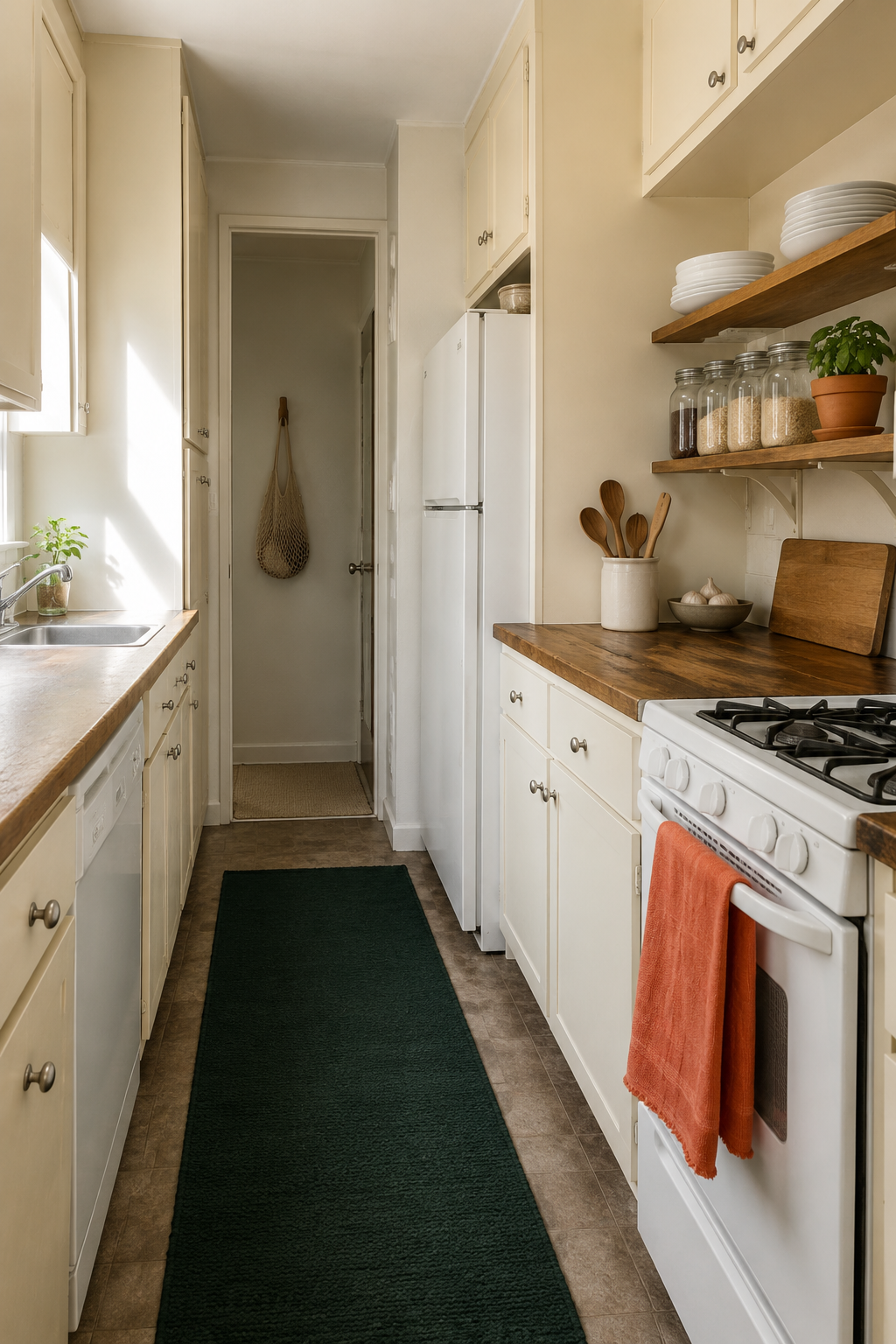
You open the cabinet under your sink to grab the dish soap and three things fall out. The drawer next to the stove doesn’t fully close because it’s holding a spatula collection you didn’t mean to build. And the one deep corner cabinet has become a place where lids go to disappear. If that’s your kitchen, you’re not disorganized. You just have less square footage than the storage industry assumes everyone has.
Small kitchen storage comes down to three moves, in order: use every inch of what you already own before buying anything, add storage to walls and doors instead of the floor, and only then bring in freestanding pieces for what’s left over. This is the Taims Space Method™ in action, Simplify → Organize → Style, and in a kitchen it means clearing what doesn’t belong before you add a single new bin.
What Actually Works in a Small Kitchen
The fastest wins in a small kitchen come from storage you already have but aren’t using well, not from buying more stuff. Start with cabinet and drawer organization, then move to vertical wall space, then consider freestanding pieces only for what’s genuinely left over. Most small kitchens have 20 to 30 percent more usable storage hiding in plain sight than the person cooking in them realizes.
That order matters. Buying a rolling cart before you’ve sorted your cabinets just gives you a new place to pile things you didn’t need to keep. The sequence below follows that logic: no-installation fixes first, then wall-mounted options, then the weekend projects that are worth the extra effort.
Start With the Cabinets and Drawers You Already Have
Before you buy a single organizer, empty one cabinet or drawer at a time and only put back what you use at least once a month. This single step typically frees up 15 to 20 percent of existing cabinet space in a standard small kitchen, without adding any new storage at all.
The deep corner cabinet is usually the worst offender. If yours has become a black hole for lids and pans you forgot you owned, a two-tier lazy Susan (roughly $15 to $25) turns that dead corner into space you’ll actually reach into. For a standard 24-inch-deep base cabinet, stackable risers double your usable shelf height for canned goods and small appliances you don’t use daily.
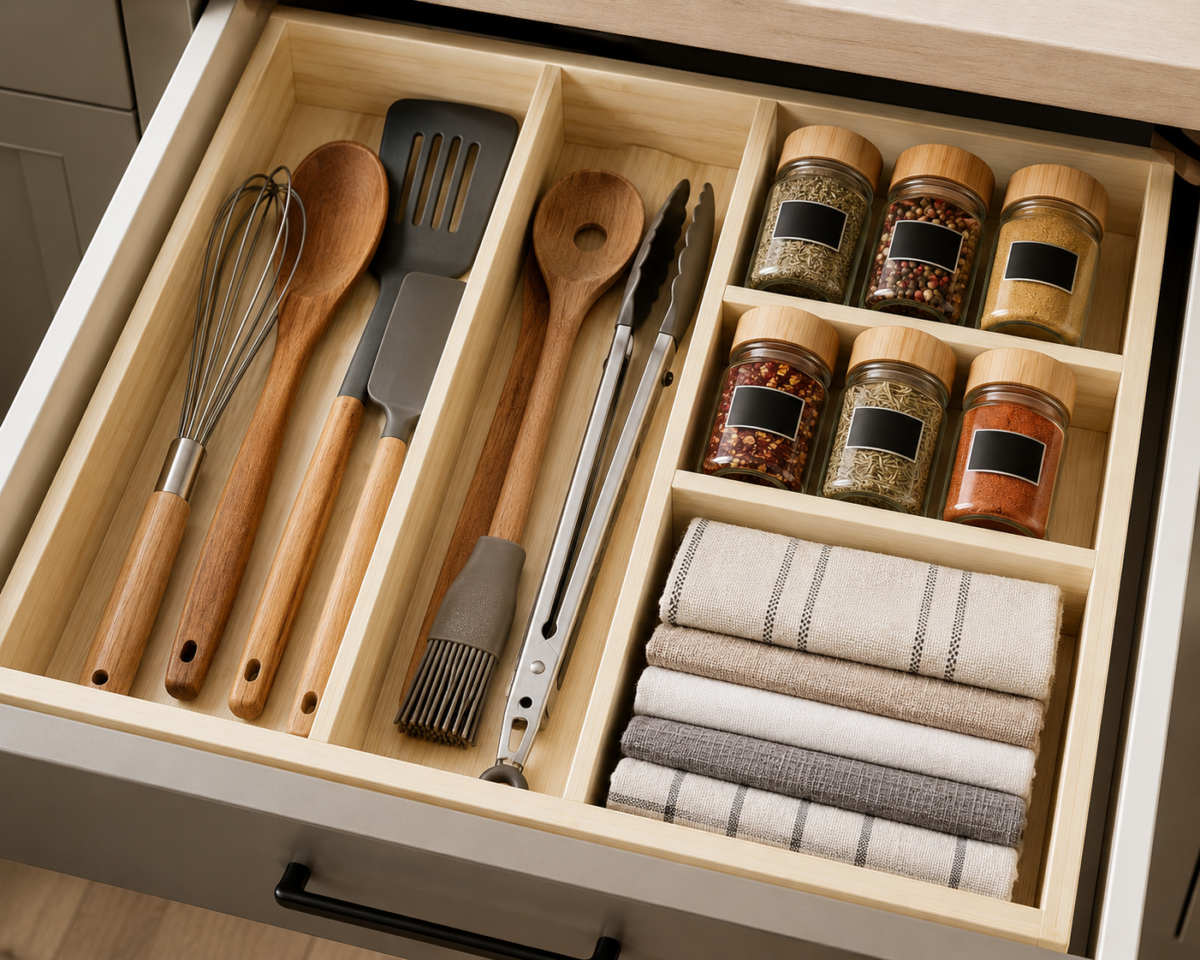
Drawers work the same way. A spice drawer insert with angled slots keeps jars visible from above instead of stacked three deep, and a simple bamboo divider turns a junk drawer into one with an actual system. None of this requires tools. It requires twenty honest minutes and a trash bag for the mismatched lids.
If your real problem is drawers that are already full of duplicate tools and expired spices, that’s a decluttering job before it’s a storage job, and this guide from Organization & Storage → Decluttering walks through exactly how to sort a kitchen without second-guessing every item.
Cabinet Door Storage You’re Not Using Yet
Every cabinet door in your kitchen is unused vertical real estate. Over-the-door racks, adhesive hooks, and slim door-mounted organizers turn that flat space into storage for cutting boards, foil boxes, spray bottles, and lids without touching a single shelf. This is often the single biggest capacity gain in a small kitchen, and it’s entirely reversible.
A wire rack on the inside of your cabinet-under-the-sink door holds spray bottles and sponges off the cabinet floor, which also solves the “everything falls out” problem from the first section. On a pantry or cabinet door, a shallow door-mounted rack corrals spice jars, foil, and plastic wrap boxes that otherwise get shoved sideways into whatever gap is left. If you’ve never measured what’s actually possible on your doors, Cabinet Door Storage You’re Not Using Yet breaks down exactly which racks fit which door types and how to avoid the ones that don’t clear your shelves when the door closes.
Vertical Storage for the Space Above Your Counter
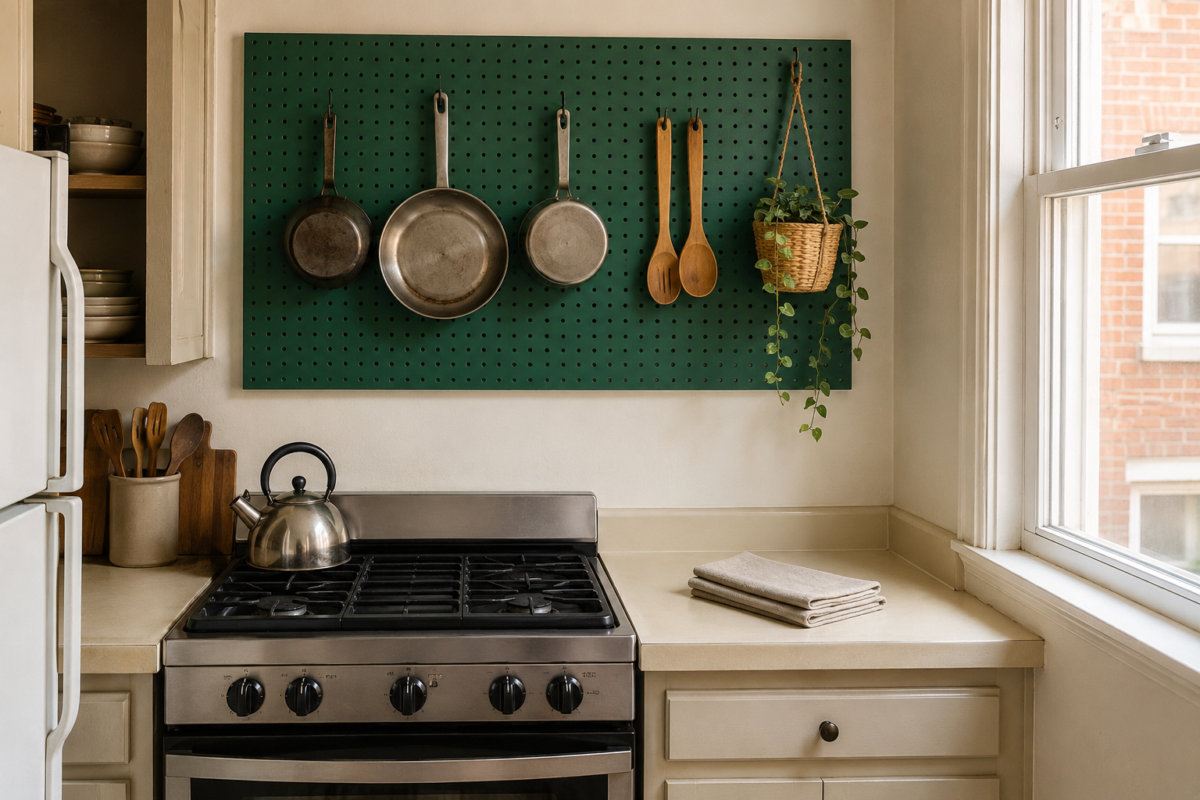
If your kitchen has no extra cabinets to add and the walls above your counters are bare, that’s the storage you’re missing. Wall-mounted shelving, a pegboard, or a hanging rail above the counter or stove adds real capacity without touching floor space or requiring a single new cabinet.
A single floating shelf above a stretch of counter can hold everyday plates or a row of glass jars, freeing up a whole cabinet shelf for something else. A pegboard mounted above a prep area holds pots, utensils, and cutting boards on hooks you rearrange as your cooking habits change, which matters more than a fixed shelf if you cook different things week to week. A magnetic knife strip on the wall next to the stove clears an entire drawer that used to hold nothing but knives.
For a full breakdown of what actually holds weight on a kitchen wall versus what looks good for a week and then sags, Vertical Storage for Kitchens With No Extra Cabinets covers weight limits, mounting options for both owned and rented kitchens, and which items are actually worth hanging.
Countertop and Under-Sink Fixes That Don’t Eat Space
Countertop clutter usually isn’t a storage problem, it’s a container problem. Grouping loose items into one tray or caddy per zone (coffee station, oil and spices, cleaning supplies) makes a counter look intentional even when nothing about the actual amount of stuff has changed.
Under the sink, a slide-out organizer or a simple two-tier riser lets you see and reach everything instead of digging past the front row to find what’s behind it. A tension rod mounted low, just above the pipes, gives you a second layer to hang spray bottles from, which uses the vertical gap most people leave completely empty. If your under-sink cabinet holds cleaning supplies for the whole apartment, not just the kitchen, a labeled caddy that lifts out in one motion means you’re not unpacking the whole cabinet to grab one bottle.
Small appliances cause the same clutter on a smaller scale. A blender, a slow cooker, and an air fryer can eat an entire lower cabinet if they’re stored loose. Grouping them by how often you actually use them, weekly appliances at eye level, seasonal ones on the highest or lowest shelf, keeps the cabinet you open every day from feeling like a puzzle.
Rental-Friendly Storage That Needs No Drilling
If you’re renting, every solution above still works, and a few specific ones are worth knowing because they leave zero marks. Tension-mounted shelves, adhesive hooks rated for kitchen weight, and freestanding carts add real storage without a single hole in the wall or cabinet.
Command-brand adhesive hooks rated for at least 5 pounds hold everything from oven mitts to a hanging fruit basket, and they come off clean at move-out. A tension rod inside a cabinet or under the sink creates a second shelf with zero hardware. A slim rolling cart, three tiers deep, slots into the gap next to a fridge or stove and gives you extra counter-height storage you can wheel wherever it’s needed that day. Rental-Friendly Kitchen Storage That Needs No Drilling goes deeper into which adhesive products actually hold in a real kitchen (steam and grease weaken some faster than others) and which ones are a waste of money.
The Weekend Projects Worth the Extra Effort
Once the no-installation and light-installation fixes are done, a small number of weekend projects are worth the extra time because they solve a problem the smaller fixes can’t. These aren’t required for a functional kitchen, but they’re worth knowing about if you’ve hit the ceiling of what shelves and hooks alone can fix.
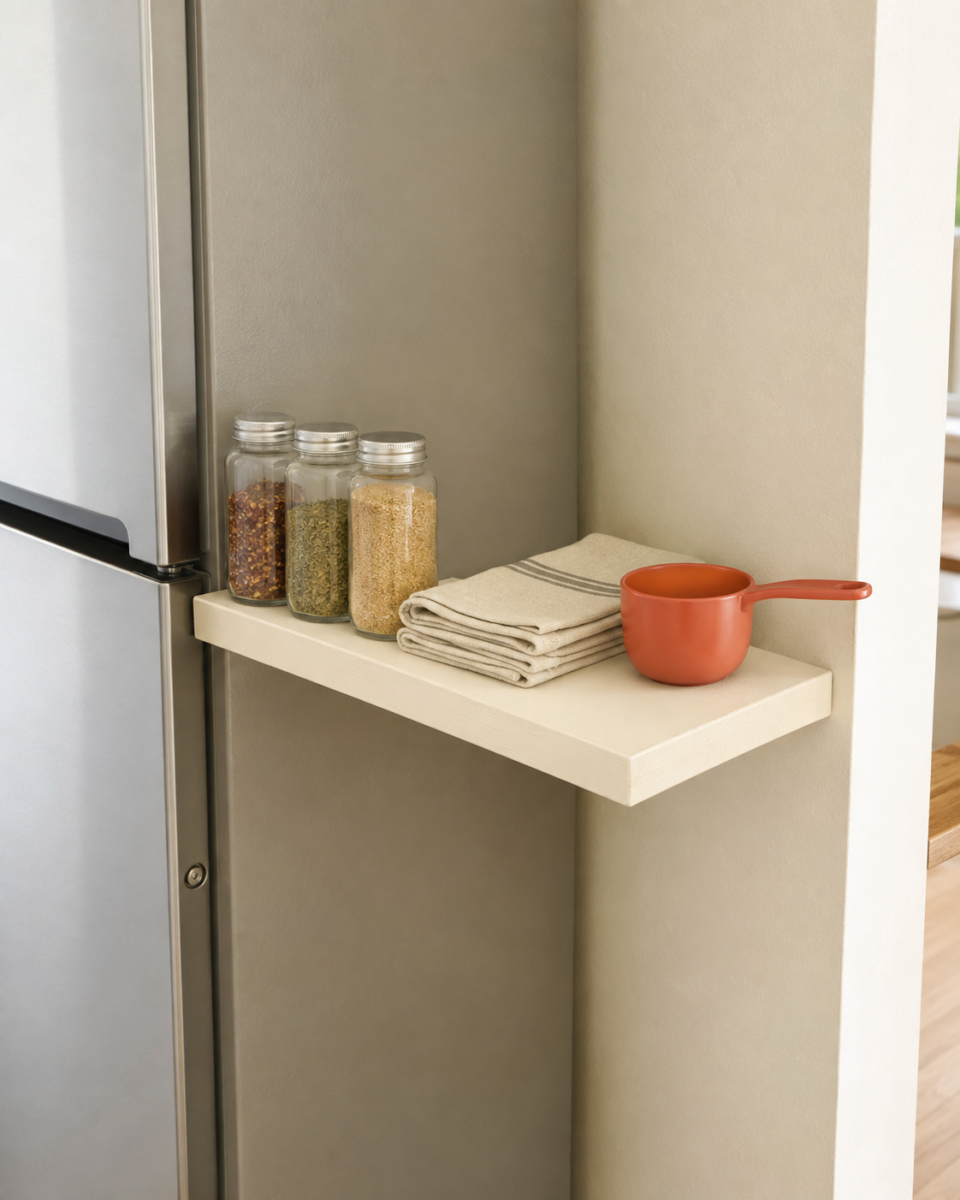
A shallow floating shelf built into an awkward gap between the fridge and the wall turns dead space into a spice or cookbook shelf. A tension-mounted curtain rod under an open shelf, with S-hooks along it, adds hanging storage for mugs without a single screw. If you own your kitchen or have full renovation approval, a pull-out cabinet organizer installed into an existing base cabinet is a bigger project, but it solves the corner-cabinet problem permanently instead of managing it with a lazy Susan.
Choosing the Right Fix for Your Kitchen
| Storage Type | Installation Needed | Typical Cost | Best For |
| Cabinet door racks & hooks | None (adhesive or slide-on) | $8–$25 | Renters, apartments, quick wins |
| Vertical wall storage (pegboard, shelf) | Light drilling or adhesive strips | $20–$60 | Kitchens with bare wall space above counters |
| Tension rods & rolling carts | None | $15–$50 | Under-sink, cabinet gaps, movable extra storage |
| Built-in pull-out organizers | Full installation | $40–$150+ | Owned homes, permanent corner-cabinet fixes |
A Simple System to Keep It Organized
Storage solves the space problem. A system keeps it from filling back up. Once your cabinets, doors, and walls are organized, a five-minute reset before bed, dishes away, counters cleared, one thing back in its actual spot, keeps a small kitchen from sliding back into the state you started in. This is the Maintain stage of the Taims Space Method™, and it matters more in a small kitchen than a large one, because there’s less room to absorb a week of small messes before it feels chaotic.
FAQ
How do I organize a small kitchen with no extra cabinets? Start with wall-mounted storage above the counter, like a pegboard or floating shelf, and cabinet-door racks that use the flat space inside cabinet doors. Both add real capacity without needing more cabinets, and neither requires major installation if you use adhesive-mount or tension-based options.
What’s the best storage for a rental kitchen? Adhesive hooks rated for kitchen weight, tension rods, and freestanding carts are the best rental-friendly options because they leave no marks and come off clean at move-out. A two-tier lazy Susan and drawer dividers also require no installation and work in any kitchen you don’t own.
How much does small kitchen storage cost to set up? A full no-installation setup (door racks, tension rods, drawer dividers) typically runs $50 to $120 total. Adding light wall-mounted storage like a pegboard or floating shelf brings the total closer to $150 to $250 for a full kitchen refresh.
Do adhesive hooks actually hold in a kitchen? Yes, if you choose ones rated for at least 5 pounds and avoid mounting them near the stove where grease and steam weaken the adhesive over time. Clean the wall with rubbing alcohol before applying, and give the hook 24 hours to set before hanging anything on it.
What should I fix first in a cluttered small kitchen? Start with the cabinet or drawer that bothers you most every single day, usually the one under the sink or the junk drawer, before touching walls or buying anything new. Clearing that one spot first makes the rest of the kitchen feel more manageable and shows you what you actually still need to store.
Related Reading
If your cabinet doors are still empty space, Cabinet Door Storage You’re Not Using Yet shows exactly which racks fit which doors.
If your walls above the counter are bare, Vertical Storage for Kitchens With No Extra Cabinets covers weight limits and mounting options for both owned and rented kitchens.
If you’re renting and need zero-damage solutions specifically, Rental-Friendly Kitchen Storage That Needs No Drilling goes deeper into which adhesive products actually hold up.
For more ways to organize the rest of a small kitchen beyond storage, visit the Kitchen Storage category, part of the Small Kitchens hub.