Table of Contents
There’s a version of packing that turns an apartment into an obstacle course for three straight weeks, boxes stacked in every walkway, dishes wrapped and unreachable a full month before the actual move, the whole place feeling half-abandoned long before moving day arrives. And there’s a version where the apartment stays genuinely livable right up until the final day or two, with packing happening in an order that protects daily function instead of sacrificing it for the sake of getting an early start.
The difference is entirely about sequence. Packing a small apartment doesn’t have to mean weeks of disruption if the order follows one simple principle: pack what you use least, first, and don’t touch what you use daily until there’s genuinely no other choice. This guide lays out that exact sequence, room by room and category by category, so the apartment stays functional for as long as possible.
The Core Principle: Frequency of Use, Not Room Order
Most people pack room by room, finishing the bedroom completely before moving to the next space. This feels organized, but it’s actually the source of most mid-move disruption, since even a “finished” bedroom usually still needs a change of clothes, a phone charger, and a made bed every single night until moving day.
The better organizing principle is frequency of use, not physical room. Within every room, some items are used daily and some are used rarely or seasonally, and packing should follow that distinction rather than a room’s four walls. A bedroom’s off-season coat and unused suitcase can be packed in week one. A bedroom’s daily-wear clothes and bedding stay untouched until the final one or two days, regardless of how “done” the rest of the room already looks.
Three to Four Weeks Out: The Genuinely Unused Items
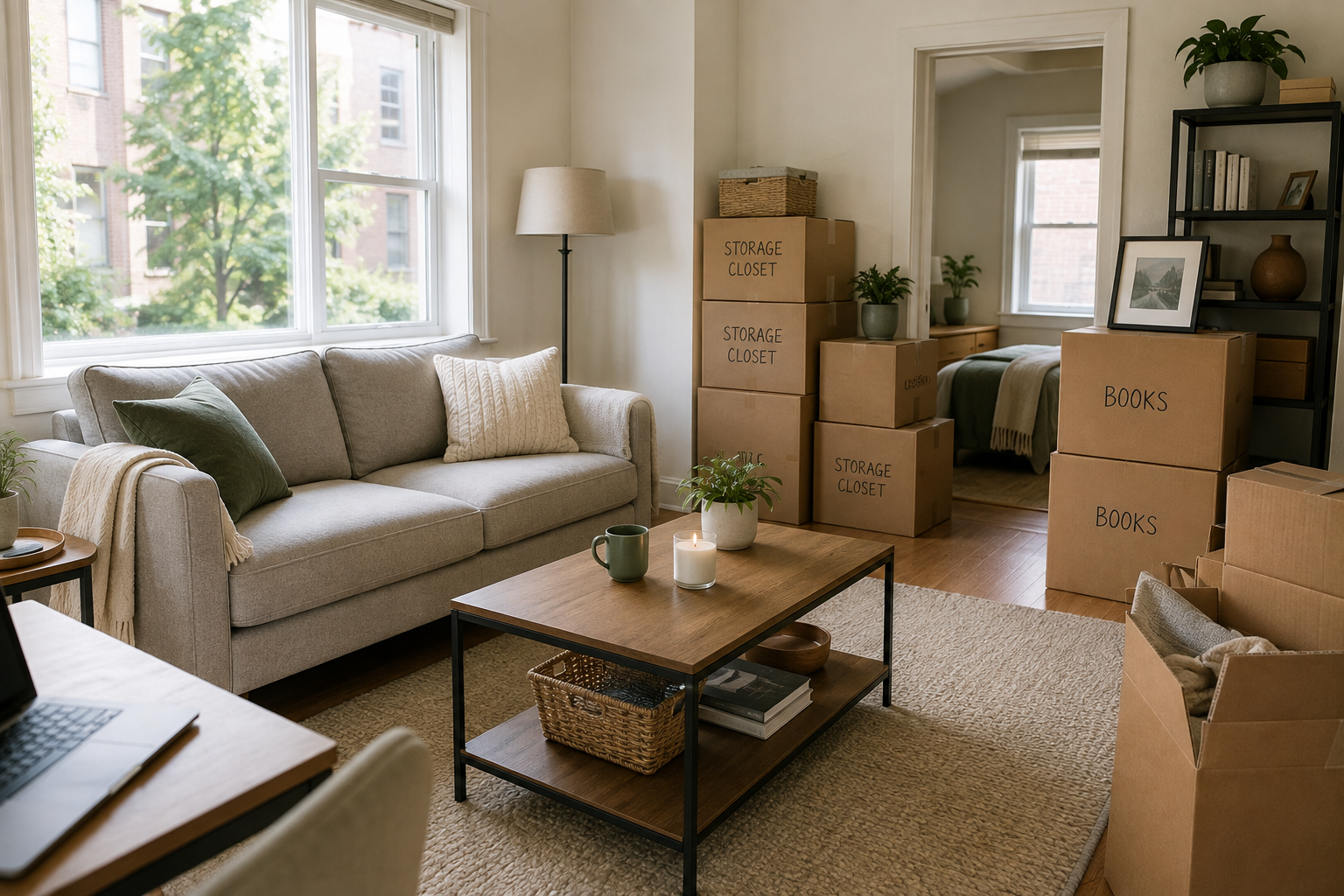
Start with anything that’s currently in storage, rarely accessed, or simply not needed for the remaining weeks in the apartment. This category can be fully packed with zero impact on daily life.
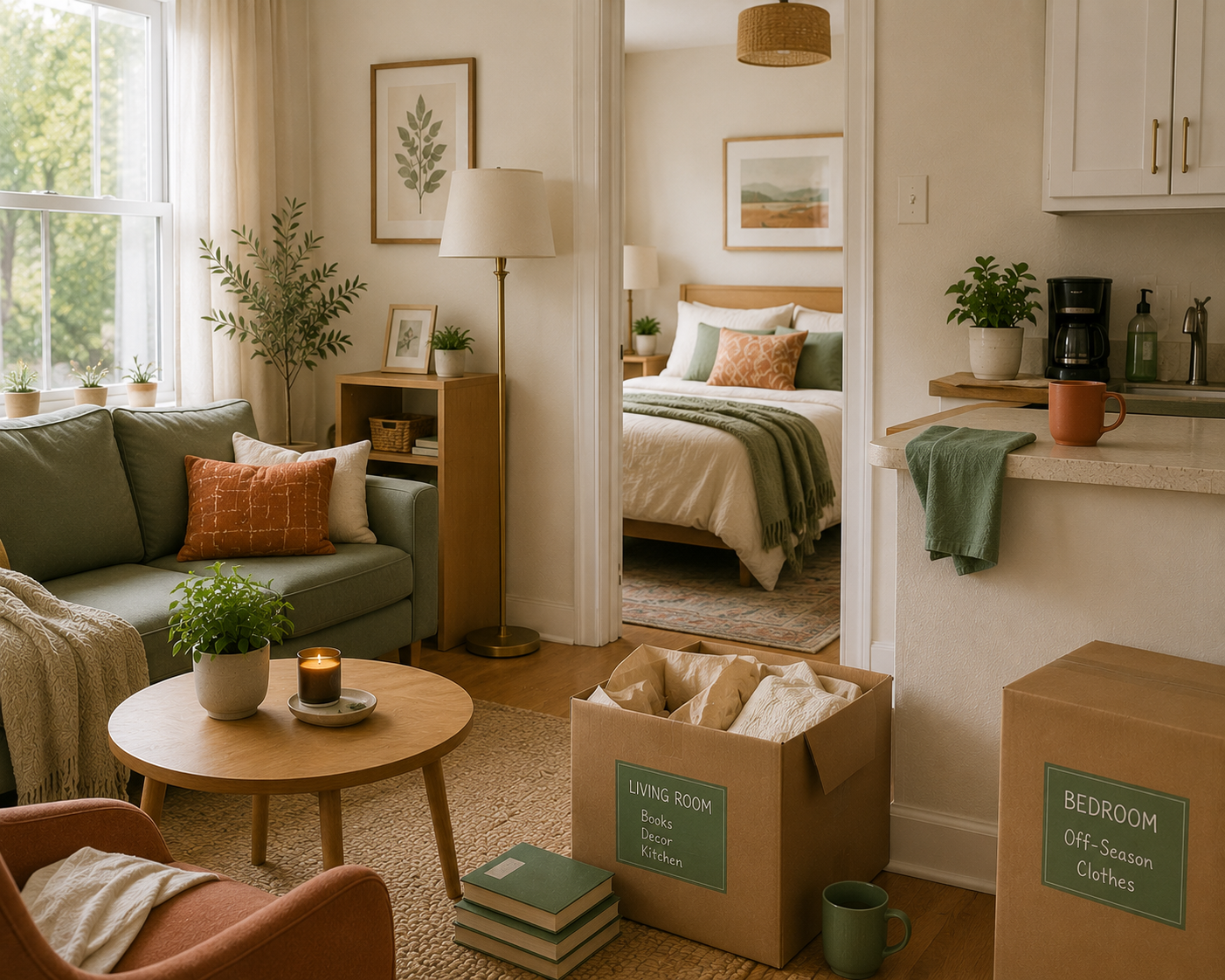
Off-season clothing and gear. Winter coats in summer, summer gear in winter, holiday decorations, and anything seasonal that’s already tucked away can go into boxes immediately, since it wasn’t being used regardless of the upcoming move.
Books, media, and display items not in active use. A bookshelf mostly holding books you’re not currently reading, or decorative items that aren’t essential to daily function, can be boxed up early, leaving just a few active items out if needed.
Guest room or secondary storage areas. If the apartment has any space dedicated to guests, overflow storage, or items used only occasionally (a spare set of dishes, extra linens beyond what’s in daily rotation), this is a natural first target, since packing it causes essentially no disruption.
Duplicate or rarely used kitchen items. A second set of mixing bowls, specialty appliances used a few times a year, or serving pieces reserved for entertaining can all be packed weeks in advance without affecting regular cooking.
Two to Three Weeks Out: Reducing Redundancy
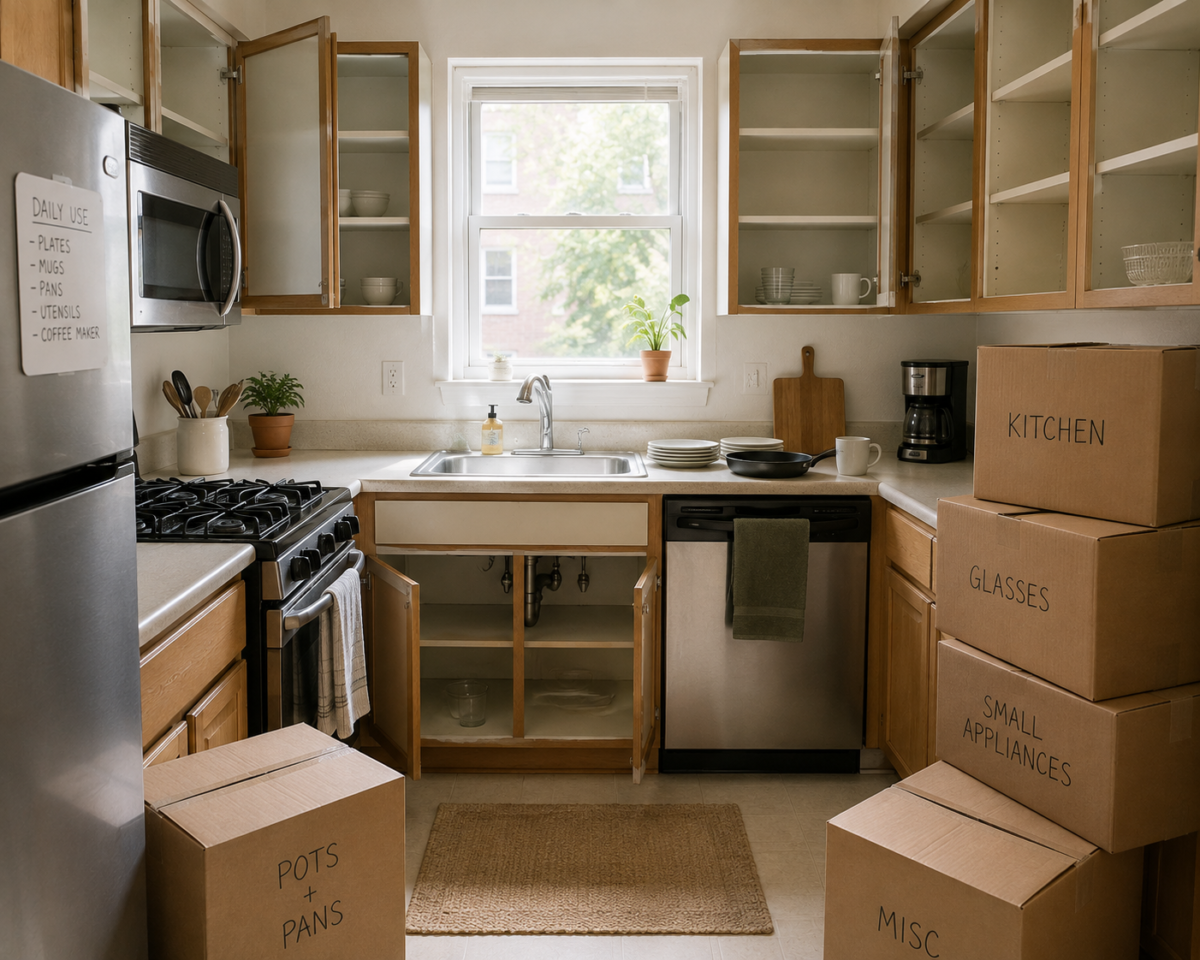
At this stage, start reducing anything you own in duplicate or excess down to just what’s needed for the remaining weeks, which both lightens the eventual moving load and creates natural packing opportunities without disrupting daily routines.
Pare down clothing to a two-to-three-week rotation. Most people own significantly more clothing than they’ll wear in the final weeks before a move. Pack everything beyond a reasonable rotation, keeping out just enough for the remaining time, and set aside laundry needs as part of that calculation.
Reduce kitchen items to daily essentials. A full kitchen typically has far more dishes, cookware, and tools than are needed for basic day-to-day cooking. Pack everything beyond a small, functional set, a few plates, one or two pans, basic utensils, enough for the remaining weeks, and box up the rest.
Pack non-essential bathroom items. Backup toiletries, unused products, and anything beyond what’s genuinely used daily can go now, leaving just the essentials accessible until the final days.
Start on closets systematically, not all at once. Rather than emptying a closet completely in one session, work through it by category, shoes not currently in rotation, accessories not currently worn, keeping only what’s actually needed for the remaining time period easily accessible.
One to Two Weeks Out: Non-Essential Furniture and Room Consolidation
If the apartment has more than one living or working space, this is the point to consider consolidating daily life into fewer rooms, which lets you fully pack and even begin disassembling furniture in the rooms no longer needed.
Fully pack and clear any secondary room (a home office, a guest space, a dining room not used for daily meals), moving any remaining daily-use items from that room into the space you’ll be living out of for the final stretch.
Begin disassembling furniture that isn’t needed for daily function. A desk, a bookshelf that’s already been emptied, or a dresser holding only off-season clothes can be broken down at this stage, following the knock-down guidance covered in Storage Furniture That Moves With You if the pieces are designed for it.
Pack decorative items and wall art, since these have zero functional impact on daily living and packing them now, rather than waiting, checks off a meaningful amount of remaining packing work while the apartment is still otherwise functional.
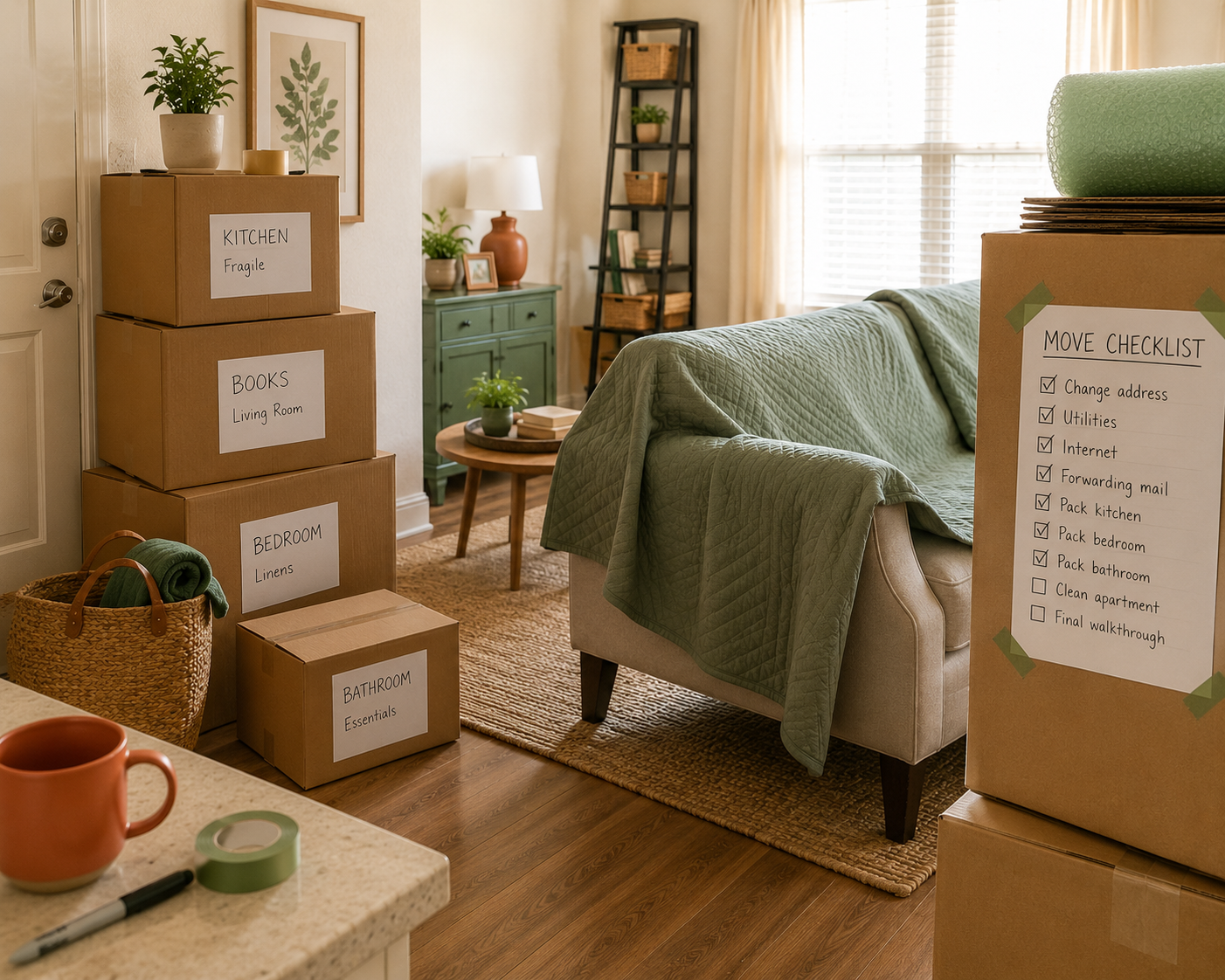
Label everything by destination room, not just contents. A box labeled “Kitchen” for the new apartment is more useful on move-in day than one labeled just “Miscellaneous,” since it tells whoever’s unloading exactly where it belongs without needing to open it first.
The Final Week: Protecting One Fully Livable Room
By the final week, the goal shifts from packing broadly to protecting exactly one room as fully functional, everything else in the apartment can be boxed and ready to go.
Choose which room stays functional longest, usually the bedroom. A bed, a few days of clothes, and basic toiletries are the minimum needed to actually live somewhere, and consolidating everything else into that one space (or keeping the bathroom functional alongside it) means the rest of the apartment can be fully packed days before the actual move.
Set up a simple daily kit if the kitchen gets packed early. A single plate, one set of utensils, a cup, and whatever’s needed for basic meals or coffee can live in a small, unpacked bag or basket even after the rest of the kitchen is boxed, avoiding the need to unpack a full box just to eat breakfast.
Pack the first-day essentials box last, and set it aside separately. This box, covered in more detail in the companion move-in guide, should be the very last thing packed and should never get loaded onto the truck with everything else, since it needs to travel with you personally and be immediately accessible on move-in night.
Do a final walk-through of every room the day before moving, checking closets, cabinets, and any easily forgotten spots (behind doors, high shelves, under sinks) for anything left behind.
Packing Techniques That Actually Save Time
A few specific techniques make the packing process itself faster and reduce the odds of anything getting damaged, regardless of which stage of the timeline you’re in.
Pack heavy items in small boxes, light items in large boxes. A large box full of books becomes nearly impossible to lift safely, while a small box of pillows wastes space. Matching box size to item weight keeps every box manageable and reduces the risk of a box failing under its own weight.
Use clothing and linens as padding for fragile items, rather than buying separate packing paper for everything. Towels, sheets, and off-season clothing wrap dishes and glassware just as effectively as bubble wrap, and it means one less thing to source or purchase separately.
Keep a simple inventory list as you pack, even just a running note on your phone listing what’s in each numbered or labeled box. This becomes invaluable during unpacking, letting you find a specific item without opening every box in the apartment.
Leave drawers loaded for short-distance moves. For furniture that will fit through doorways with drawers still in place, leaving lightweight items in dresser drawers rather than fully emptying them saves real packing time, provided the move is relatively local and the furniture is being moved carefully.
What to Avoid During the Packing Process
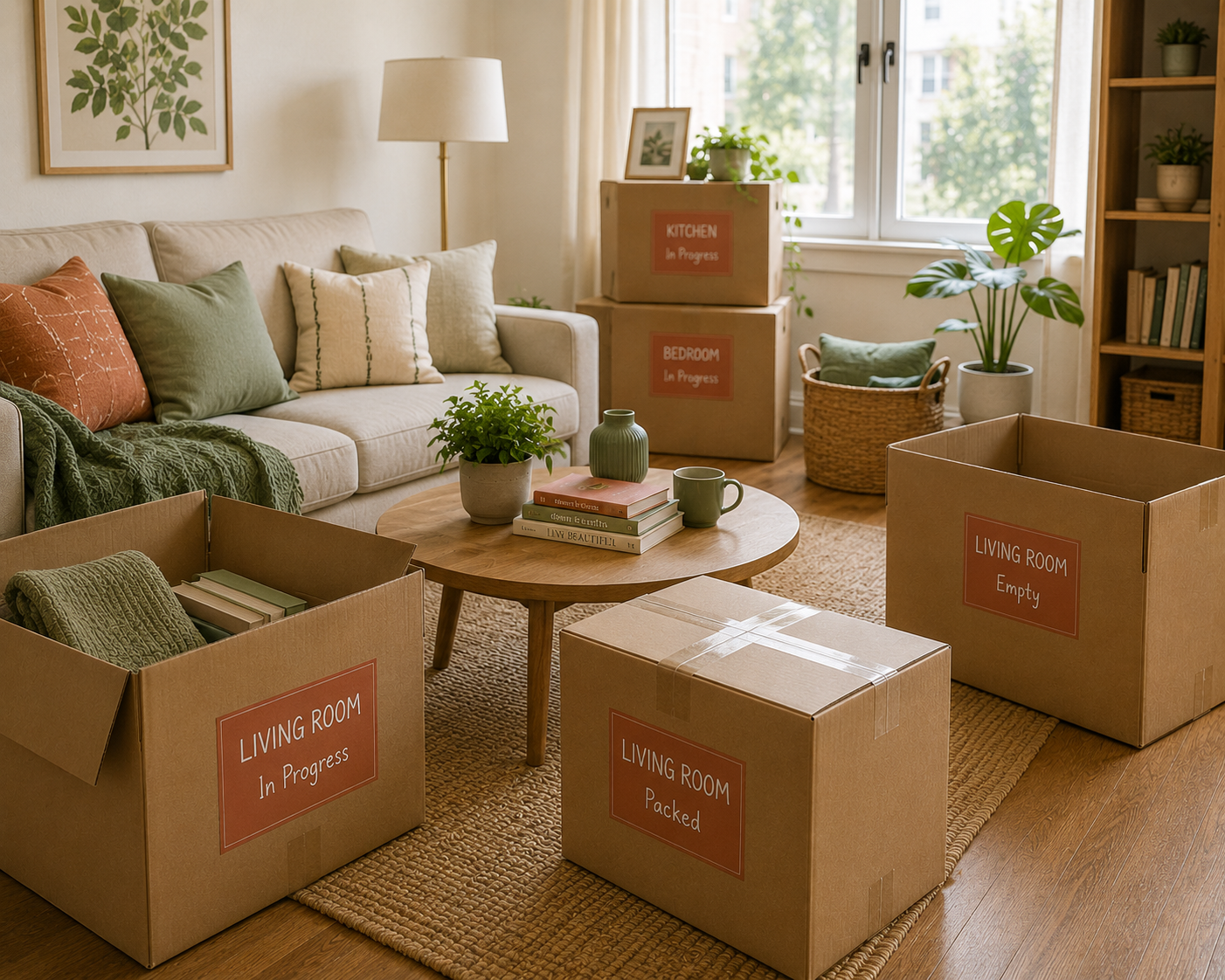
Packing an entire room in one exhausting session. This leads to rushed, disorganized boxes and often means realizing too late that something essential got packed by accident. Working in shorter, more frequent sessions across the full timeline produces better-organized results with far less stress.
Overpacking boxes to save on box count. An overstuffed box is harder to close securely, more likely to break during the move, and genuinely difficult to lift safely. It’s worth using slightly more boxes, each reasonably weighted, than fewer boxes packed to their structural limit.
Leaving the “everything else” category until the very end. Miscellaneous items, junk drawers, random accumulated odds and ends, tend to get left for last precisely because they’re harder to categorize, which means they often end up rushed into unlabeled boxes right before the move. Setting aside even thirty minutes mid-timeline to deal with this category specifically prevents it from becoming a last-minute scramble.
Packing Fragile and High-Value Items Specifically
A handful of item categories need extra care beyond the general packing approach, since they carry a higher cost if something goes wrong, either financially or in terms of replacement difficulty.
Dishes and glassware should be wrapped individually, with plates packed vertically (like records in a crate) rather than stacked flat, since vertical stacking distributes pressure more evenly and holds up better against the shifting and jostling of a real move. Fill any empty space in the box with soft padding, crumpled paper, or clothing, so items can’t shift and knock against each other in transit.
Electronics hold up best in their original boxes if you kept them, since these are specifically designed for that exact item’s weight and shape. Without the original packaging, wrap screens separately from cords and accessories, and keep small parts (remotes, cables, chargers) in a labeled bag taped to or packed alongside the main device rather than loose in a general box.
Important documents (lease paperwork, identification, financial records) deserve their own dedicated folder or small box that travels with you personally rather than on the moving truck, the same way the first-day essentials box does. These are the items where a lost or delayed box causes genuine, disproportionate stress compared to almost anything else being moved.
Plants don’t pack into boxes the way most items do, and they’re worth planning for separately, transported upright in a vehicle rather than a moving truck where they could tip, and ideally moved last so they spend the least possible time in a hot or cold vehicle before reaching the new apartment.
Anything irreplaceable or sentimental (photos, heirlooms, specific keepsakes) is worth transporting personally rather than trusting to professional movers or a truck full of other boxes, purely for peace of mind, even if the item itself isn’t fragile in a physical sense.
Coordinating Packing With Utility and Address Changes
Packing doesn’t happen in isolation from the rest of the moving timeline, and syncing it with the utility and address-change tasks covered in the companion move-in checklist avoids a specific, easily missed problem: losing access to something you need while it’s mid-transition.
Don’t fully pack away tools and basic supplies too early. A screwdriver, tape, and scissors get used repeatedly throughout the entire packing process, for assembling boxes, adjusting furniture, or handling last-minute fixes, and packing them away in week one just means unpacking the same box repeatedly for the rest of the timeline. Keep a small, visible tool kit out until moving day itself.
Time mail forwarding to avoid a gap, not to start too early. Forwarding mail before you’ve actually left creates its own confusion if anything time-sensitive arrives at the old address during the final days. Setting the forwarding start date to align with your actual move-out date, rather than several weeks in advance, avoids this specific overlap problem.
Keep chargers and cables out until the final essentials pack. These are exactly the kind of small, easy-to-lose items that get packed too early out of a desire to reduce clutter, then become genuinely frustrating to track down again once every box in the apartment looks the same.
Frequently Asked Questions
What should I pack first when moving out of an apartment? Start with items you’re not currently using at all: off-season clothing, rarely accessed storage, duplicate kitchen items, and anything in a guest or secondary space. This causes zero disruption to daily life while making real progress on the overall packing load.
How do I keep my apartment livable while packing for a move? Follow a frequency-of-use order rather than packing room by room. Pack rarely used items first regardless of which room they’re in, and protect one room, usually the bedroom, as fully functional until the final day or two before the move.
How many boxes do I need to pack a small apartment? It varies by apartment size and how much you own, but a general guide is roughly 10 to 15 boxes per room for an average small apartment, weighted toward more small boxes for books and heavy items and fewer large boxes for lightweight items like linens and pillows.
Should I pack my kitchen or bedroom first when moving? Neither should be fully packed first, since both are needed daily. Instead, pack the non-essential portions of each, extra kitchen items, off-season bedroom clothing, early on, while keeping a small daily-use set of items from both rooms accessible until close to moving day.
What’s the best way to keep track of what’s in each moving box? Label boxes by destination room and general contents, and keep a simple running inventory, even just a phone note listing numbered boxes and what’s inside each one. This makes unpacking significantly faster and avoids opening every box just to find one specific item.
Related Reading
- The Complete Move-In / Move-Out Checklist — the full sequence this packing order fits into, covering both ends of a move.
- The Small Apartment Move-In Checklist — what happens once the truck is unloaded and it’s time to set up the new space.
- The Move-Out Cleaning Checklist That Protects Your Deposit — the deep clean that follows once packing is complete and the apartment is empty.
- Storage Furniture That Moves With You — furniture built to disassemble easily as part of this exact packing timeline.
- Parent Category: Move-In & Move-Out
- Parent Hub: Apartments & Rentals